
QURAN & HISTORICAL GHAYB ~𝒂𝒏 𝒂𝒓𝒈𝒖𝒎𝒆𝒏𝒕 𝒇𝒐𝒓 𝑸𝒖𝒓𝒂𝒏'𝒔 𝒅𝒊𝒗𝒊𝒏𝒆 𝒐𝒓𝒊𝒈𝒊𝒏 EP1: Ancient Egypt—𝐏𝐡𝐚𝐫𝐚𝐨𝐡'𝐬 𝐝𝐢𝐯𝐢𝐧𝐢𝐭𝐲. (1/6)
According to a commonly accepted premise of Abrahamic history, the Exodus narrative is set out during the 𝐍𝐞𝐰 𝐊𝐢𝐧𝐠𝐝𝐨𝐦 period. The Quran, unlike the Bible, mentions three distinct claims about the divinity of the Pharaoh. Let's check them out vis a vis history. (2/6)
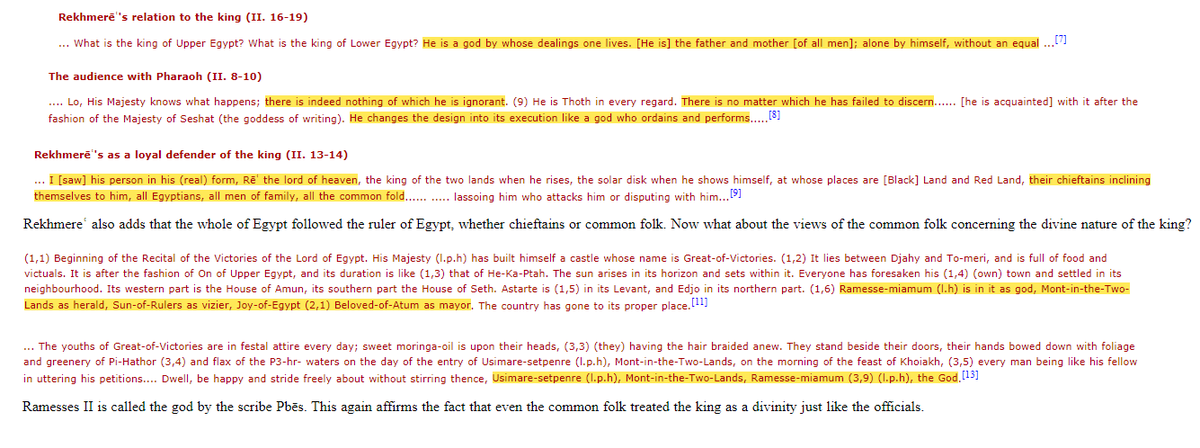
Claim 1: The Pharaoh claims divinity—the POV of his subjects. [79:24] Historical proof 1: (from the New Kingdom) → "He is a god by whose dealings one lives. [He is] the father and mother [of all men]; alone by himself, without an equal". (See pic for more) (3/6)
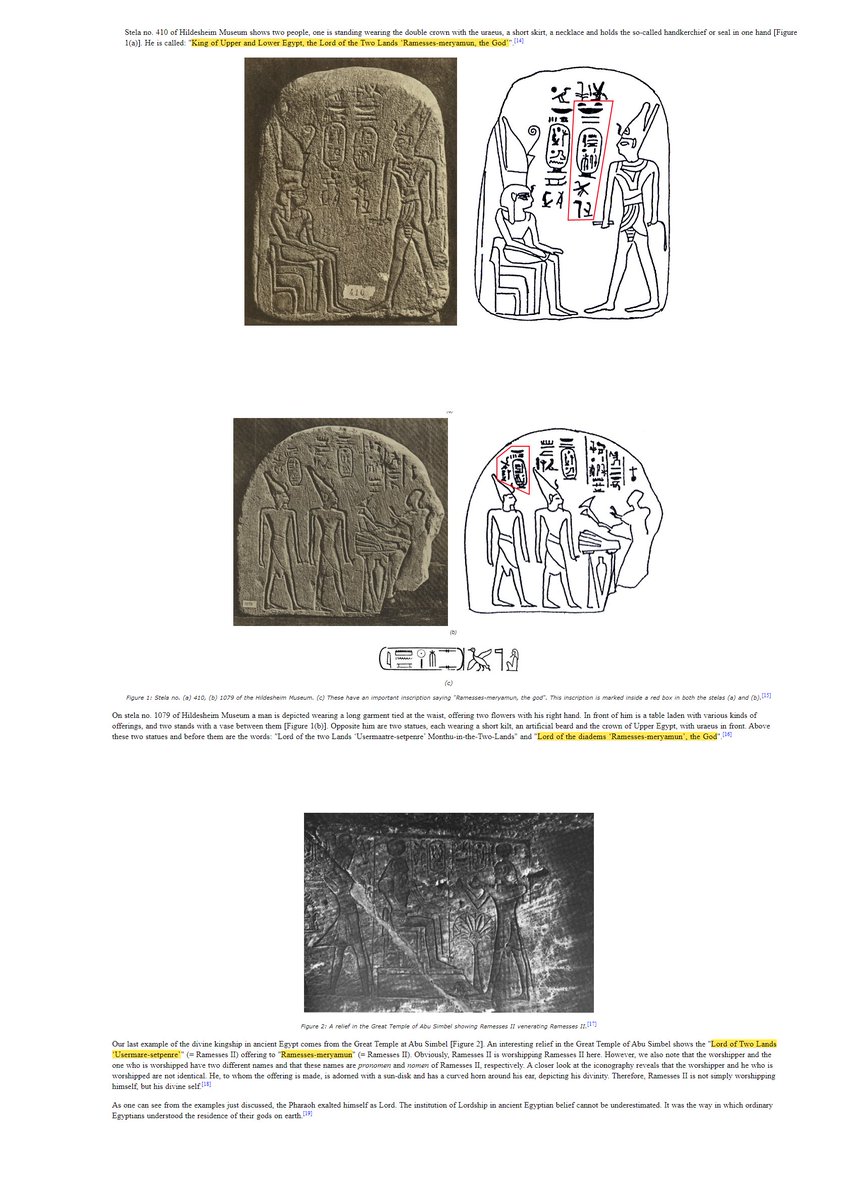
Claim 2: The Pharaoh claims divinity—his own POV. [28:38] Historical proof 2: (from hieroglyphs) → "King of Upper and Lower Egypt, the Lord of the Two Lands ‘Ramesses-meryamun, 𝐭𝐡𝐞 𝐆𝐨𝐝" from Stela no. 410 of Hildesheim Museum. (See pic for more) (4/6)
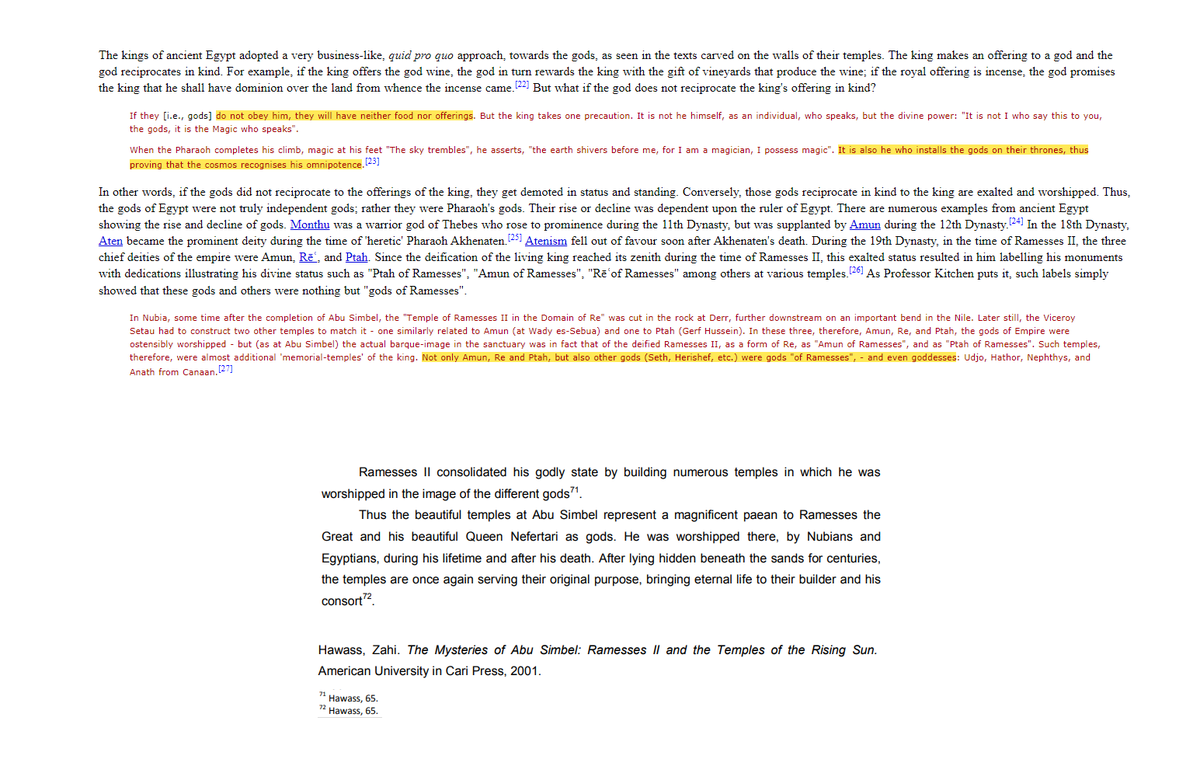
Claim 3: The Pharaoh himself has gods. [7:127] Historical proof 3: Even though he was the boss, the Pharaoh had gods himself: → "Not only Amun, Re and Ptah, but also other gods were gods "of Ramesses", and even goddesses: Udjo, Hathor, Nephthys, and Anath.." (See pic) (5/6)
Conclusion: The Divine Book Muhammad (s) preached, contains meticulous details of the religion of Ancient Egypt (New Kingdom), that were physically impossible for him to access. Thus, we can conclude that he was given access to ghayb. Why is this important? 𝐒𝐞𝐞 𝐩𝐢𝐜. (6/6)

Appendix - Sources: 1. https://www.islamic-awareness.... 2. https://wou.edu/history/files/... 3. http://www.quranicstudies.com/...