
Time for a #TetZoocryptomegathread! This time we look at one of the most famous sea monster accounts: the WWI incident in which the crew of the U-boat U-28 witnessed a gigantic, crocodile-shaped monster get blasted out of the water by an explosion. Yes, you read that right…
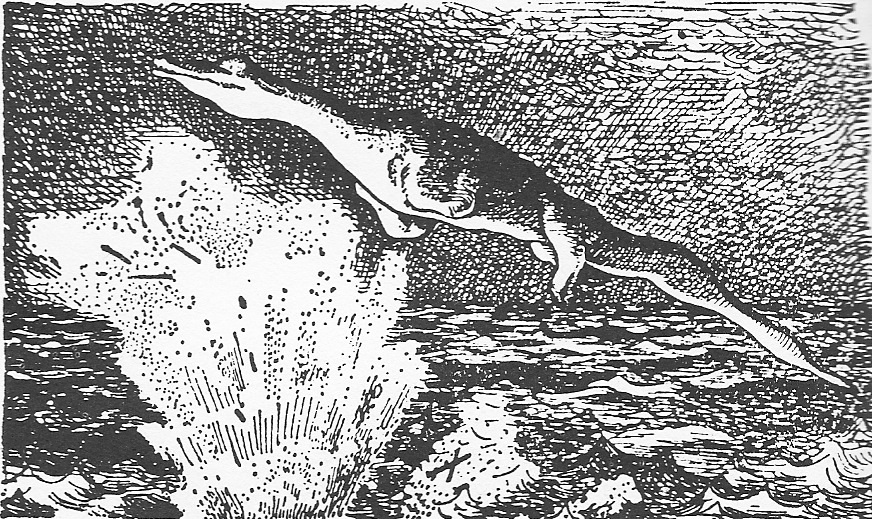

The U-28 incident is generally considered one of the most amazing and exciting claimed sea monster observations, combining the drama and historical realism of marine warfare with a remarkable creature account that defies belief… #cryptozoology #monsters
As usual with these megathreads, please remember that I discuss both the ‘pros’ and ‘cons’ of these sorts of stories. If you read something that seems wrong, silly or illogical, remember that I’ll very likely be coming back to it later on in the thread. Ok…
Disclaimer: get read for a LOOOOONG thread. These ain’t called megathreads for nothin…
The story goes that – while on patrol about 110 km off the south-west coast of Ireland on 30th (or 31st) July 1915 – the U-28 succeeded in torpedoing the British steamer the Iberian, which sank…
As the U-28 crew watched the Iberian sink, a substantial underwater explosion occurred, this apparently being the result of the vessel’s boilers imploding...
Among the wreckage thrown into the air was a massive, “writhing and struggling wildly” sea monster which had somehow got too close to the explosion and been lifted clear out of the water…
A few very dramatic depictions of this incident are findable online, mostly as YouTube thumbnails. They are not in the least bit accurate, but they’re fun to look at… hey, glad the red arrow's there, I'd have missed the point of interest without it...
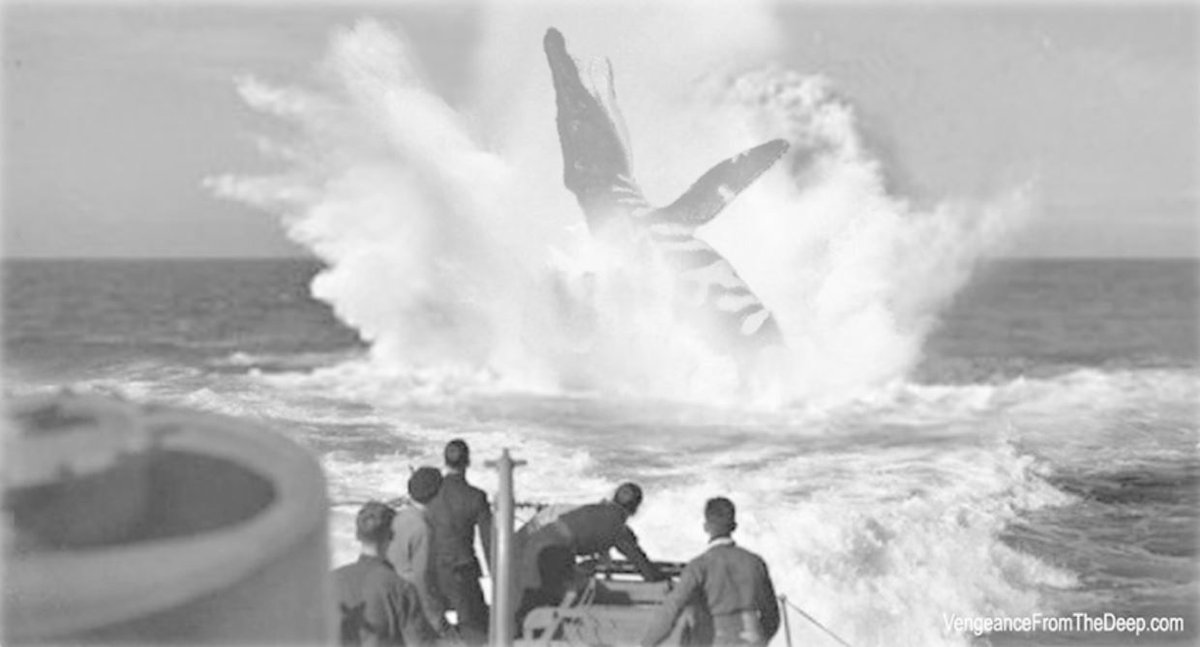

The animal was blasted 60-100 ft (18-30m) skyward, and was supposedly watched simultaneously by six people, including the officer of the watch Dieckmann, chief engineer Ziemer, engineer officer Romeiss, and the U-28’s commander himself…
The key witness here was the commander: Georg-Günther Freiherr Von Forstner (1882-1940), usually termed Baron Von Forstner, since it’s thanks to him that the story was recounted in print…
Von Forstner appears to have been something of a celebrity in WWI Germany, in part because he was commander of Germany’s very first U-boat, U-1. No photos of him appear to be available, unfortunately...
His account on life as a submarine commander was published in 1916 as The Journal of Submarine Commander Von Forstner. This was translated into English in 1917…

I’ve checked it, and there’s no mention of a sea monster, nor indeed is the sinking of the Iberian mentioned at all, which seems odd in view of the fame this incident has had in the decades since…
After the monster was thrown skyward, it fell back into the sea, was visible for a further 10-15 seconds, and sank from sight. There was no time for a photo (a statement which implies that at least one man had a camera to hand, which may or may not have been true, I don’t know)…
Von Forstner’s account of the animal’s behaviour is a bit contradictory. His story is usually taken as showing that the animal was ‘blasted upwards’ by the force of the explosion, but he also stated that it “leapt out of the water”. What, leapt 18-30m up into the air?
…. Excuse me if I’m slightly suspicious of the idea that an gigantic, long-bodied animal could perform such feat. For comparison, a Killer whale – at most, 10 m long – can leap maybe 5 m above the surface [image © Biosphoto/Christopher Swann]…

In terms of the monster’s appearance, it was huge: 18 m (60 ft) long. Von Forstner stated that it “was like a crocodile in shape and had four limbs with powerful webbed feet and a long tail tapering to a point”…

This case is formative in that it’s THE key observation of a kind of sea monster endorsed by several cryptozoologists. Namely the MARINE SAURIAN, a crocodile-shaped marine reptile equipped with paddles and a sculling tail…

Founding cryptozoologist Bernard Heuvelmans – who I’ve now written about on an innumerable number of occasions (and I’m not finished yet) – featured an illustration of the U-28 monster in his famous, definitive work of 1968: In the Wake of the Sea-Serpents...


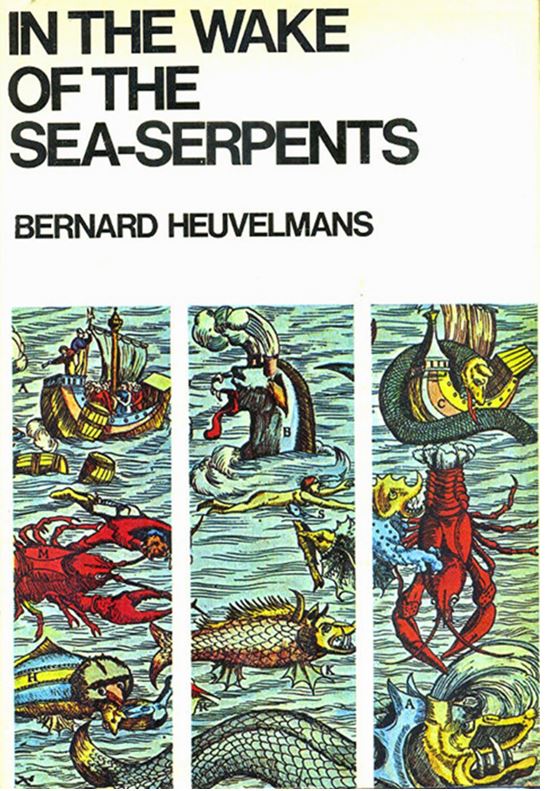
... (Heuvelmans used the term ‘sea-serpents’ as a catch-all term for all ‘sea monsters’)…
Therein, #Heuvelmans quoted (p. 395) Von Forstner from a newspaper account, and also featured a redrawing of a drawing of the account, the latter being credited to Richard Hennig (these details are significant for reasons discussed later)… #seamonsters #cryptozoology #monsters

This drawing gives the story an element of plausibility, because it makes it look at if the U-28 sea monster was a specialised aquatic reptile with anatomical features recalling those of the Mesozoic marine reptiles we know of from the fossil record…
… namely, the #plesiosaurs (some of which were short-necked and with a crocodile-like head), the giant swimming lizards known as #mosasaurs, and the #thalattosuchians (sea-going kin of crocodylians, some of which had flippers for forelimbs and, again, a crocodile-like head)…
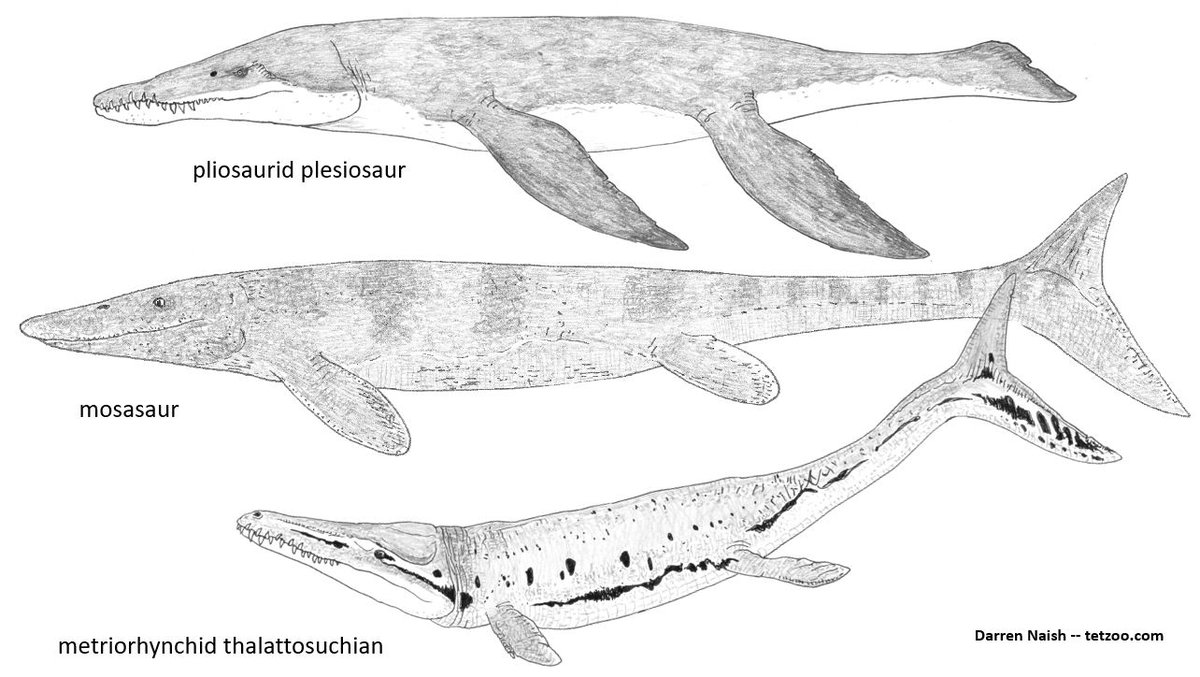
Ever since Heuvelmans’s coverage of the U-28 account, the majority of cryptozoologists have covered the case as if it were a bona fide description of a ‘marine saurian’...
... and have implied that Heuvelmans’s idea that mosasaurs and/or thalattosuchians might have survived to the present has merit…
Well, if this is what you think… I have bad news…
As you’ll see later in this thread, there are, sadly, lots of reasons for thinking that the incident – at least, that part involving a crocodile-shaped sea monster – never occurred…
Having mentioned Bernard Heuvelmans, I have to say the following (in part due to comments made in a recently published book). It’s not uncommon to see cryptozoologists refer to #Heuvelmans as a far-sighted genius, head and shoulders above those of us who criticise him...

Alas, the fact remains that he simply isn’t (or wasn’t) a reliable source of information. He very often based his retellings of claimed cryptid encounters on secondary, popular sources…
… he was often unaware of (or failed to cite or mention) follow-up accounts which demonstrated that some of the cases he promoted were known to be false or bogus…
… his understanding of evolutionary history and biology were very often out of date even for his time (he was mostly writing in the 1950s, 60s, 70s and 80s), and his zoological theorising was and is, to put it politely, unrealistically speculative….