
This is #EuropeanBios entry #59, Peter the Great. A metaphorical and also literal giant of a man, standing 6'8" (the European average at the time was a foot shorter), he totally revolutionized Russia through sheer force of will and also by being a total asshole most of the time.
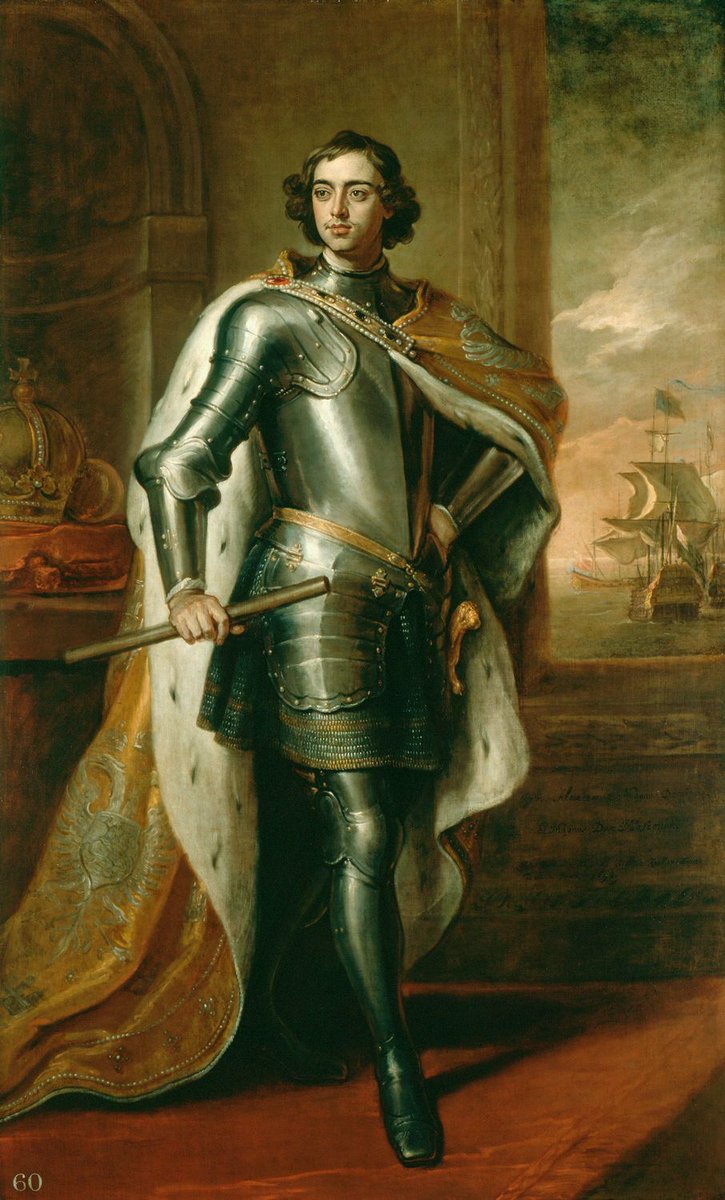
Peter was, for better and worse, a man who acknowledged no limitations. The same mind that could formulate an intention and carry it through to the end without hesitation created Russia's second-biggest city, invented its navy from scratch, and also murdered his own son.
(If you've noticed a jump in numbers: don't worry, you haven't missed any, I just fucked up the numbering... uhhh... several times. Queen Anne was 58, Maria Merian was called 54 but should have been 57. The full list is now at http://europeanbios.com)
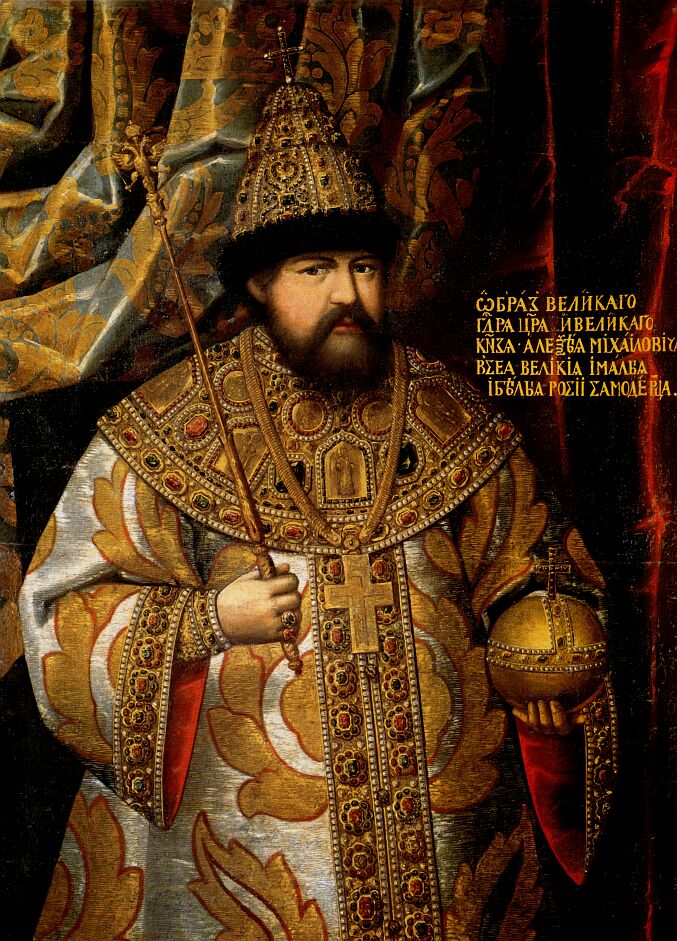
But we must start at the beginning. Peter was born in 1672 to Tsar Alexis of Russia. Alexis died when Peter was 4, leaving Peter's half-brother Feodor, then 15 years old, in charge. Feodor was described as "sickly" and died only 6 years later, creating a crisis of succession.
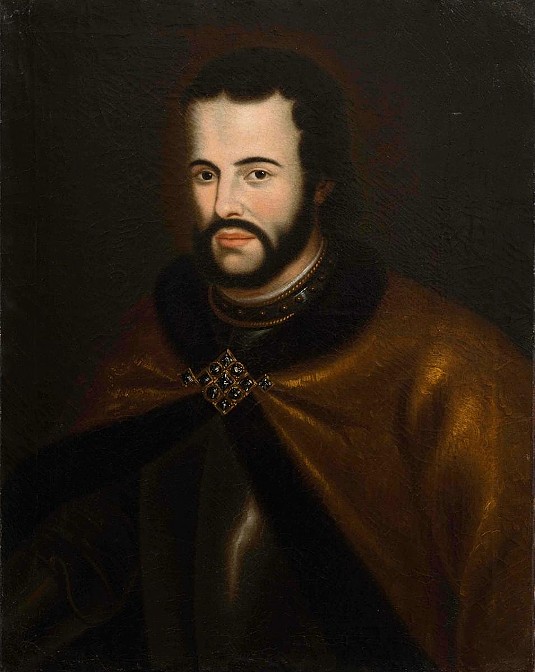
Next in line to the throne was another half-brother, Ivan, aged 16. Ivan was mentally under-developed and physically even less well. He was widely regarded as incapable of ruling and was vocal about not wanting the job anyway, but Ivan's side of the family wanted power.
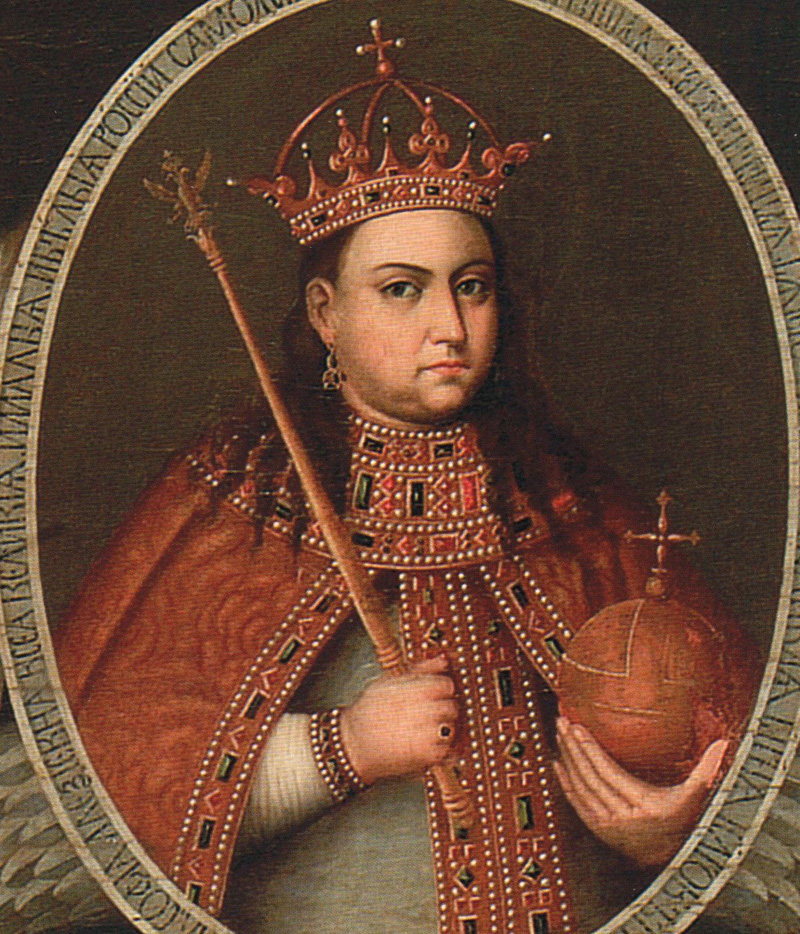
Ivan's side of the family was led by his sister Sophia (likewise half-sister to Peter) who was a vocal, ambitious and capable power-broker. This was extremely unusual for a noble-born Russian woman at the time; they were usually kept literally out of sight and sound of men.
Sophia engineered a rebellion of the Streltsy, a sort of elite military corps in which membership was hereditary (so, not actually selected for being good at their jobs, or loyal). The Streltsy had been created a hundred years earlier by Ivan the Terrible: https://x.com/seldo/status/139...
This rebellion got catastrophically out of hand. The Streltsy, fed misinformation by Sophia, invaded the royal palace. They killed hundreds of people, dragging them from their hiding places and throwing them over a balcony to be cut into pieces by their fellow soldiers below.
10 year old Ivan and his mother remained cowering in terror in their hiding place in the palace for days as their friends and relations were dragged screaming away. A triumphant Sophia installed Ivan as co-ruler with Peter. She became regent, wresting power from Peter's mom.
This traumatic event understandably shaped Peter forever. He hated the palace and all of Moscow. This is surprisingly similar to what happened to Louis XIV at a similar age, and Louis had a similar reaction: he hated Paris. https://x.com/seldo/status/142...
Sophia ruled unchallenged for 7 years, literally the power behind the throne: Peter and Ivan would sit on the throne (made wide enough for two) and Sophia would sit behind them, listening through a hole cut in the back (right hand side) and telling Peter what to say.
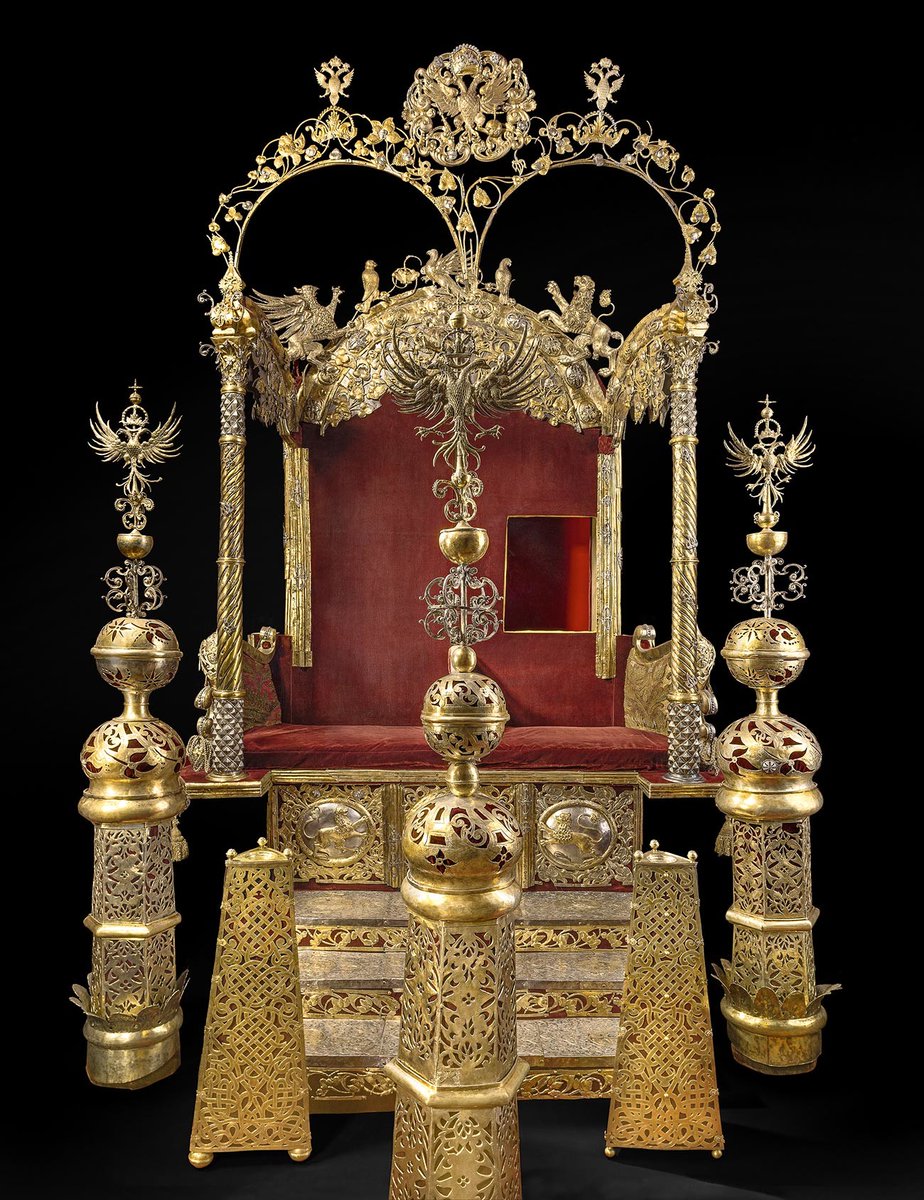
While Sophia held power, Peter grew up. He had a truly wild childhood featuring almost no formal education, an unlimited budget, and a near total lack of adult supervision. He played soldiers with his friends by firing real, loaded cannons at each other and setting off fireworks.
Peter's soldier games got more and more realistic: they got uniforms, built real forts, and earned ranks and promotions through service. They grew larger and more serious until when Peter became an adult they were promoted from an astonishing plaything to real, loyal battalions.
Teenagers with live ammunition? They could get hurt! And indeed, they DID get hurt: they got shot with real bullets and died of real wounds. But the only person with the authority to tell Peter to stop was Sophia, and Peter dying would be convenient for her, so she didn't.
It was also during this time that Peter stumbled upon a boat for the first time. Russia at the time had no navy of any kind. To understand why, it's helpful to look at a map of how Russia grew: it started out landlocked (purple). The coastline it had was usually locked in ice.
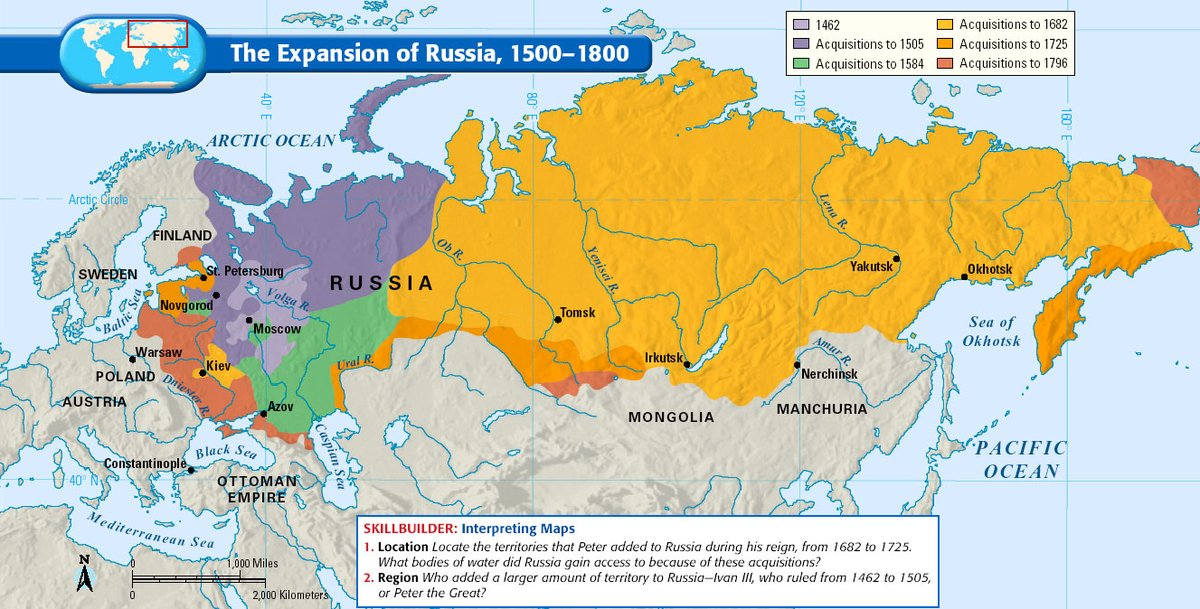
So Russia didn't have a martime culture. Despite this, young Peter became obsessed with boats. He found foreign sailors and ship-builders and -- again, no budget, no supervision -- started building ships and sailing them around the nearest large lake, 40 miles away.
Despite almost no formal schooling, Peter was a tremendously practical learner: he learned how to build ships himself and continued to do so even after he became Tsar. He also learnt metalworking, pottery, even dentistry (his court would hide their ailments to avoid his "help").
After 7 years of rule Sophia over-extended herself and got into a war with the Tatars, by which we mean the remnants of the Mongolian empire started 600 years earlier by our friend Temüjin, better known as Genghis Khan. She lost, and it was expensive. https://x.com/seldo/status/129...
Military losses weakened Sophia politically, allowing Peter, now 17, to summon loyalists and seize power in a (thankfully, this time bloodless) coup. He banished Sophia to a convent and his mother regained her position as regent, with Ivan still technically co-ruler with Peter.
Sophia comes off as rather the villain here but that is almost certainly sexist historians again. One king was incapable, the other a child, somebody had to run the place and by all accounts she did a pretty good job until being ousted by nobles who preferred a male tsar.
(This portrait of Sophia depicts her after she has lost power and is banished to the convent. Incidentally it is painted by the same artist who did this painting of Ivan the Terrible, his speciality apparently being painting The Eyes Of People Who Have Seen Some Shit)
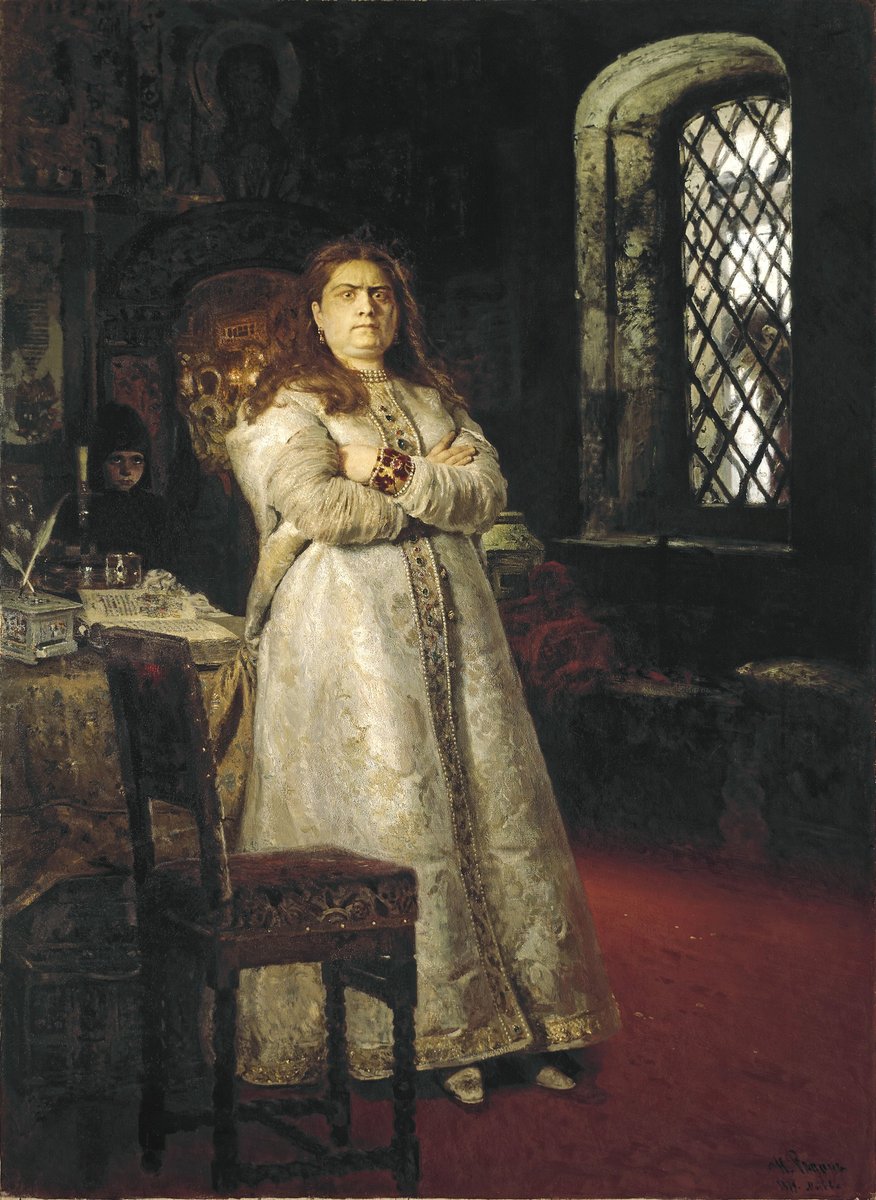
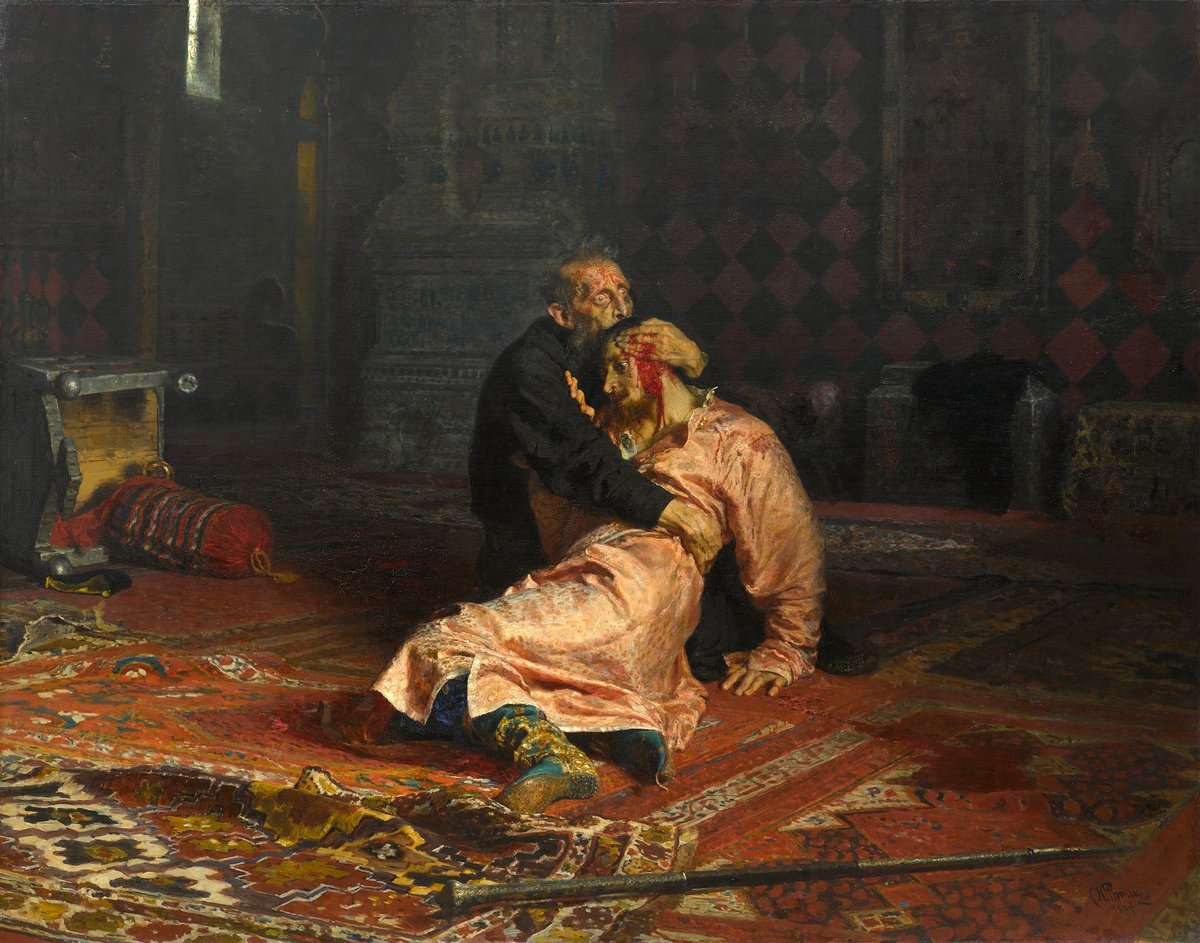
The next phase of Peter's life, from ages 17 to 24, is sort of a super-powered frat boy. While his mother ran the country, he ditched responsibilities to go build boats, sail, and get extremely drunk with his friends in a building built and reserved exclusively for them to do so.
He continued to obsessively learn about boats and sailing from foreign sailors and shipwrights in Moscow. He visited Arkhangelsk, then Russia's only seaport, and even that was locked in ice half of every year. He became the first Russian Tsar to board an ocean-going vessel.
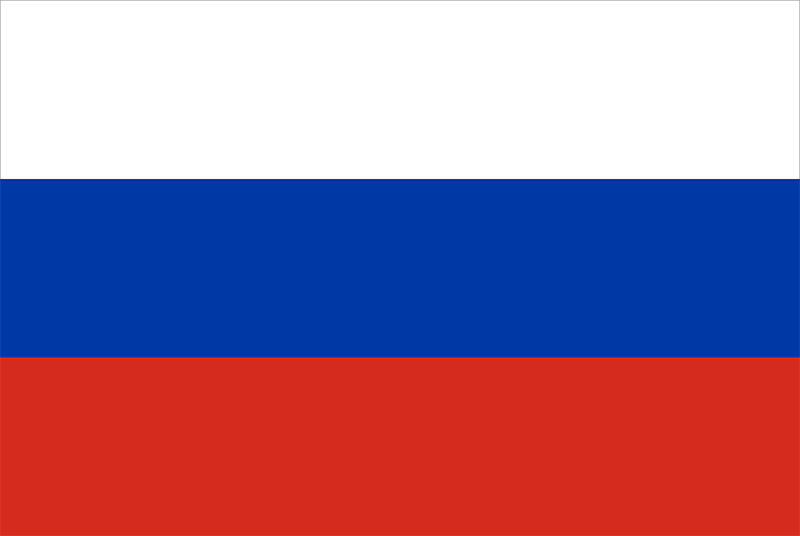
He became great friends with sailors who visited Arkhangelsk. They were mostly Dutch, and he admired them and learned to speak Dutch quite well. He created Russia's naval flag by copying the Dutch one (left) and rearranging the colors; it is today the Russian national flag.

In 1694 his mother died, and he at age 22 began to rule directly, though still technically sharing power with the increasingly sick Ivan, who died two years later in 1696. At this point Peter seems to have decided to start taking being Tsar seriously.
Peter still wanted to turn Russia into a naval power but was hindered by the major problem of having no access to the ocean six months out of the year. He first tried to gain access to the black sea, but was rebuffed by the Ottoman empire. He needed foreign allies.
To get them, he planned a "grand embassy", a 2 year long trip around Europe to persuade other nations to join his fight against the Ottomans. Along the way, he would also learn about European culture, technology, and military tactics to modernize Russia. The arrows are his route.

He did the trip "incognito", to avoid the massive expense and ceremony of a state visit, but this did not go well. When people knew it was him they thronged to see him, preventing him visiting ship building yards and other industrial venues where he was eager to learn techniques.
When they *didn't* know it was him it went even less well. The town of Riga in what was then Sweden (now Latvia) paid his entourage what he considered insufficient courtesy. He held a grudge, and a decade later during the Russian-Swedish war he burned the place to the ground.
He did eventually manage to live for several months undetected in Amsterdam, under an assumed name, learning shipbuilding, though he got into some trouble when some locals insulted him. He attempted to have them executed, but was told since he was incognito he couldn't do that.
He also visited London, hanging out with William of Orange, who had not yet been succeeded by our favorite lesbian Queen Anne (https://x.com/seldo/status/144... True to his frat-boy past, he and his entourage completely trashed the house they stayed in, including burning the furniture.