
After all the #COP26 debate about whether "requests" is stronger UN-speak than "urges" (it is), here's a fuller version of the @UNFCCC style guide on how to choose verbs in legal text eg "encourage" is at the weaker end of the spectrum, which runs from "instructs" to "calls"
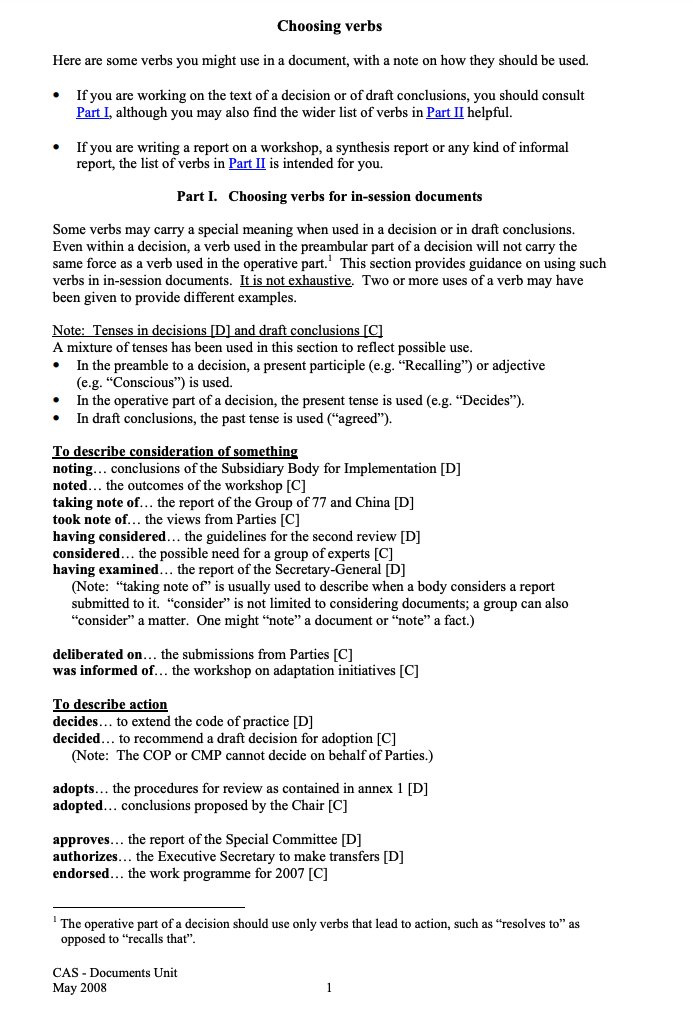
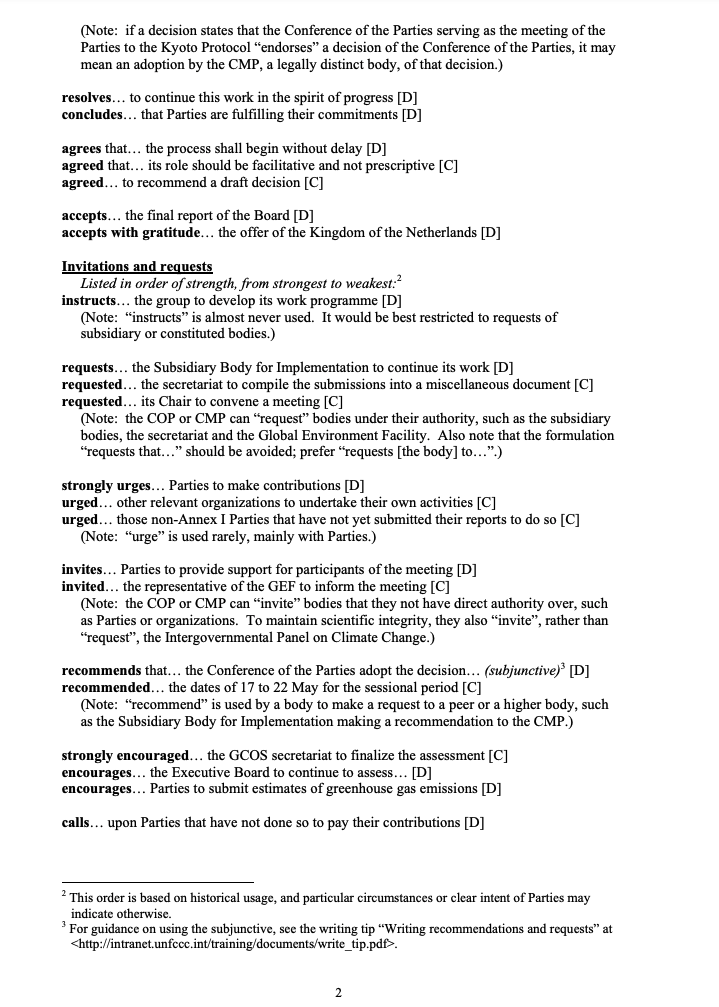
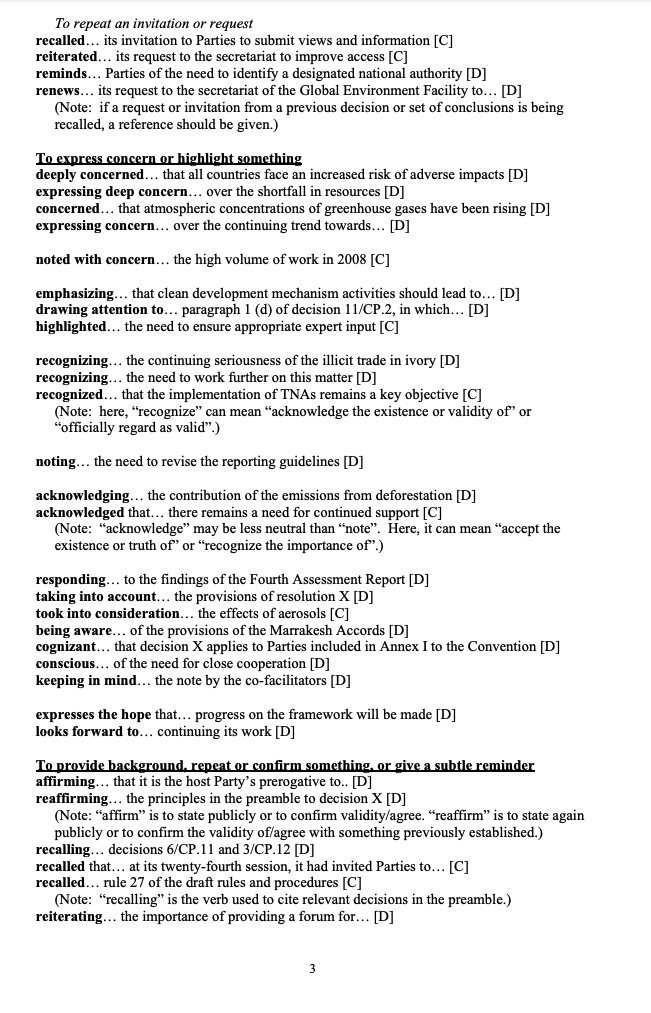
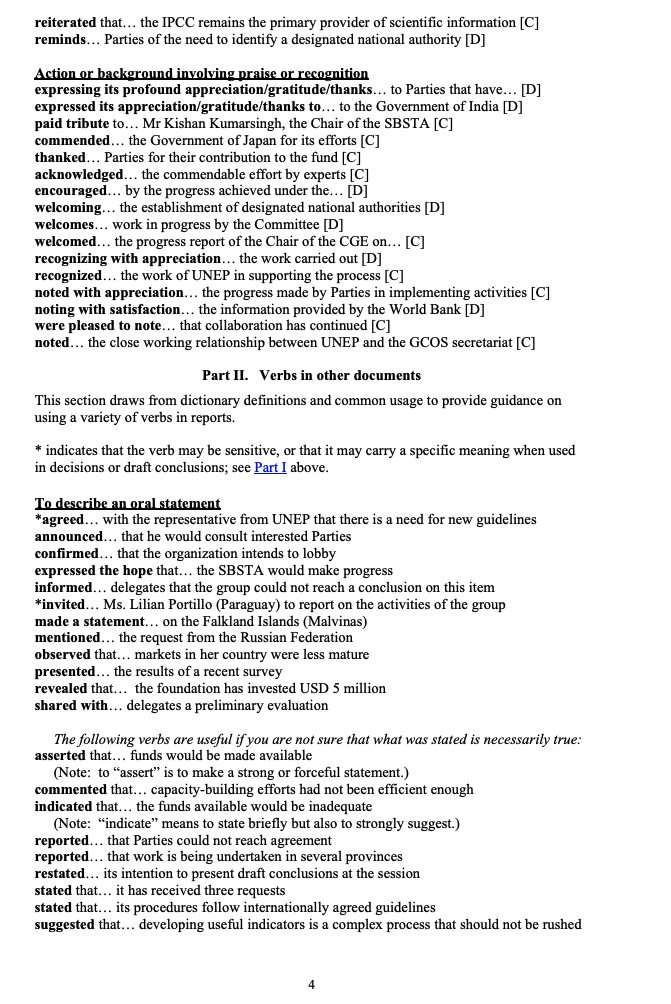
@DrSimEvans @UNFCCC Thanks @DrSimEvans! Is this guide publicly available? Couldn't see it from a quick google
@lucysmaxwell @UNFCCC Hi Lucy, it's from a reliable source but isn't officially online as far as I'm aware
@DrSimEvans @UNFCCC Would there be some way of providing some political language guidance for people to understand to what extent these wordings actually show an improvement ? It’s hard I think for scientists and commoners to see any meaning of stronger language in some of these …
@DrSimEvans @UNFCCC Do you have part 2 Simon?
@kimfriedmans @UNFCCC I do not, sorry
@DrSimEvans @UNFCCC Thanks! Useful😊
@DrSimEvans @UNFCCC I also like the subtle difference between shall (article 4.2 of the Paris Agreement) and will (article 4.3)
@DrSimEvans @UNFCCC *saves this for next year's @CarbonBrief quiz *
@DrSimEvans @UNFCCC Great! How did you get the guide?
@DrSimEvans @UNFCCC This is super helpful @DrSimEvans, thanks for sharing! Are all the lists ranked in the same order as the invitations and requests (from strongest to weakest), or is the nuance different for them?
@DrSimEvans @UNFCCC Decision link here: https://bit.ly/3Dj4LMC
@DrSimEvans @UNFCCC Is it possible to get a pdf version or text version for these screenshots?
@DrSimEvans @UNFCCC lol wut? Z O G @un doing?