
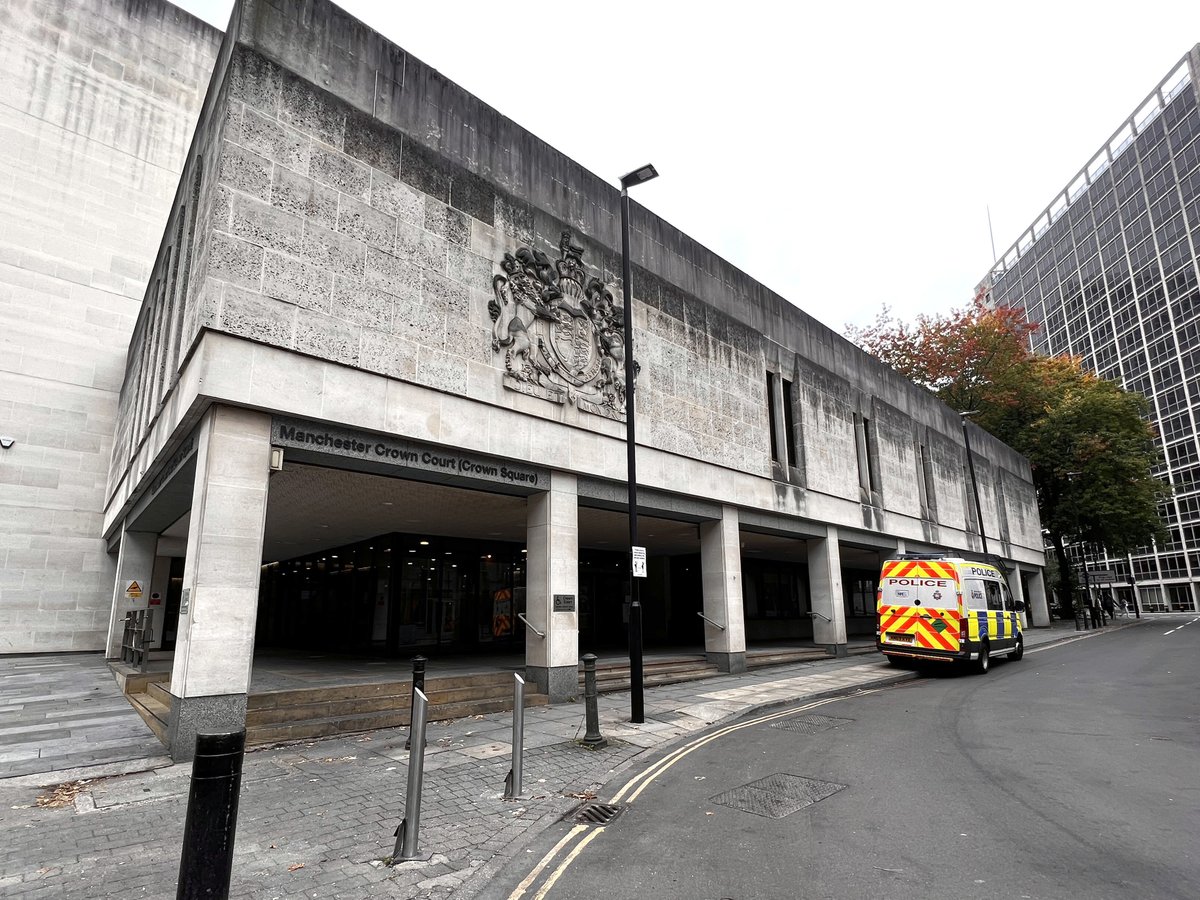
Lucy Letby's murder trial resumes at Manchester Crown Court this morning. Today we're hearing evidence from from colleagues in relation to the death of Child D in June 2015.
Imagine it'll be a fairly challenging morning technology wise. A witness is giving evidence via live link from Switzerland - there's an interpreter translating to French and back at that end. Already issues with an echo on the audio.
Another interpreter has just arrived in court in Manchester. Prosecution and judge currently debating how many are needed
It's now been settled that as everyone understands English, no interpreter is actually needed...
Jury now in court. We will soon be hearing evidence from consultant paediatrician Dr Sarah Rylance
Dr Rylance, who was a registrar at the Countess of Chester in 2015, is going over notes from the period. They show in the hours after Child D's birth she was 'bleeped' as a midwife was 'not happy' with the infant's colour. Notes show she needed respiratory support via neopuff.
Asked to assess her condition after respiratory and medicinal support, Dr Rylance said 'overall I was happy', adding: 'She had responded well to the interventions'
A note from 20:20 on June 20, made by Dr Rylance, stated: 'Parents updated. Explained likely sepsis, needing help with breathing on CPAP at present, she may need further support with ventilation, receiving antibiotics'
At 19:00 on June 21, the evening before Child D's death, Dr Rylance states in her clinical notes: 'Presumed sepsis'
Her 19:00 review of Child D also states that the infant had made good progress, and her ventilation status was 'very satisfactory'. Note states that the baby was 'responsive on handling' and there were 'no abnormal movements'
Asked for her opinion on Child D before she finished her shift that night, she said: 'I was clinically very happy with her' Ms Letby's defence lawyer, Ben Myers KC, is now questioning Dr Rylance.
Mr Myers is taking Dr Rylance back over her notes from June 20. Notes show that at 12mins of age Child D was 'in Dad's arms, lost colour and floppy' He asks Dr Rylance is that is a worrying sign, 'yes' she says
Mr Myers summarises that Dr Rylance first reviews Child D three and half hours after her birth. He says this was a baby presenting as 'seriously ill'...Dr Rylance agrees, adding: 'She was an unwell baby'
Dr Rylance agrees with Mr Myers that infection is a leading cause of death among newborns...he asks if antibiotics should be given within an hour of birth if concerns.
Dr Rylance says there are differing guidelines, but as a 'general as soon as you have concerns then you would want to give antibiotics ASAP'
Mr Myers notes how there was 60 hours between Child D's mothers waters breaking and birth. That the infant was born 'floppy', that within 12 mins she was in a state of collapse. He asks Dr Rylance if, had she been there at that time, would she have given antibiotics immediately.
'Yes I think so', she responds
We're now hearing from a former nursing colleague of Ms Letby, who cannot be named for legal reasons.
The nurse is recalling events from the early hours of June 22, 2015 when Child D collapsed for the first time. The nurse remembers seeing Child D with a 'redy brown' rash on her abdomen. She tells the court she had seen this in other babies around this time, but not before
The nurse recalls the efforts made to resuscitate Child D, which were ultimately successful. After Child D had died, she told the court there was a discussion with Ms Letby about the resuscitation drugs used.
The chart advising dose levels would normally be kept by the child, but it was missing. The nurse said "it must have gone missing in the stress of everything".
The nurse said that Ms Letby asked her how she knew what dose levels to give, and the nurse explained how she did this by calculating the doses with Child D's weight, and using her years of experience
The court later heard a statement from Dr Emily Thomas, who in June 2015 was working at the Countess of Chester Hospital.
Dr Thomas recalled her then colleague Dr Andrew Brunton, who was leading resuscitation efforts, being “mortified” when a mix-up led to the mother of Child A, also allegedly killed by Ms Letby, being contacted on the phone instead of a consultant.
Dr Bruton had wanted to speak to senior colleague Dr Elizabeth Newby for advice on the resuscitation of Child D. Dr Thomas said Dr Brunton was “shocked” when he realised the error that had been made.
The call would have been made to Child A’s mother in the early hours of the morning, just two weeks after the death of her baby. Court has now adjourned for today, back tomorrow.