
For Marx's birthday, here's a thread addressing the common misconceptions and myths about his thought -🧵 Starting with a controversial one; religion.

Myth #1: Marx wanted to attack religion. Some conceive Marx as the precursor to Richard Dawkins. However, Marx, while not believing, did not spend his time doing polemics against religion. His famous Opium formula is often quoted without its full context:

While Marx saw modern religion as something which will whither away after the necessary developments in the mode of production, he was against any type of direct attack against this "real suffering" that is religion:

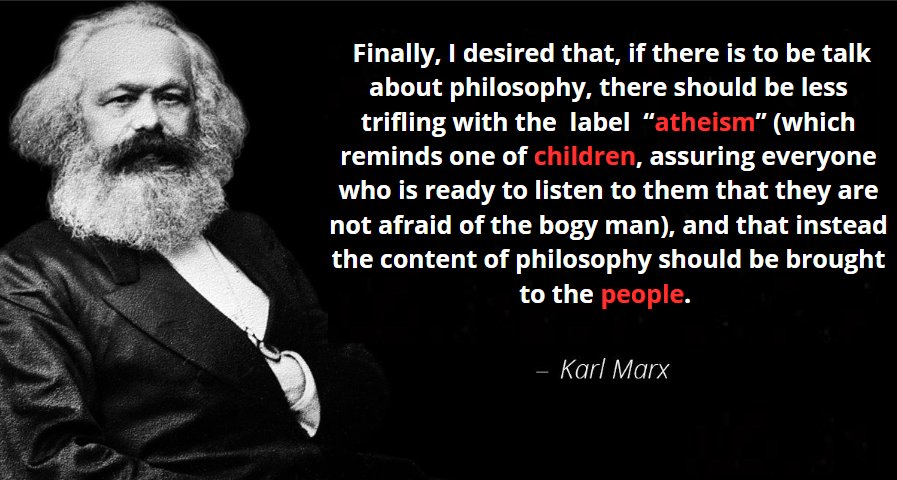
Marx even criticized "atheism" as a word. He see it as something ridiculous to take such an explicit position against God.
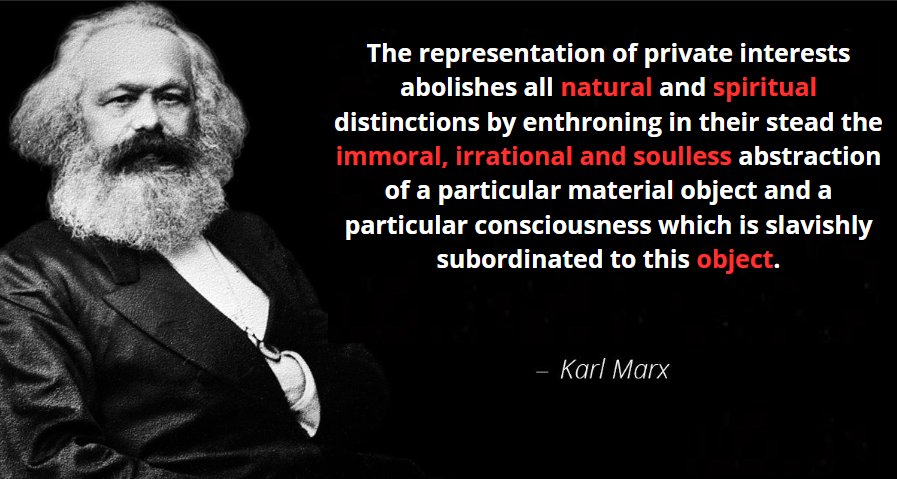
What did Marx think of spirituality then? Did he conceive of a future society of mere hedonism? No, rather, he argued that current organization of society killed any true spiritual emancipation:
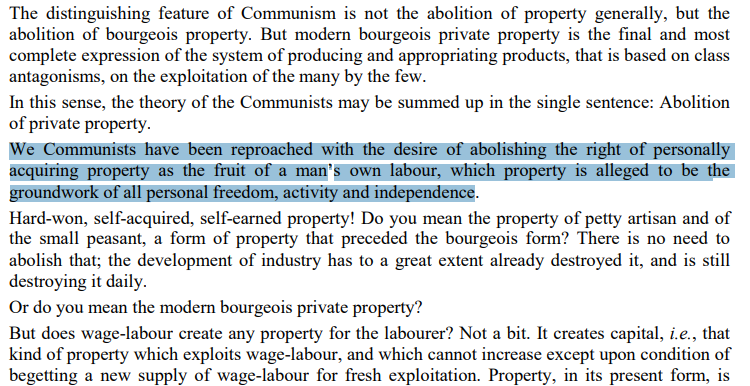
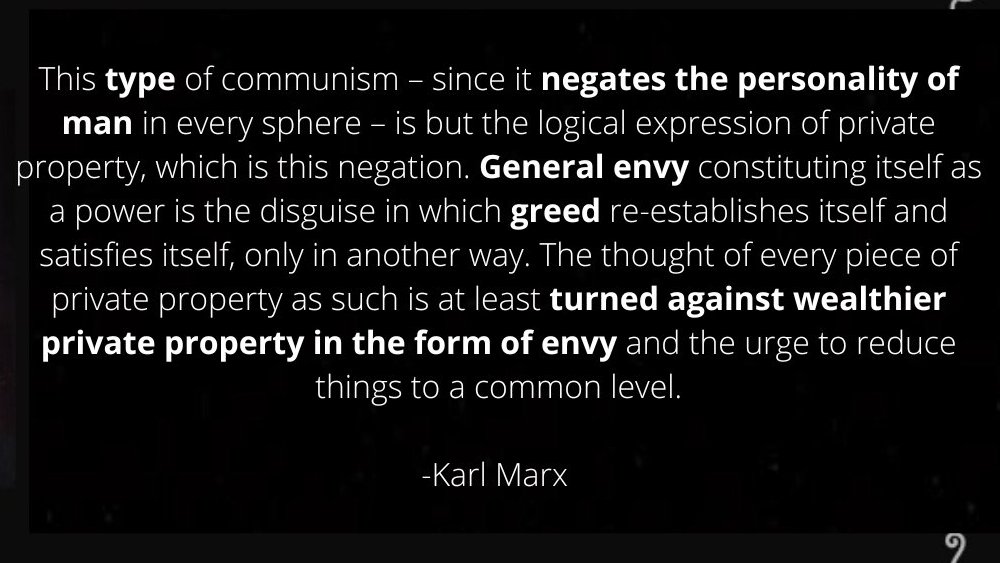
Myth #2: Marx advocated for the abolition of all property. He wanted no one to own anything and still be happy! He was envious! Communism advocates for the end of private property, which is property that subjugates others for a profit. Hard earned property will not be removed.
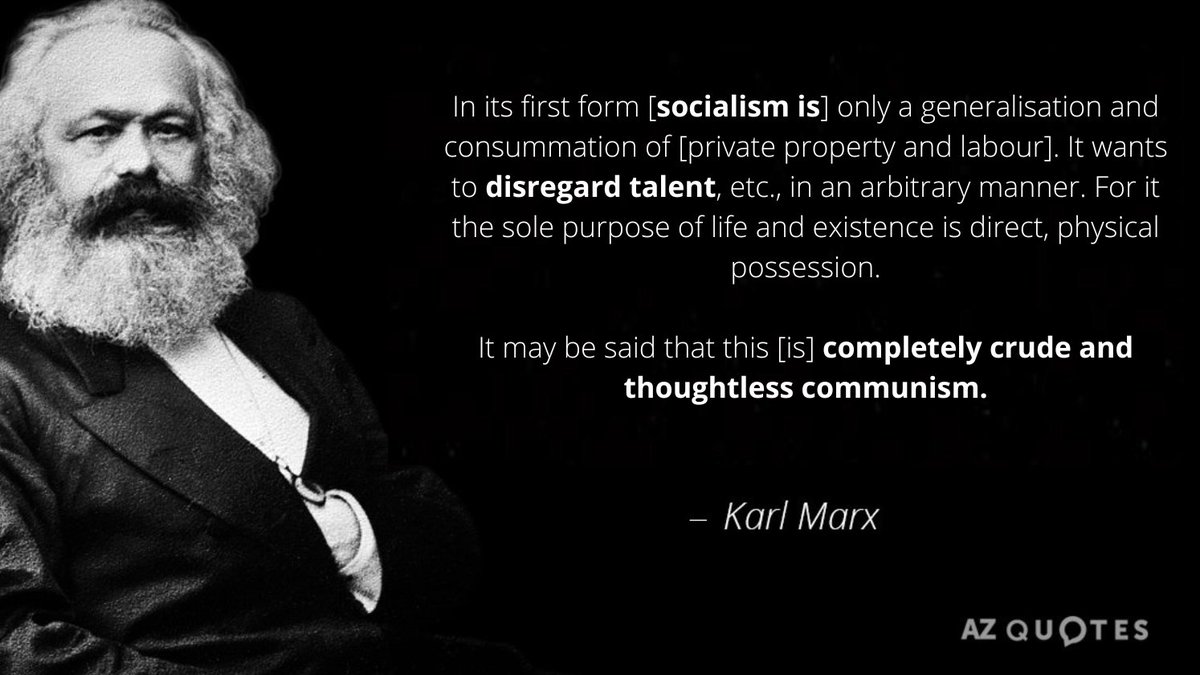
Communism can not be this crude form of the government owning everything. Marx called that "thoughtless" communism that disregards talent.
Marx also criticized those socialists who merely wanted to "eat the rich" or "steal property". He called them greedy and envious.
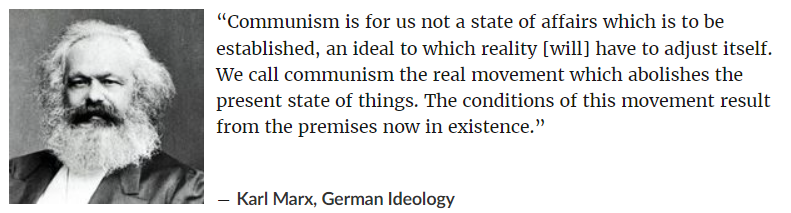
Myth #3: Marx was a utopian. The reality was that Marx derived all his conclusions from his actual materially existing society. He criticized applying abstract policies & solutions to society. Communism for him was the *conscious* active progress of capitalism.
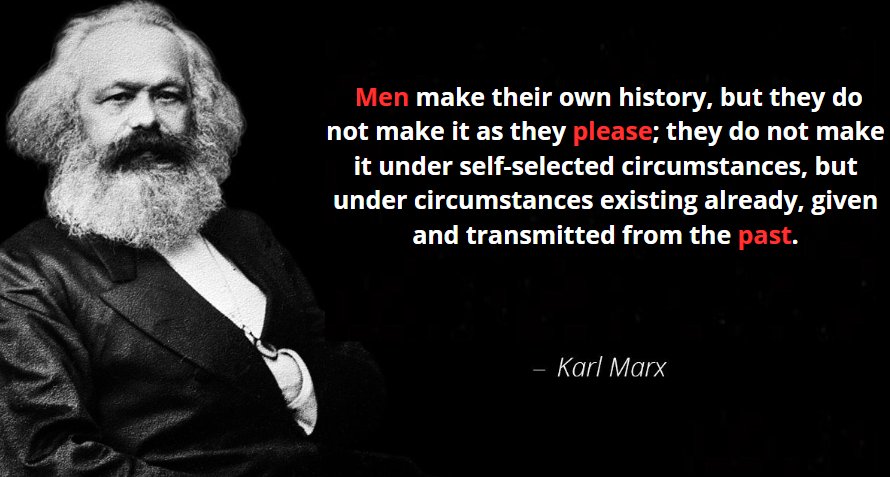
Marx recognized there is a discrepancy between man's will and the objective material reality. This is one of the aspects of what he calls "dialectical materialism".
In fact, Marx spend most of his life refuting what he called "Utopian socialists" who did not derive their conclusions from a scientific analysis of society (like what Marx did in Capital) but vague ambitions.
Myth #4: Marx hated capitalism Marx did not have any emotional sentiment to a mode of production, contrary to many very emotional "anti-capitalists" today. In fact, he recognized classical capitalism as a system with fantastic results:
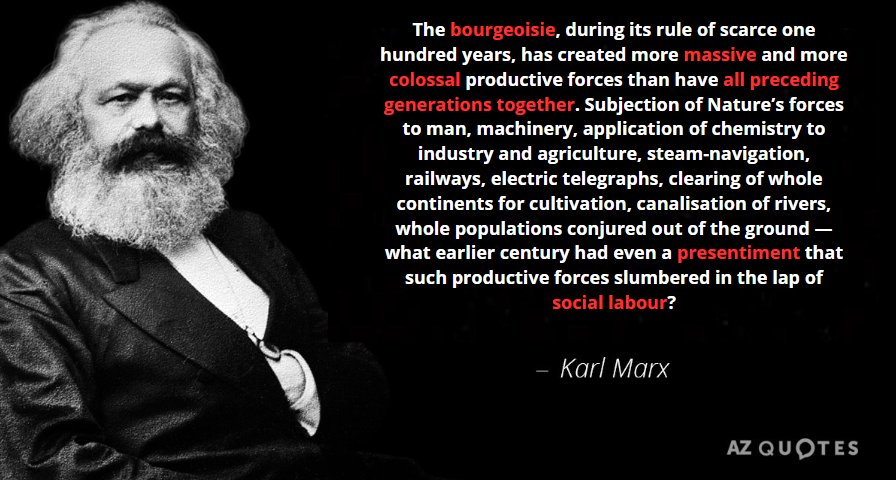
What was his contribution then? Marx was dealing with the excess of capitalism, the working class, and its conflict with social humanity; the anarchy of production due to private property.

Myth #5: Marx was the champion of equality Many boil down communism or Marxism to an extreme form of equality. In reality, Marx refers to how distribution would take place in a communist society: ‘from each according to their ability, to each according to their need’.
This implies that if X needs more than Y, X will get more than Y; that if a can contribute more than b, a will contribute more. The two will not earn equal wages or receive the same outcomes.
In Marx’s work, the concept of "equality" is generally criticized as an abstract bourgeois notion. Thank you for reading.
