
[Response 🧵] The meaning of al-istiwā’ upon the Throne. I recommend listening to @Hassan_maturidi’s video before reading.
[1] Imām al-Bukhārī quoted from Mujāhid and Abū al-‘Āliyah (students of Ibn ‘Abbās) that they explained “istawā ‘alā al-‘Arsh” to mean ‘alā (ascended) and irtafa‘ (rose) respectively. You instead explained these terms to mean “exaltedness,” “loftiness,” or “grandeur.”

Firstly, irtafa‘ and ‘alā can’t only mean “the loftiness of Allāh,” since Qatādah and ‘Ikrimah (also students of Ibn ‘Abbās) said al-istiwā’ was done on a specific day. If al-istiwā’ simply meant exaltedness, this would imply Allāh was not “lofty” until al-istiwā’ was enacted.

Secondly, Imām al-Bukhārī mentioned this under “The Refutation on the Jahmiyyah.” If irtafa‘ and ‘alā only meant metaphorical loftiness and exaltedness, this wouldn’t refute the Jahmiyyah because they didn’t deny this. https://x.com/RaadTheShepherd/...
[2] @Hassan_maturidi then quoted Imām al-Ṭabarī explaining the name of Allāh “al-‘Alī” as meaning, “He who holds ‘uluww [ascendancy] and irtifā‘ [exaltedness] over His creation by His Power (bi-qudratihī).”

The reason why “dhū al-irtifā‘ bi-qudratihī” means “exaltedness of power” is the qualifier “bi-qudratihī.” When the terms irtifā‘ and ‘uluww are used without such a qualifier, al-Ṭabarī exemplifies its meaning with a man rising upon a bed. https://x.com/mahmud_murrah/st...
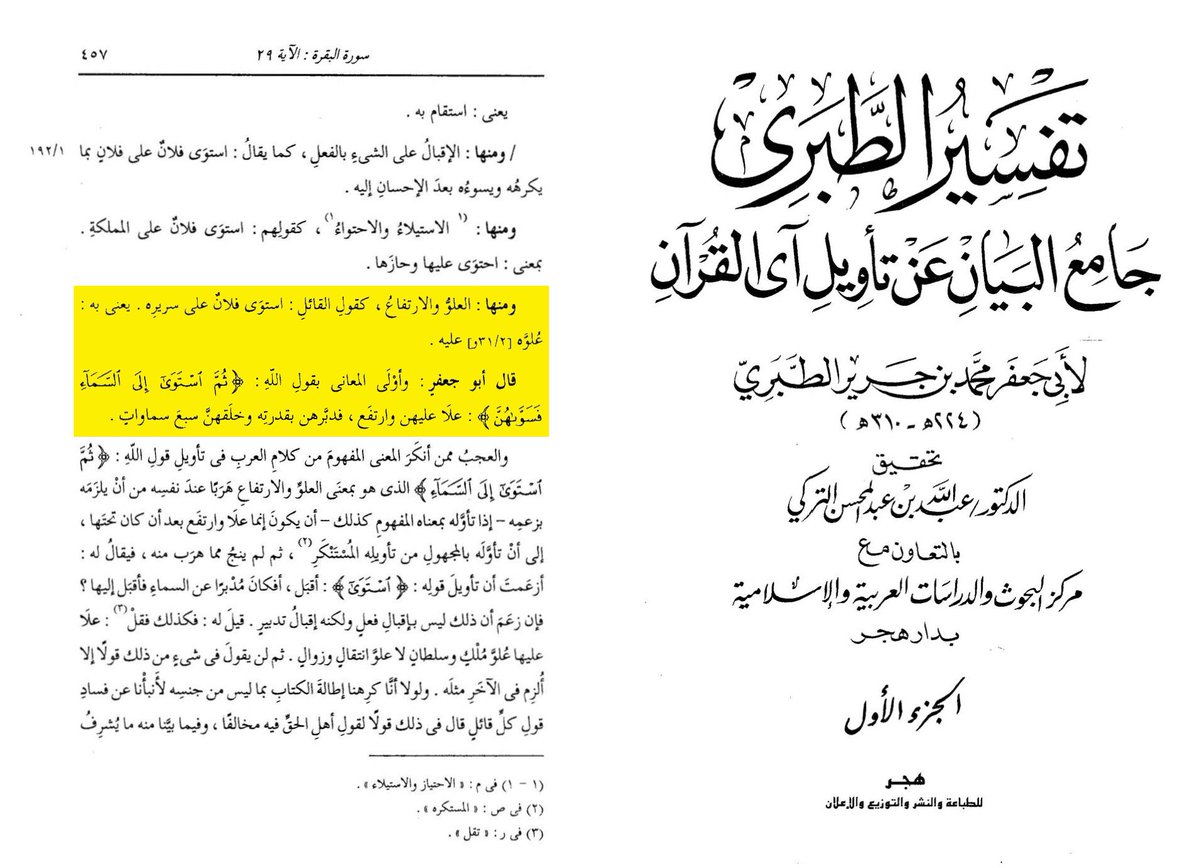
I addressed this in more detail here: https://x.com/mahmud_murrah/st...
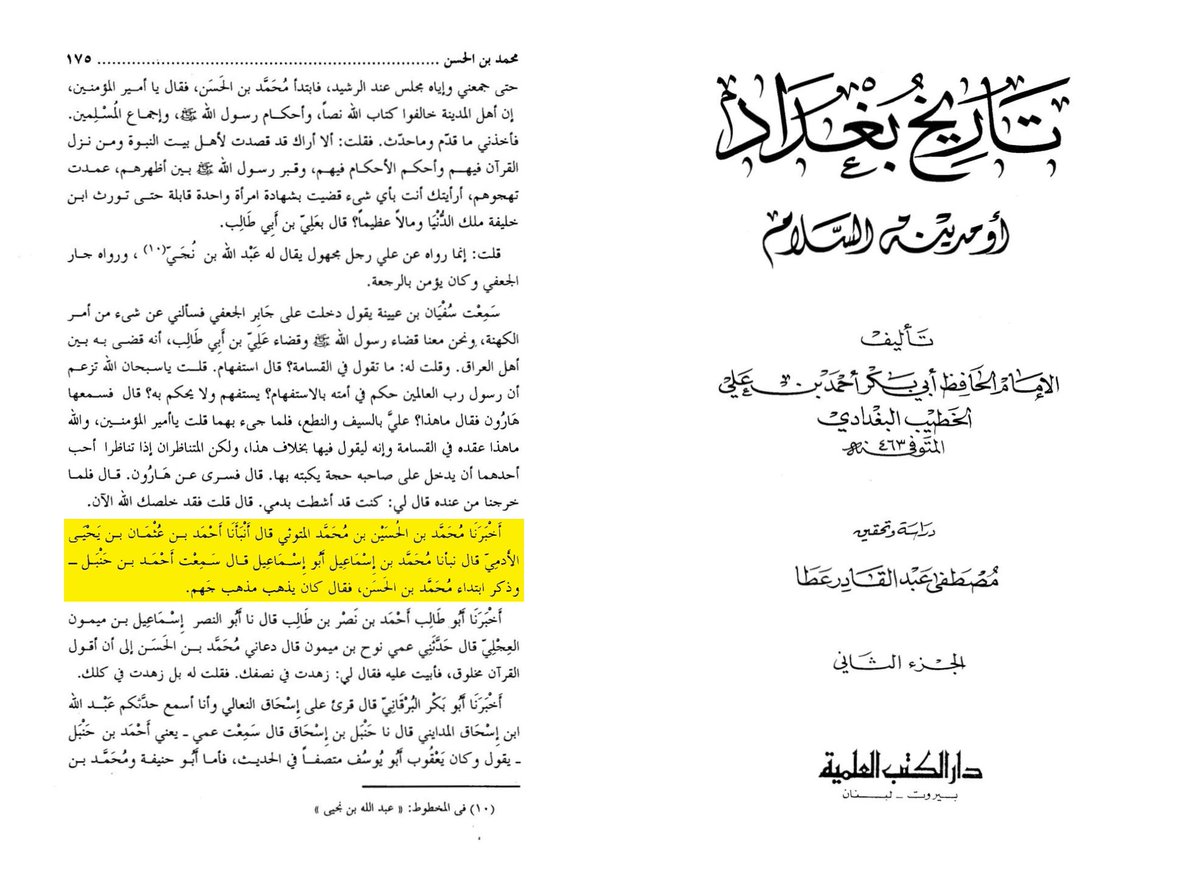
[3] Lastly, @Hassan_maturidi appealed to the narration from Muḥammad Ibn al-Ḥasan wherein he made ta’wīl of the istiwā’ of Allāh. Yazīd Ibn Hārūn here declared Ibn al-Ḥasan to be a Jahmī for this reason.
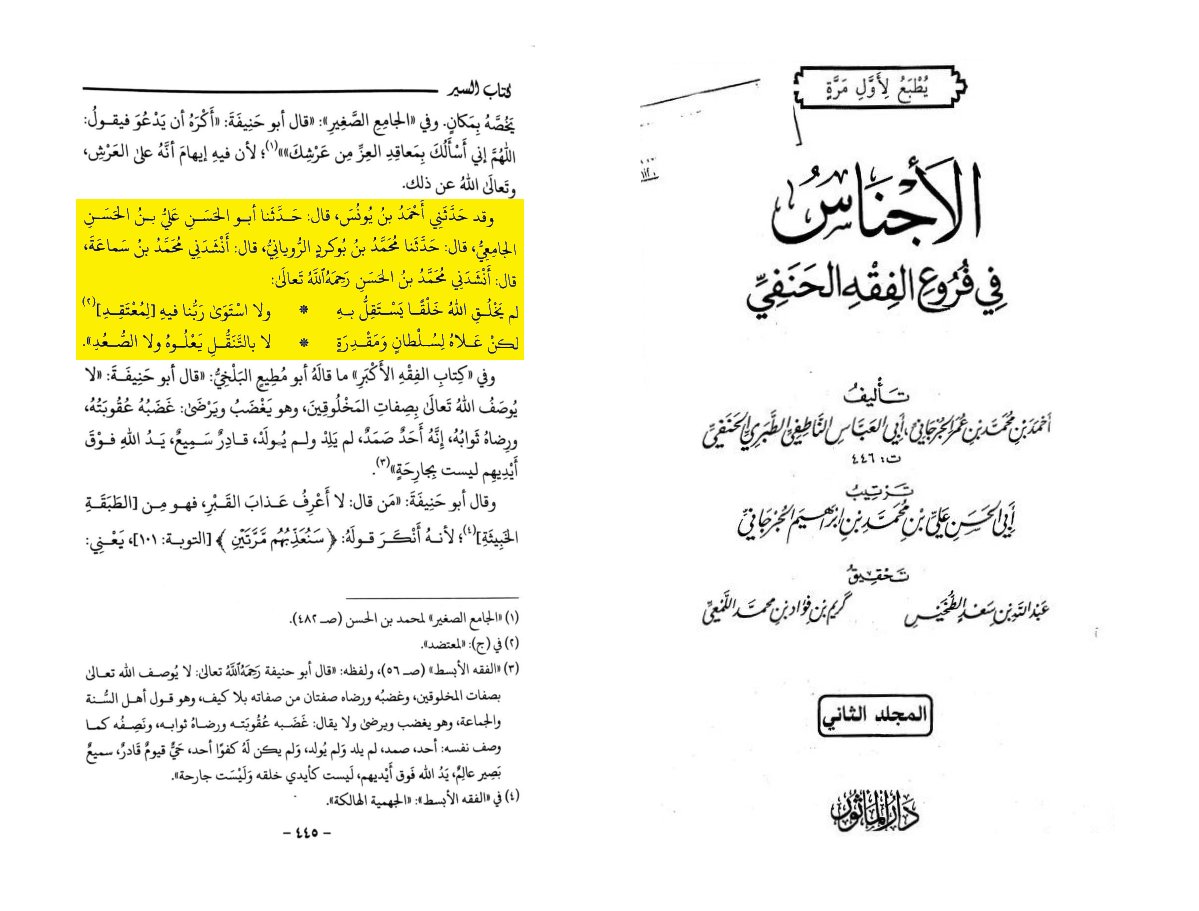
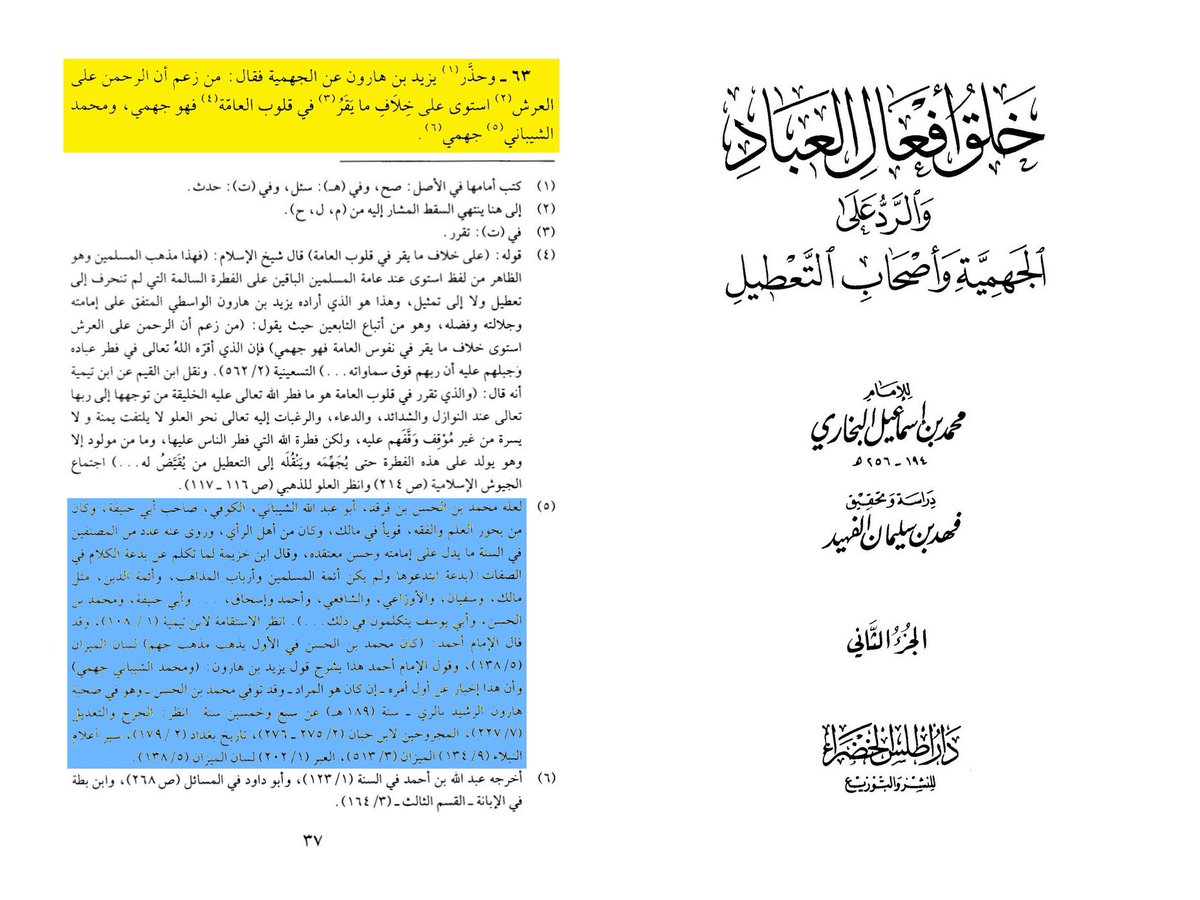
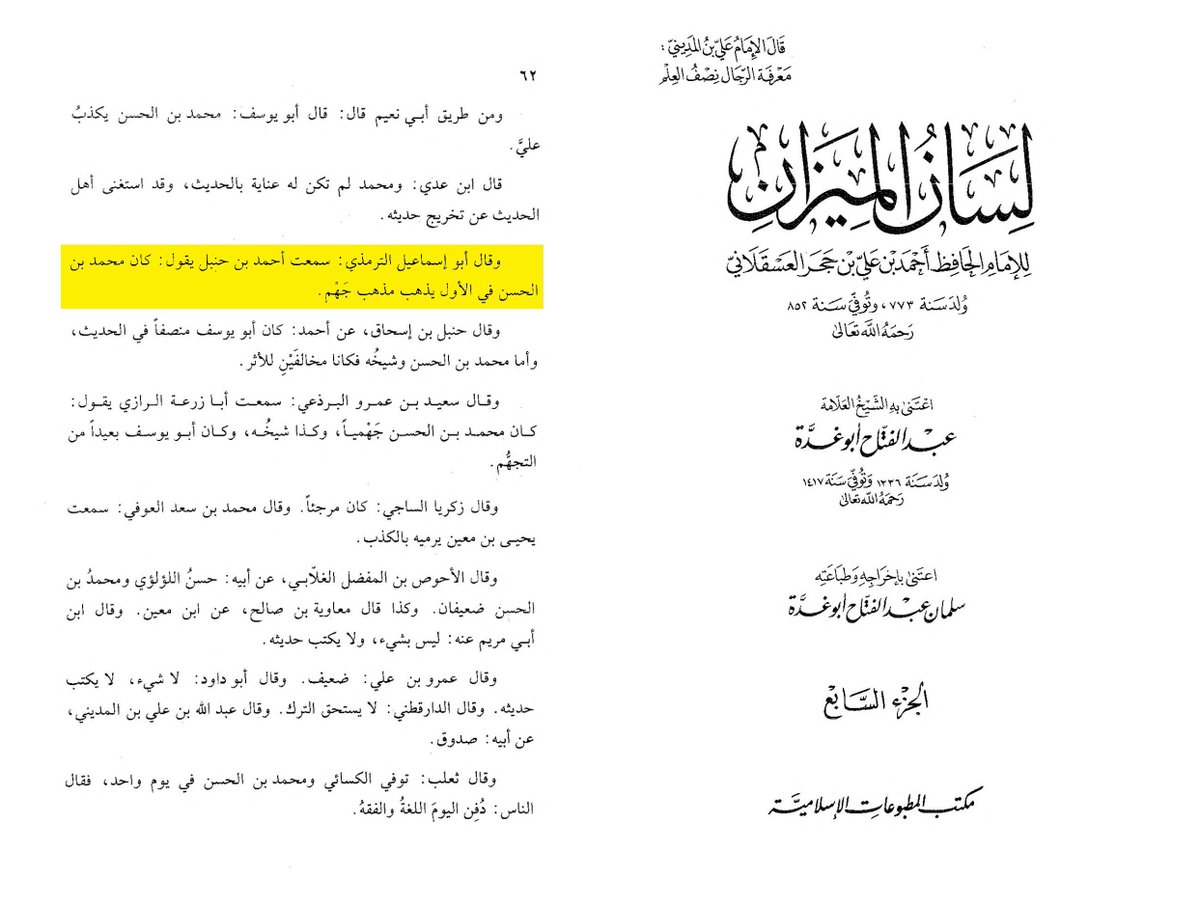
Imām Aḥmad reportedly described that Muḥammad Ibn al-Ḥasan initially inclined to the maḏhab of Jahm Ibn Ṣafwān, which may explain the aforementioned ta’wīl.
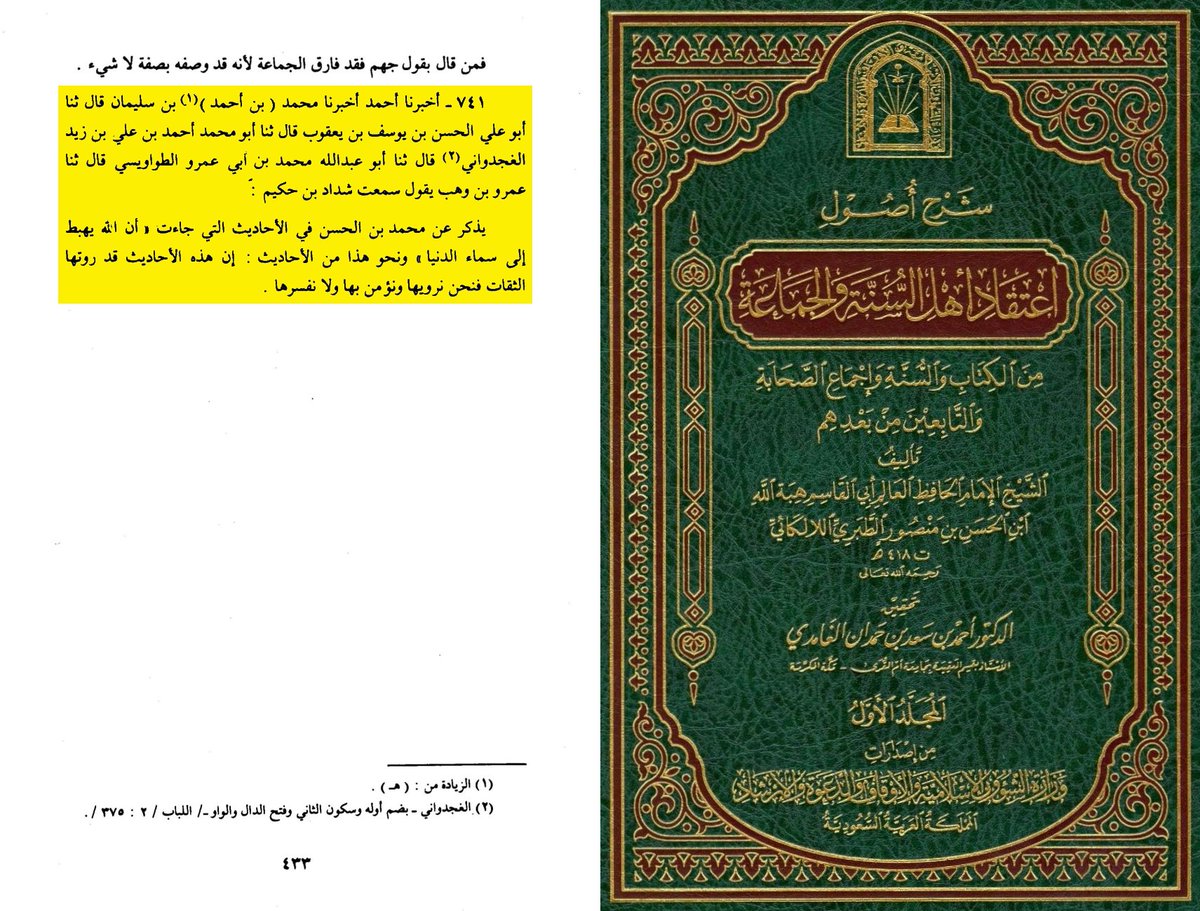
In this athar regarding Allāh’s descent, Imām Muḥammad Ibn al-Ḥasan doesn’t seem to apply ta’wīl. This may imply a change in his methodology from ta’wīl; given the similarity between al-istiwā’ and al-nuzūl, it is expected of the mu’awwil to do ta’wīl of both. Allāh knows best.
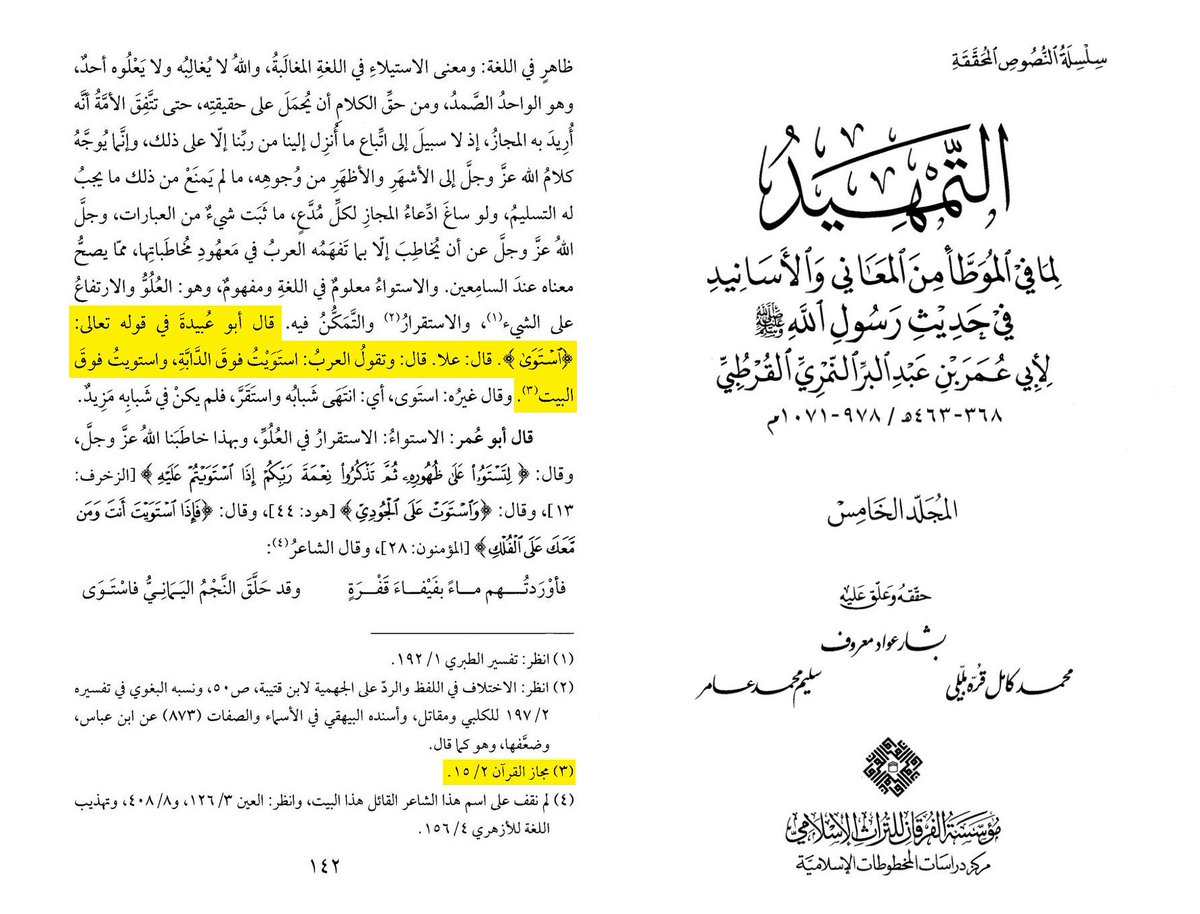
[4] How did the Salaf interpret al-istiwā’? Abū ‘Ubayd Ibn al-Muthannā, the shaykh of al-Qāsim Ibn Sallām, explained “istawā” to mean “ascended” (‘alā) and corroborated this by citing how the Arabs say, “So-and-so did istiwā [i.e. ascended] upon the animal.”
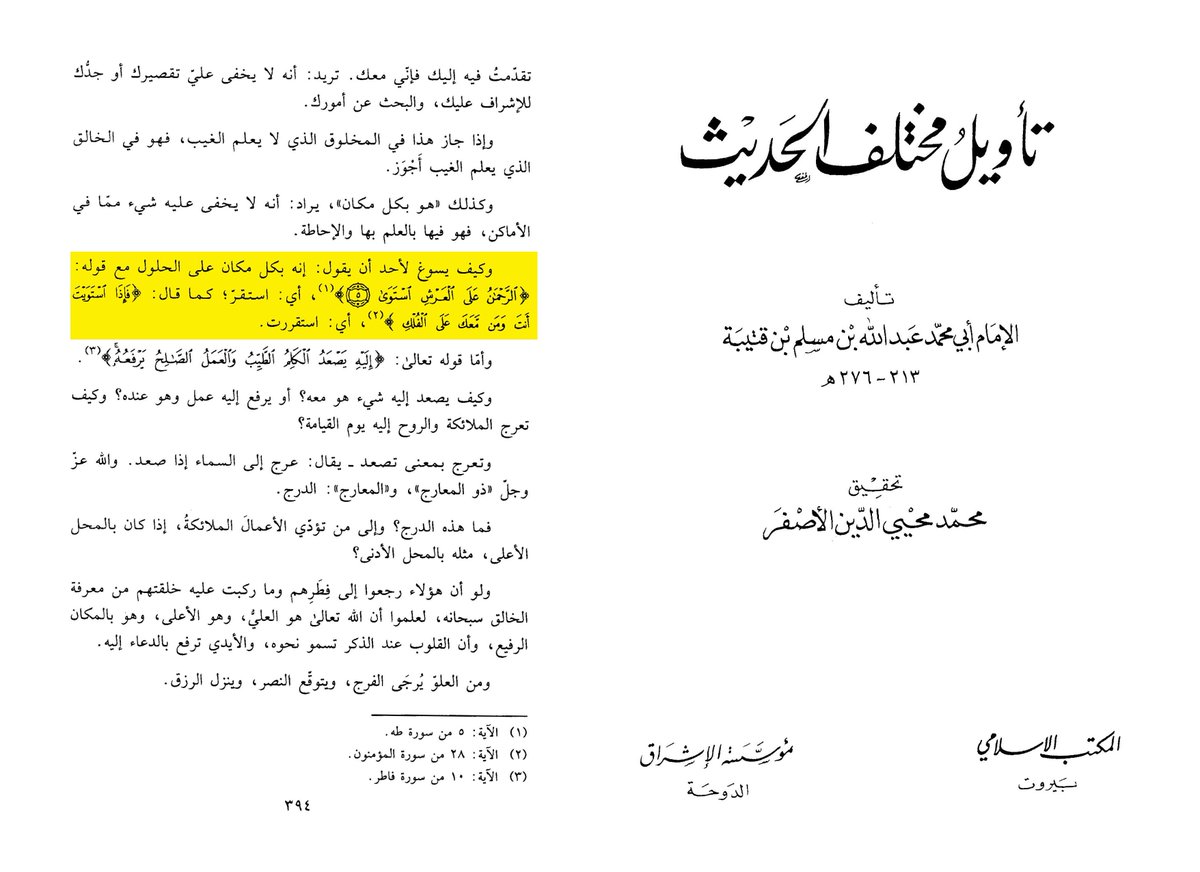
Similarly, Ibn Qutaybah al-Dīnawarī explained “istawā” to mean “settled” (istaqarr) and thereafter denoted its meaning with the example of boarding upon the ark.
Imām al-Nasā’ī commented on al-istiwā’ by citing a ḥadīth on the Prophet صلى الله عليه وسلم doing istiwā upon his camel.

Al-Khalīl Ibn Aḥmad, the shaykh of Sībawayh, explained “istawā” to mean “ascended” (irtafa‘) and exemplified its meaning with the example of rising upon a roof.

Now that we know what the Salaf meant by irtafa‘ we can fully appreciate how Bishr Ibn ‘Umar (the shaykh of Isḥāq Ibn Rāhawayh) said, “I heard more than one of the mufassirīn [explain] ‘The Most Merciful istawā above the Throne’ [to mean] ascended (irtafa‘) above the Throne.”

Allāh knows best. Keep the Muslims of Palestine and Afghanistan and all places in your du‘ā’s.
@mahmud_murrah @Hassan_maturidi بارك الله فيك اخي may Allah reward you for this, very beneficial.
@Lbizzle779 @Hassan_maturidi وفيك بارك لله
@mahmud_murrah @Hassan_maturidi Idk what he's up to but even among deobandis they afirm the athari position on istiwa