
Someone asked, "What's up with the rolled pant legs in each of these outfits?" So here's a thread on the history behind men cuffing pants, the meaning of cuffs, and how to think about when you might want to cuff your pants. This thread covers tailored trousers and jeans. 🧵

As a consequence of the Second British Empire, much of traditional Western men's dress comes from England. There, men of means had wardrobes cleaved between country and city. County clothes were for sport. City clothes were for business. Hence the phrase, "no brown in town."


No one really knows when British men started cuffing their pants, as much of menswear history is muddled with lore. But one story suggests it started with King Edward VII, who turned up his pants to prevent the hems from getting dirty in the mud or rain.
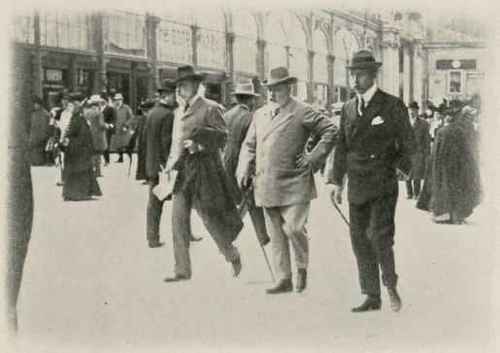
Regardless of who started doing it, the detail was considered casual. It was more often seen on country suits worn for sport while trudging through the muddy countryside than on slick worsteds worn for business around London's streets.

This was until Edward VIII came along. By all accounts, Edward VIII (also known as the Duke of Windsor) was a blithering idiot, but he was also the single most influential figure in men's fashion during the 20th century. When he wore something, others followed.

The Duke loved breaking menswear rules and making his outfits more casual (anyone who laments the casualization of men's style in the modern era is unfamiliar with history). The Duke's father, George V, often criticized him for wearing turn-ups while inspecting troops.

The Duke didn't care and made cuffs a style signature. Soon, everyone was doing it, including the future members of the Royal family. It also became common to see them on "city suits" made by some of Savile Row's most traditional tailors.


Americans have always been about making clothes a little more casual. We popularized the single-breasted two-piece suit, the lounge suit as business daywear, penny and tassel loafers with suits, oxford button-down collars, seersucker, patchwork madras, 3 roll 2 sack jackets, etc


So it's no surprise that Americans adopted cuffs. Flat-front pants with cuffed hems were a signature of a style imported from Britain, championed by Brooks Brothers, and spread across the US through Ivy clothiers. Note RFK's cuffed hem and 2 button sleeve (both casual details)

There is a somewhat concurrent history here with jeans. In the early days, jeans were made from unsanforized denim, which is to say that the fabric was not pre-shrunk. This meant that the jeans shrank a little over time with each wash.

To prevent jeans from being too short ("high waters"), people cuffed them so the length was adjustable. Over time, jean production became modernized. Denim was more commonly sanforized. Shuttle looms were replaced by power looms. There was also pre-washing and -distressing.

But there were also people—many in Japan—who loved those original pre-1970s Levis jeans. Things made from raw, unsanforized denim that had been woven on old shuttle looms. Collectors looked for a "Big E" on the Levis tab and a selvedge stripe on the inside leg.


As the cost of vintage jeans went up, people started to make new jeans using these old methods. That's where you get shops such as @selfedge (my favorite denim store). You may ask, "how can jeans cost $300+?" It's because these are made in small batches using niche methods.

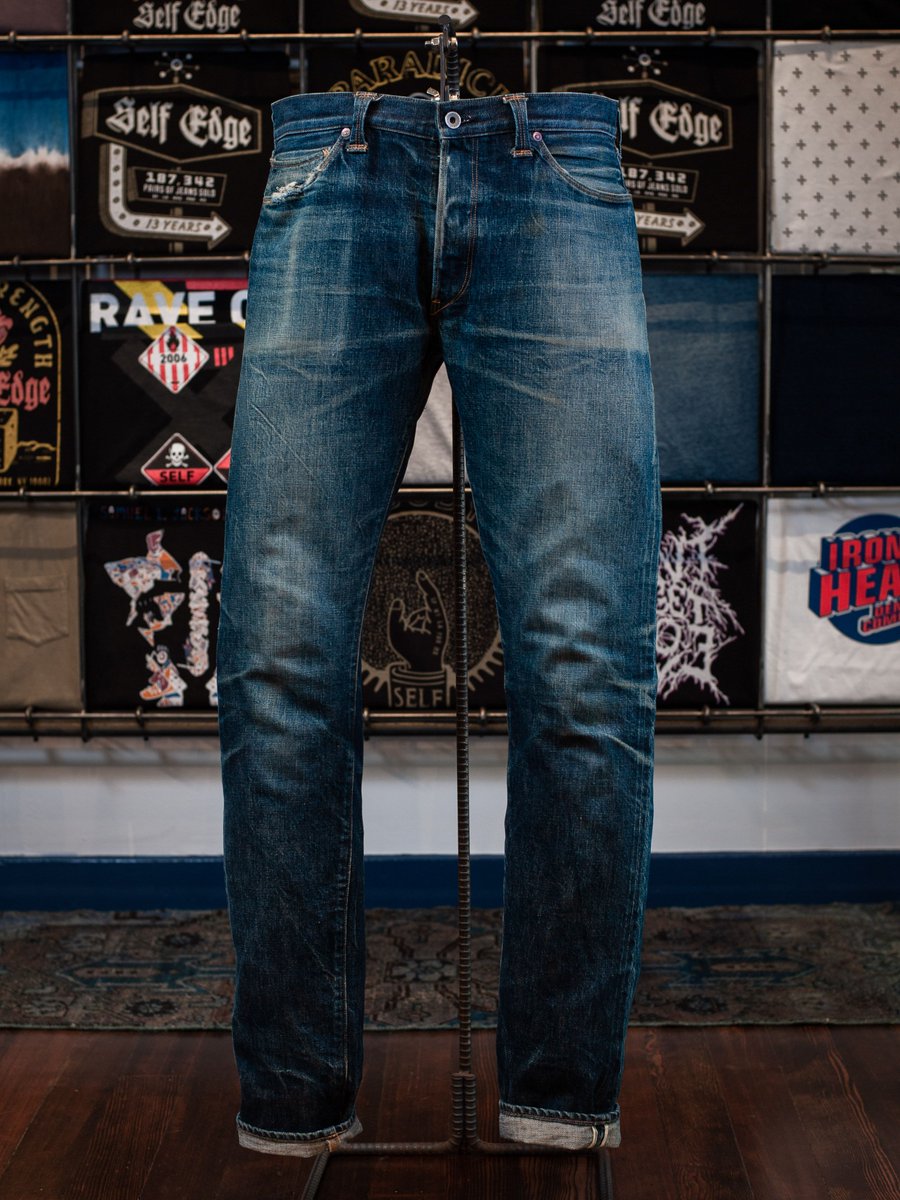
For people who love that vintage look, they may turn up the cuffs to show off the selvedge stripe (pic 1). This admittedly used to be a rarer detail 10-20 years ago than it is today (but it's still cool, IMO). Others wear cuffs bc they take inspiration from vintage looks (pic 2)


So, how should you think about cuffs in relation to your outfits? For trousers, adding a cuff can help them hang better, as you have a bit of weight at the end of your pants. They are fine on anything except tuxedos (as this is a casual detail).


To me, pleated pants almost cry out for cuffs. Flat fronts can go either way (although the Ivy thing to do is cuff). Anything between 1.5" and 2" is fine, although narrow pant legs should be on the smaller side. I like my friend Dick Carroll's guide here (IG dick.carroll)

For denim, I think cuffs are good if the outfit feels classic or vintage-inspired. For a more contemporary outfit, such as what you see at Lemaire or Margiela, I think a plain hem or even a stacked leg looks better.

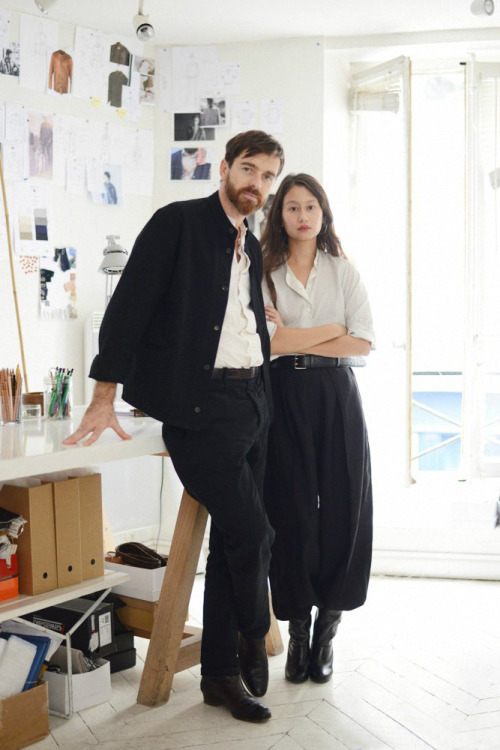
A graphic designer friend once put it in very useful terms: you can think of cuffs like the serif on a font. A serif can make typography look more traditional, while a sans-serif looks more modern. So traditional tailoring? Cuff. More modern look? Plain hem.


If you just bought a new pair of pants and you're unsure whether you should get them finished with a cuff or a plain hem, I recommend starting with a cuff. You can always take cuffs out, but you can't put them in.
