
Starting a list of Orthodox books I’ve read & recommend to others - a 🧵. After starting my journey from Protestantism to Orthodoxy in 2015, I began working my way through history, the canon, the fathers & theology. I still have a long way to go. So I’ll add chronologically…
I started with these two books: Early Christian Writings & The History of the Church by Eusebius. These books gave me an intro level overview of the early church. I recommend starting with these to get your appetite wet. You can get into much more detail later.

Philip Schaff Ante-Nicene Fathers volumes 1 & 2. Sts. Polycarp, Ignatius, Justin Martyr, Irenaeus, Tatian, Theophilus of Antioch & Clement of Alexandria. You can purchase each volume separately on Amazon if you can’t afford the original hardcover series in full.

Philip Schaff Ante-Nicene Fathers volumes 3, 4, 5 & 6. Tertullian, Mencius Felix, Commodian, Hippolytus, Cyprian, Caius & Novatian.


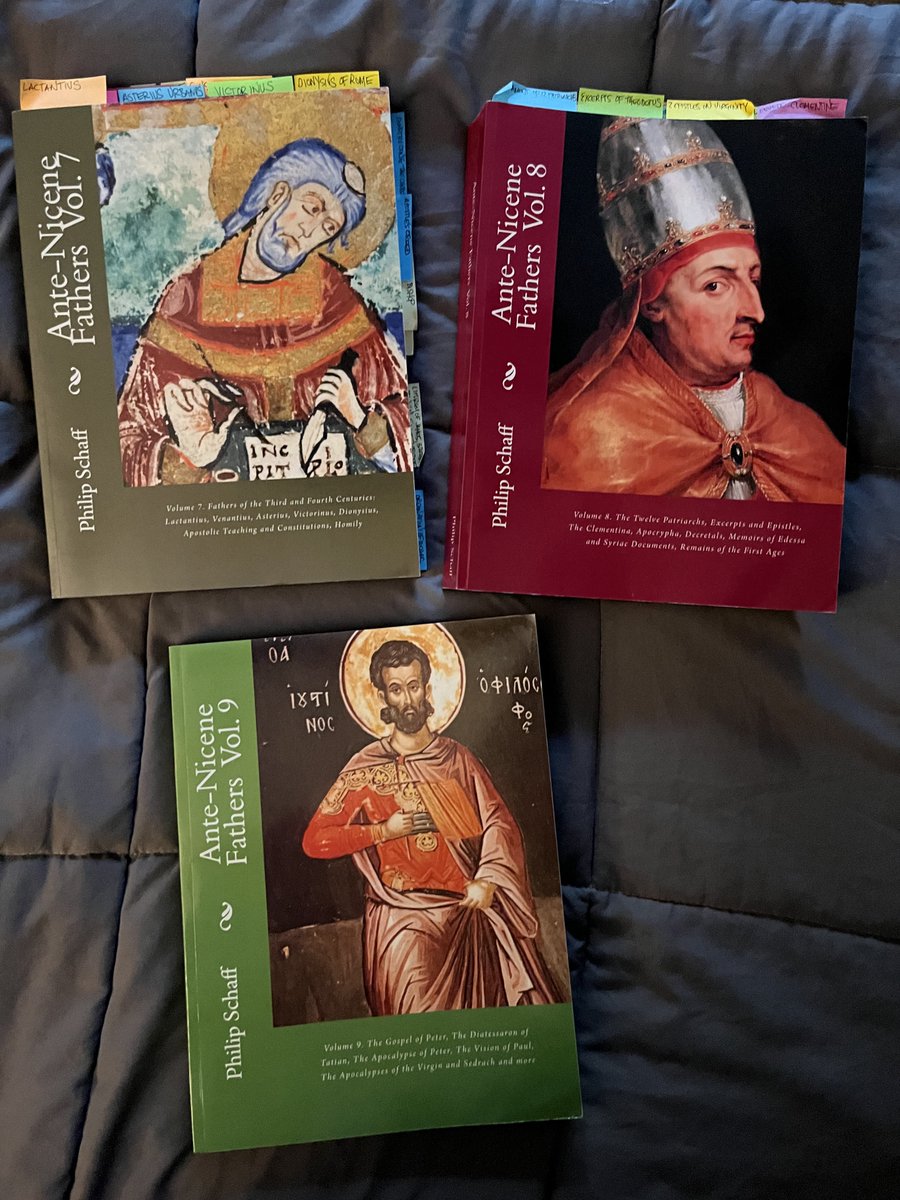
Philip Schaff Ante-Nicene Fathers volumes 7, 8 & 9. Lactanius, Venantius, Asterius, Dionysius & Victorinus. Also, Apocrypha, Decretals, Syrian Documents, Apocalypses of Peter & the Virgin, Vision of Paul, Gospel of Peter, Memoirs of Edessa, etc…
As a low-church non-denom Prot, I’d read my Bible many times over. So, I decided to find out where the Bible came from. These are the best Protestant canon scholars. Who, what, where & when the scriptures were written, authenticated, passed down & eventually canonized.

Philip Schaff Nicene & Post Nicene Fathers volumes 9, 10, 11 & 12. Sts. Athanasius, Gregory Nyssa, Jerome, Cyril of Jerusalem & Gregory Nazianzus.

Philip Schaff Nicene & Post Nicene Fathers volumes 13 & 14. St. Gregory the Great, Ephraim Syrus & Aphrahat. Volume 14 is the 7 Ecumenical Councils & Canons in full. At this point I was attending Orthodox Liturgies regularly,

Philip Schaff Nicene & Post Nicene Fathers volumes 9, 10, 11 & 14. All St. John Chrysostum. The rest of the volumes are loaned out to a friend. By the time I got to St. John Chrysostum, I was a catechumen. Orthodoxy was the church of the first millennium - and it wasn’t close.

From there, I wanted to study Church History from the point of view of doctrine. I think this series: The Christian Tradition, by Jaroslav Pelikan is excellent. A bit dense at times, but if you’ve read the primary sources, it’s not too hard.

As a catechumen, I spent a year just packing in books that my spiritual father, priest and new friends in the church gave to me or recommended. I basically took a year off work to read as much as I could. This series from Fr. Hopko is excellent. Nails the basics.

Wanting to know more about the continuity in liturgical worship that only the Orthodox Church provides, I found these, by Fr. De Young, Met. Kallistos Ware and others to be very valuable.

Quick disclaimer: recommendations do not entail blanket acceptance of absolutely everything within those pages. It’s sad this even needs to be said.
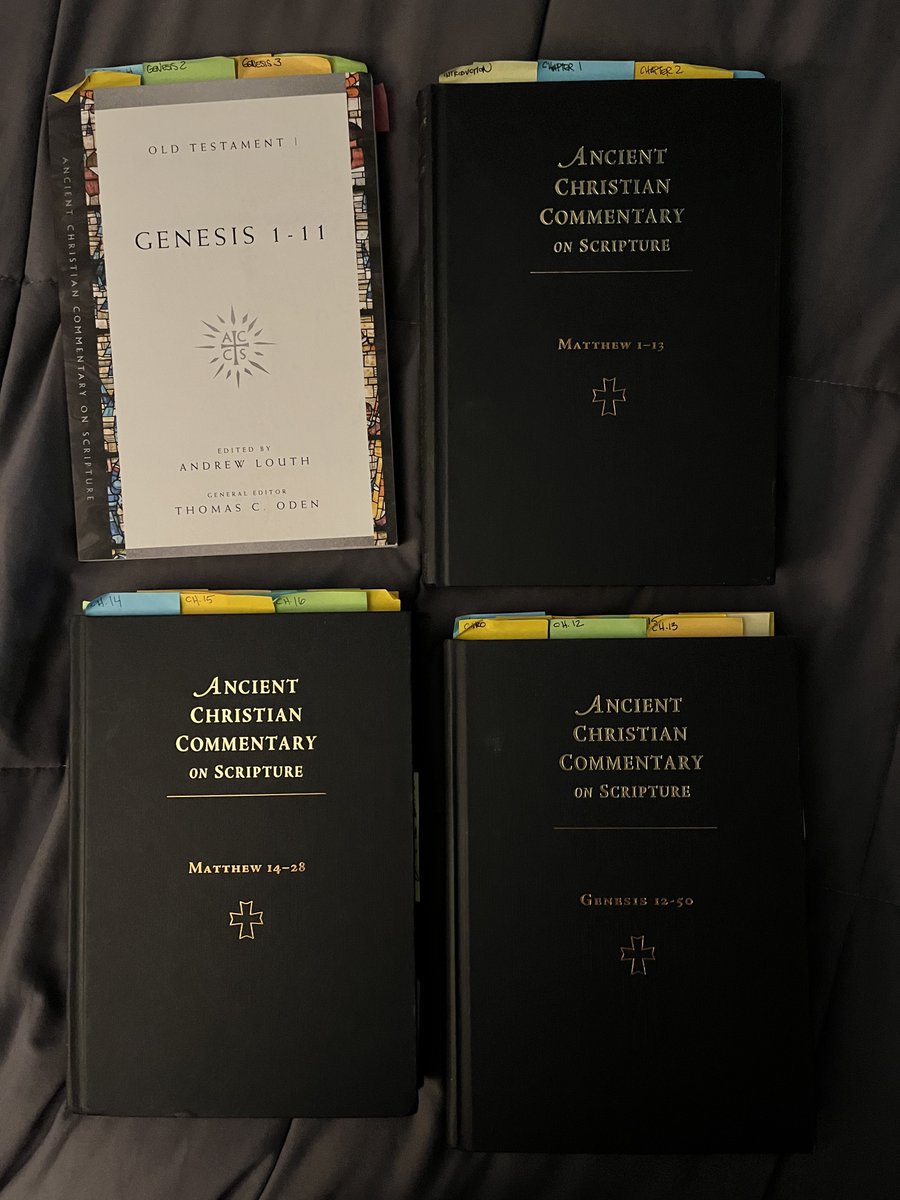
A great series that’s more in-depth than the Catena app (which I love), is the Ancient Christian Commentary series. It covers the entire Bible. Commentaries from the ancient fathers as you read through the scriptures. Again, another reason I left Protestantism.
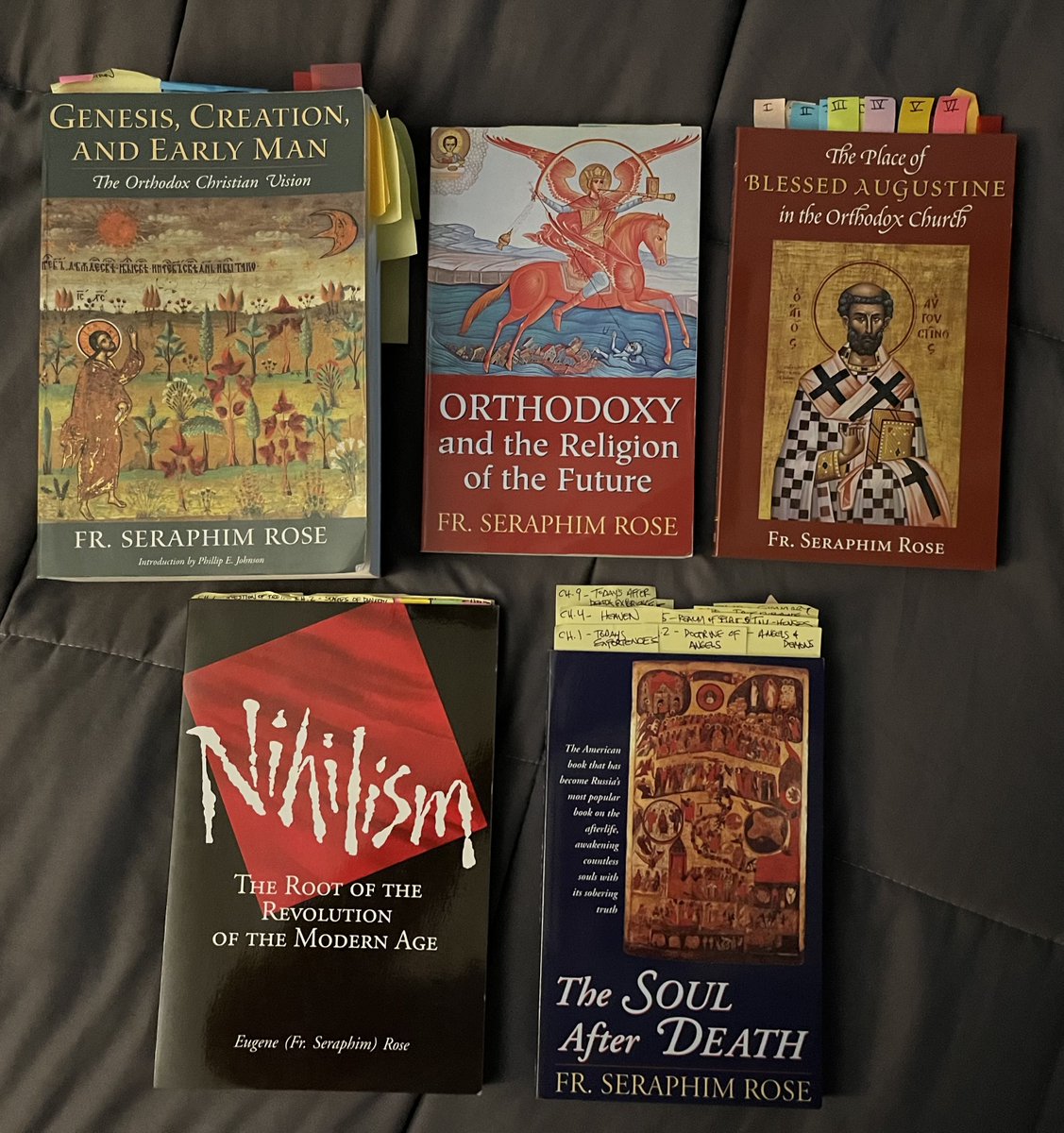
Like all American converts to Orthodoxy, I was awash in the works of soon-to-be Saint Seraphim Rose. In particular, his Genesis, Creation & Early Man which refutes evolution completely. Nihilism prophecies our world today. His book on St. Augustine is great too.
Speaking of St. Augustine, his books were a big part of my conversion as well. City of God is one of the greatest written works of all time, secular or religious. Confessions highlights his monumental piety.

After reading the Cappadocian Fathers, I really needed to wrap my head around Orthodox Christology & this essence energy thing my priest kept telling me about. So, after the Cappadocian’s, I started with St. Dionysius the Areopagite. Must read if you want an Orthodox foundation.

St. Maximus the Confessor was next in line. However, I needed a lot of help from my priest, bishop, and a few other theologians to get a decent grip on his work. I’d say I’m still about 2-3 more re-reads away from saying I understand most of it.

St. John of Damascus has the most comprehensive & accessible exposition of the Orthodox Faith that I’ve seen. You see the development of the essence energies doctrine from the Cappadocian’s to St. Dionysius to St. Maximos and now St. John. Must read!

St. Gregory Palamas. My man! His 700 page collection of homilies are a treasure. Dialogue w/ a Barlaamite gives the Orthodox v Rome position. Apodictic Treatises is heavy, but like the Triads, and his homilies, a vindication of the Orthodox essence energies distinction.

The Venerable Bede is someone I’d never heard of as a low-church Prot. But once I got ahold of these books, it got me interested in my English ancestors and other saints from the medieval West. Very informative to someone as naive as I was.

I hesitated putting Origen on the list (besides all his works in the Schaff set). I would only recommend Origen IF you are doing a deep-dive on Cappadocian theology & metaphysics. Obviously, not everything Origen said was wrong. So read w/ caution.

Back to the Orthodox Church. John McGuckin has several really good books. Here are a couple, along with some others that cover our theology and how we differ from the West. Basic overviews a catechumen should know. Like it or not, Christianity started in the East.

Around this time I had gotten into a few heated conversations w/ Prots about the Theotokos. My spiritual father recommended both of these books, and along with/ St. Jerome’s work on the Virginity of Mary, really closed the case for me.

I acquired these along the way. St. Basil’s Hexameron is required reading for anyone interested in creation & refuting evolution. Before he apostatized, Schooping wrote a great Orthodox apologetic that I still find helpful. Read the Behr book, like Schooping’s, with caution.

Once I started to really dig into the essence energy distinction, I was referred to Dr. Bradshaw’s work. These books are indispensable. The crux of East v West & Schism is much easier to understand once the underlying issues are exposed. Hint: it’s not Filioque and Pope.

When it comes to St. Gregory Palamas, Fr. Meyendorff is near the top. When it comes to Christology, it’s hard to find a better book than Zachhuber. Barnes’ book on St. Gregory of Nyssa is extremely dense. I’d only recommend to those who’ve had a solid education in metaphysics.

Dr. Tikhon Pino has, next to Meyendorff, the most comprehensive study of source material there is. And it shows. The more you read Palamas, the more vindicated the Orthodox Church becomes. Our theology is truly one of a kind. It’s unlike any other worldview. I love it!

I think I got these at our parish bookstore? I can’t remember. But Deification of Man left a heavy imprint on my heart… along w/ Meyendorff, Pino, Veniamen, etc… just a great essence energies layout. Lossky & Florovsky are both good. Dogmatic Theology is really good!

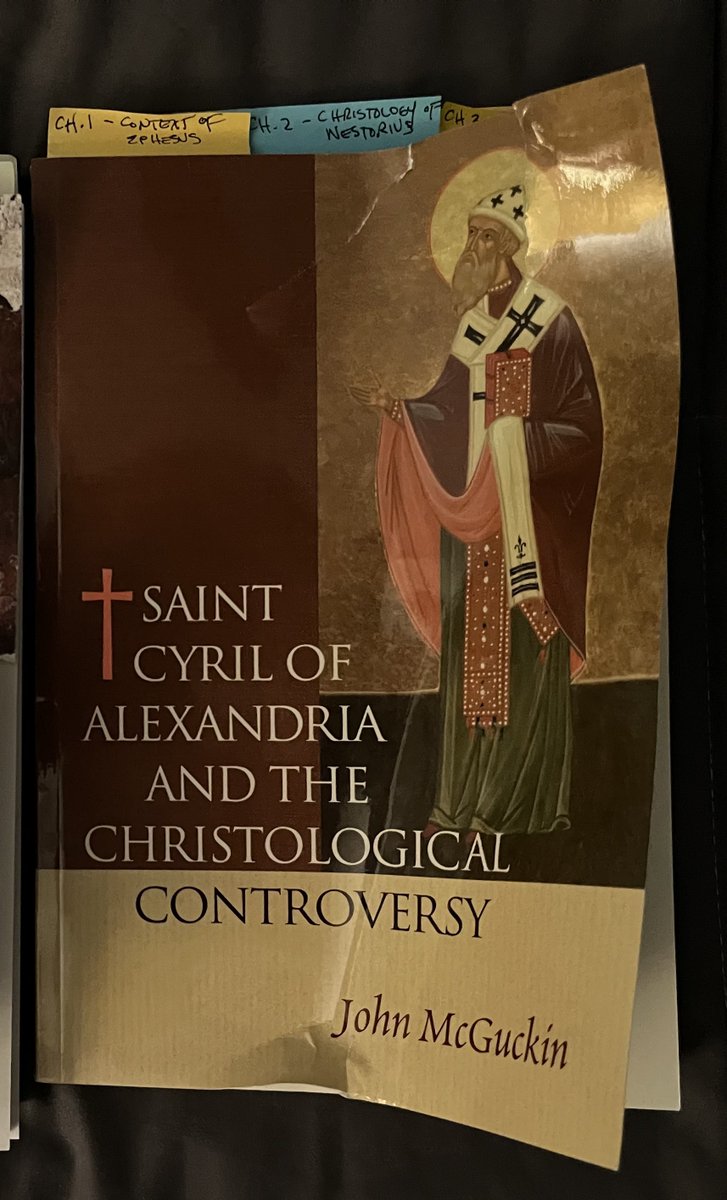
This book is not for beginners. Maybe it wasn’t for me either. I need to read it again. The Christological controversies of the first few Ecumenical Councils were heavy duty. Lots of people involved, accusations, etc… hint: We Won! Eyes. Opened.
Was the Protestant doctrine of “Faith Alone” ever in the purview of the first millennium church? This book makes it starkly clear: NO! McGrath has done it before & he did it again. Dense reading, so be warned!
