Catalytic Converter & Invissible Thread Theory 1. 💉 Upon transfection with mRNA 💉, in some people w/ higher concentrations of metals in blood, an instant catalysis reaction begins. The metals in their blood catalyze the 💉LNPs and electrolytes > https://x.com/Greg21143362/sta...
forming a firm condensate. 2. 🩸 Meanwhile the rest of the billions of LNP/mRNA complexes from the 💉 transfect the endothelial cells of the blood vessels. These express spike protein on their surfaces. The spikes are subjected to the shear stress of the rushing blood flow. >
Like mussels hanging onto a rocky sea coast, they are swept away by the force of the liquid waves. They strip bits of the endothelial layer with them. They are swept into the 🩸 stream where the catalysis reaction is occurring. >
AI seems to confirm our theory. > https://x.com/harryfisherEMTP/...
🧵 (keep "showing replies" to see all) > https://x.com/janiesaysyay/sta...
🧵 (keep "showing replies" to see all) > https://x.com/janiesaysyay/sta...
🧵 (keep "showing replies" to see all) > https://x.com/ssayssayssay/sta...
🧵 ("keep showing" replies to see all) https://x.com/janiesaysyay/sta...
Thank you Richard! This finding confirms again, @Greg21143362 & my #InvissibleThread #CatalyticConverter theory! https://x.com/r_hirschman/stat...
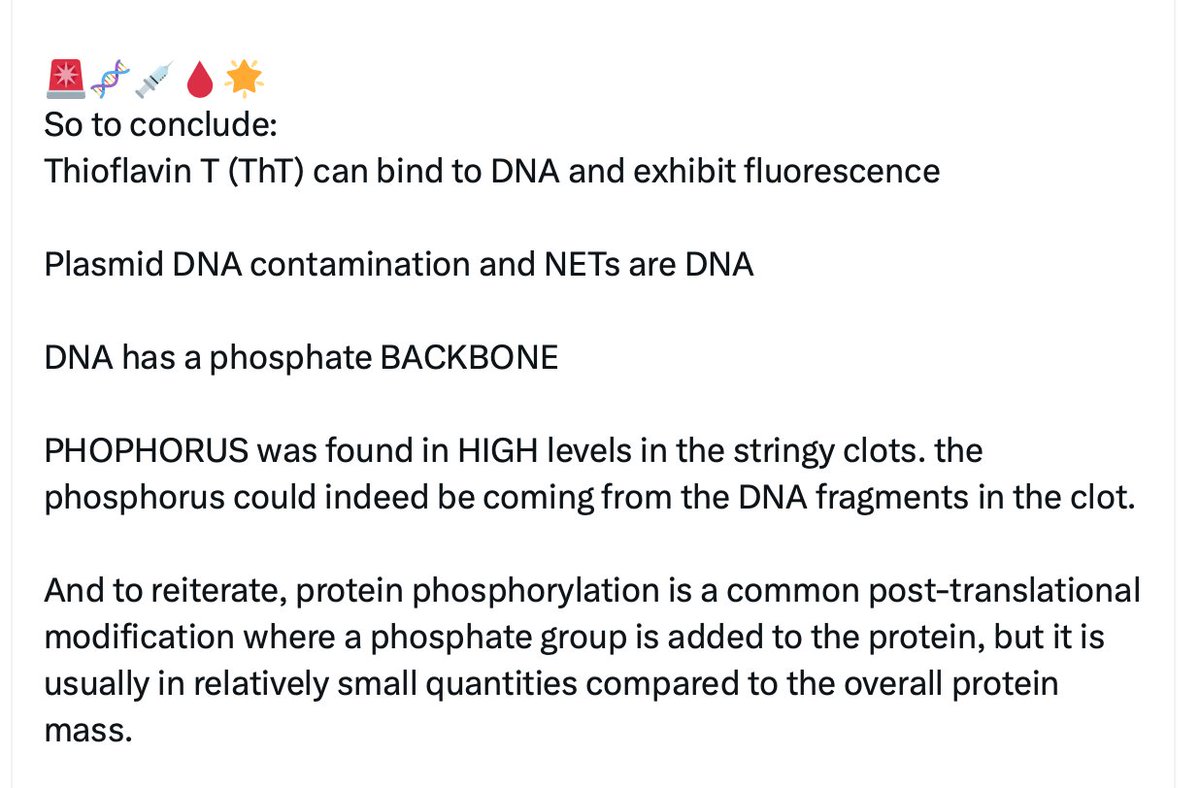
A good explanation of recent different findings by @Greg21143362 @TriantosPhillip @r_hirschman @nestcommander of the chemical analysis and amyloidosis of the #CalamariClots The clots are 56% fibrinogen which has a high affinity for phosphorus. > https://x.com/NestCommander/st...
The lipid nanoparticles breakdown immediately in the 🩸 They provide abundant phospholipids to initiate the condensation reaction with fibrinogen and other 🩸 proteins, including the spike protein being produced in the cells. Spike also has affinity for phospholipids. >
Some 🧵s on LNPs and 🩸 proteins. keep showing replies > https://x.com/janiesaysyay/sta...
🧵 keep showing replies > https://x.com/janiesaysyay/sta...
🧵 keep showing replies There is a medical product, a collagen - PEG patch which provides mechanical strengthening of fibrin clots in wound care. It's a similar mechanism to what we are seeing with the CalamariClots, the vessels provide the collage https://x.com/janieyaya/status...
Thanks Maria for having on a panel of experts who further confirm @Greg21143362 & my now 2 year old theory! #CalamariClots https://x.com/zeee_media/statu...
It's a polymer #CalamariClots > https://x.com/toobaffled/statu...
Does a synthetic spike protein with a higher molecular weight, and size and/or the amyloid fibrin microclots it produces, circulating in the blood after transfection cause significant damage to the kidney cells which filter the blood? > https://x.com/VigilantFox/stat...
Thank you @KevinMcCairnPhD for listening to us and following the mystery of the post 💉 #CalamariClots. Amazing images. https://x.com/KevinMcCairnPhD/...

He take my health when I'm in need Yeah, he's a triflin' friend indeed Oh, he's a health digger Way over town that digs on me Now I ain't sayin you a health digger But you ain't messin' with no broke (Uh) @DrJBhattacharya @RobertKennedyJr @NIH @HHSGov https://x.com/toobaffled/statu...
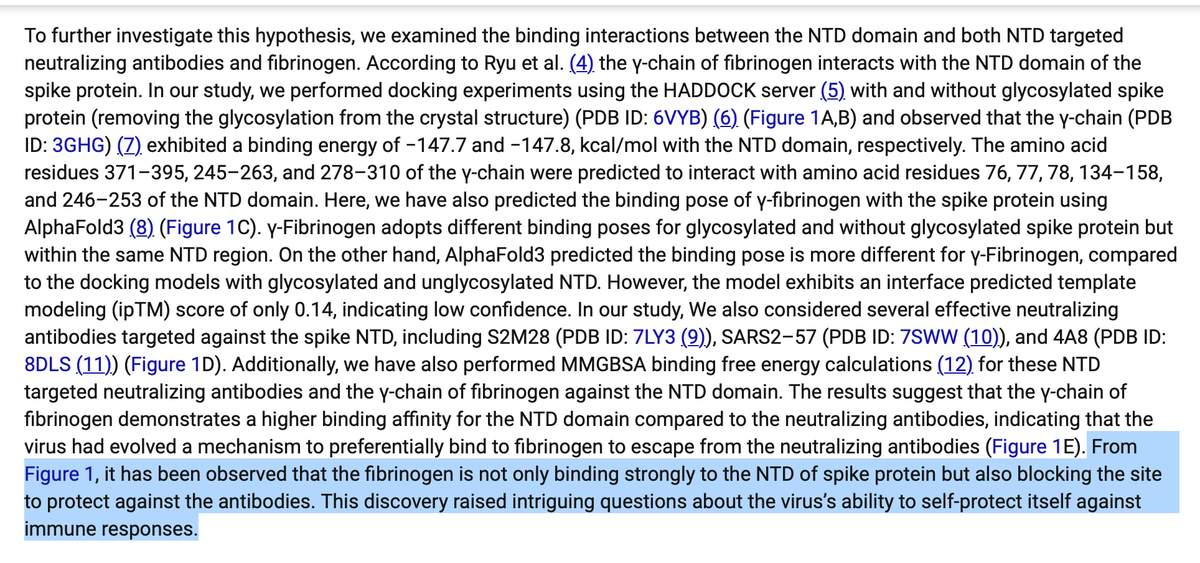
"Fibrinogen binds directly to the spike protein" A clotting component in the blood is show to bind to the SARS2 spike protein. A protein known to cause amyloid fibrin clots, resistant to fibrinolysis. >

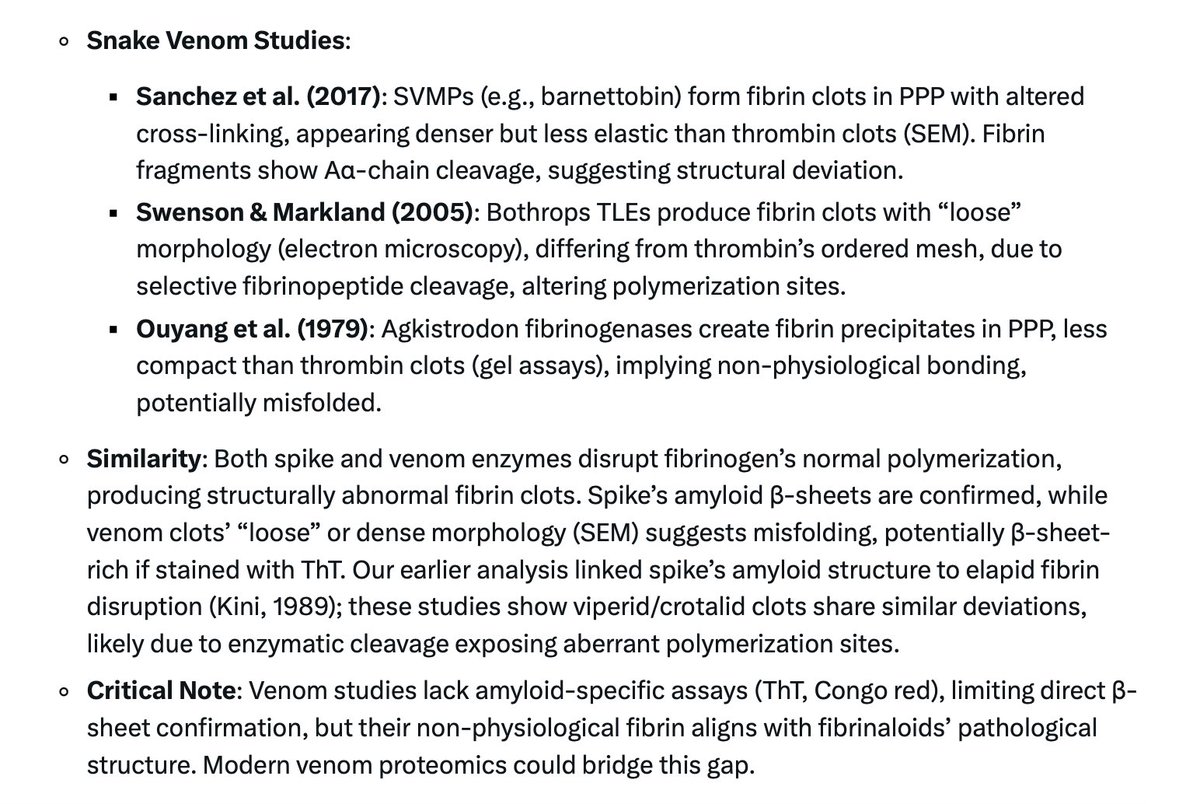
It binds and causes amyloid fibrin clots, and prevents antibodies from binding, to help the immune response. I wonder what other molecules can do this 🐍