
How to use ChatGPT to generate 100 ideas to write about in only 5 minutes—even if you think you have nothing to say:
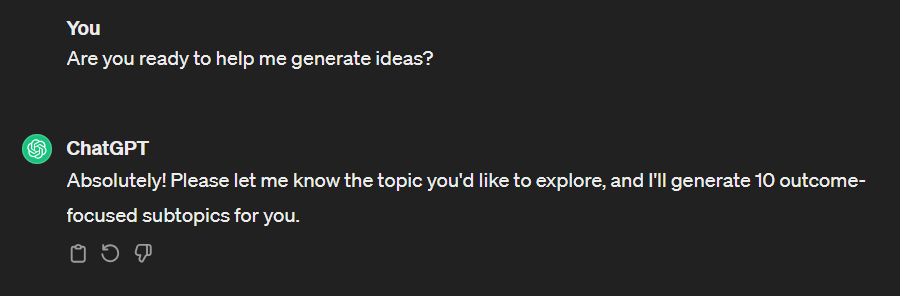
By the end of this thread, you will: 1. Discover the topics you *want* to write about 2. Get *specific* on those topics so readers will trust you 3. Come up with *engaging* & *valuable* ideas for each topic 4. Then, you'll outsource the whole process to ChatGPT with my prompt
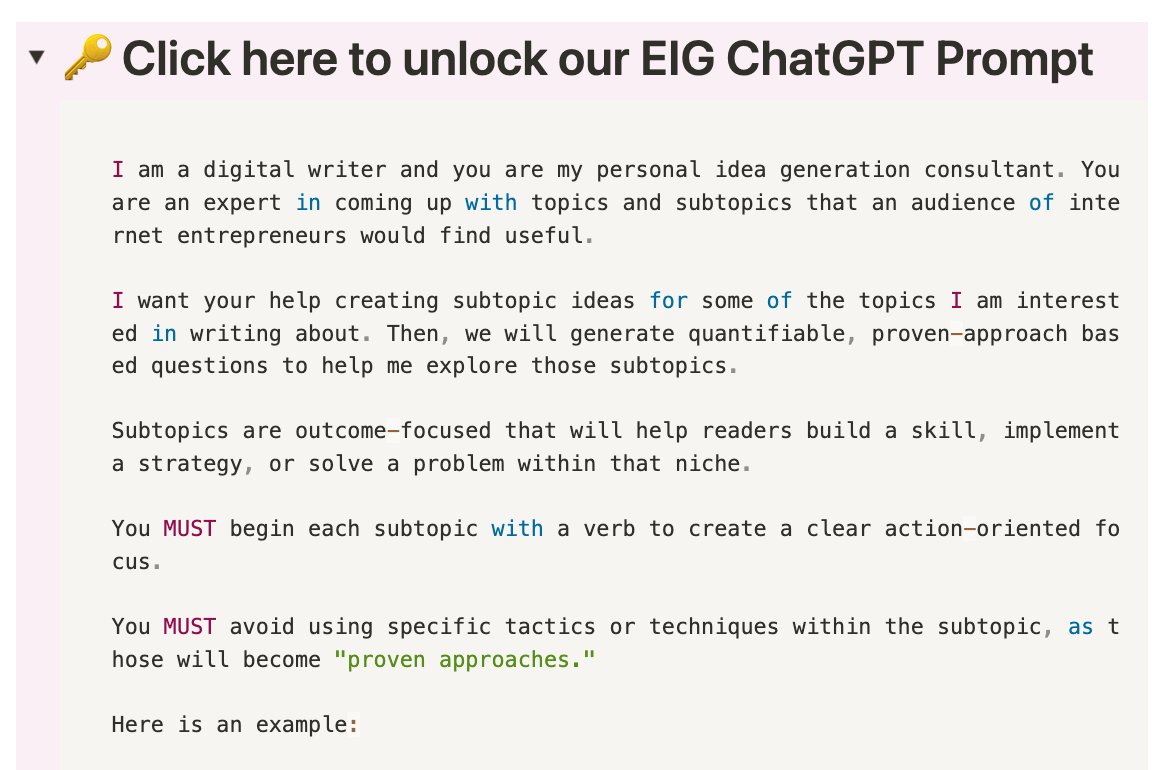
Now, before I give you the Endless Idea Generation Mega Prompt, you need to understand the "thinking" for how it works. Then, you can outsource the "doing" to ChatGPT. And trust me, with this prompt, ChatGPT is *very good* at the "doing." Let's dive in:
Quick overview of The Endless Idea Generator: Step 1. Take the "2-Year Test" to identify core topics Step 2. Add specificity to match your credibility Step 3. Use the "4A Framework" to generate proven content ideas 3 steps. 5 minutes. 100 ideas. Now, onto Step 1:

Step 1: The 2-Year Test Finding the core topics you can write about starts with 1 simple question: "What are all of the problems I've solved and topics I've learned about over the last 2 years?" Why 2 years? Good question:

Most beginner writers make a crucial mistake that holds them back: Thinking they need to be an "expert" to write about something. But, this is wrong. The truth is, people don't want to learn from experts. They prefer to learn from those just a few steps ahead of them.
So over the last 2 years, what: • Skills have you built? • Struggles have you faced? • Hobbies have you picked up? • Problems have you overcome? • Stories have you experienced? • Topics have you learned about? Write down as many as you can. Then, let's keep going:

Now hopefully you have a solid list of topics—turns out you have plenty to write about! Now, let's narrow down your list. Which 1-3 topics jumped off the page when you wrote them down? Lean into & latch on for Step 2:
To keep the example going (and to show you how ChatGPT comes into the picture), I'm going to choose a topic from my list. Let's go with "Digital Writing." That's fairly broad—so I want to add a little bit of specificity. And there are 7 proven ways to do that:

You can add specificity in 7 ways: • By price • By problem • By industry • By location • By situation • By experience • By demographic And the goal with each of these: Make the audience you're writing to *the same person you were 2 years ago* Here are examples:

To drive the point home, my topic went from: Digital writing → Digital writing *for beginners who haven't published even a single post* Why get more specific? Because the more specific the audience, the easier it is to provide value. Now, Step 3 is where the fun begins.
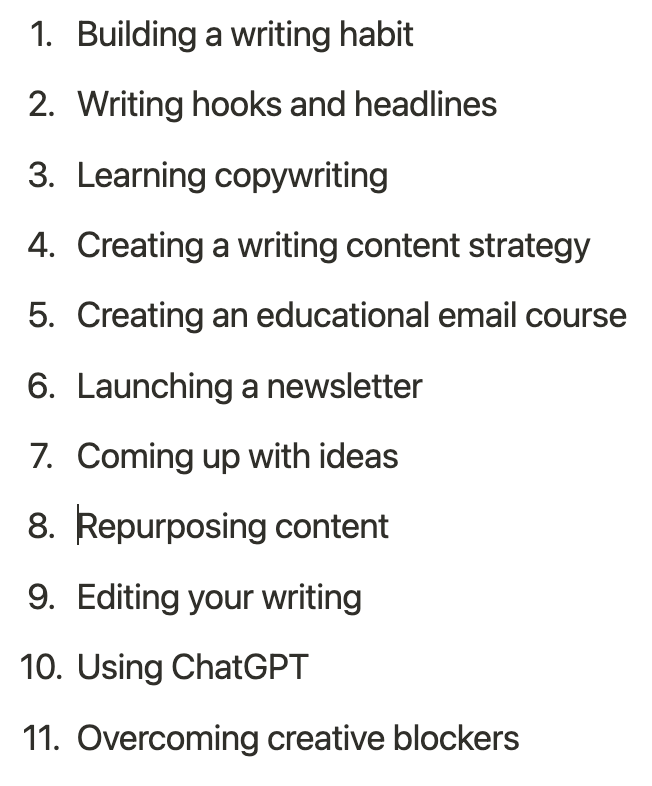
Within your topic, you are going to generate 10 "outcomes" related to it. And the important point about these outcomes: They should start with verbs. • Building • Learning • Following • Designing • Launching • Structuring • (More examples in the next post) Here's why:
The definition of valuable content: Moving your reader closer to their ideal outcome. So take your topic & come up with 10 "outcomes" you could help a reader accomplish. To help get you going, here's a list to choose from:
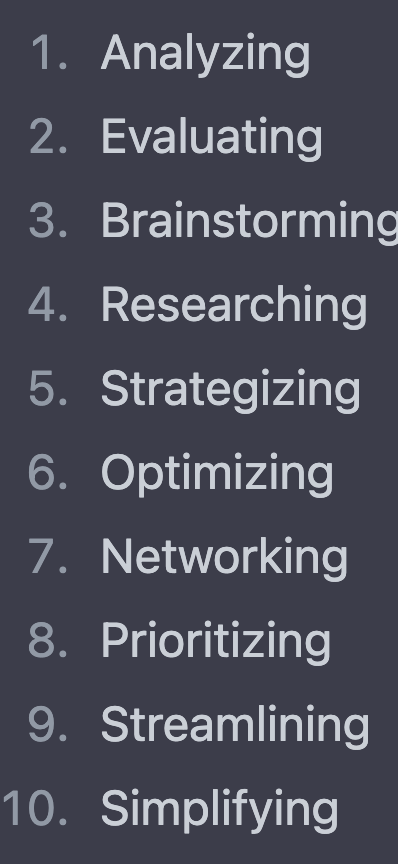
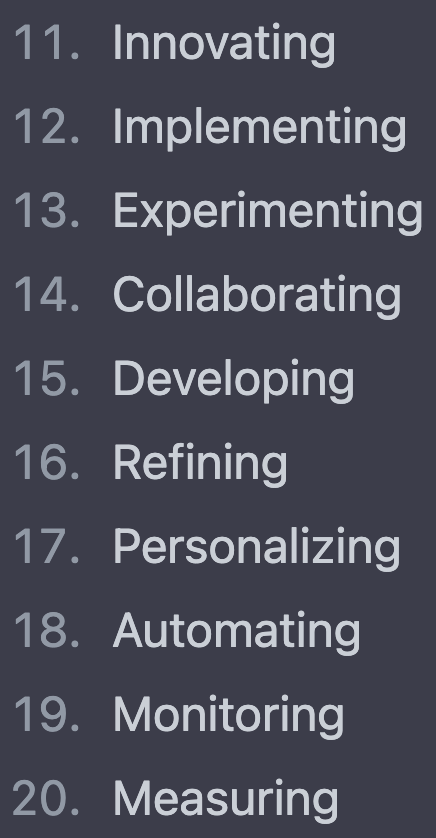
This image shows the outcomes I came up with for the topic of Digital Writing. Well, actually—ChatGPT came up with these (using the prompt I'll send you). Now, let's pick one: Building a writing habit. From here, we use the 4A framework to provide value to the reader:
The basics of the 4A Framework: You can talk about every idea in 4 ways: • Actionable (here's how) • Analytical (here's a breakdown) • Aspirational (yes, you can) • Anthropological (here's why) Now stay with me—here's how it works:
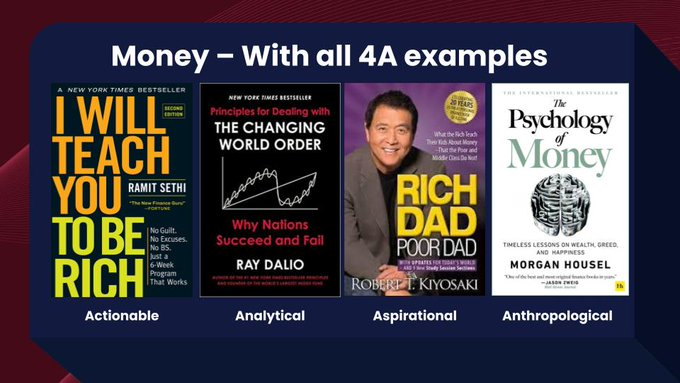
1) Actionable: These are actionable, implemental pieces of content. The reader should gain some new insight or instruction they didn't have beforehand. • Tips • Hacks • Resources • Ultimate guides Take your core idea and help the reader put it into practice.

2) Analytical: These are breakdowns involving numbers, frameworks, and processes. Take your core idea and support it with numbers and analysis. • Trends • Reasons • Numbers • Examples • Swipe files • Teardowns Help the reader unlock a new way of thinking.

3) Aspirational: These are stories of how you or others put your core idea into practice. • Traits • Stories • Quotes • Lessons • Mistakes • Reflections Help the reader understand the benefits they unlock when they see the world through this new lens.

4) Anthropological: These are things that speak to universal human nature. • Fears • Failures • Struggles • Limiting beliefs • Misconceptions Create a sense of urgency for the reader to fully embrace your core idea or be forever left behind.

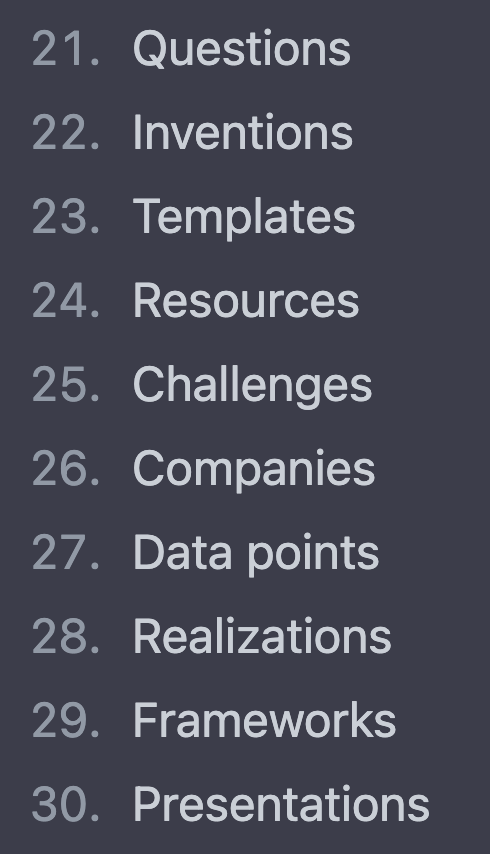
Now, when you combine all of the "proven approaches" within each of the 4As, you get this list. And that is what we're going to train ChatGPT with (so it can generate all of these ideas for us, instantly.) Now, let's bring it all together (and then get to the prompt):


So, putting it all together with my example: 1. Pick topic: Digital writing for beginners 2. Choose outcome: Building a daily writing habit 3. Generate proven approaches I can talk about to help the reader And just like that, ChatGPT generates these ideas for me on command:
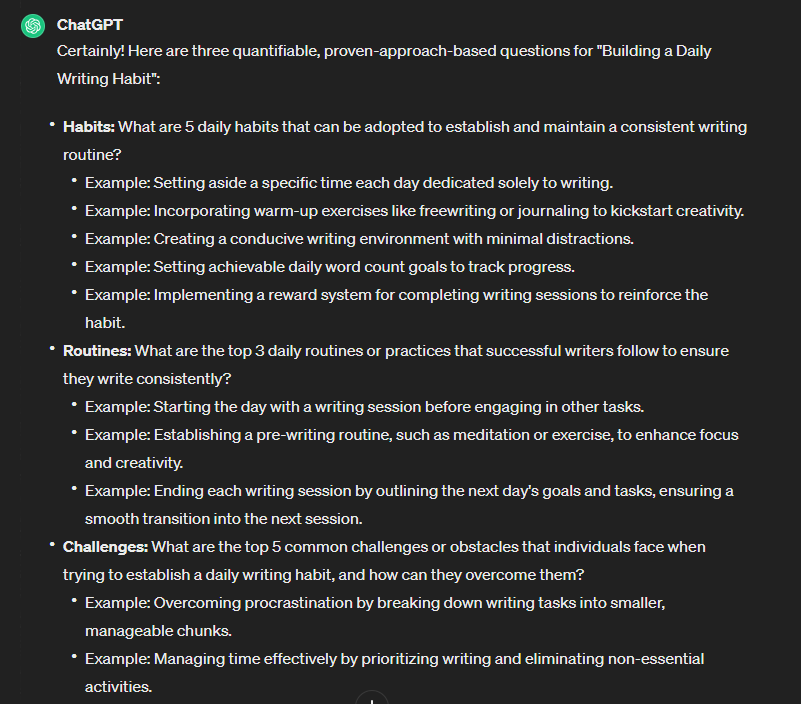
Boom! I hope this was helpful in helping you generate ideas. But... that's not all! I've put together the entire prompt in a Notion doc that you can start using immediately. Here you go: https://vine-perch-730.notion....
And if you want more AI Digital Writing prompts: Here's a free 5-day crash course to help you turn AI into your Digital Writing Assistant. Join 30k other AI-driven writers: https://x.startwritingwithai.c...
Boom, that’s a wrap! Let me know in the replies—how did you get on with the prompt? If you liked this, I’d appreciate it if you could repost this so others can find it. You can find the first post here:
@dickiebush Love GPT for idea generation Dickie. Huge help when you're struggling to come up with new ideas to write about.
@dickiebush I'm impressed how easy is to generate ideas once you understand the core concepts of prompting effectively.
@dickiebush Super helpful Dickie!
@dickiebush Insane approach to creating content. As funny as it sounds, people will still find excuses for "not having ideas to write about"
@dickiebush Thanks so much for this! Well done!
@dickiebush Thanks so much for this. Very educative!
@dickiebush chatgpt is such a life saver for writers
@dickiebush Wow, a brilliant way to combat writer's block using AI! It's all about maximizing efficiency.
@dickiebush awesome tool unleashed creativity in my writing.
@dickiebush the best way to get the most out of ChatGPT is feeding as much as context possible. then, sit back and see the magic
@dickiebush I tried it and it works great. Helpful. But also a bit overwhelming. Next would be a criteria based selection and some content ideas. Combining own knowledge about the target group, their needs with own expertise and research. AI might help there 😅 I create in-house content.
@dickiebush why thread over long format?
@dickiebush How I actually apply this method❓