
Candle Range Theory: (Choose the best CRT Candle) A detailed thread explaining everything about CRT. 🧵 - Origin - Theory - Advance Protocols - Conjunction of CRT - Trade Examples - CRT Filters - Applications. This is all you need to master the markets. Credits:@Romeotpt

The Origins of CRT: The true authorship of CRT has been a topic of considerable debate; however, it has been unequivocally established that the author is @Romeotpt. Aside from Romeo, the only secondary sources for CRT are @TraderFlameseN [ME], @SpeculatorFL and a few others.
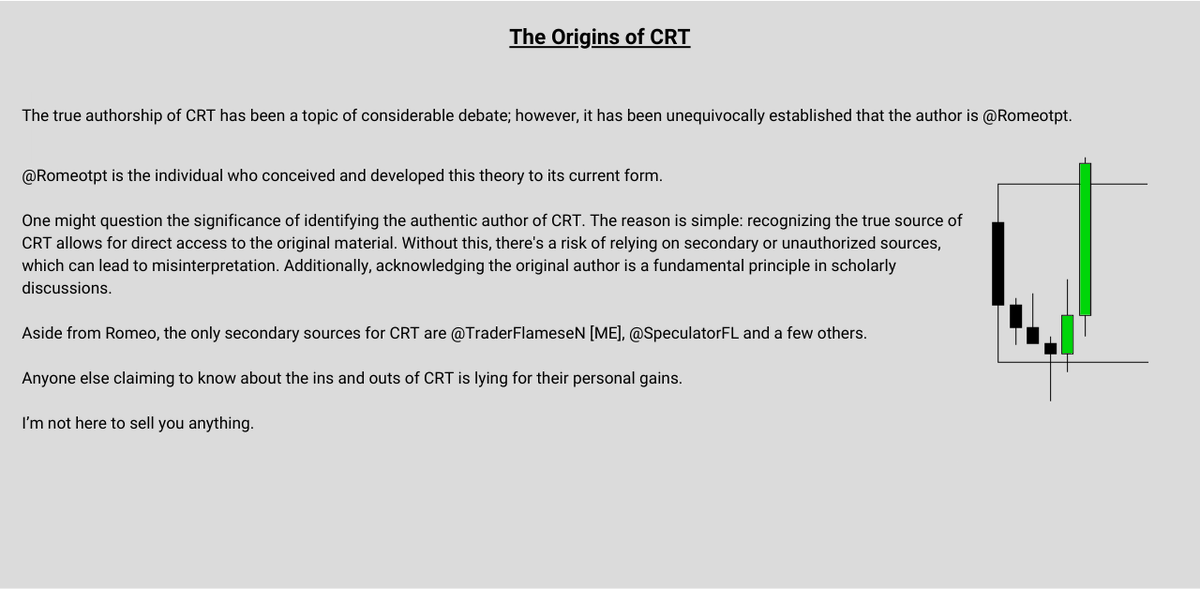
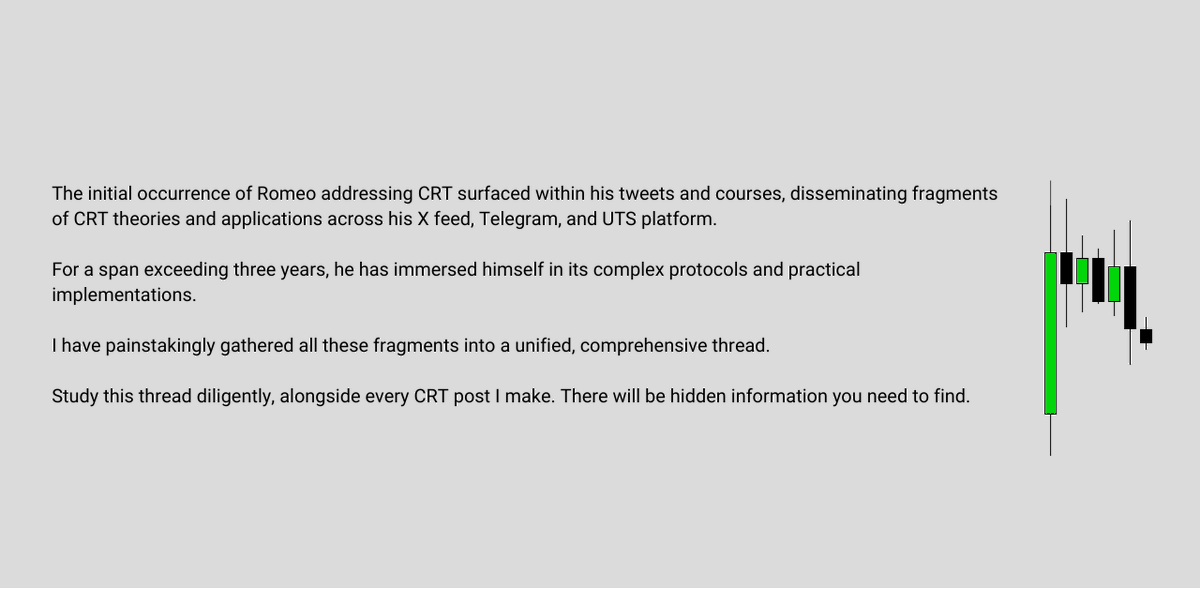
All fragments of CRT is compiled into this one thread. Study this thread diligently.
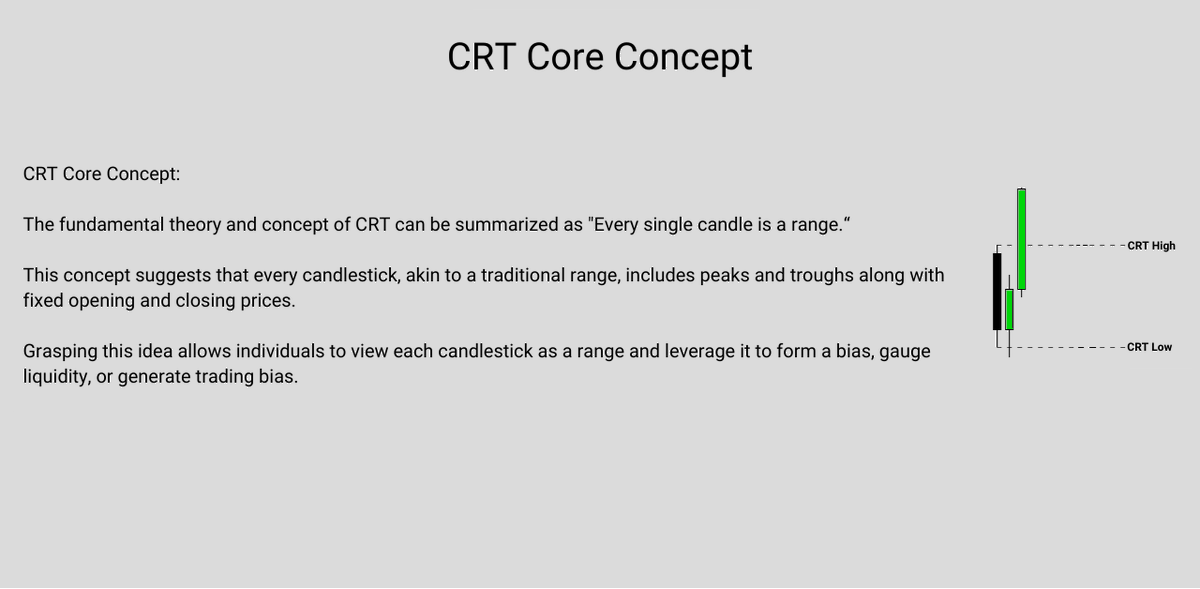
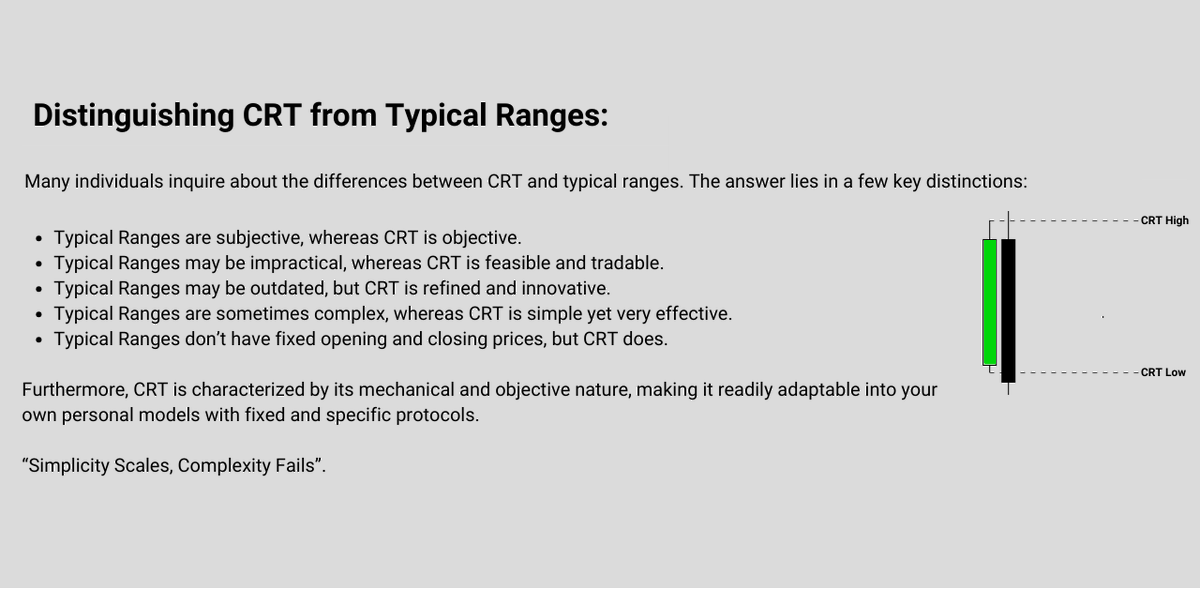
CRT Core Concept and Theory: - The fundamental theory and concept of CRT can be summarized as "Every single candle is a range.“ - Each candle, like a traditional range, possesses both High/Low along with fixed Open/Close prices.
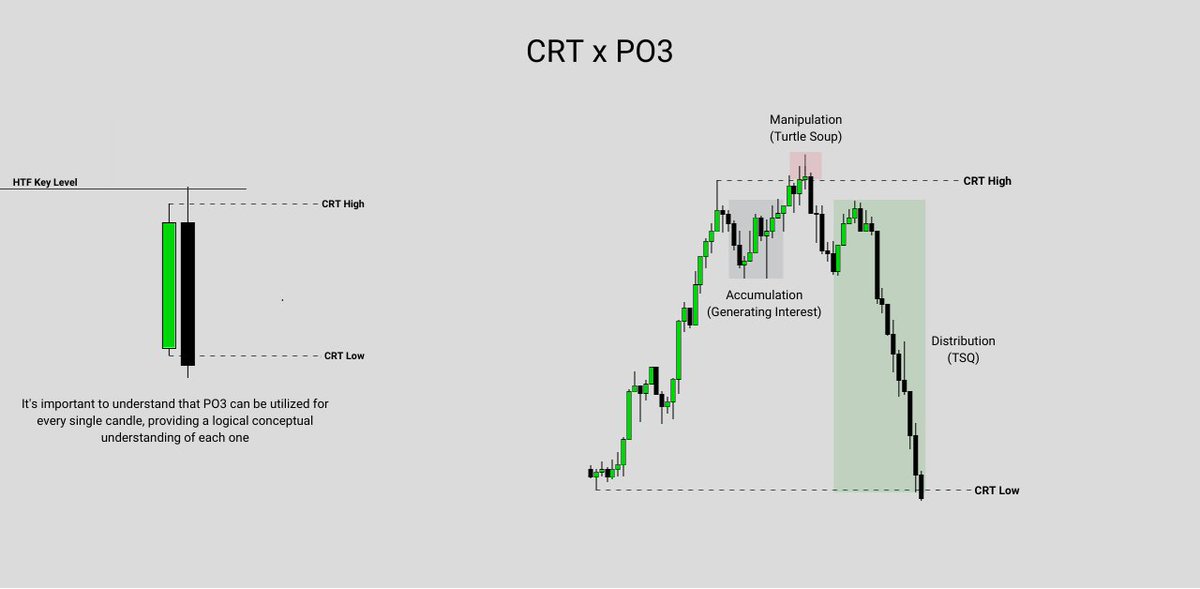
Furthermore, according to CRT every candle has its own PO3 [Power of 3] or AMD. By understanding these characteristics, we can leverage the range of each candle to our advantage using specific strategies during the manipulation or distribution phase. - Accumulation -
Distinguishing CRT from Typical Ranges: Many individuals inquire about the differences between CRT and typical ranges. The answer lies in a few key distinctions: - Objectivity - Feasibility - Technicality - Mechanical - Simple - Refined - Innovated - Scalable.
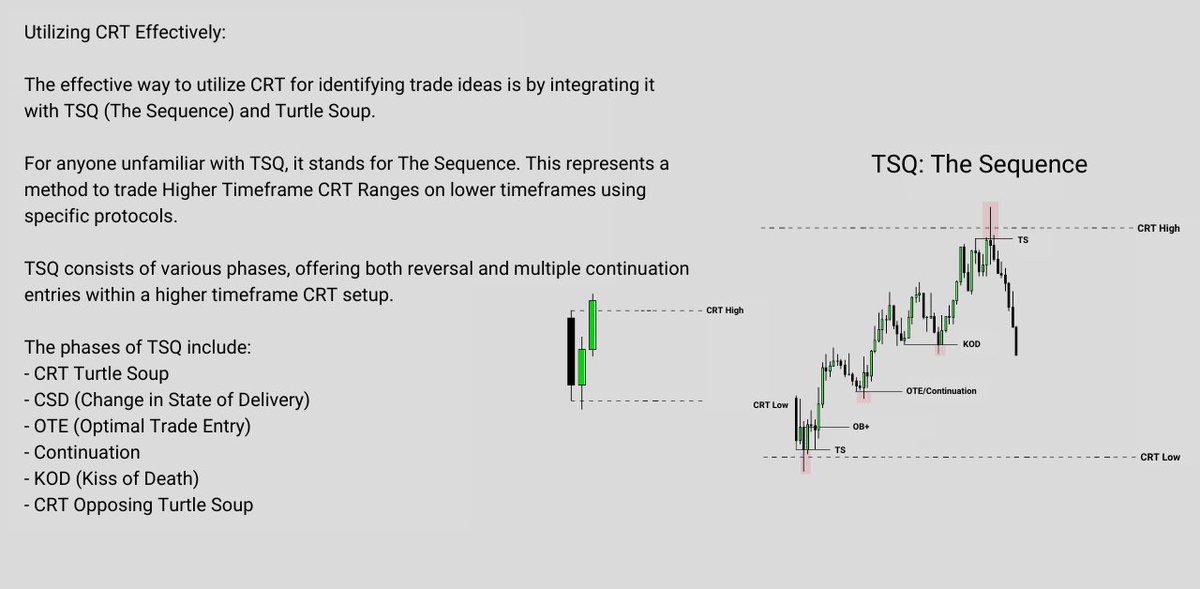
Utilizing CRT Effectively: The effective way to utilize CRT for identifying trade ideas is by integrating it with TSQ (The Sequence) and Turtle Soup. The phases of TSQ include: - CRT Turtle Soup - CSD - OTE - Continuation - KOD (Kiss of Death) - Turtle Soup
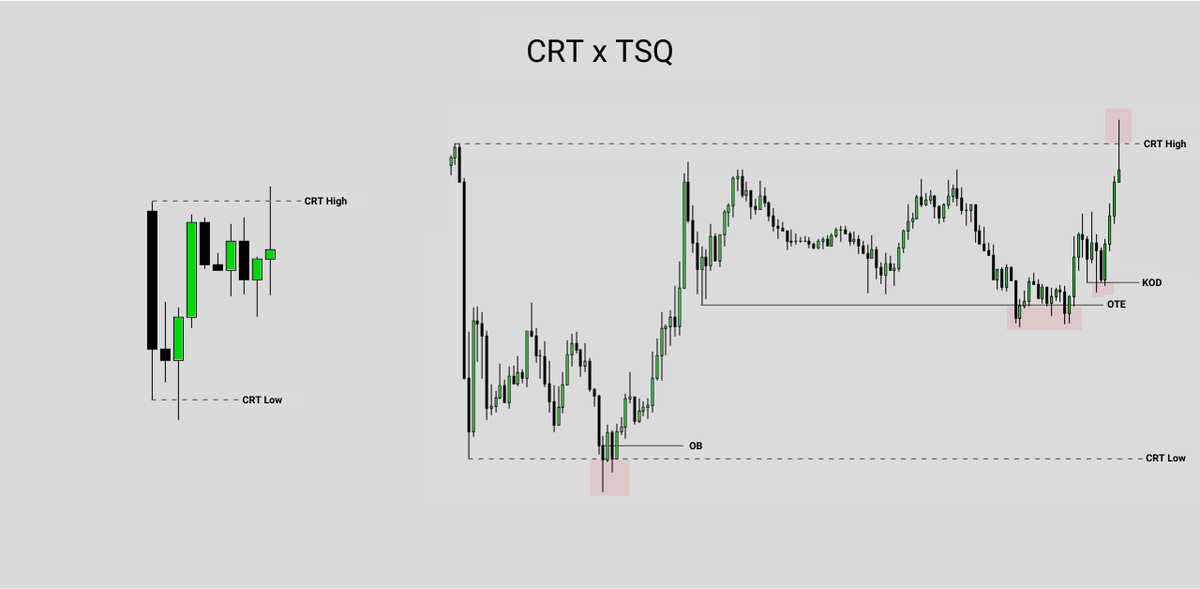
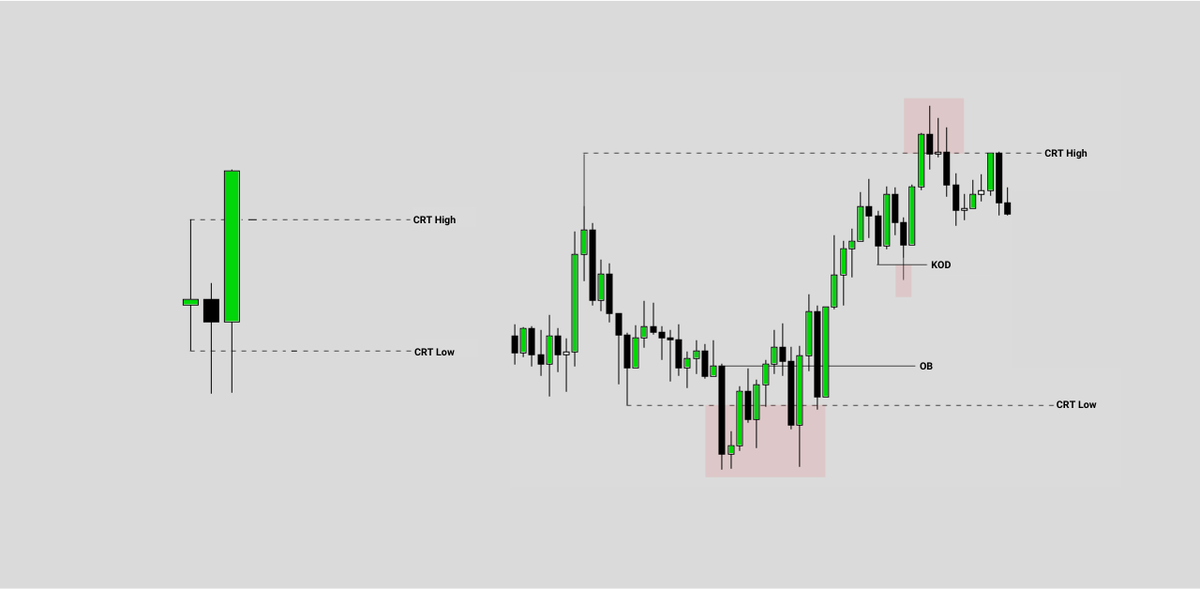
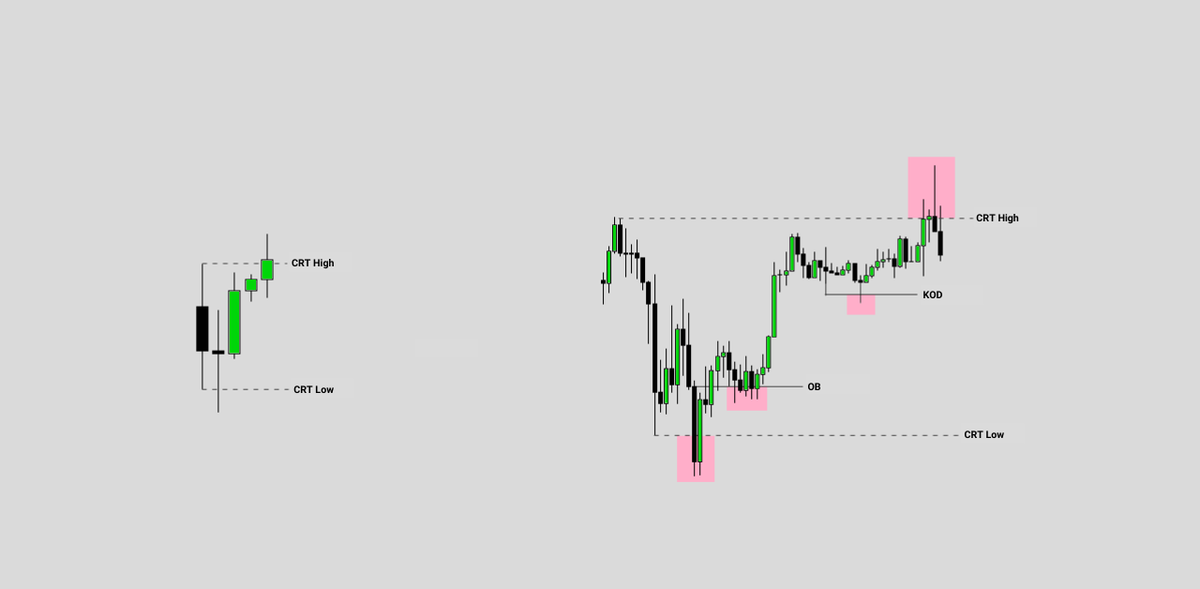
Combining CRT with TSQ: Incorporating CRT with TSQ not only simplifies and objectifies your entries on lower timeframes but also eradicates the complexities commonly encountered. "Everything beings with a TS, everything ends with a TS"
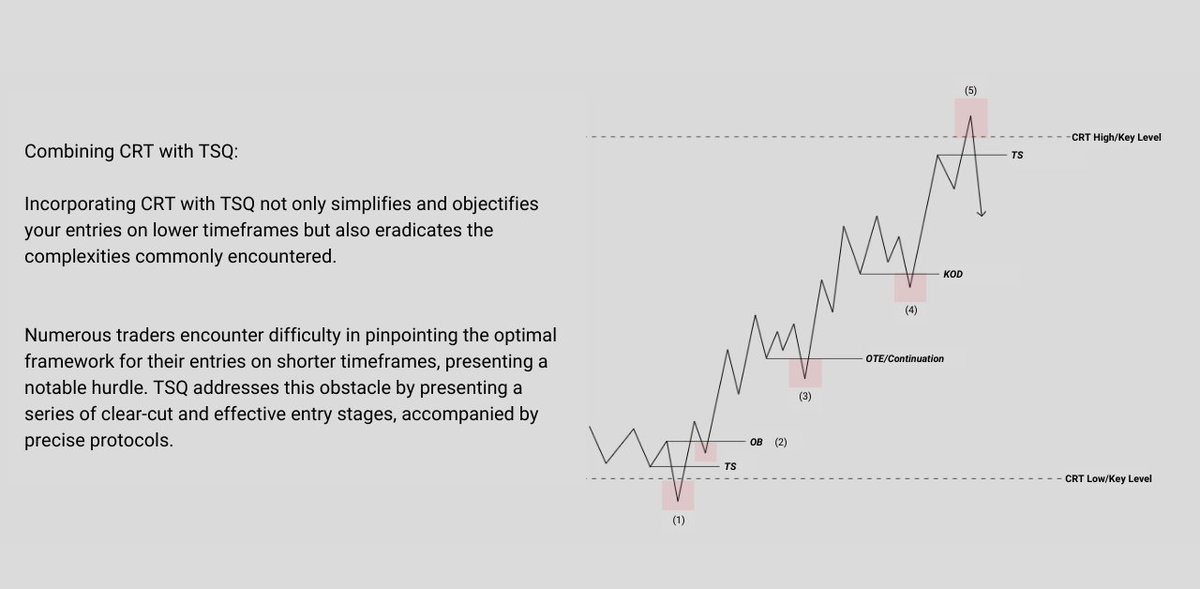
Selecting the Right CRT: In essence, any candle has the potential to be regarded as a CRT. Nonetheless, to identify the most precise and accurate CRT, adherence to several protocols is essential. I'll delve into these protocols in detail to equip you with the knowledge to
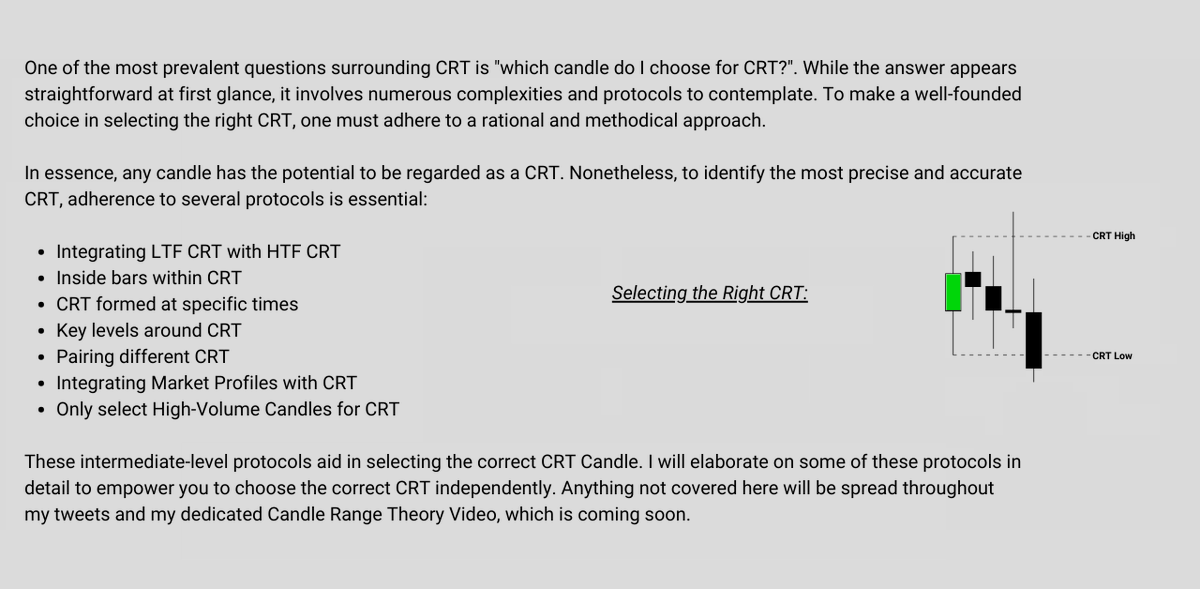
These are some of the most intricate and significant protocols: • LTF CRT within HTF CRT • Inside bars within CRT • CRT formed at specific times • Key levels around CRT • Pairing different CRT • Market profile with CRT
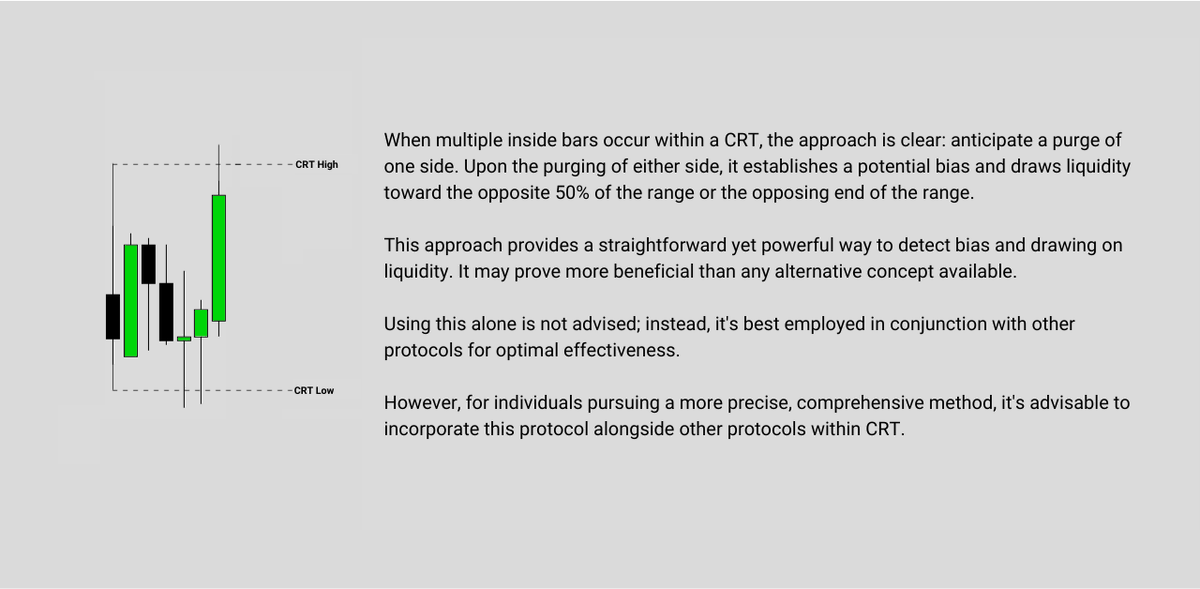
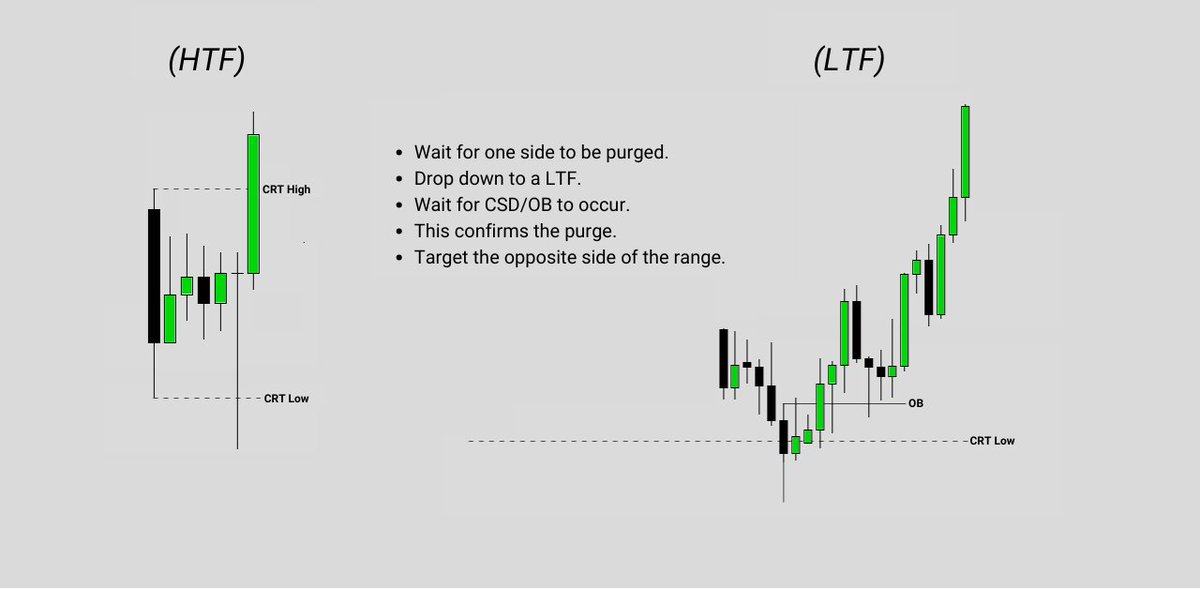
Inside Bars within CRT: This protocol carries considerable significance within CRT. Inside bars that appear within a CRT represent the accumulation of interest around CRT. The greater the number of inside bars, the better the CRT.
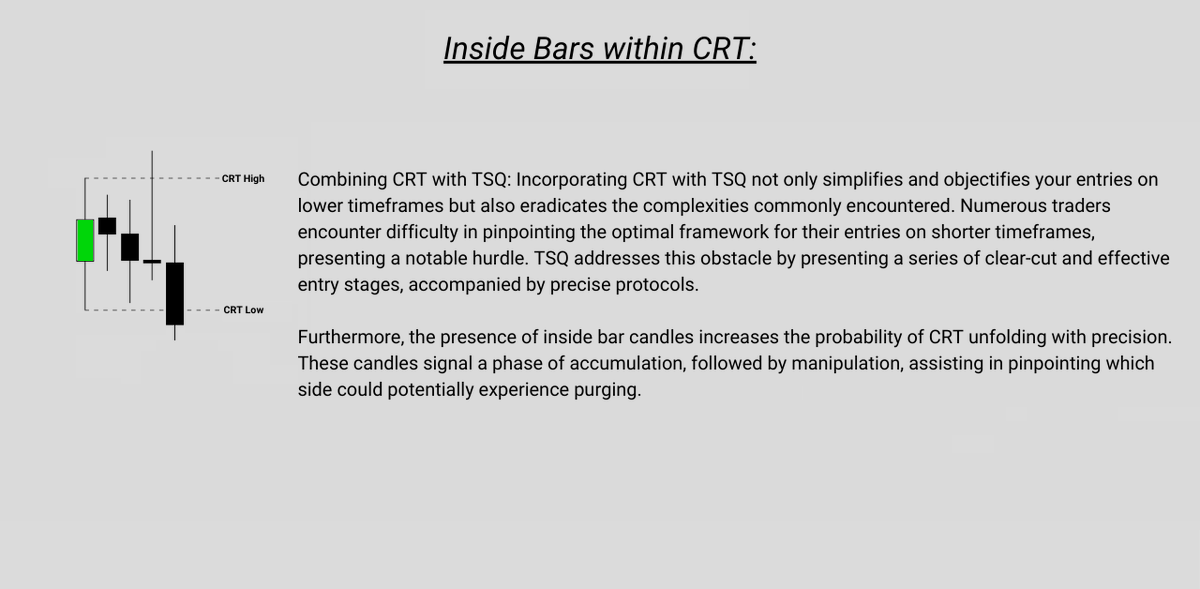
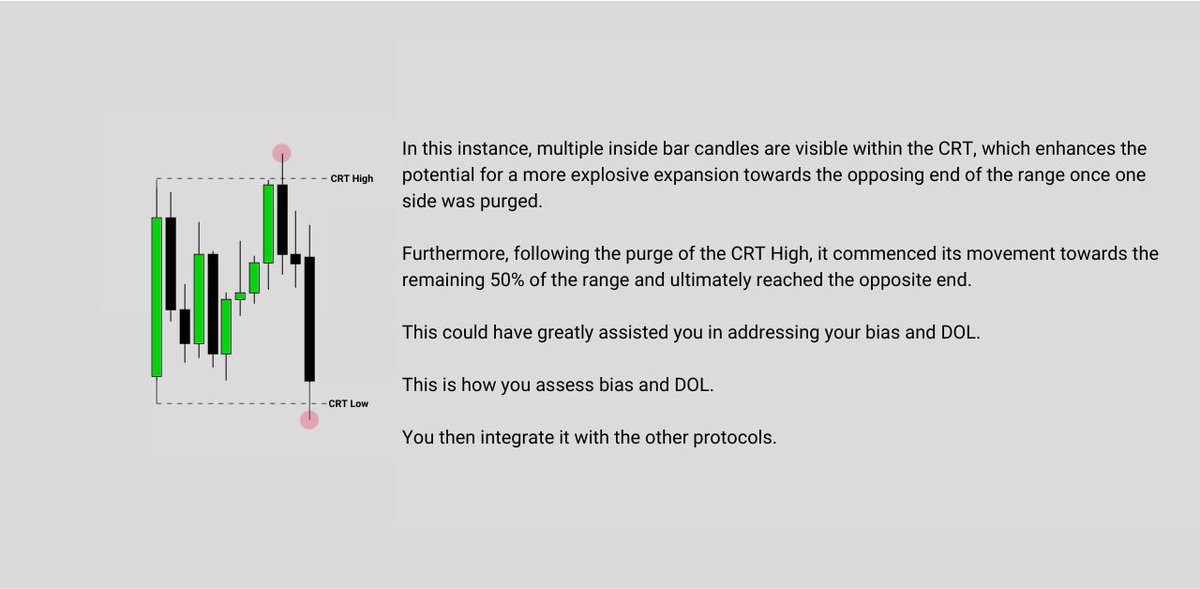
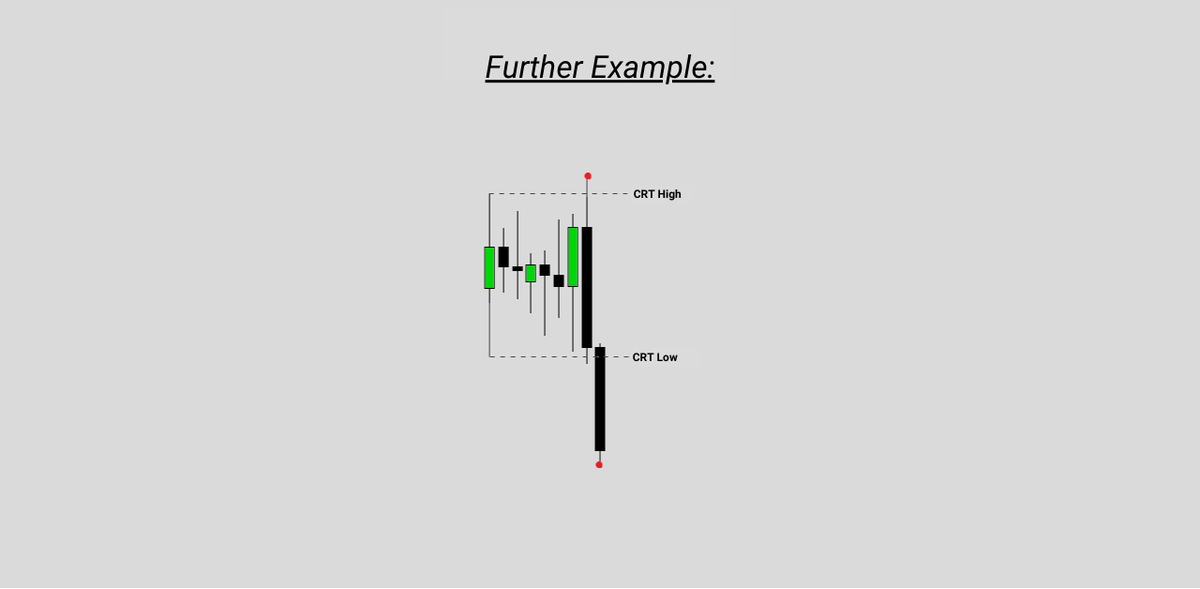
When there are multiple inside bars within a CRT, the approach is simple: Wait for one side to be purged. Once either side has been cleared, it establishes a potential bias and attracts liquidity towards the opposite 50% of the range or the opposing end of the range.
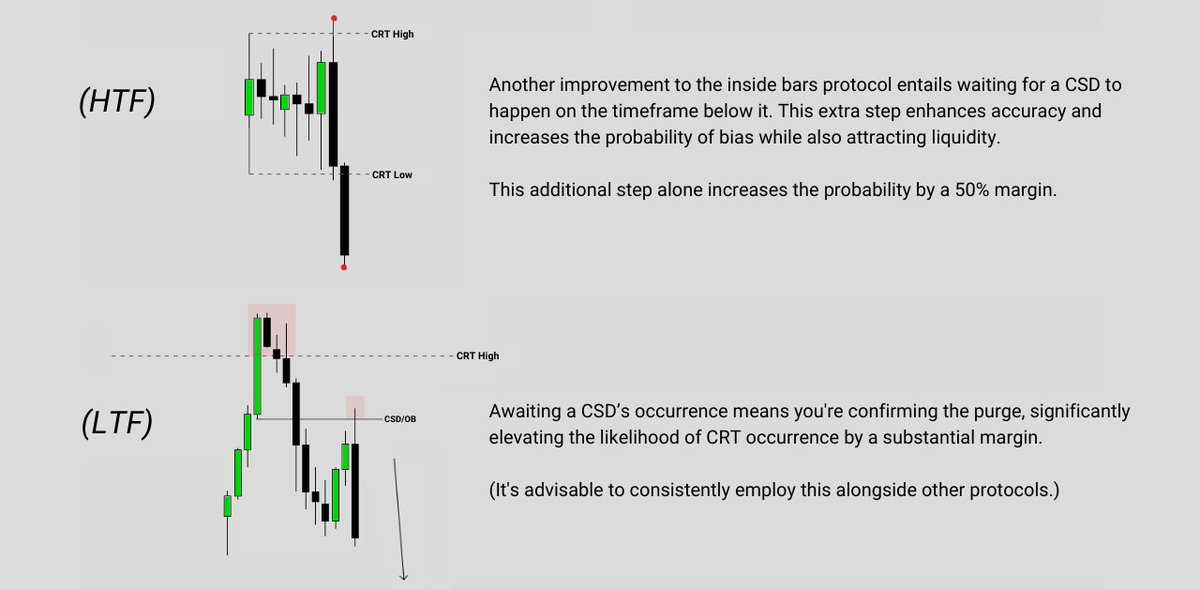
Another improvement to the inside bars protocol entails waiting for a CSD to happen on the timeframe below it. This extra step enhances accuracy and increases the probability of bias while also attracting liquidity. This additional step alone increases the probability by a 50%
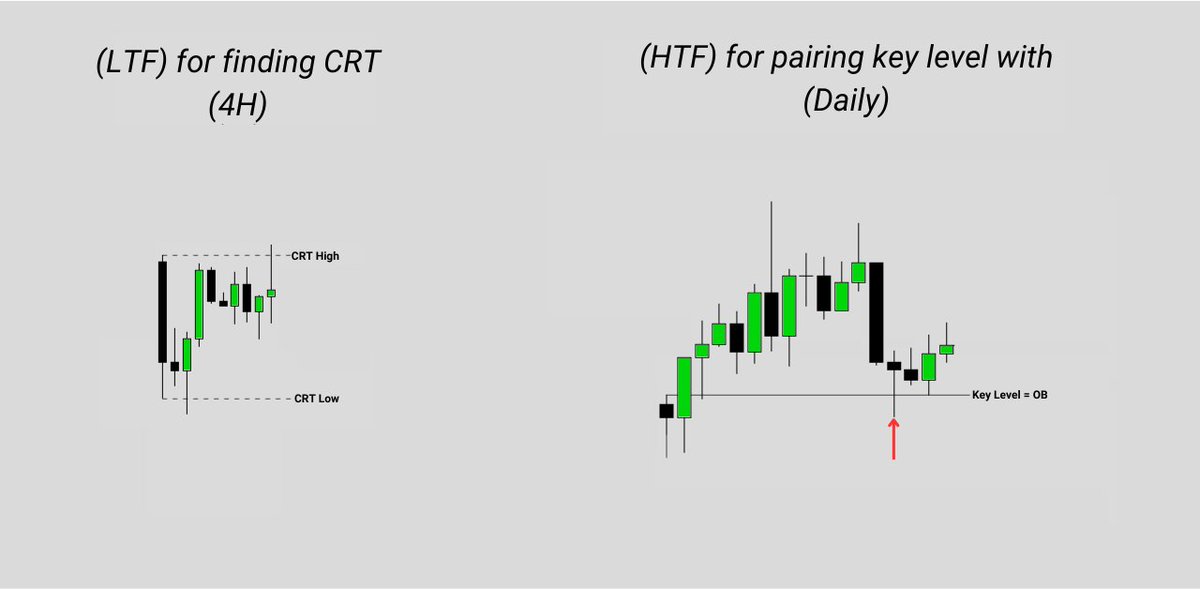
Key levels surrounding CRT act as triggers for reactions and expansions toward the opposite end of the range. The hierarchy of key levels, ranging from highest to lowest quality, includes: • Rejection blocks. • Orderblocks • Fair value gaps • Breakers

Example: If you're using the H4 timeframe to identify CRT, then you should use the daily timeframe for coupling key levels with it. Likewise, if you're using the daily timeframe to identify CRT, then you use the weekly timeframe for coupling key levels with it.

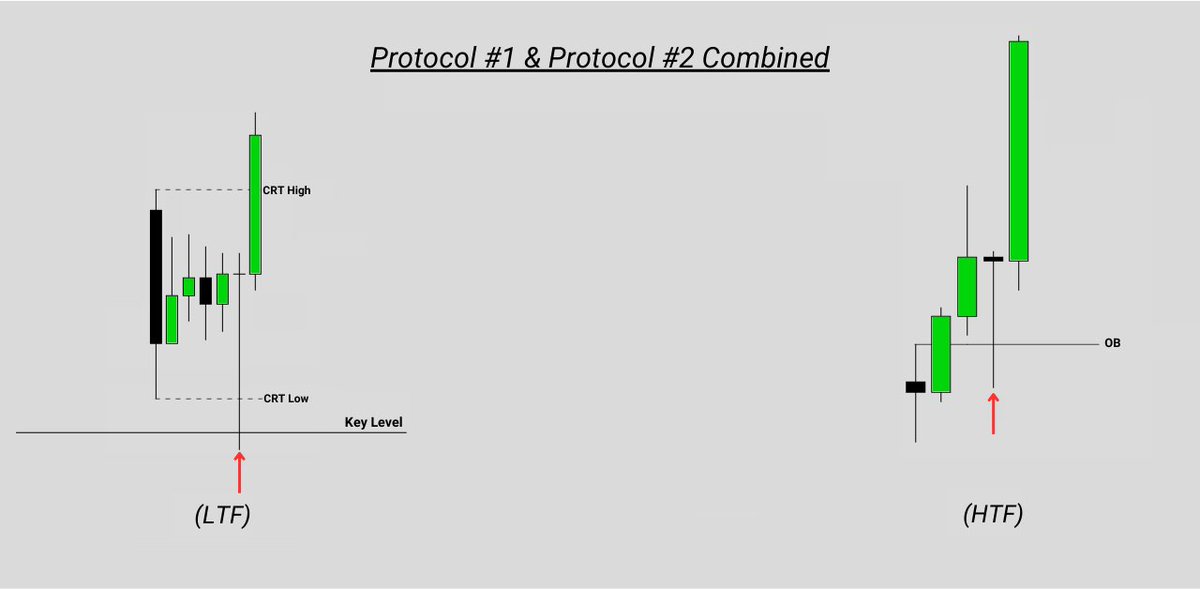
Combining [Inside Bars] and [Key Level]: By integrating the initial two protocols, we can enhance the caliber of our CRTs quality to an advanced level, leading to improved accuracy and precision. As we incorporate additional protocols , the quality of our CRT will continue to

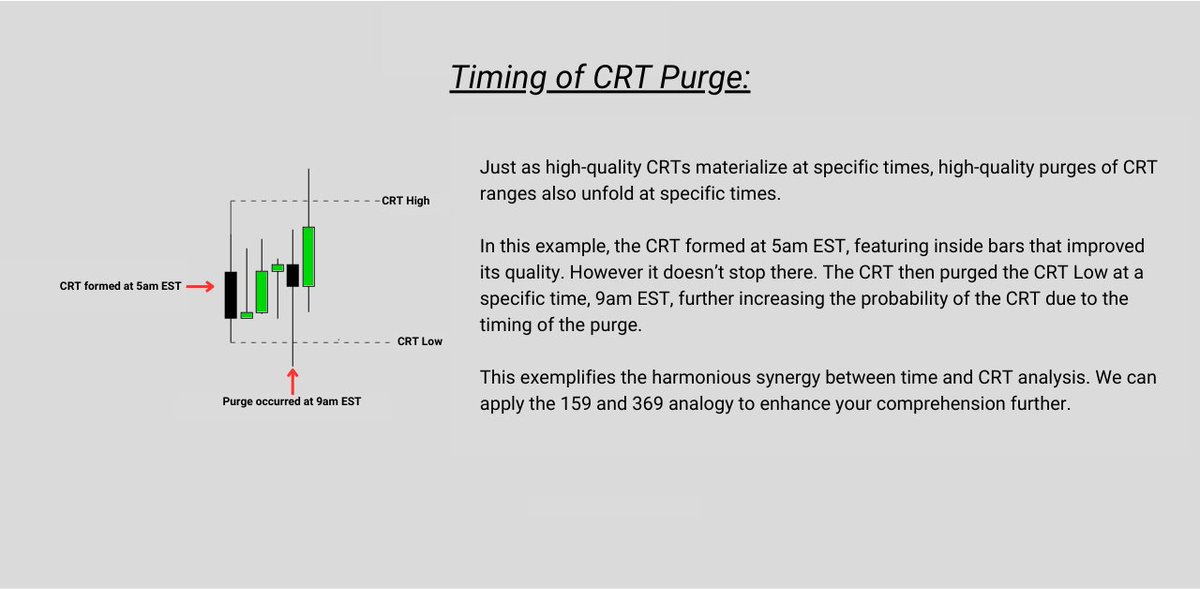
CRT formed at specific times: Time > Price. You should always remember this. This fundamental principle guides our trading decisions, emphasizing particular times within the day or week. By acknowledging the importance of time over price, we can filter out less accurate CRTs
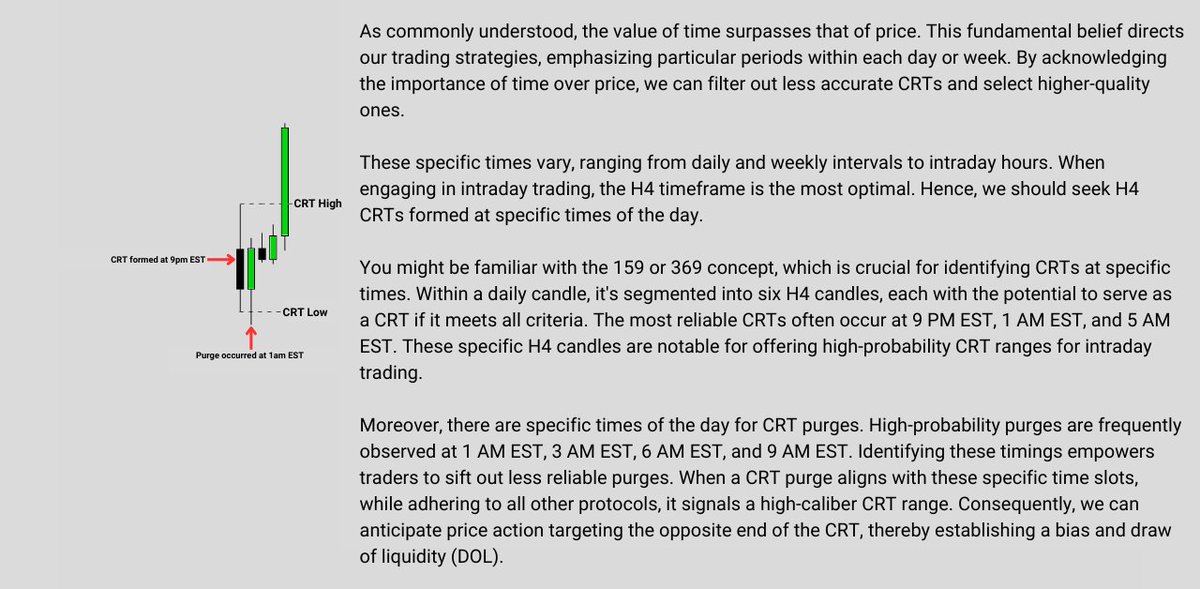
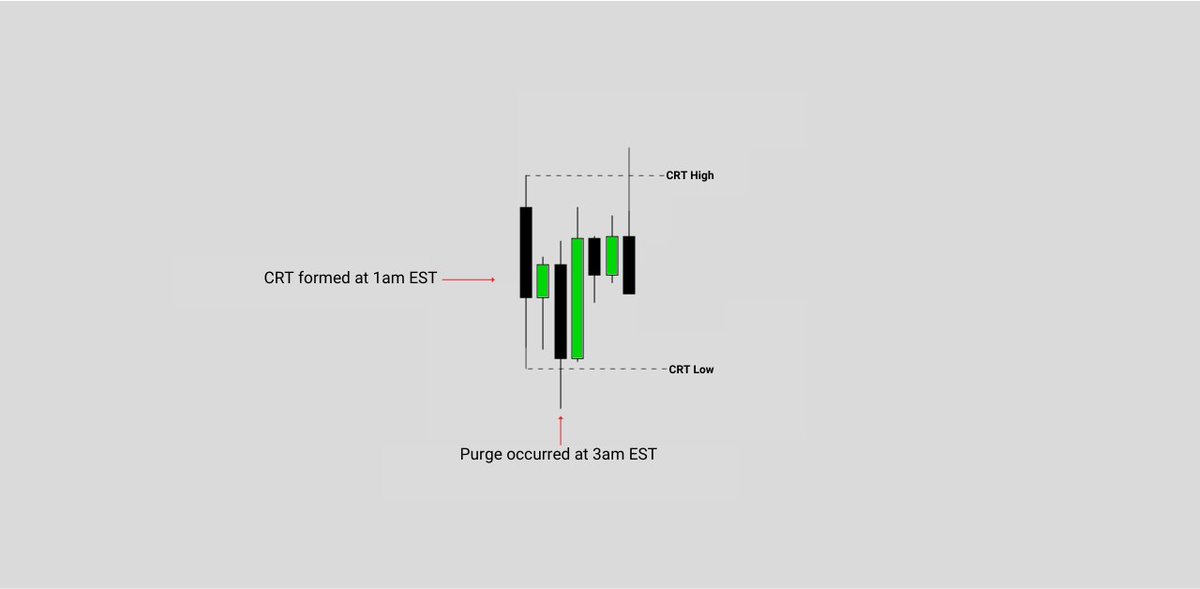
Timing of CRT Purges: Just as high-quality CRTs materialize at specific times, high-quality purges of CRT ranges also unfold at specific times. This exemplifies the harmonious synergy between time and CRT analysis. We can apply the 159 and 369 analogy to enhance your
Pairing multiple CRT: I've already provided many protocols, and here's another fantastic one to add to the mix: pairing different CRTs within the same timeframe.
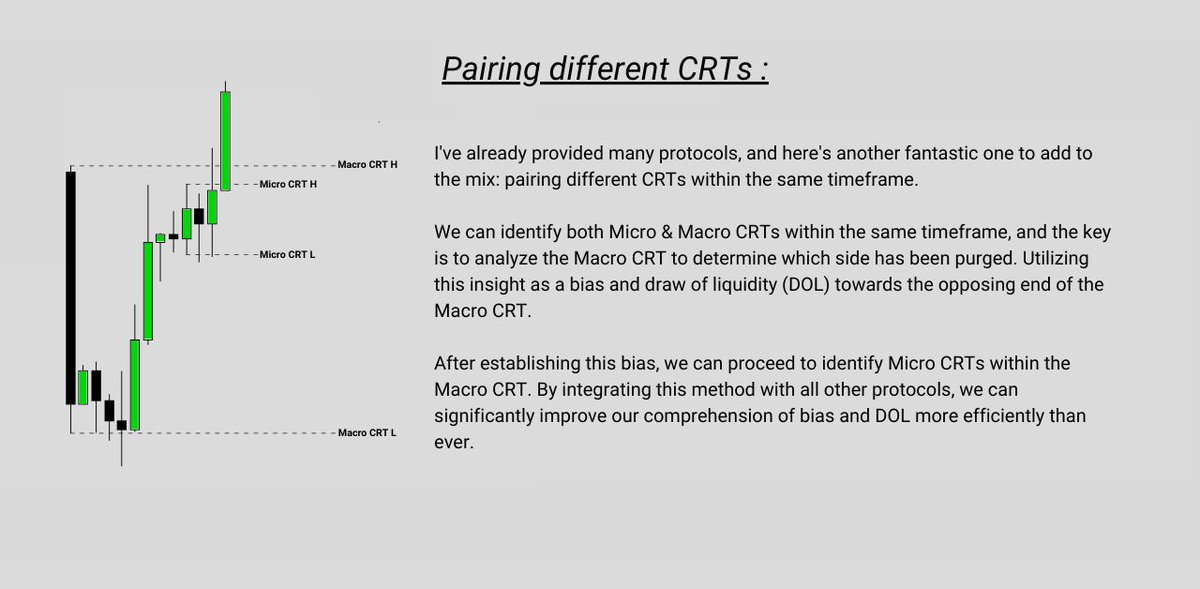
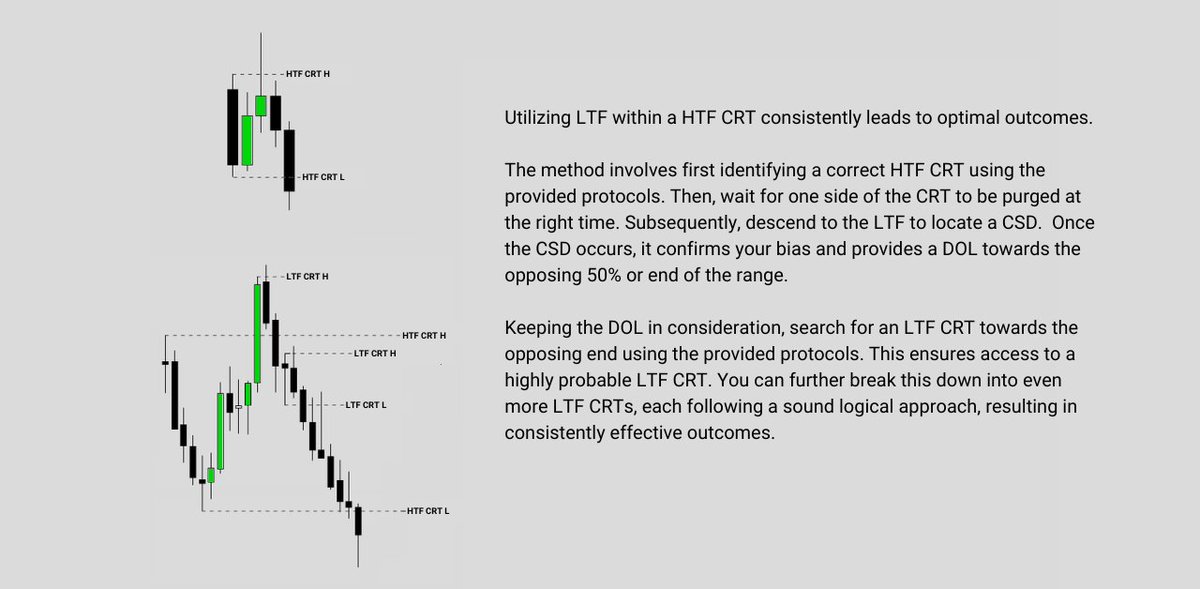
In this scenario, we're examining a Macro CRT in which one side has been purged, offering us a bias and direction of liquidity (DOL) toward the opposite end of the CRT range. As we progress toward the opposite end, we can identify Micro CRTs within it. CSD can also confirm
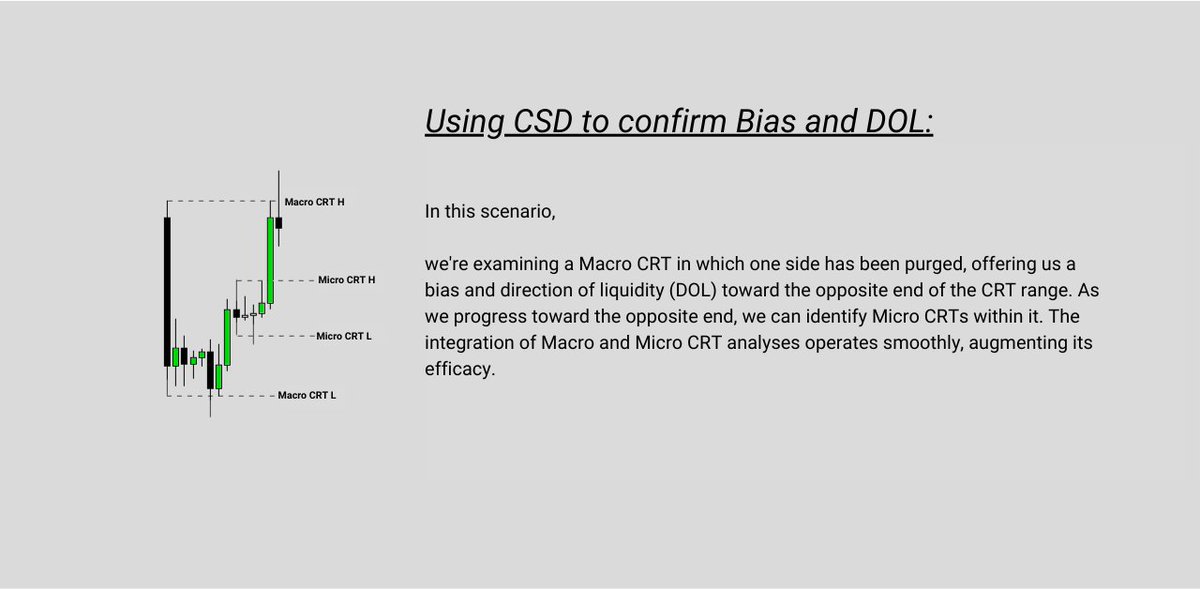
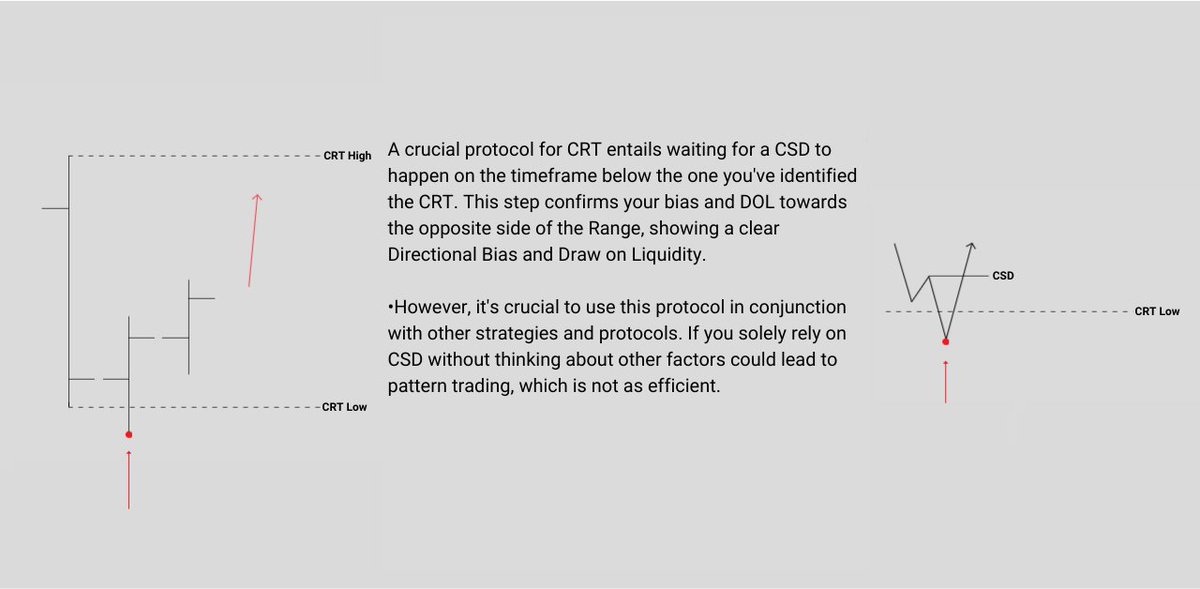
Using CSD to confirm Bias and DOL: A crucial protocol for CRT entails waiting for a CSD to happen on the timeframe below the one you've identified the CRT. This step confirms your bias and DOL. However, it's crucial to use this protocol in conjunction with others.
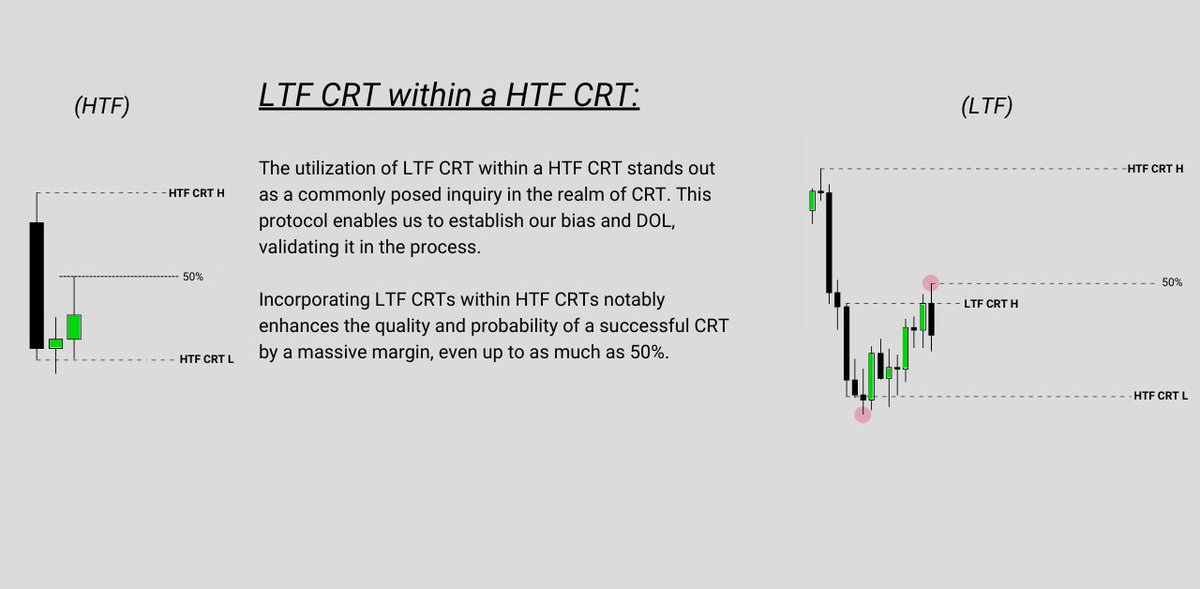
LTF CRT within a HTF CRT: The utilization of LTF CRT within a HTF CRT stands out as a commonly posed inquiry in the realm of CRT. This protocol enables us to establish our bias and DOL, validating it in the process. LTF CRTs within HTF CRTs notably enhances the quality and
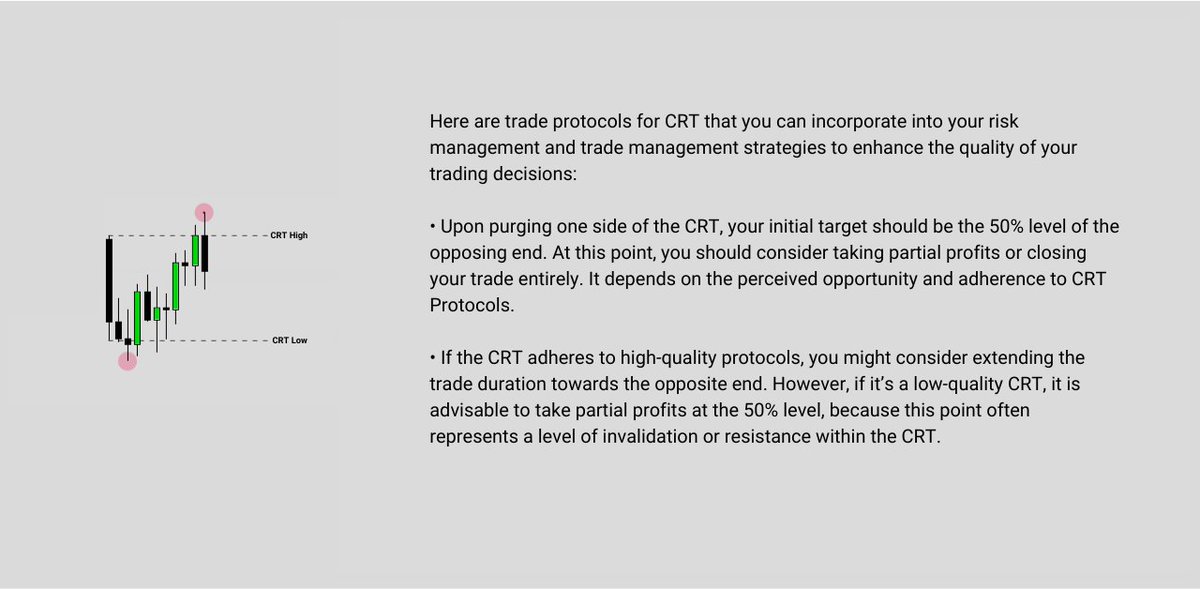
Trade Protocols for CRT: - Upon purging one side of the CRT, your initial target should be the 50% level of the opposing end. - If the CRT adheres to high-quality protocols, you might consider extending the trade duration towards the opposite end.
The greater number of protocols employed in locating a CRT correlates with higher CRT quality. - With the addition of each protocol, the margin of quality and probability increases by an additional 11%. - Employ all the protocols in a logically coherent manner alongside all
This is merely a glimpse into the enigmatic world of CRT. Romeo has yet to unveil the full extent of his discoveries to the public eye. This is everything he has shown on his Youtube, Twitter, Telegram and Private Courses. There is more to come. Anything I have missed, will
Candle Range Theory Video Series: Episode 1. https://www.youtube.com/watch?...
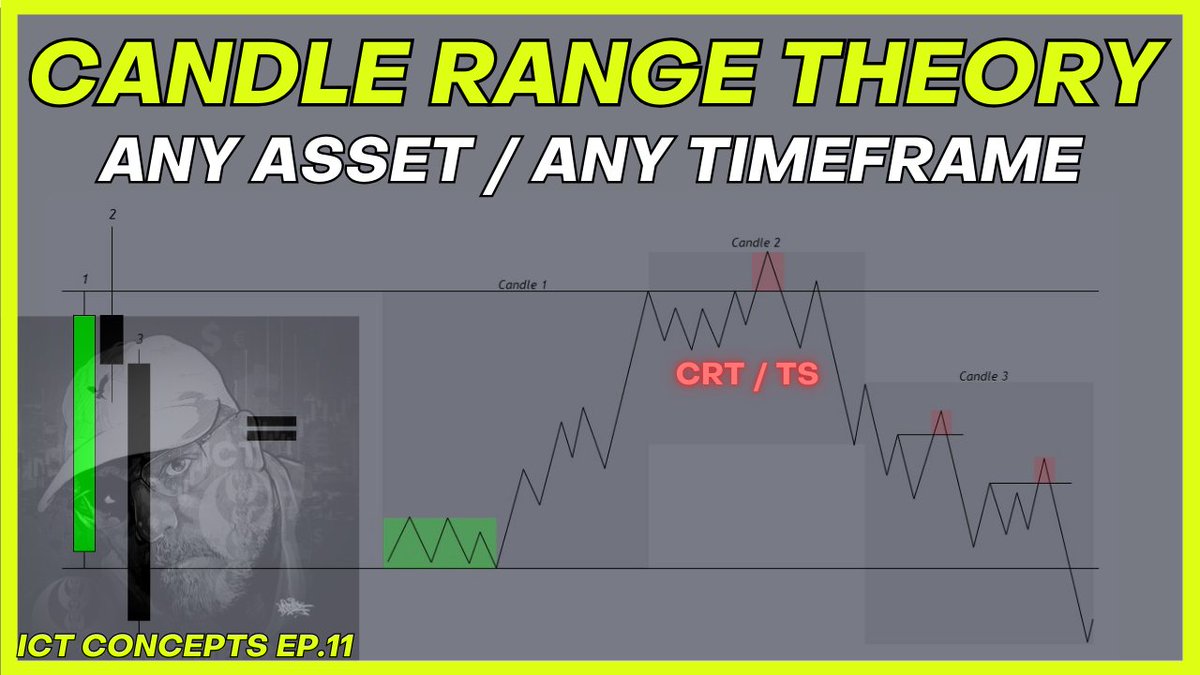
Candle Range Theory Explained Series: Episode 2. https://www.youtube.com/watch?...
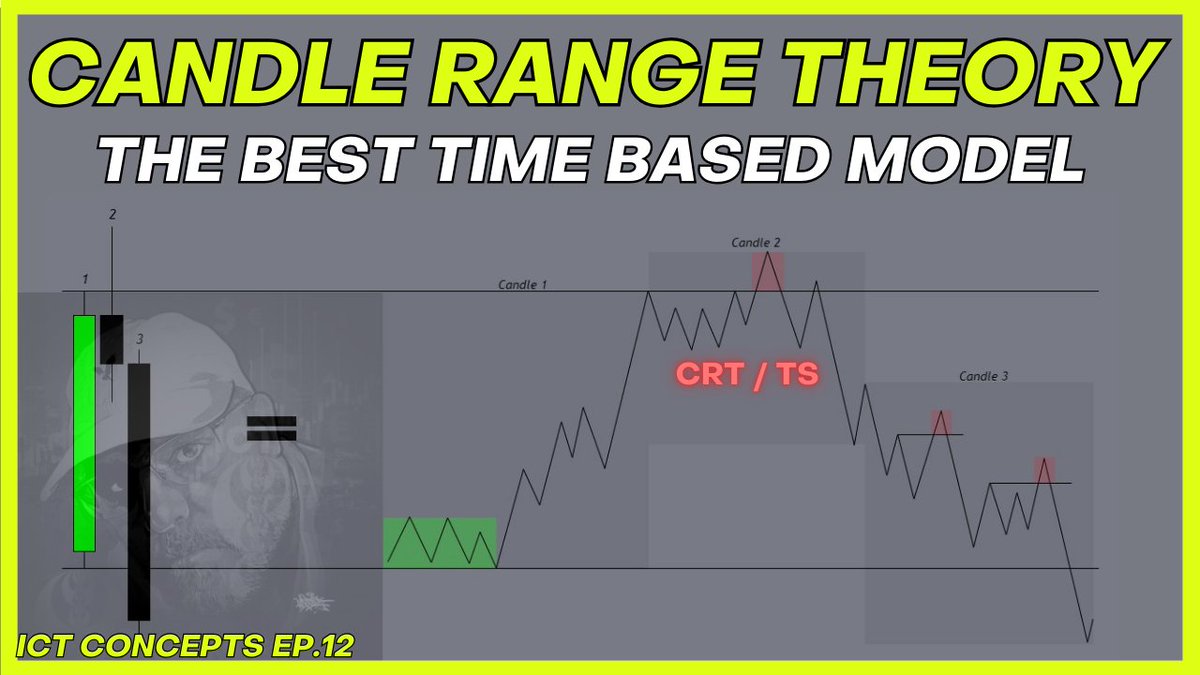
Candle Range Theory Explained: Episode 3🧵 https://www.youtube.com/watch?...

@TraderFlameseN @Romeotpt If I'm to use 5m for entry, which timeframe should I use for CRT and which one should I use for coupling key level with CRT
@MuhammadYusufO3 @Romeotpt I would use the 15m and higher for Key Levels and the 1m or 30s for your entry.
@TraderFlameseN @Romeotpt Bro ure the mvp
@jsonsay24 @Romeotpt Glad you like it mate! 👊🏽
@TraderFlameseN @Romeotpt Any youtube video regarding this ??
@yogesh39941650 @Romeotpt Not yet bro. Soon. 🤝🏽
@TraderFlameseN @Romeotpt no coments...tks bro!!
@lucasgarciafx @Romeotpt Enjoy brother! 🤝🏽