Ferdinand Ulrich’s Homo Abyssus - A Running Commentary
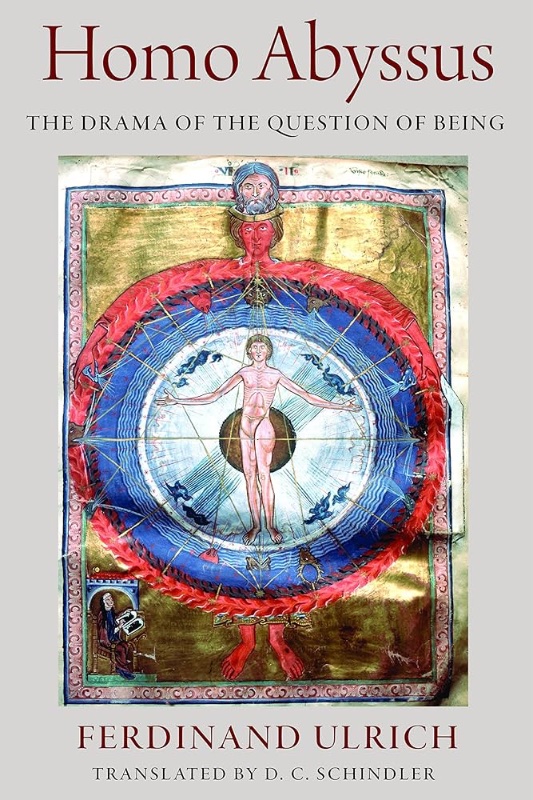
I’ll do my best to give a commentary on Ferdinand Ulrich’s understudied work of anthropological metaphysics as I reread it. Won’t be able to be comprehensive, but I hope to be able to touch on some important points.
@Wired73813850 @_bonaventurian @NcesThriceGreat @Filoremy @HazThomist @espanyolatzaros @daniel_drain etc, you may find this of interest
@Wired73813850 @_bonaventurian @NcesThriceGreat @Filoremy @HazThomist @espanyolatzaros @daniel_drain PREFACE The work begins with a brief preface indicating its (ambitious) intention. Hegel and Heidegger loom largely, even when not explicitly named.
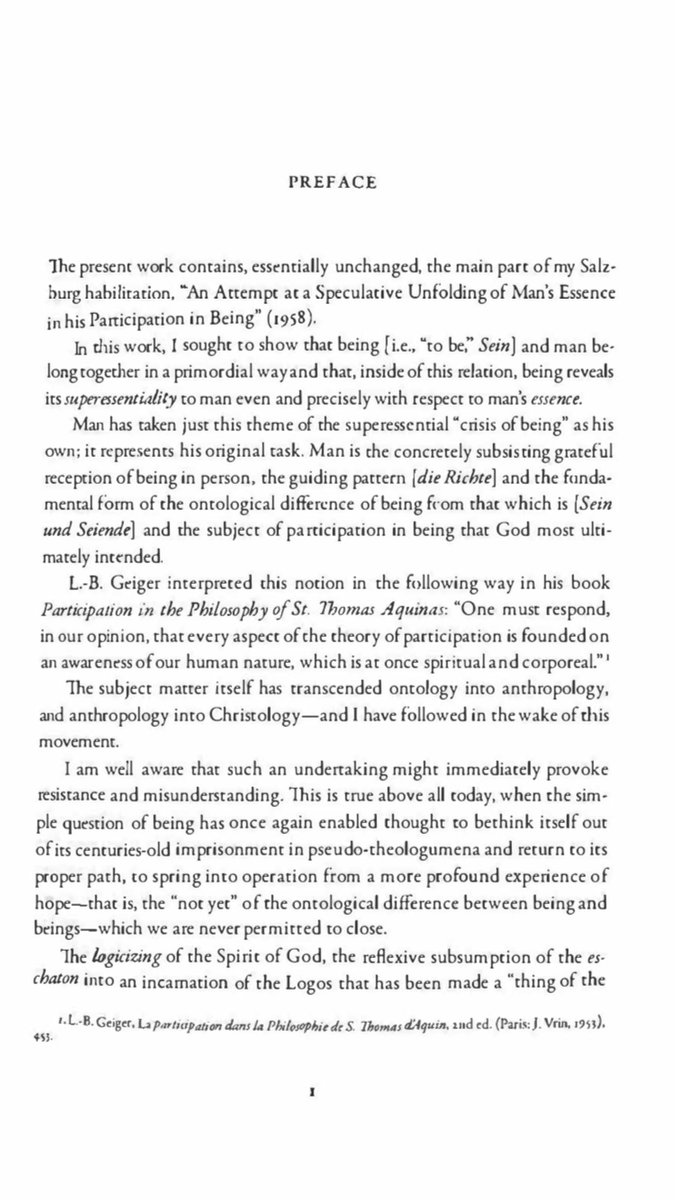
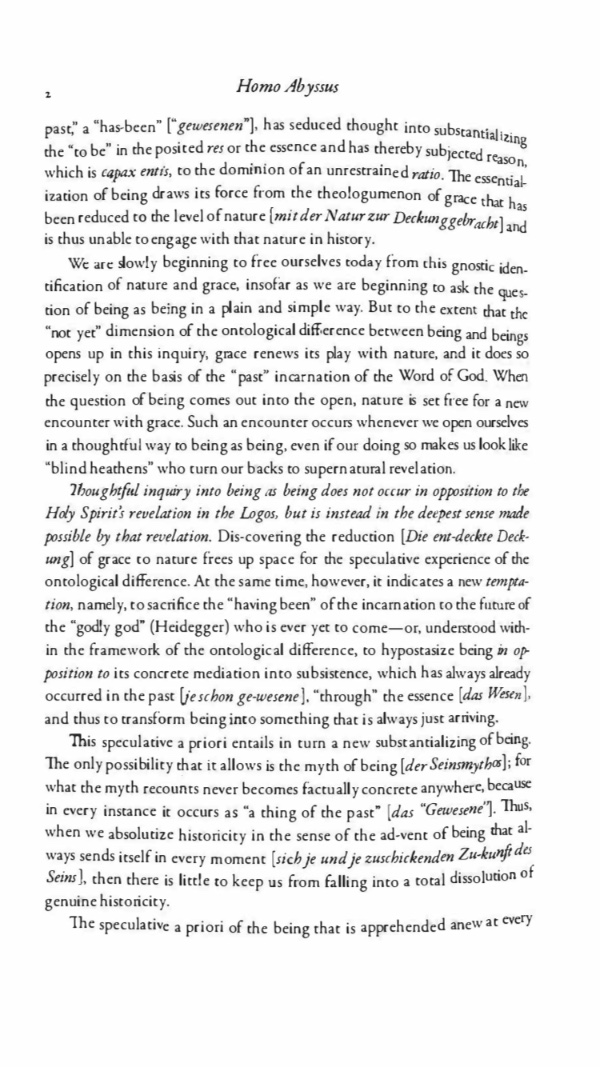
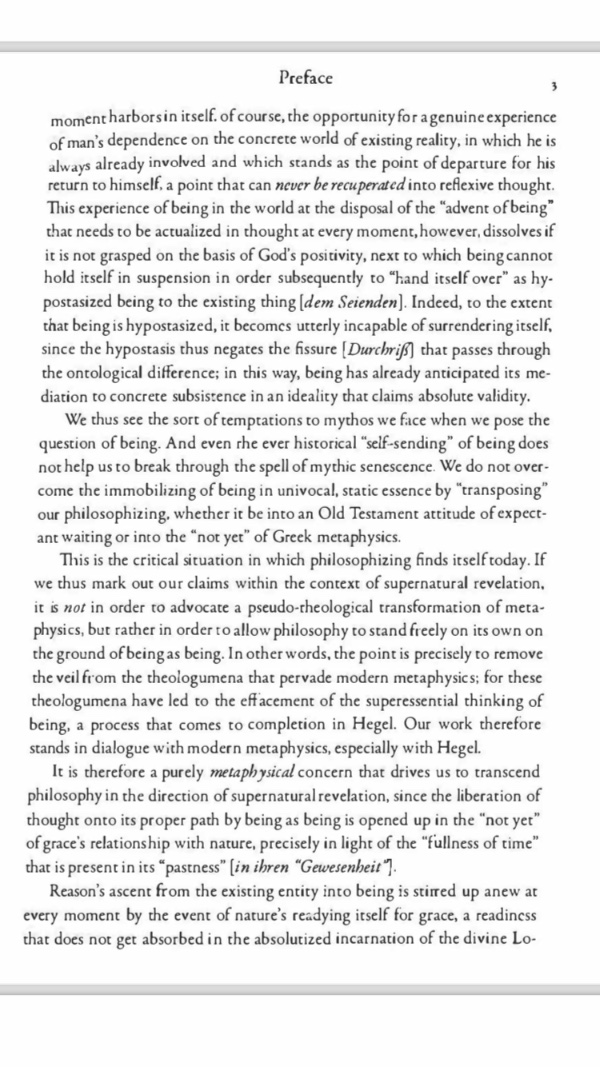
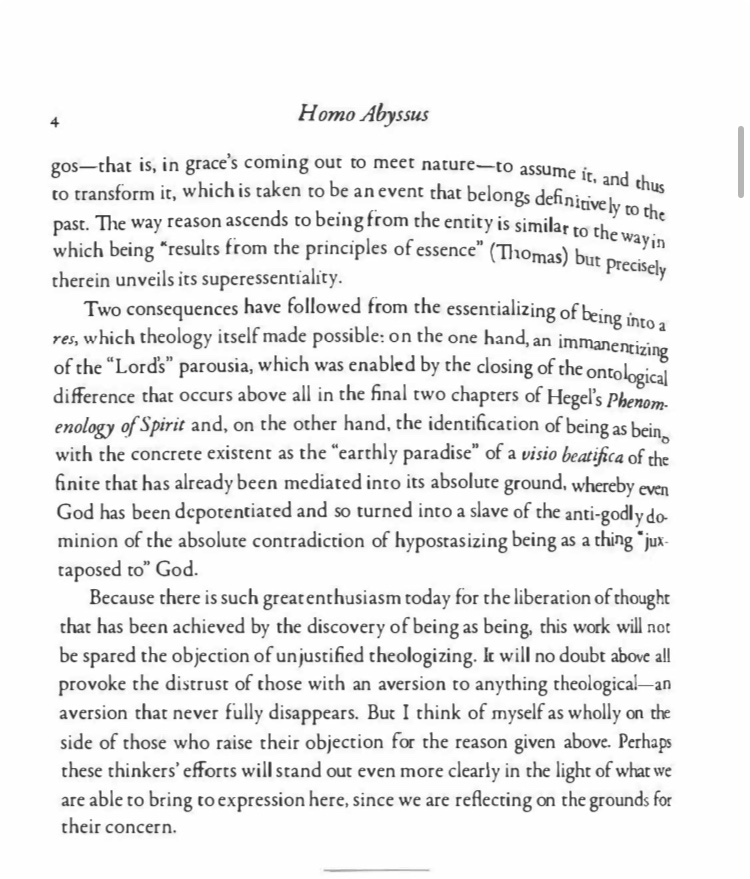
@Wired73813850 @_bonaventurian @NcesThriceGreat @Filoremy @HazThomist @espanyolatzaros @daniel_drain I’ll particularly draw attention to these two paragraphs. Hegel gets a shoutout, as one could perhaps view the book as a response to his totalistic vision. Following much 20th century German Catholic thought (Przywara, Balthasar), Ulrich is concerned to allow philosophy to…
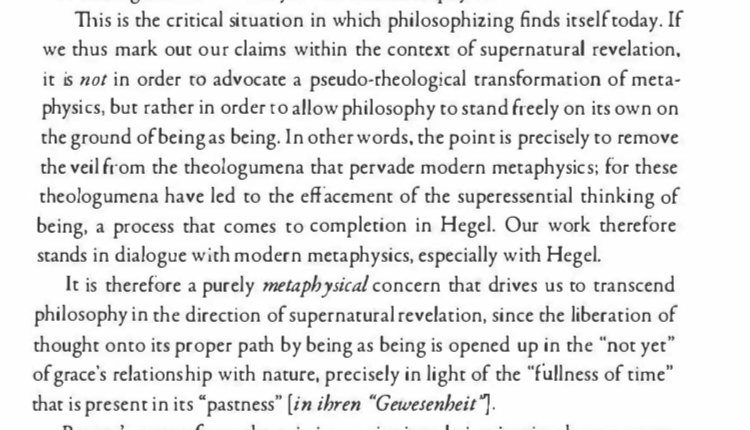
@Wired73813850 @_bonaventurian @NcesThriceGreat @Filoremy @HazThomist @espanyolatzaros @daniel_drain …maintain its autonomy; although he mentions theological doctrines, and they often play an important role (particularly the trinity but also Christology/ Mariology), this is not a theological book. One might call it an example (among the finest) of truly “Christian metaphysics.”
@Wired73813850 @_bonaventurian @NcesThriceGreat @Filoremy @HazThomist @espanyolatzaros @daniel_drain CHAPTER 1 - The Operatio of Speculative Thought as an Enactment of Ontological Hope Ulrich begins the work proper with a reflection on the paradox of reflecting on being: how is it that we intend to “reach” being if we are always already “within” it, as outside being is nothing?
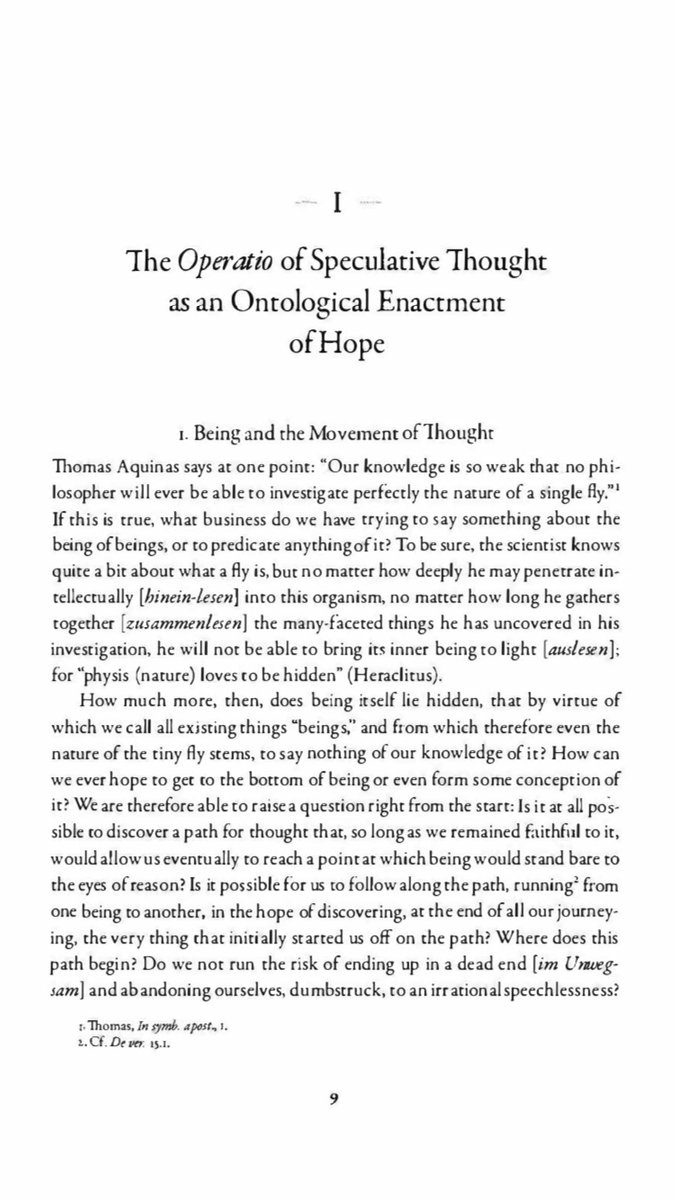
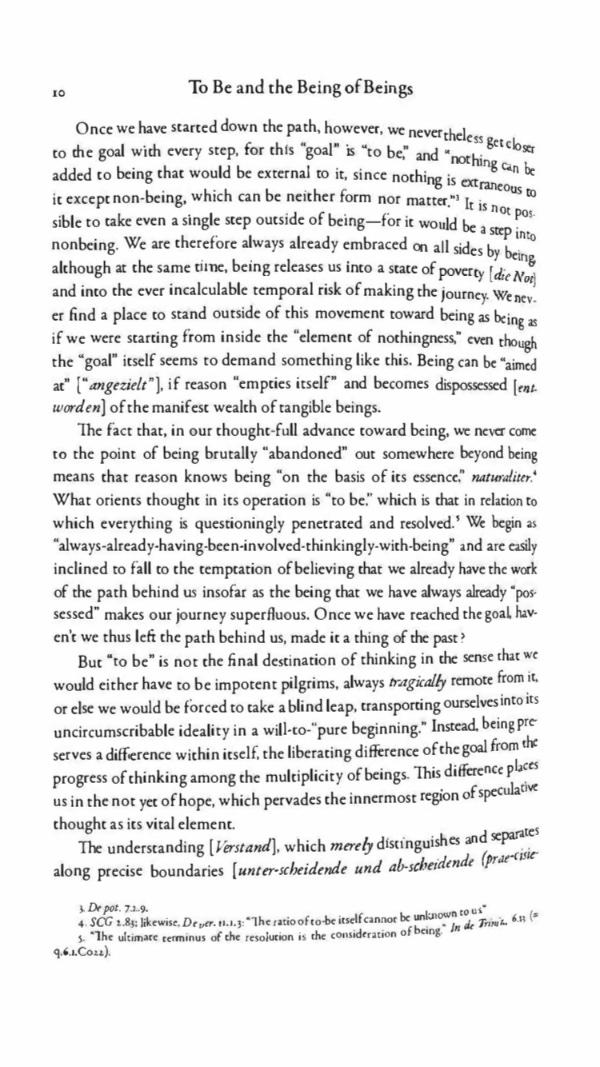
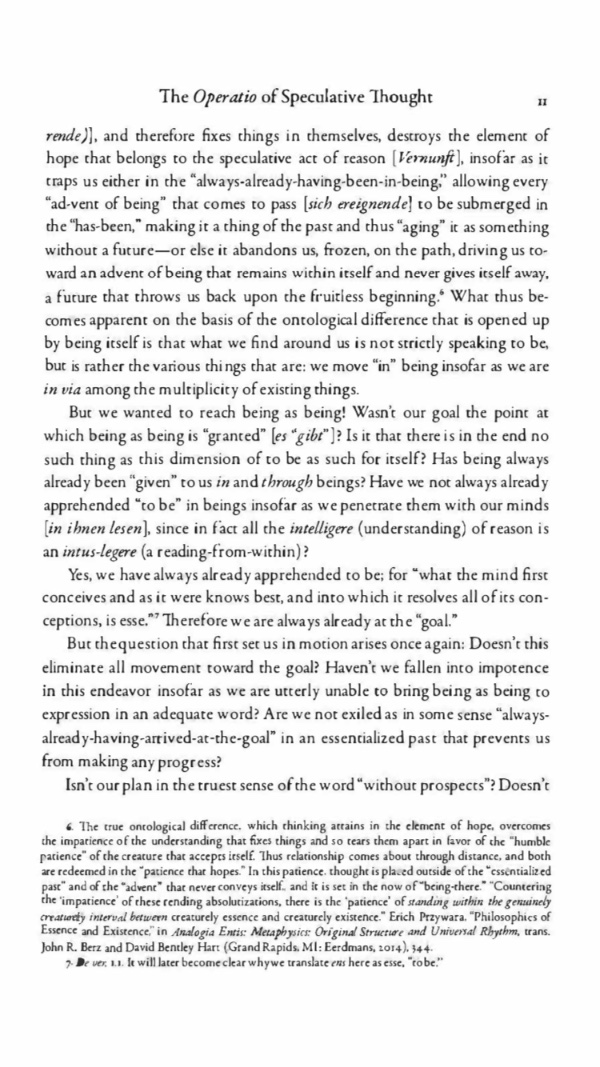

@Wired73813850 @_bonaventurian @NcesThriceGreat @Filoremy @HazThomist @espanyolatzaros @daniel_drain Consider these few paragraphs in particular, as their themes will continue throughout. As being is found only in and through beings, and not as subsisting in itself, so reason aims for being not as leaping “beyond” beings, as if we could somehow stand outside being and observe…

@Wired73813850 @_bonaventurian @NcesThriceGreat @Filoremy @HazThomist @espanyolatzaros @daniel_drain …it, rather than viewing it “from within.” A key point of the book is that this aspect of being, its paradoxically containing its “difference” within itself, aka its non-subsistence, is not a weakness or finitude but rather part of its very perfection as imaging divine goodness.
@Wired73813850 @_bonaventurian @NcesThriceGreat @Filoremy @HazThomist @espanyolatzaros @daniel_drain These points bear reflection. What is meant by being, as in “being and beings”? Following Heidegger, Ulrich is not speaking of the more conventional Thomist “real distinction” within a given thing, but of subsisting beings and the encompassing dimension of “beingness,” that is…
@Wired73813850 @_bonaventurian @NcesThriceGreat @Filoremy @HazThomist @espanyolatzaros @daniel_drain …“esse commune,” which is not of any particular being but rather more like the reality and interconnectedness of all created being(s). This “realm of beingness” is what Puntel would call the most fundamental dimension of discourse, that which is presupposed in all thought, …
@Wired73813850 @_bonaventurian @NcesThriceGreat @Filoremy @HazThomist @espanyolatzaros @daniel_drain …outside of which nothing can be. Consider also Lonergan’s “unrestricted desire to know,” the object of which is being in this sense. Lonergan’s notion of determinate questions within the horizon of questioning illustrates the being/beings relationship quite well. While our…
@Wired73813850 @_bonaventurian @NcesThriceGreat @Filoremy @HazThomist @espanyolatzaros @daniel_drain …potential questioning is infinite, our actual questioning takes the form of determinate questions within that infinite horizon. We do not understand infinitely being as such, but rather come to understand being in and through understanding beings; … all our knowledge takes…
@Wired73813850 @_bonaventurian @NcesThriceGreat @Filoremy @HazThomist @espanyolatzaros @daniel_drain …place within being, although we do not grasp being itself apart from this mediation. In summary, questions take place as movement and advancement within the infinite horizon of questioning, as beings dwell in the infinite horizon of being, which itself is not “a being.” …
@Wired73813850 @_bonaventurian @NcesThriceGreat @Filoremy @HazThomist @espanyolatzaros @daniel_drain …Ulrich’s work will largely explore the implications of this paradoxical relationship of mutual reciprocity, primarily using the image of gift/givenness: being does not subsist in itself but only as the being of beings as wholly given over to them, a “wealth of poverty.”
To return to the text, Ulrich sees this kind of interaction in the movement of reason, an archetypically exitus-reditus scheme: substance/accident, sign/signified, etc. Even the intellect itself shares in this motion, being “emptied” out into things as “none” of them yet…
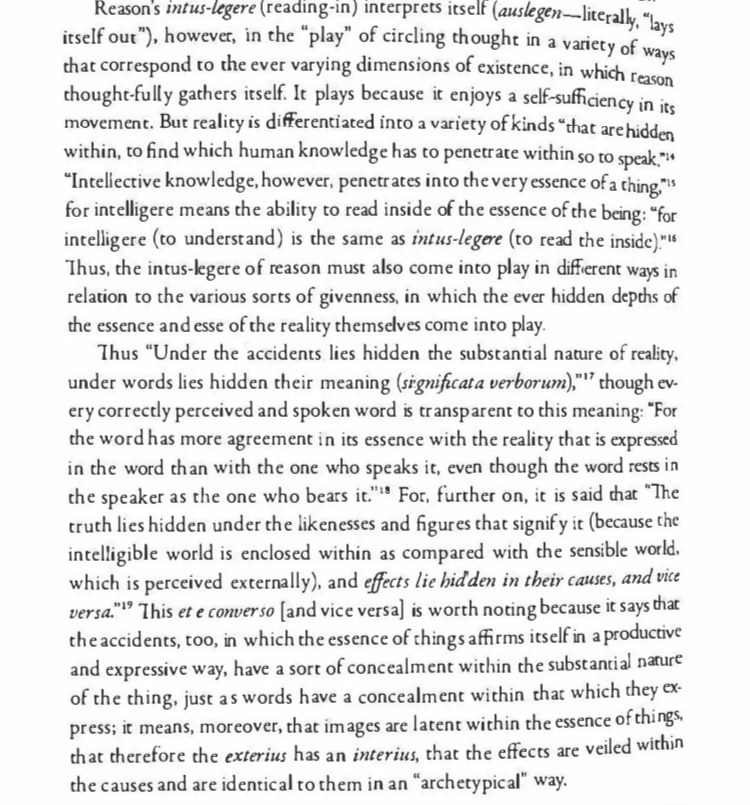
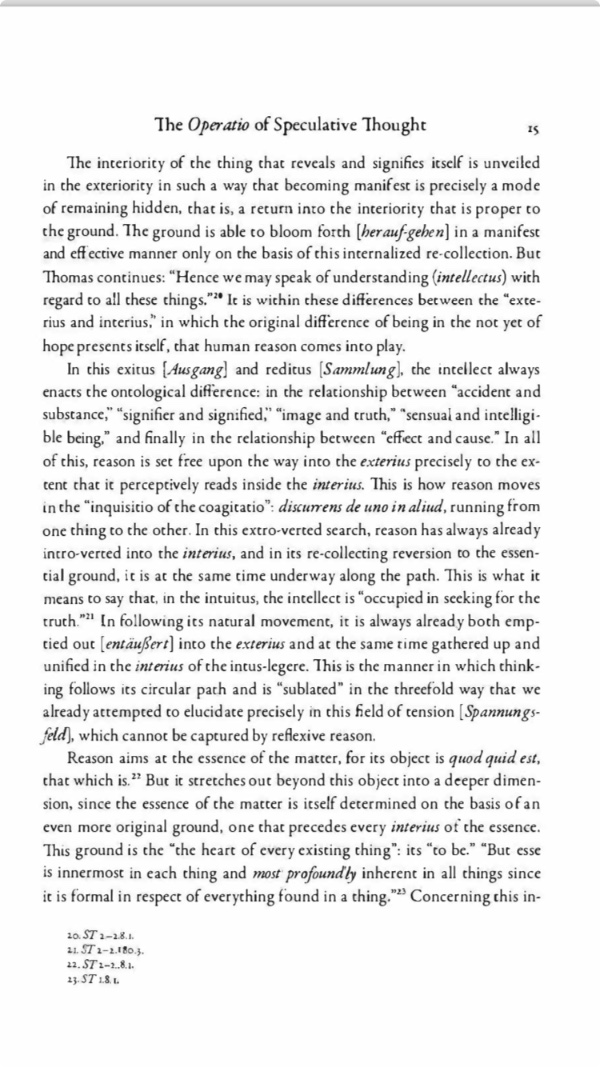

…gathering them into a unity.
Moving on, Ulrich here introduces an important notion: being is not a tertium quid between creature and God, so thinking being as being does not open a horizon which would comprehend both. Being/esse commune is in a way “nothing” or no-thing, but this approach is to be…


…distinguished from approaches that identify being as a merely conceptual universality with no corresponding referent in reality (Scotus, Suarez, etc). Being as such does not exist/subsist outside the mind, and yet that point will be decisive in Ulrich’s articulating an…
…anthropological speculative metaphysics. Being as “nothing” is not something we isolate or gaze upon in itself, yet as it is in a structural sense the “first effect” of God, God shines forth in the being of beings. The “little way” thus “circles” or remains always with beings…

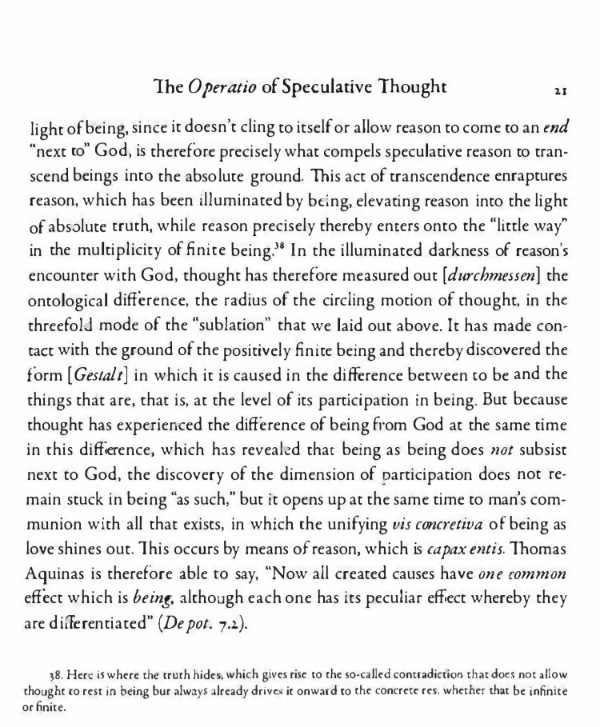
…even as it seeks to view them in their non-subsisting being.
CHAPTER 2 - A Preliminary Exposition of the “Crisis of Being” from the Perspective of Bonitas This short chapter introduces more key points, particularly of being’s “crisis.” The “crisis” of being refers to the seemingly contradictory elements of being’s structure that arise…

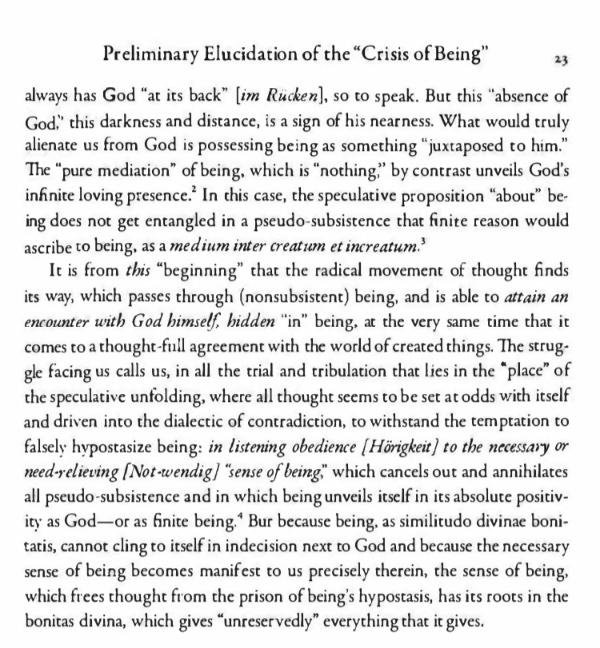
…if one views those structural elements as intelligibly independent in separation from the unity of ens. In such a view, the universal actuality and non-subsistence of being becomes a *contradiction* which must be overcome through various means (eg Hegel’s dialectic). Ulrich…
…by contrast avoids this by viewing the structure of ens from the perspective of “bonitas.” To summarize, Ulrich draws on the often-neglected tripartite structure of ens in Aquinas as being-essence-subsistence in which each element mediates and is mediated by the others (the…
…work of Rudi te Velde is particularly good on this). Ulrich identifies subsistence with “bonicity” or goodness, as part of an alignment of this structure to the transcendental properties of being (recall that truth is in the mind but goodness *in things,* for instance). …
… The primacy of the subsisting being ensures that the seemingly opposed moments of super-essentiality and essential limitation, or infinity and finitude, remain in tension rather than collapsing into one or into a dialectical opposition. Goodness takes on a particularly…

… important role in imagine the divine generosity, which does not “hold back” in creating but rather truly allows the creature to be and to be itself. Being, while itself not a subsisting being, provides the “space” in which creatures can be.
To reiterate, being is never a third thing between God and creature; being is always either finite being or ipsum esse subsistens. Our understanding of God comes not from “extracting” a common “core” from all beings but rather from the “foregrasp” (not identical with Rahner’s)…
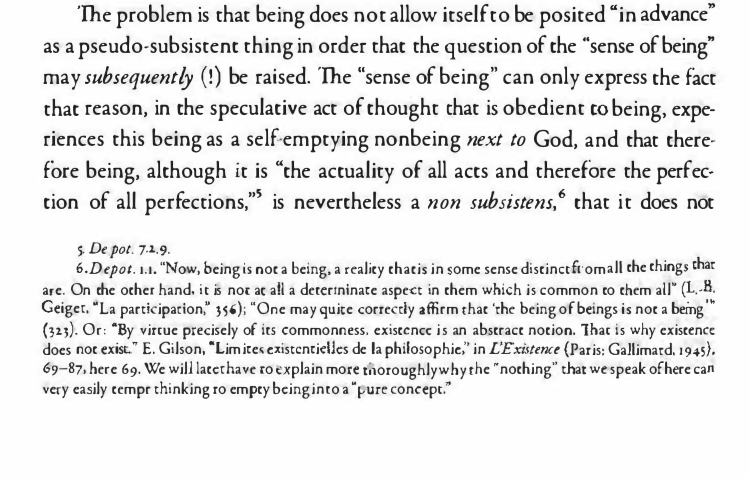

… of being in and through beings, and vice-versa (recall Lonergan’s questions-in-questioning). There is a “forward” and “backward” in the one movement of being and beings, but in which neither element (or “being itself”) can be isolated and cleanly separated from the other.
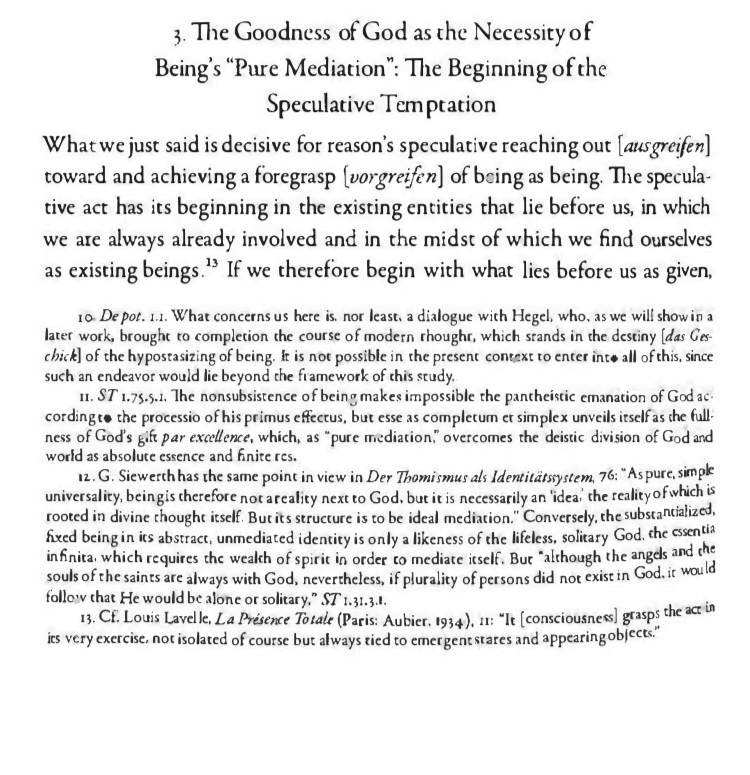

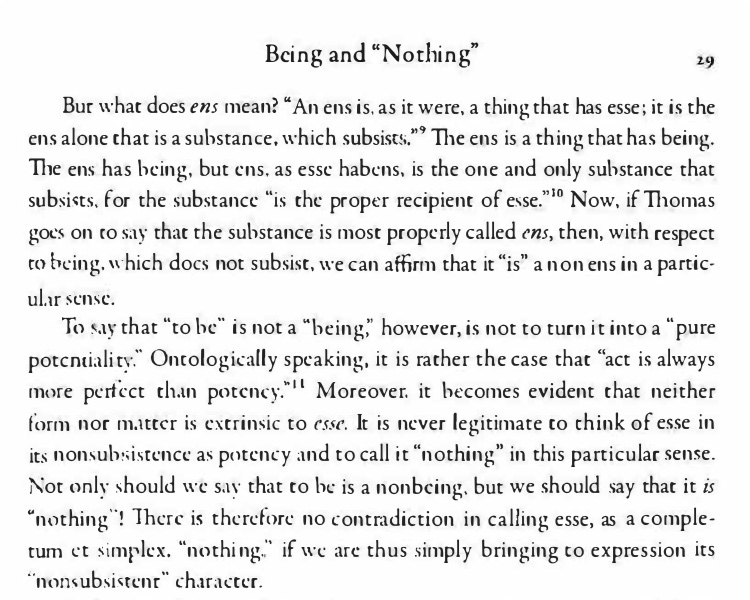
CHAPTER 3 - Being and “Nothing” A short yet decisive chapter, here we are introduced to the heart of Ulrich’s creative appropriation of Aquinas, that of being or esse commune as “complete and simple but non-subsistent.” Not itself “a being,” being itself is infinite and perfect.
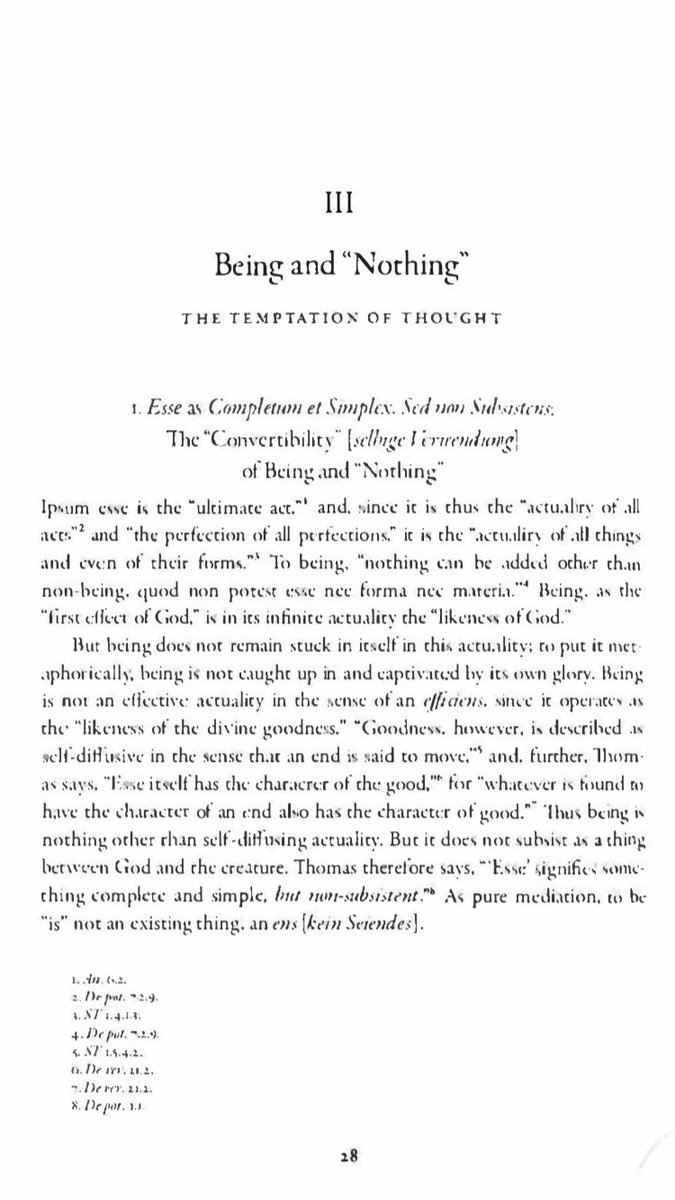
Consider the structure of ens. Truly speaking, “what is” is not esse but rather ens, a supposit. And yet as part of its very structure that supposit contains being, or rather is “contained in” being. A paradox: no reality or perfection is outside being, yet being’s perfection…