
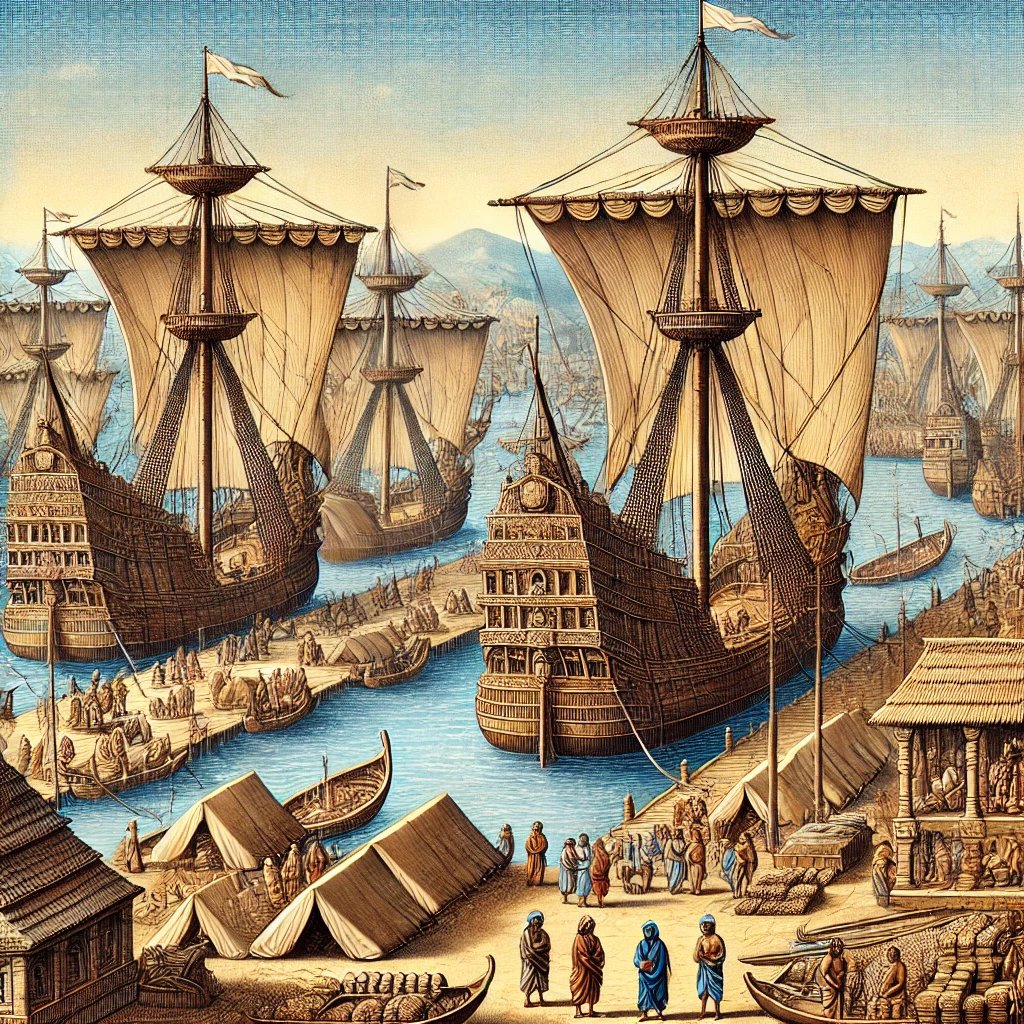
India at the Pinnacle of Trade Bali Yatra Festival: Celebrated on Kartik Purnima in Odisha, Bali Yatra commemorates the ancient Kalinga Empire traders who set sail to Bali, Java, Sumatra, Borneo, and Sri Lanka around 1500-2000 years ago. This annual festival marks the beginning
Historical Trade Dominance: The Kalinga Empire's naval superiority is acknowledged by the great poet Kalidasa, who referred to its king as the 'God of the Sea' in his epic 'Raghuvamsa.' Major ancient ports like Tamralipti (Tamulk), Manikpatna, Chelitalo, Pithunda, Gopalpur,
Indian-Chinese Trade: Trade between India and China is documented in Kautilya's 'Arthashastra' (circa 350 BCE) and by Chinese envoy Zhang Qian during the Han Dynasty (195-114 BCE). India's exports to China included spices, Ayurvedic medicines, cotton textiles, precious stones,
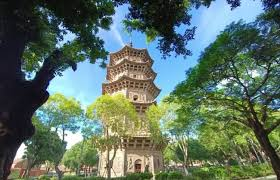
Indian Ports and Trade Routes: Mahabalipuram was a significant port for trade with China and Southeast Asia, mentioned in the 'Periplus of the Erythraean Sea' (circa 1st century CE). Other major ports included Tuticorin, Ennore, Machilipatnam, and Arikamedu. Excavations in
Trade Networks and Infrastructure: Ancient trade routes like Uttarapatha (North Route) and Dakshinapatha (South Route) are mentioned in Panini’s 'Ashtadhyayi' (circa 500 BCE). Key cities along these routes included Pataliputra, Vaishali, Rajgriha, Kashi, Mathura, Ayodhya, Taxila,
Correction of Historical Misconceptions: Contrary to popular belief, Sher Shah Suri (1540-1545) did not build the first highway but repaired existing trade routes. Ancient highways like Uttarapatha existed 2500 years ago, mentioned in the Vinaya Pitaka, Jataka tales, and by
Conclusion: Ancient India had an extensive and sophisticated trade network, contributing to its status as the world's wealthiest nation during that period. This rich legacy is evident in various historical and archaeological records, showcasing India's prominence in global trade