
Was St. Kaleb of Axum a Miaphysite? Yes. A thread 🧵
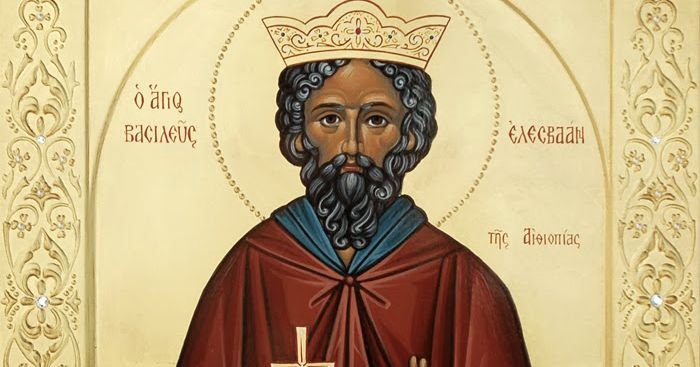
The Kingdom of Axum in the fifth- and sixth-centuries was evidently Miaphysite, as can be deduced from the historical sources.
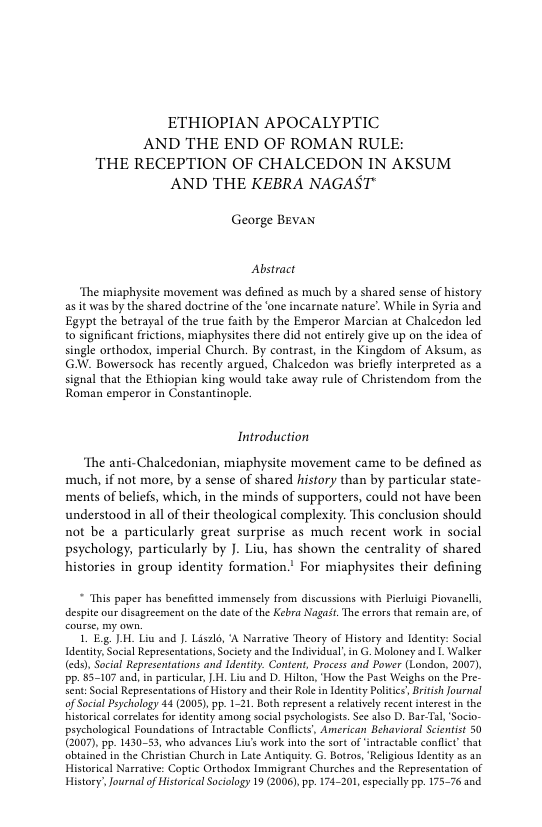
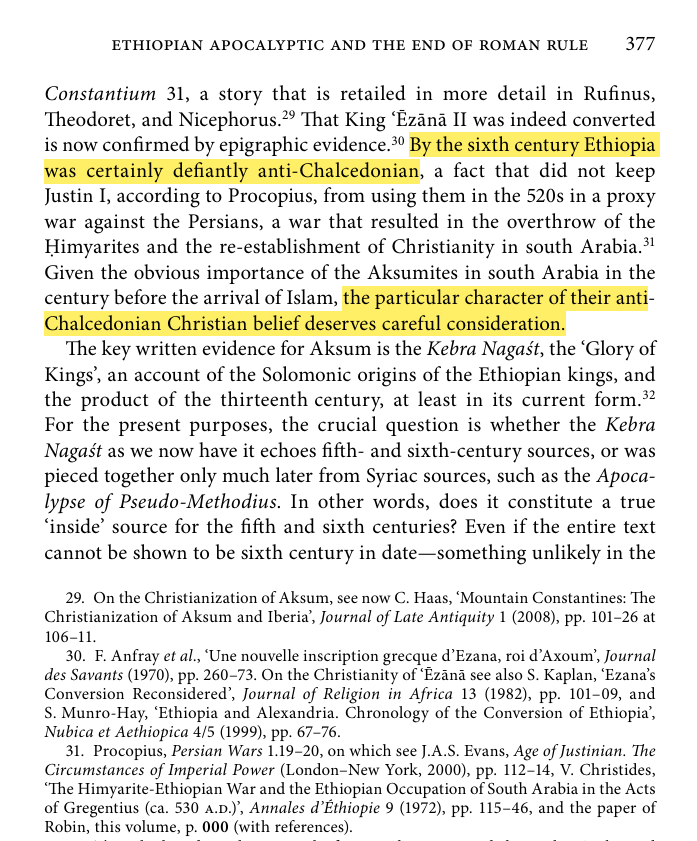
The Kings of Axum, particularly MHDYS (Mehadeyis), officially held and proclaimed an anti-Chalcedonian attitude, perceiving themselves as defenders of the Orthodox Faith.
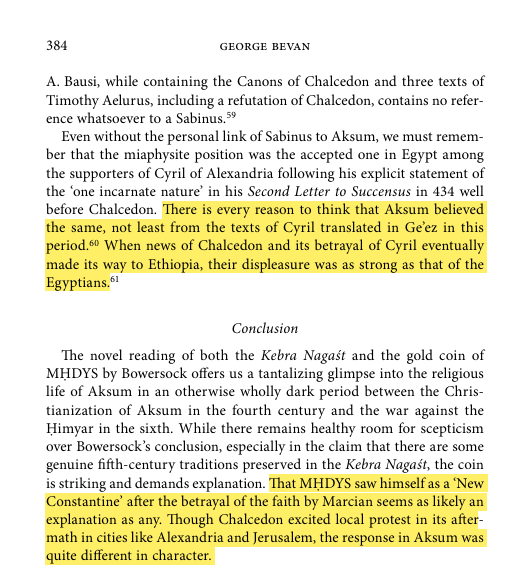
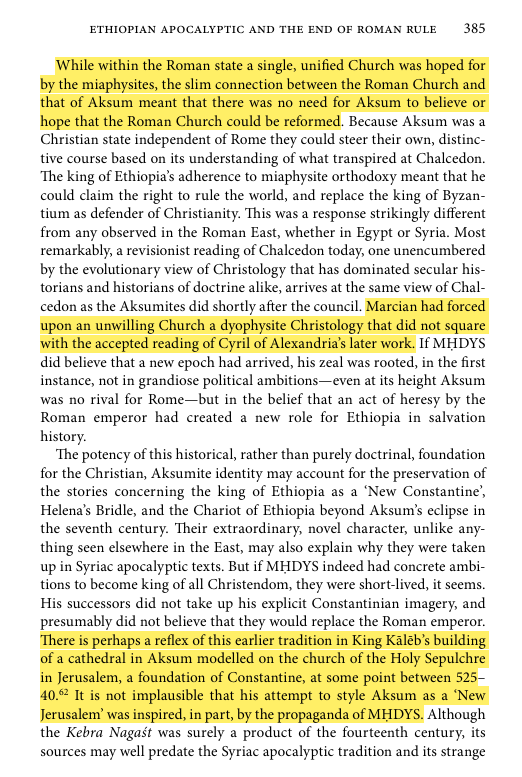
That is to say, Axum’s overall tolerant view of other beliefs including Dyophysitism (excepting certain cases, e.g. when a Chalcedonian bishop was burnt and put to death for attempting to impose his beliefs) never negated nor diminished its own, unique confessional identity.
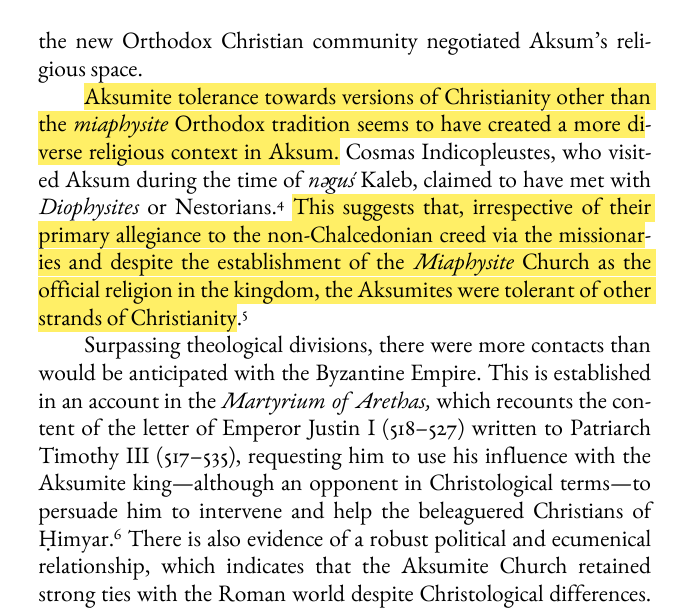
This deduction is confirmed by analyses of the Byzantine diplomatic sources.
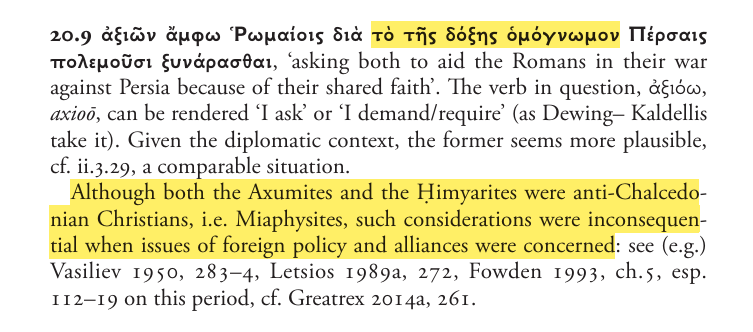
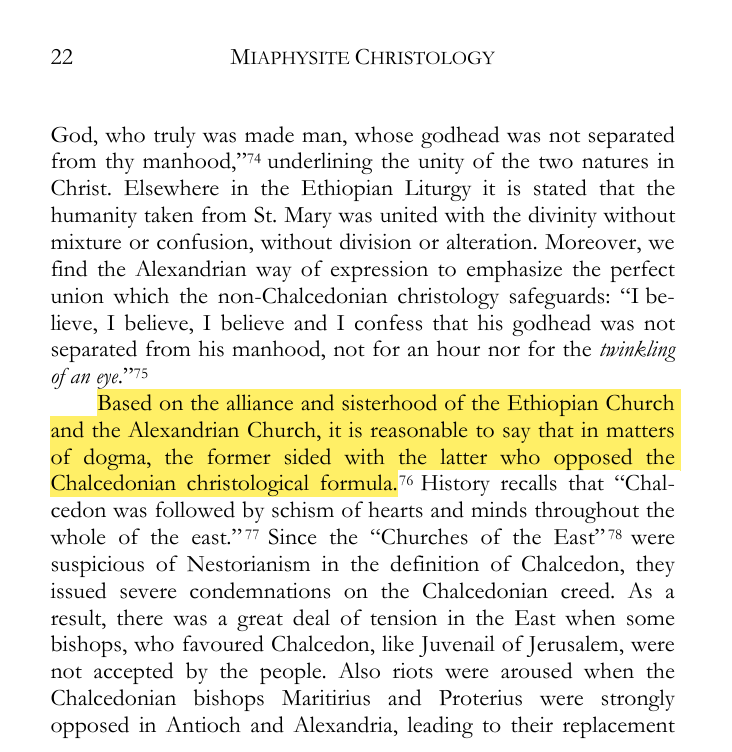
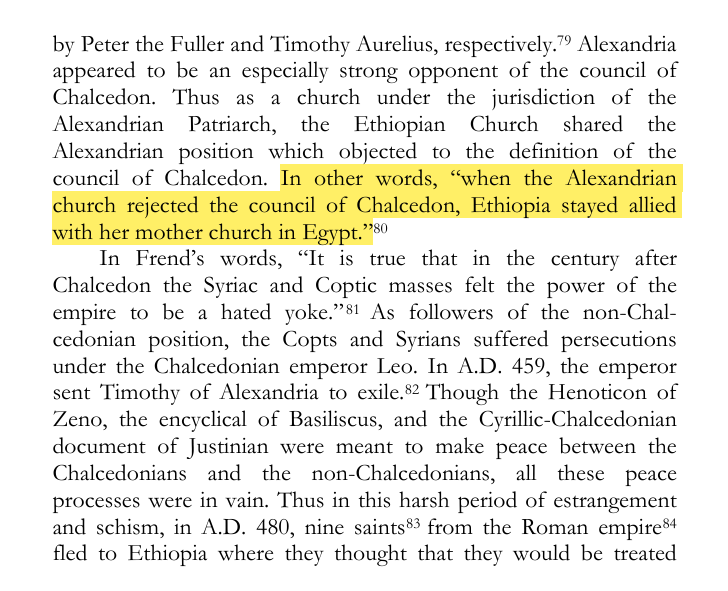
Keeping this in mind, we turn to the confession of Kaleb of Axum. To begin with, the Church of Axum / Ethiopia was under the Miaphysite Patriarchate of Alexandria, and there is zilch evidence to suggest anything to the contrary.
As attested by the sixth-century text Martyrdom of Arethas, Emperor Justin I wrote to Pat. Timothy III [IV], the anti-Chalcedonian Miaphysite Patriarch of Alexandria, asking the Patriarch to instruct Kaleb of Axum to invade and destroy the Himyarites.

Later Chalcedonian copyists of the text were so embarrassed by the mention of a Miaphysite Primate in connection with Kaleb, that they either censured his name, or replaced it with “Asterius” — a clearly fictious name — or “Proterius”, who died around a century ago.


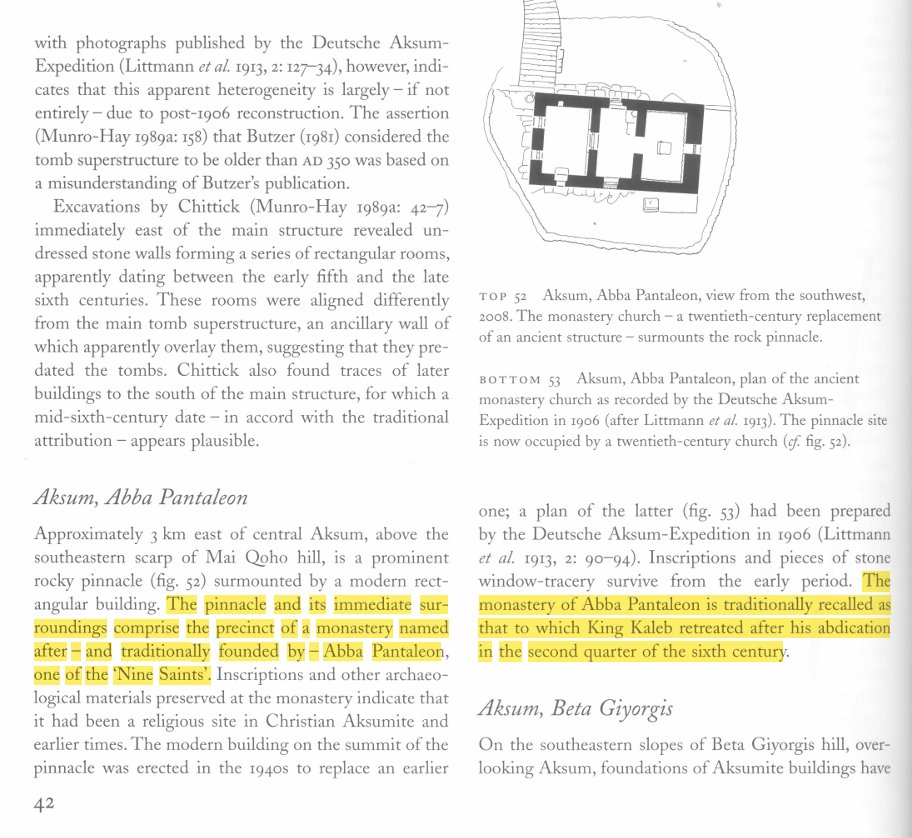
If native Axumite tradition is to be accepted, Kaleb retired to the Monastery of Abba Pentalewon, a Miaphysite monastic settlement, established by Abba Pentalewon, one among the anti-Chalcedonian “Nine Monks”, who played a vital role in the growth of the Ethiopian Church.

Indeed, this isn’t the only instance where a historically Miaphysite / anti-Chalcedonian figure came to be venerated by Eastern Orthodoxy. Peter the Iberian is another example, besides Kaleb.


To summarize, then, historical evidence points to Kaleb of Axum being a Miaphysite: he was under the jurisdiction of a Miaphysite See, received counsel and directives from his anti-Chalcedonian Primate, and retired to a Miaphysite monastery. 🧵
@hypatiusbrontes in the meantime the Armenian OOs literally venerate Saint Romanos Melodos who was clearly a Chalcedonian.
@AUGUSTINUSMAXIM That’s unsurprising, since St. Romanos condemns everything except Miaphysitism in his hymns, and the communion between Armenia and Constantinople ceased only in the 550s, around the time of Romanos’s death. I presume he would’ve already been a part of their liturgical tradition.
@hypatiusbrontes To be fair, being a king and not a theologian, he was probably ignorant of the issue. Similarly to St Isaac, the Orthodox Church canonized him even though he (probably) wasn't in communion with us so I will still venerate both of them as Saints.
@Ortho_Enjoyer I believe it is quite implausible that Kaleb was unaware / ignorant of the issue. Axum was engaged in the whole matter, as Bevan’s article (cited above) makes clear: for instance, Kaleb’s predecessor MHDYS appears to have been well aware of Marcian and Chalcedon 451.
@hypatiusbrontes you

@hypatiusbrontes Tbh I will concede that St. Kaleb(yes I still call him a Saint) was a miaphysite but the ethiopian church wasn't as miaphysite as the history books say seeing as they were willing to work with Chalcedonian Rome to protect Christians in yemen, maybe they weren't so stuanch
@il_nazri I get your point, but "Miaphysite" is the confession of faith: that doesn't have much to do with political alliances as such. What we could say is that Axum tolerated Chalcedonians to an extent and was willing to work with the pro-Chalcedonian Byzantium for a common goal.
@hypatiusbrontes how is he a saint then?
@hypatiusbrontes You're indian