
NEW: Days after the 10/7 Hama attack, UC Davis professor Jemma Decristo posted threateningly (⬇️⬇️) about "zionist journalists." It rightly sparked outrage. But an even bigger story is how Decristo was recruited to a tenure-track job at UC Davis in the first place 🧵
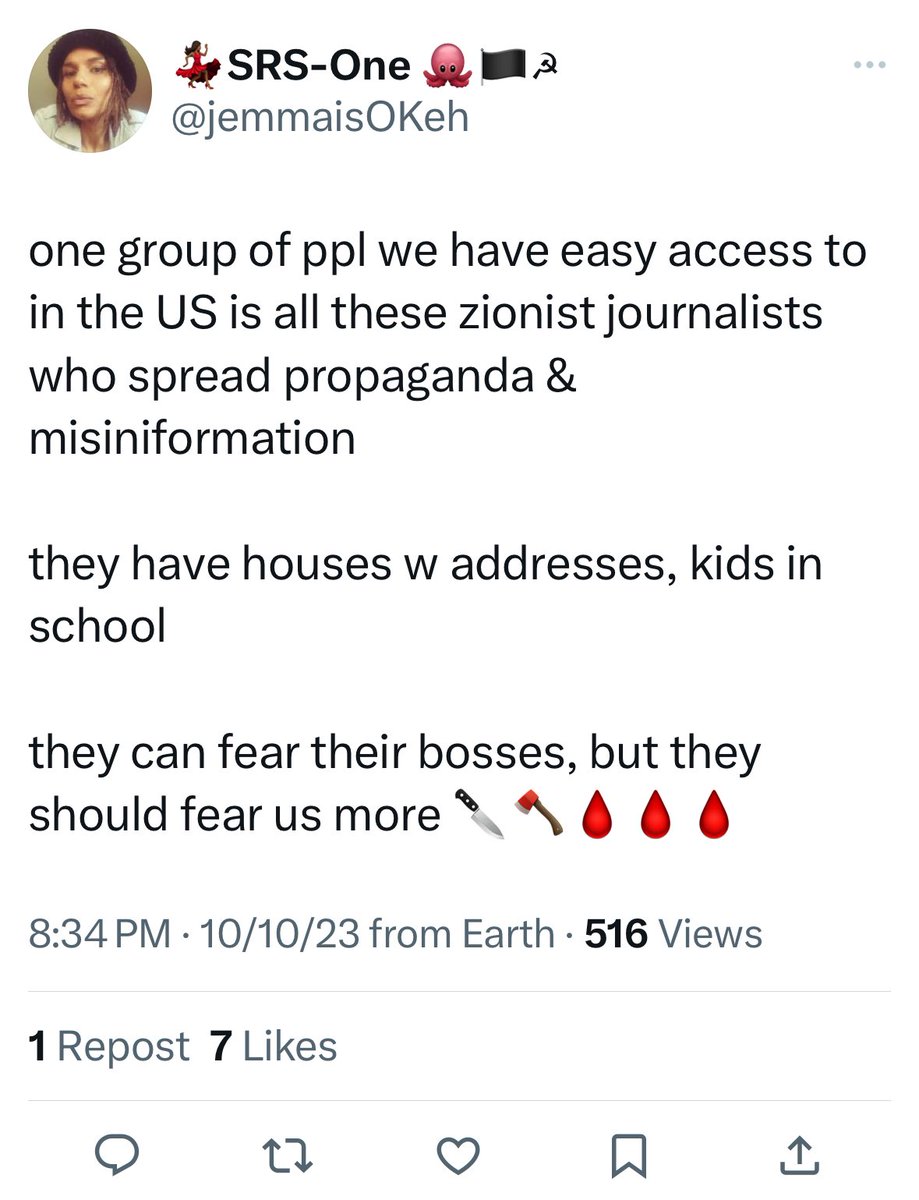
Today I’m introducing a series of investigations (@CityJournal) on the scholar-activist pipeline. For years, universities, private foundations, and federal agencies have furnished a well-funded career pathway for scholar who hold an activist vision for higher education.

@CityJournal When Decristo expressed sympathy for overt violence, UC Davis’s chancellor publicly condemned the comments—saying they were inconsistent with the university's commitment to social justice. But ironically, Decristo was hired precisely because of that commitment.


@CityJournal Decristo, once described by UC Davis as a “scholar-artist-activist,” was recruited through the President’s Postdoctoral Fellowship Program (PPFP). The program fast-tracks scholars showing a “commitment to diversity” into permanent faculty roles.

@CityJournal A growing number of like-minded activists are following Decristo’s path. This constellation of “pipeline programs” is intended to hire more minorities. In practice, it heavily favors academics who view their scholarship as an extension of a political agenda.
@CityJournal The programs raise obvious legal questions. After President Trump’s executive order “ending illegal discrimination and restoring merit-based opportunity,” many universities will likely reassess their pipeline initiatives to avoid federal scrutiny.
@CityJournal The universities with the most influential programs, though, have framed them as race-neutral, selecting scholars based on their commitment to diversity, equity, and inclusion. So far, this has helped universities avoid legal scrutiny, but it creates other big issues.
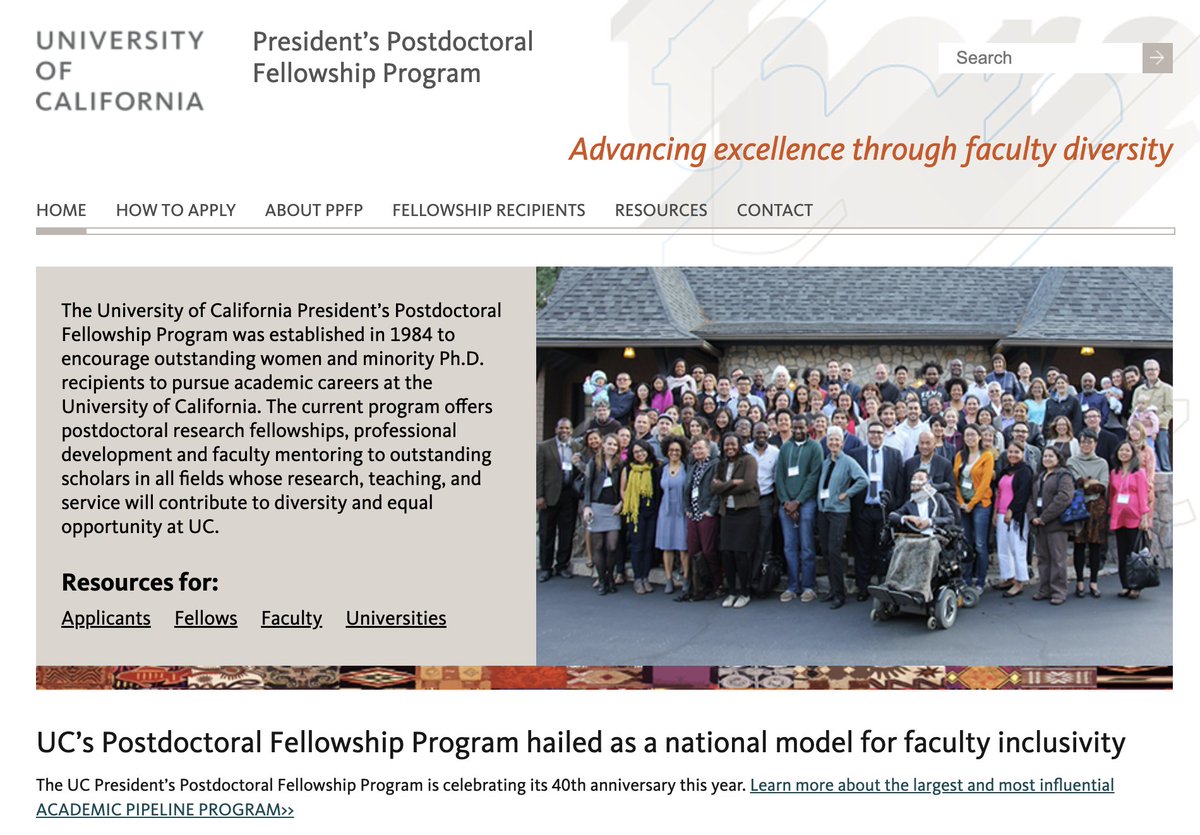
@CityJournal This series is based on thousands of pages acquired through public records requests and interviews with more than a dozen scholars. It explores what is perhaps the most popular pipeline program, responsible for Decristo’s professorship at UC Davis: the fellow-to-faculty model.
@CityJournal Usually, a postdoctoral fellowship is just a small step in a scholar’s career. After a fellowship ends, former postdocs apply to competitive positions on the open market. The diversity-focused fellow-to-faculty model modifies this pathway:
@CityJournal 1⃣ Administrators select fellows with special attention to how they contribute to diversity. 2⃣ Fellows are then heavily favored for—often guaranteed—tenure-track positions, bypassing a competitive search. It’s a side-door into the faculty lounge.
@CityJournal The UC system’s President's Postdoctoral Fellowship Program (PPFP), which the university recently declared the “largest and most influential academic pipeline program of its kind in the nation,” serves as a blueprint for the rest of the country.

@CityJournal At its inception in 1984, PPFP awarded postdocs only to women and minorities. In 1996, when California voters banned affirmative action, identity-based criteria became unambiguously illegal, forcing the program to evolve.
@CityJournal Here's the critical innovation. The UC system now seeks diversity by proxy. A grant proposal I obtained describes how PPFP assesses “a candidate’s demonstrated contributions to diversity and equal opportunity,” rather than using race or sex.

@CityJournal This “innovative holistic selection process,” the proposal carefully points out, is “compliant with the current legal environment in California.”

@CityJournal PPFP, notably, spearheaded the practice of “converting” its postdocs into tenure-track faculty positions. The system established a hiring incentive, promising UC campuses cash for hiring former fellows, along with a special search waiver.
@CityJournal Abigail Thompson, a professor of mathematics at UC Davis, was herself a President’s Postdoctoral Fellow at UC Berkeley in 1986. She is now critical of the program.
@CityJournal In 2019, Thompson published a piece in Notices of the American Mathematical Society, arguing against the use of mandatory diversity statements in faculty hiring. “In reality it’s a political test, and it’s a political test with teeth,” Thompson wrote

@CityJournal When I spoke with Thompson, she pointed out how the program gives administrators an especially convenient tool for advancing their hiring priorities. “This is such a clever idea, really,” Thompson said. “No one pays close attention to how these postdocs are hired.”
@CityJournal Perhaps because it’s so effective, the fellow-to-faculty model exploded throughout American higher education in the early 2010s, as universities around the country began ratcheting up their DEI efforts.
@CityJournal To give a few examples: The University of Arizona President’s Postdoctoral Fellowship Program seeks applicants whose research “addresses issues such as race, gender, diversity and inclusion.”

@CityJournal The University of Virginia’s Race, Place, and Equity Postdoctoral Fellowship hires postdocs who “address issues of race, justice, and equity.”

@CityJournal In the UC system, each individual campus created its own parallel program to fund the hiring of additional PPFP applicants.


@CityJournal A network of universities also coordinate on the model: the Partnership for Faculty Diversity, created by the UC system and the University of Michigan. Members include Carnegie Mellon University, Georgia Tech, and the Fred Hutchinson Cancer Research Center.
@CityJournal Many universities outside the UC orbit have adopted the model as well. At the University of South Carolina, it’s called the Bridge-to-Faculty. At Ohio State, one such program is simply called Fellow-to-Faculty.


@CityJournal A 2021 article in Frontiers in Psychology identified 38 diversity-focused postdoctoral “conversion” programs nationwide, though I found more in my investigation.

@CityJournal The upshot: a small but significant number of faculty across the country have been given side-door jobs based on ideological affinity.
@CityJournal The University of Michigan’s Collegiate Fellowship Program, one of two fellowships at the university, which I’ve reported on before, has recruited 55 fellows since 2016. https://x.com/JohnDSailer/stat...
@CityJournal The University of Illinois Chicago has recruited 49 Bridge to Faculty Fellows since 2020. This program is the centerpiece of a recent lawsuit against UIC. https://x.com/aaronsibarium/st...
@CityJournal Most remarkably, over the last five years, five percent of the tenure-track hires in the UC System were former president’s or chancellor’s postdoctoral fellows.

@CityJournal The programs thus provide a steady stream of scholars committed to activist disciplines like “critical refugee studies” and “queer of color critique.” They raise serious questions about academic freedom, the role of outside funder, and the prospects for higher education reform.
@CityJournal When the dust settles from the battle over DEI, reformers will still have to contend with the way that universities have reshaped their basic mission through the construction of a scholar-activist pipeline. https://www.city-journal.org/a...