
What did the Greeks think about Ancient India? > Did they think India too righteous to invade anyone? > That it had no slaves? > And that caste made everything run smoothly? In the 2nd century CE, Arrian wrote Indica — a Greek account of India that claimed all this & more. 🧵

Arrian wasn’t your average Greek historian. Born in the 2nd century CE, centuries after Alexander the Great had already marched across the known world, Arrian took it upon himself to write Indica, a kind of historical travelogue.


This travelogue was to be about India through the eyes of Alexander’s expedition. Now, Arrian didn’t personally visit India. But he did something nearly as valuable — he compiled the observations of those who did, especially Nearchus, one of Alexander the Great’s admirals.

He also drew from earlier authors, including Eratosthenes and Megasthenes — whose own work, also called Indica, shaped Greek views of India for generations. Through their eyes, and through Arrian’s words, we get one of the earliest detailed Greco-Roman accounts of India.


Indica begins with geography. Arrian marvels at the Indus and the Ganges, comparing them to the Danube and the Nile. Then come older stories — of Heracles and Dionysus, whom the Greeks believed had once conquered India before Alexander.
He goes on to describe Indian society: its castes, customs, and hunting methods. He lists animals and oddities, then shifts into a detailed retelling of Nearchus’ naval journey from India to Babylon — complete with strange tribes, sea battles, and long stretches of coastline.

Occasionally, he pauses to describe the people they encountered, like the fish-eating Ichthyophagi. And finally, he ends with Nearchus reuniting with Alexander and being honored for surviving the journey.
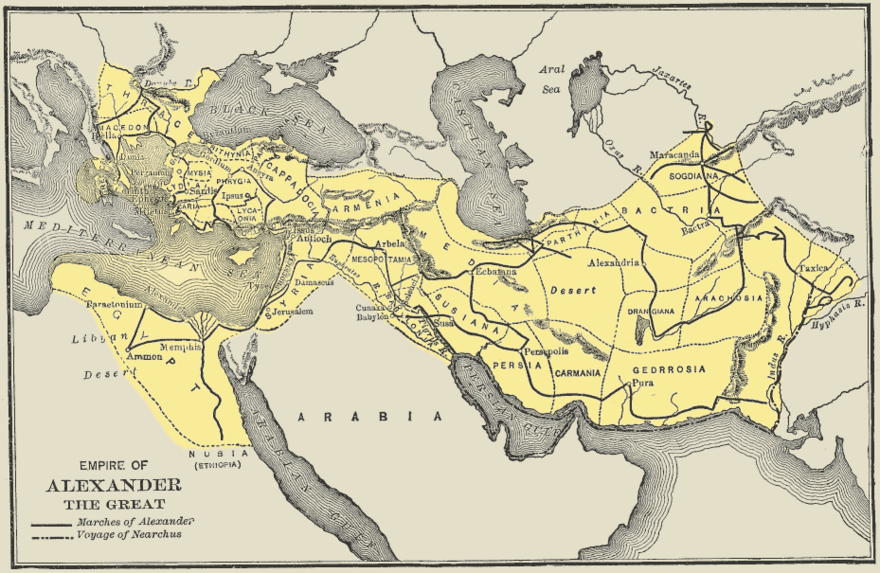
Now, not everything in the Indica is spot-on. Some things are accurate, some are exaggerated & a few are just… strange. But it offers us a useful look at how the Greeks & Romans thought about India. It’s as much a mirror of their imagination as it is a record of Indian reality.
Take Arrian’s very first impression about how Indians looked. He makes a pointed distinction between North & South Indians. That mix of observation and stereotyping tells us less about Indians and more about the reference points the Greeks were working with.
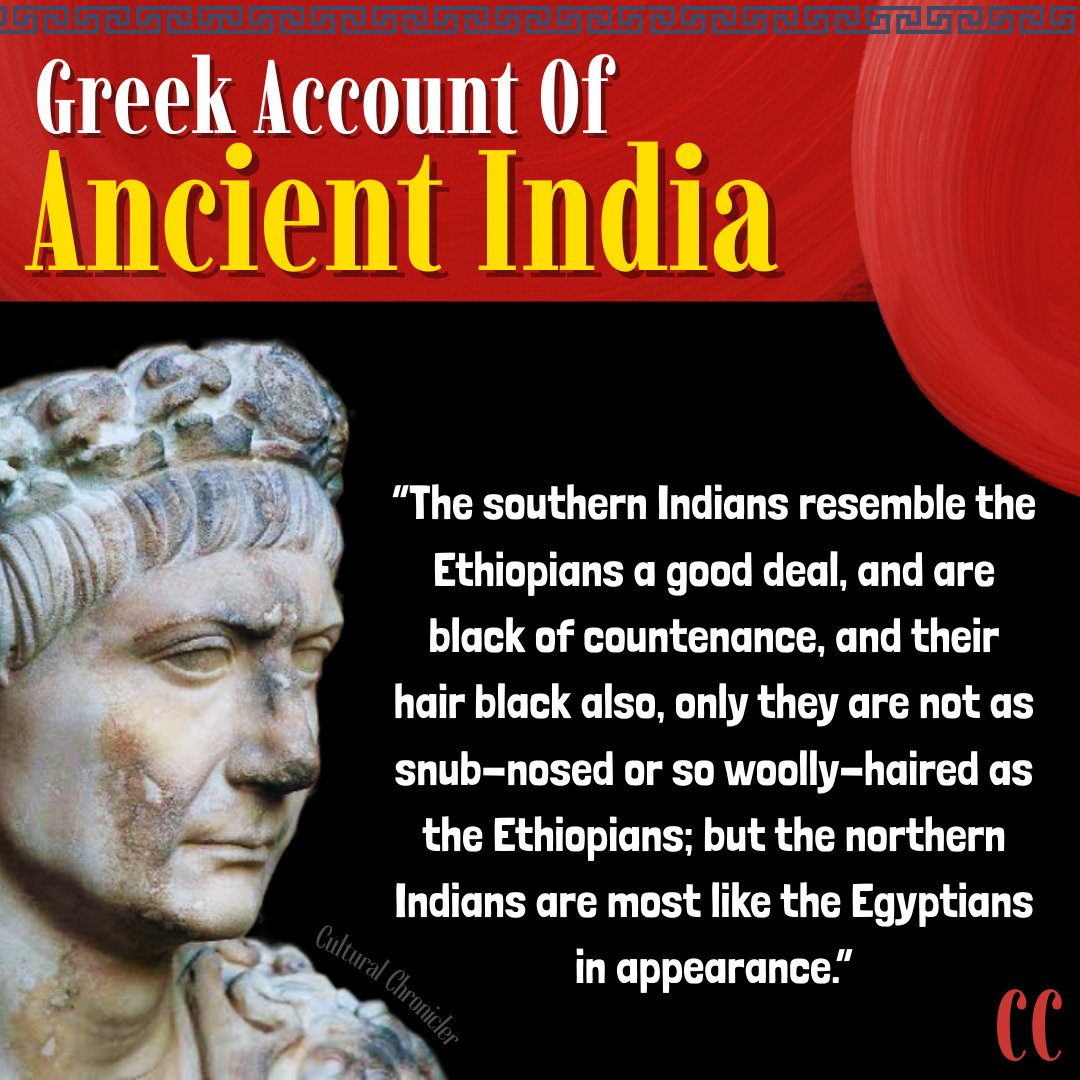
For them, Ethiopians and Egyptians were the outer markers of the known world. India sat just beyond, so it was compared to what they already knew.

This a passing comment, but it tells us something too. The Greeks saw Indians as different, but not necessarily inferior — just distinct, & sometimes admirable. He then makes a claim about slavery in ancient Indian society that in today’s world, would raise a LOT of eyebrows.

India had no slavery at all. Arrian was genuinely stunned by this fact. He even compares Indians to the Spartans, who supposedly didn’t do slavery either — except they, um, did. They had helots, who were basically slaves with a slightly more poetic job description.
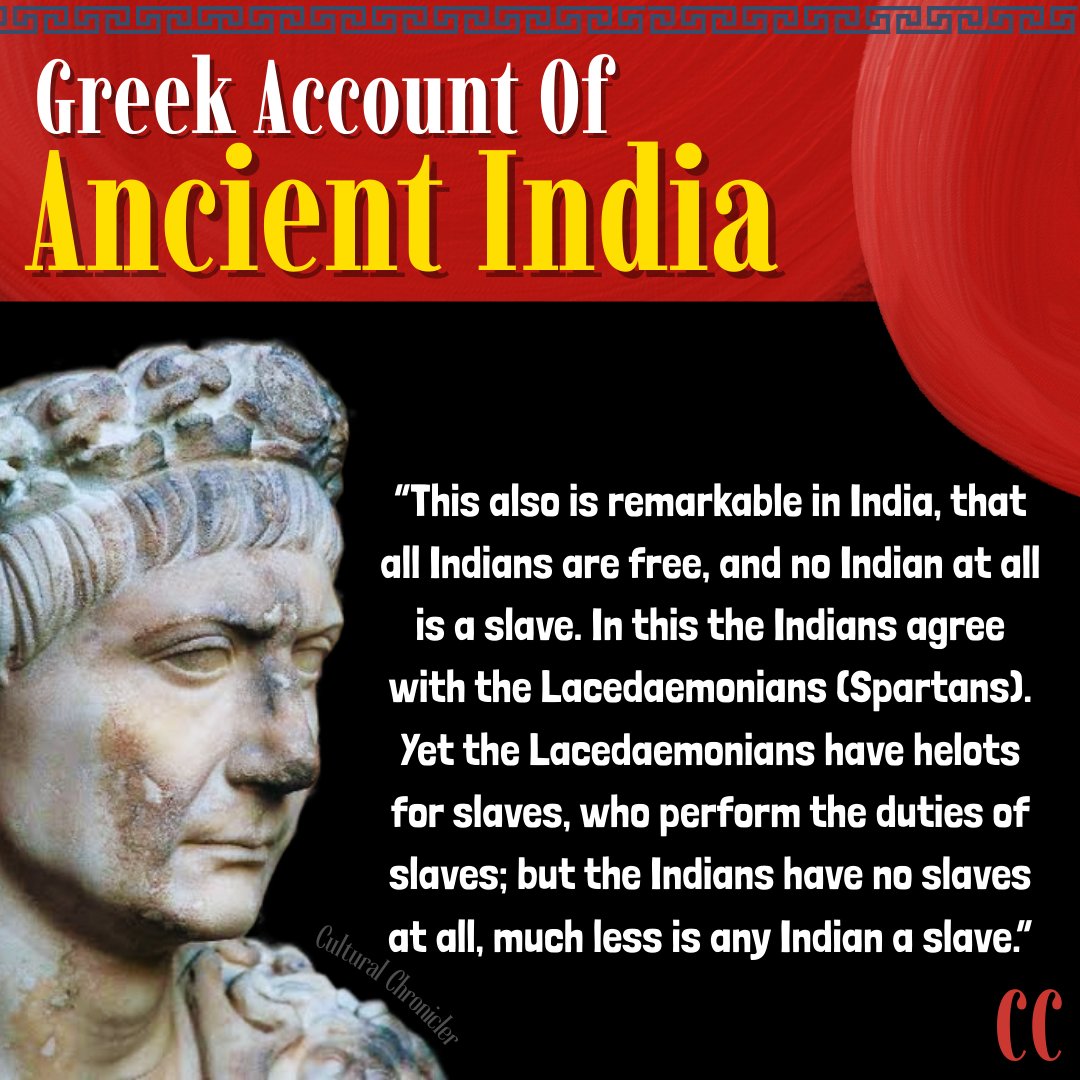
But clearly, to a Roman observer — whose world ran on slaves — this was nothing short of astonishing. Arrian uses it to paint Indian society as unusually moral, even ideal. That theme of moral superiority pops up again & again in his writings.

It’s a flattering picture that reveals more about Greek perceptions than Indian policy. Take this quote attached below for instance. The idea that a whole civilisation could be powerful, advanced, and not expansionist was, to them, remarkable.

Other parts of Indica hint at Indian values. For example, let’s take funerals. The Greeks built statues and tombs to honour their ancestors. Meanwhile, Indians, Arrian writes, honoured the dead through song and virtue (which kinda slaps, ngl).
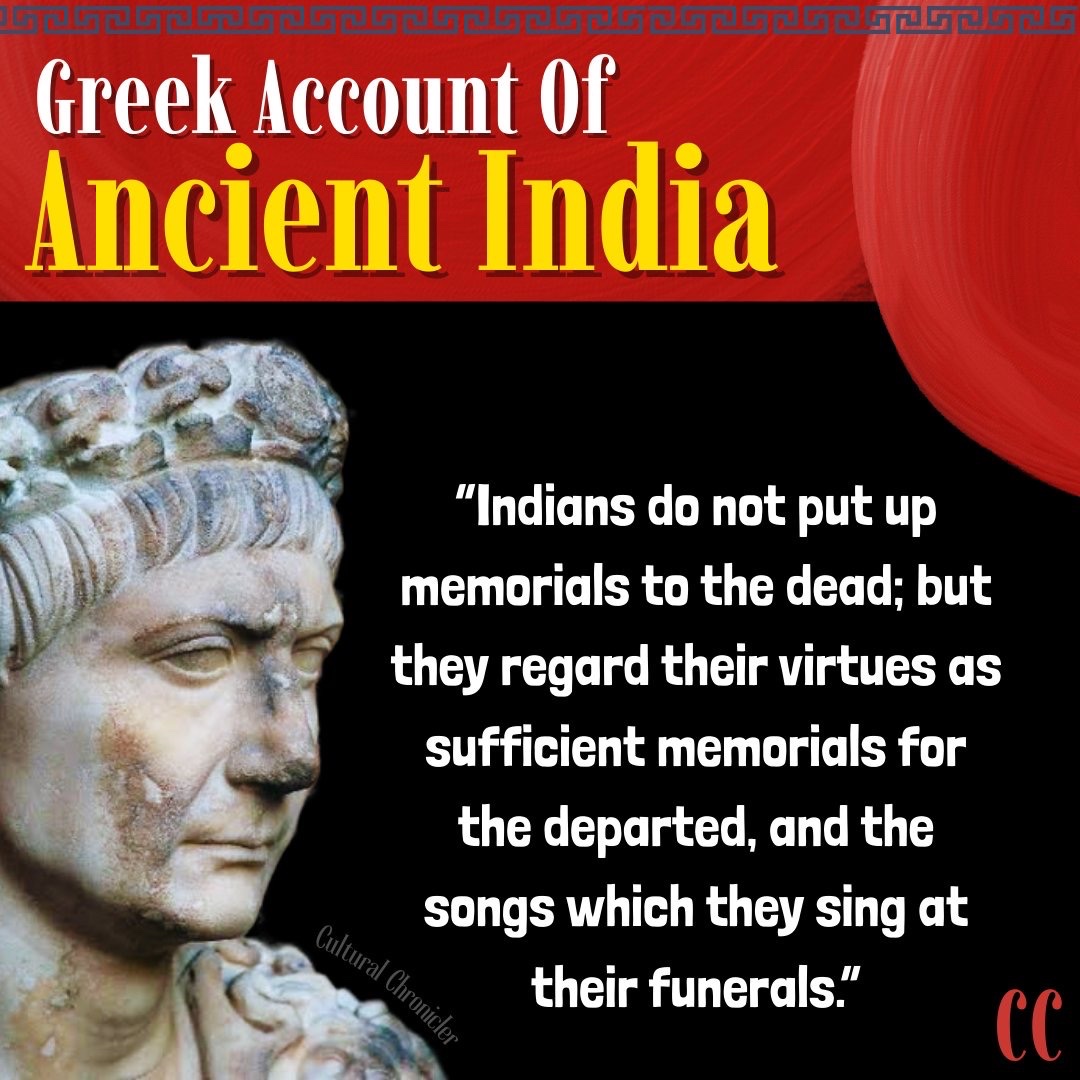
And of course, caste gets a mention. The number is a little more than the usual four we hear about, which leads to a lot of interesting implications. Either way, it shows that even 2,000 years ago, outsiders were trying to make sense of India’s social jigsaw puzzle.
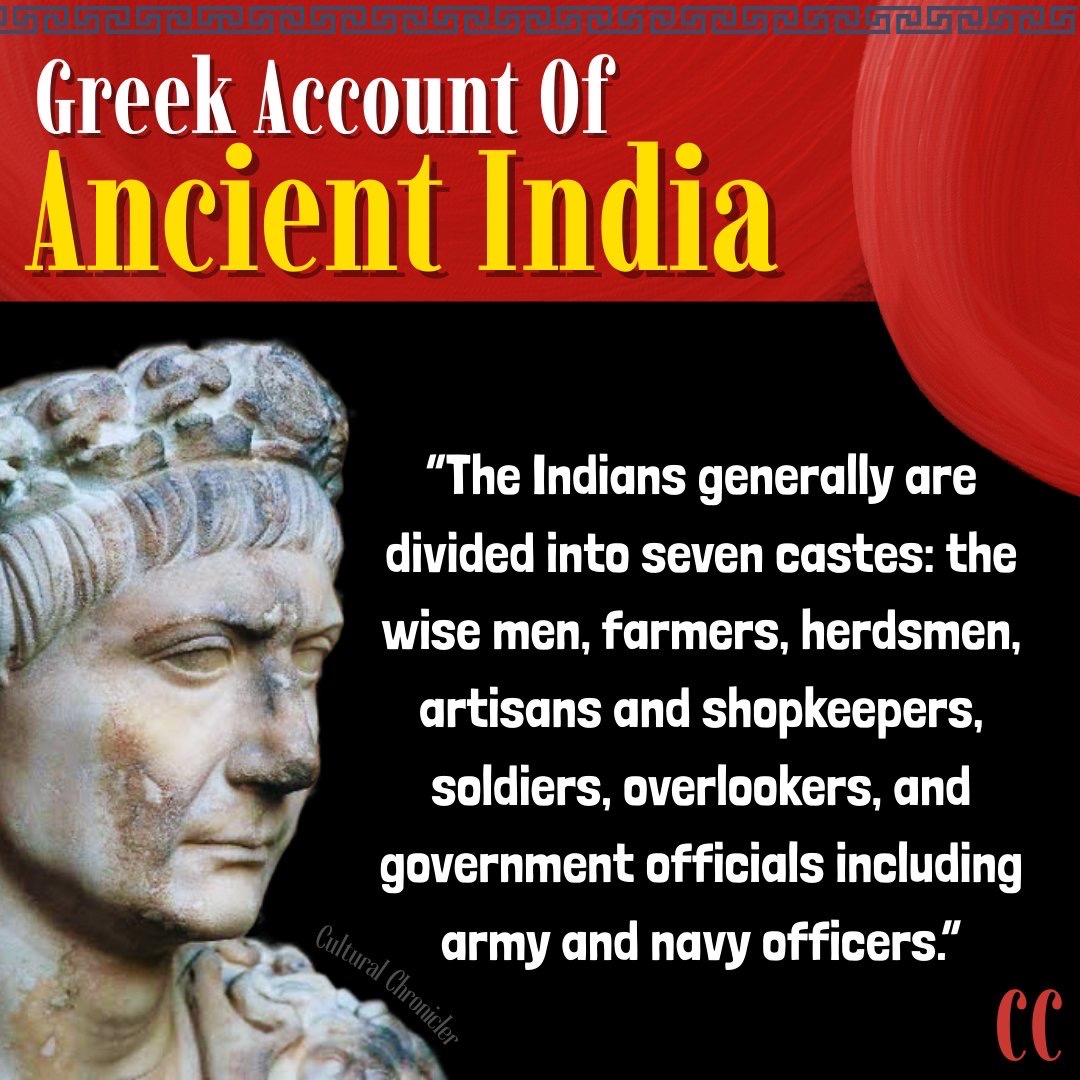
So what do we make of Indica? Not a guidebook to ancient India, certainly. But it is a guide to how India was seen by the Greeks and Romans — how it puzzled them, impressed them, and challenged their assumptions. That, in itself, makes it worth reading.
We go even deeper on Roman & Greek perceptions of India in our free newsletter — do NOT miss the next email. 500+ people read it: culture, art and history. Go click the link and Subscribe NOW. ⬇️ http://cultchron.substack.com/...