
1/ Chinese activity in March exceeded expectations, providing strong momentum for the trade war with the US and reducing the urgency for fiscal support GDP has returned above its pre-pandemic trend with two consecutive quarters of growth above potential: nearly 8% in Q4 2024 and 6% in Q1 2025

2/ On the supply side, industrial production has continued to drive activity, running 5% above its pre-pandemic trend and showing an annualized 6-month growth of 8.5%, which is 2 percentage points above its pre-2020 average

3/ External demand remained a strong support, with export volumes up over 11% y/y in Q1. However, US demand, which could have surged in anticipation of higher tariffs on Chinese goods, remained restrained

4/ Private domestic demand, particularly consumption, has significantly contributed to growth acceleration over the past 6 months. Retail sales have grown at a rate of over 9% ann. since Oct., similar to total consumption spending (which includes services) nearly returning to its pre-pandemic trend
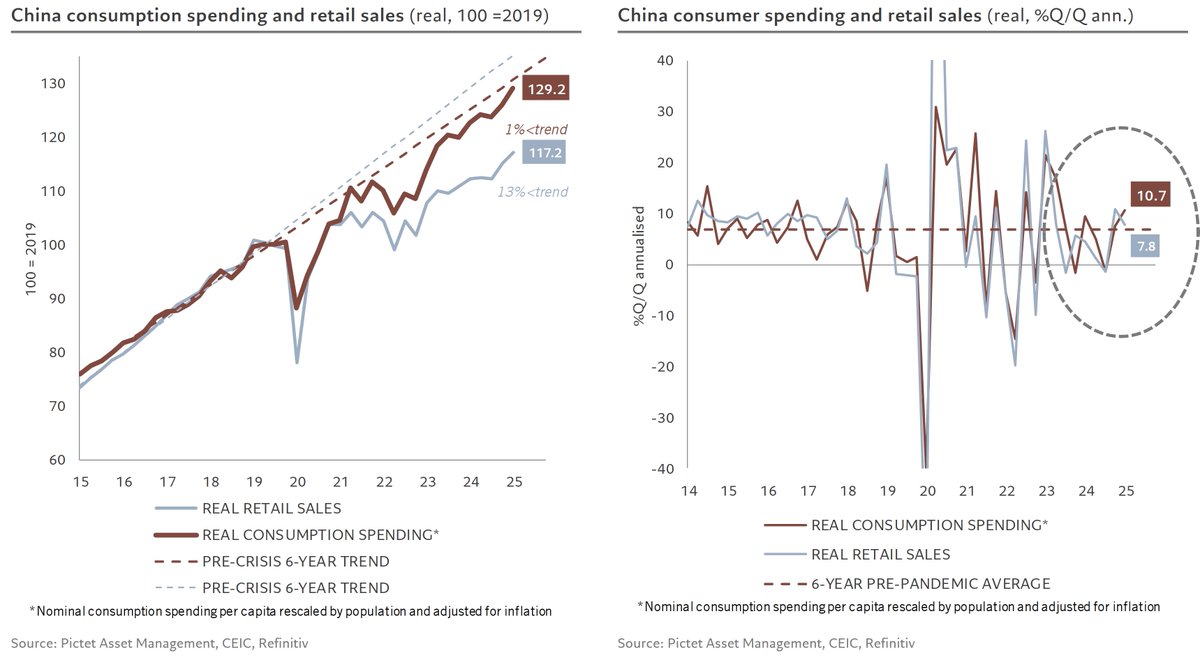
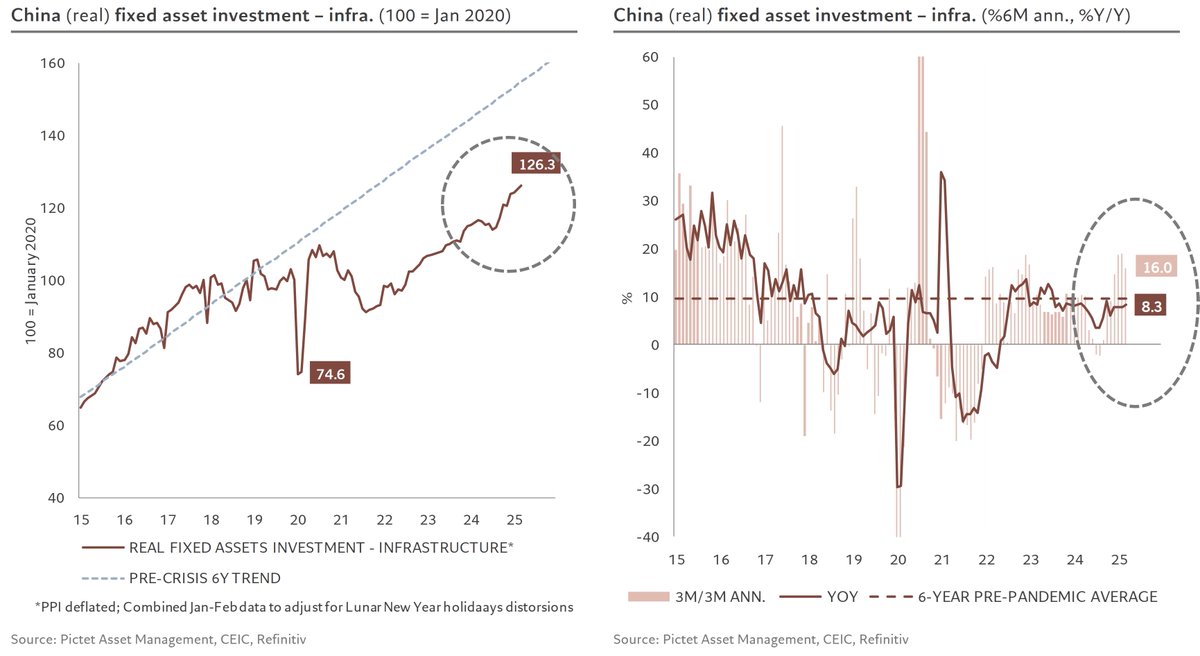
5/ Real fixed investments have also increased at a high rate over the past six months, exceeding 11% (6m ann.), which is more than 2 percentage points above their pre-2020 average…

6/ ... and they continue to be largely driven by manufacturing sector investments, which have been growing above their pre-crisis average for over a year…

7/ … infrastructure investments have contributed to the recovery since last November, following the stimulus announced at the end of September 2024, with six-month annualized growth at 16%.
8/ However, residential investments remain deeply depressed, down 10% y/y, and have been contracting for three and a half years, with demand for residential space unchanged at these low levels

9/ With residential supply plummeting further, down 76% from its peak, inventories of unsold spaces began to turn around last October, albeit slowly, and remain far from the estimated norm of around 13 months

10/ As a result, housing prices continue to fall, although there's been improvement since November, with the proportion of cities seeing house price increases rising from less than 5% to over 30%.

11/ The other relatively good news is that our construction activity indicator, which includes 10 real estate market indicators, has been stable for a year, suggesting that this sector should no longer negatively impact growth…
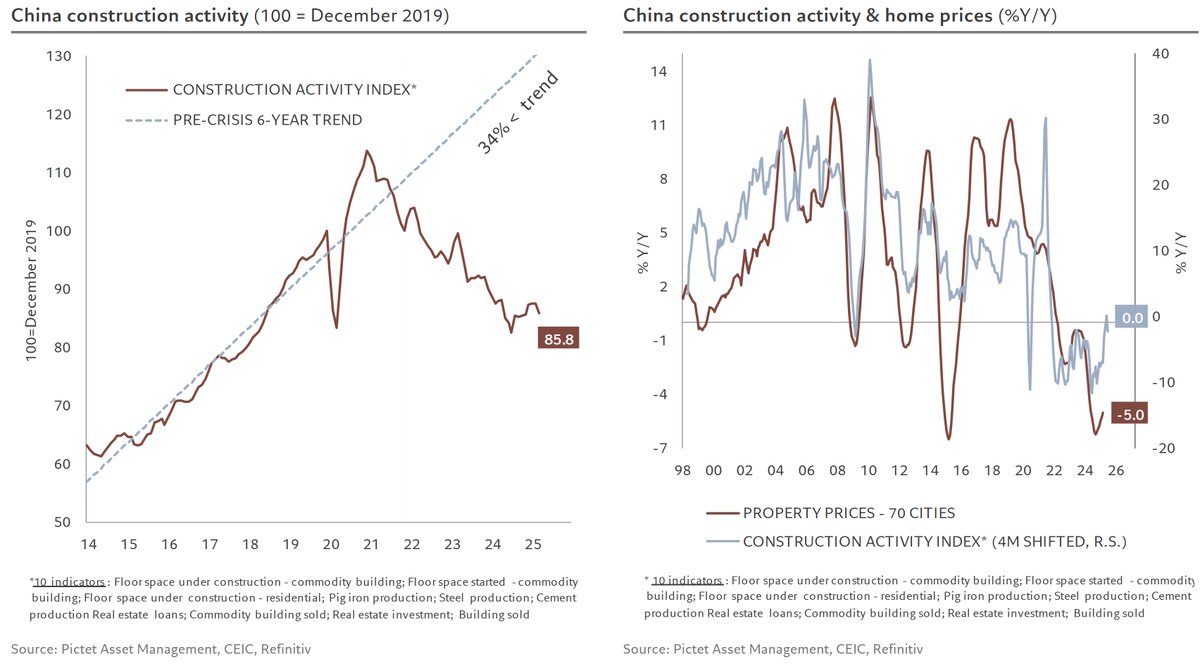
12/ ... but it's certain that this sector will continue to diminish in GDP size—currently at its 2004 level of 5.6%—as projections using four fundamental factors indicate growth of only 1.5%, well below overall GDP growth.

13/ Finally, total social financing (TSF) continues to expand, with growth over 10% annually this quarter, resulting in a significant increase in credit impulse, reaching its highest level in five years…

14/ ... which, along with fiscal expansion announced at 2.7% of GDP during the NPC, should help offset much of the impact from U.S. tariffs, currently estimated at 1.8% of GDP.
