
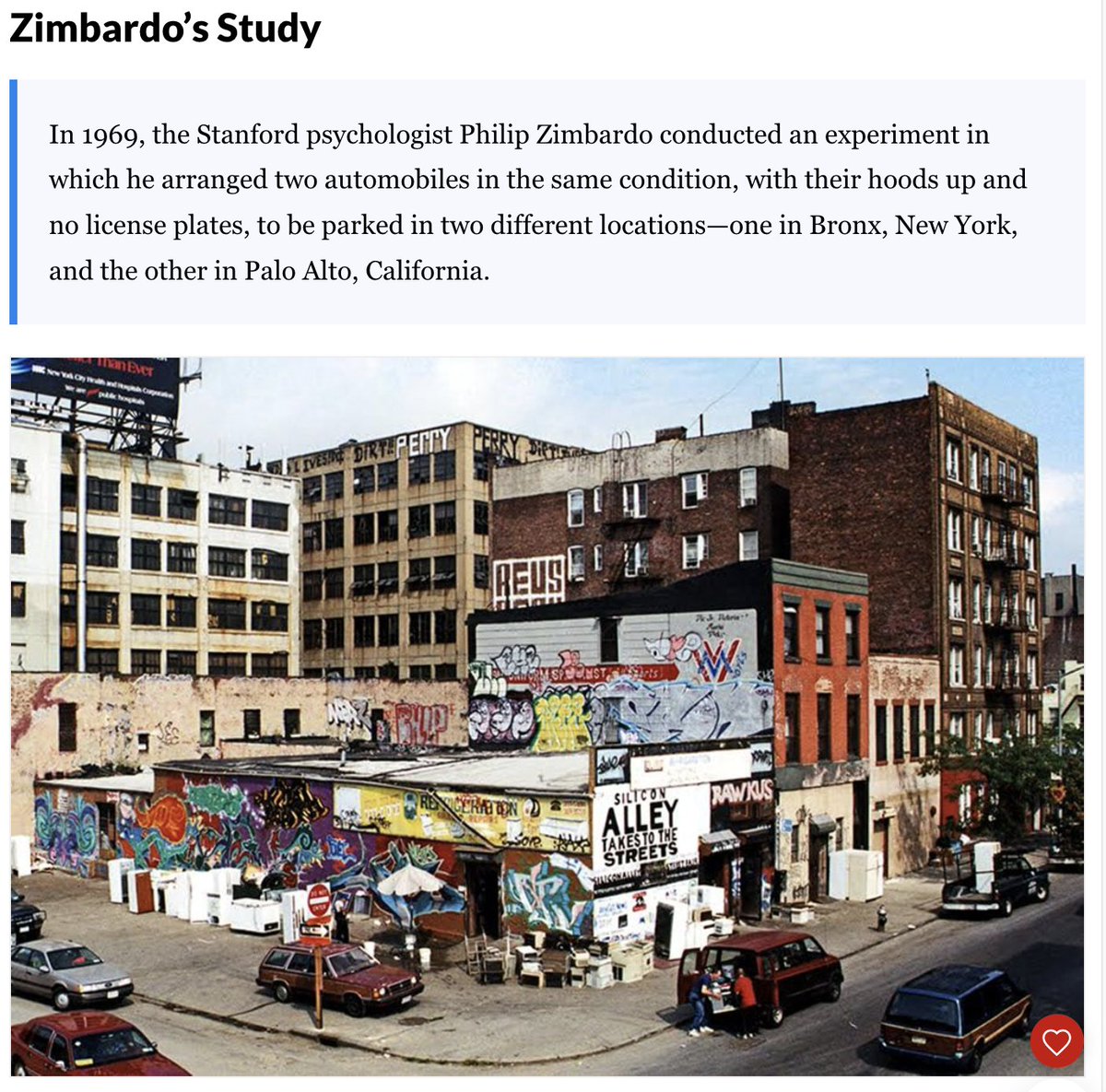
In 1969, Stanford psychologist Philip Zimbardo left 2 identical cars on the street... one in wealthy Palo Alto, the other in criminal Bronx, NYC. One was DESTROYED immediately. The other untouched for days. It's not what you're thinking... here's what actually happened: 🧵

Zimbardo wanted to test if neighborhood conditions affected criminal behavior more than personal character. The experiment cost just $1,300 - cheap compared to most psychology studies. But the results were one of the most influential experiments in crime and justice...
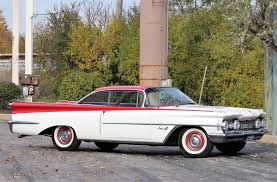
Zimbardo chose two identical cars: White 1959 Oldsmobiles with no license plates and hoods slightly open. One car was parked on a street near the Bronx campus of NYU. The other sat near Stanford's campus in Palo Alto. Zimbardo's team watched both cars from hidden positions.
In the Bronx, the first "vandals" arrived within 10 minutes. They weren't teenagers or criminals, but a family - father, mother, and young son. Working together, they removed the battery and radiator first.
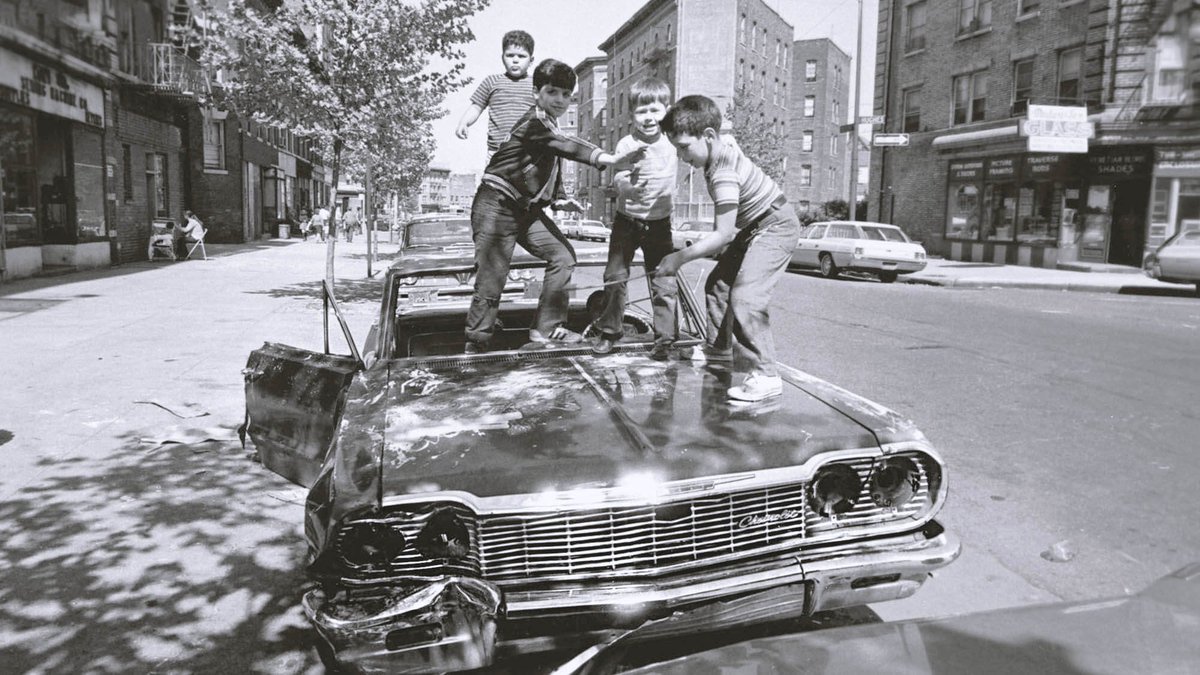
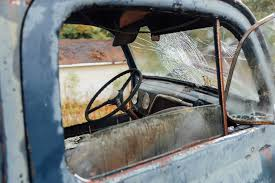
Within 24 hours, the Bronx car had been hit by 23 separate incidents of theft or vandalism. Everything valuable was taken: battery, tires, radiator, mirrors. Only the unusable metal frame remained. No one called the police.
Meanwhile in Palo Alto, the car sat untouched for over a week. People walked past it. Some closed the hood when it rained. One person directed traffic around it to prevent accidents. Zimbardo couldn't believe the difference.
Zimbardo decided to force a change after 7 days with no vandalism in Palo Alto. At 10:00 AM on a sunny Tuesday, he took a sledgehammer and smashed part of the car himself. Several passersby stopped to watch but said nothing.
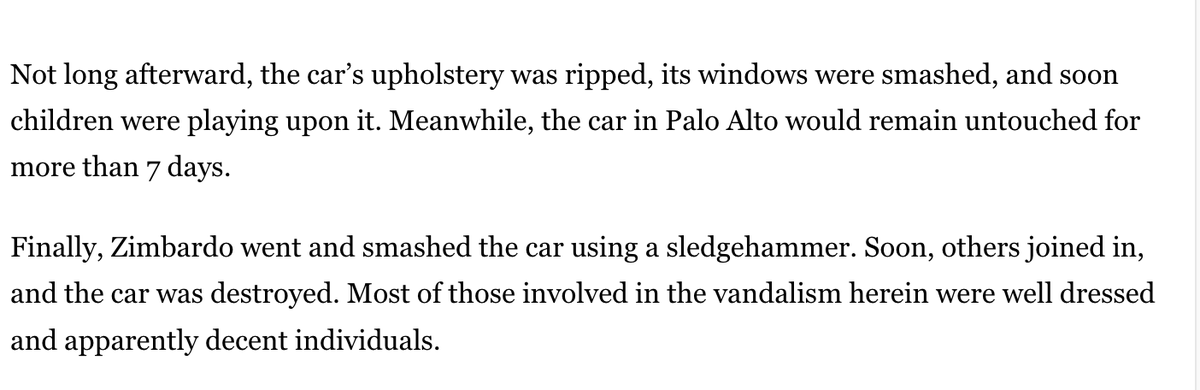
Within hours, the situation in Palo Alto changed completely. A well-dressed man in a suit joined in, smashing the headlights. By evening, the car was flipped over. By morning, everything valuable had been stripped.
The study was published in TIME magazine in February 1969, bringing national attention to this phenomenon. Psychologists called it "social proof" - the idea that we look to others to decide what's acceptable behavior.
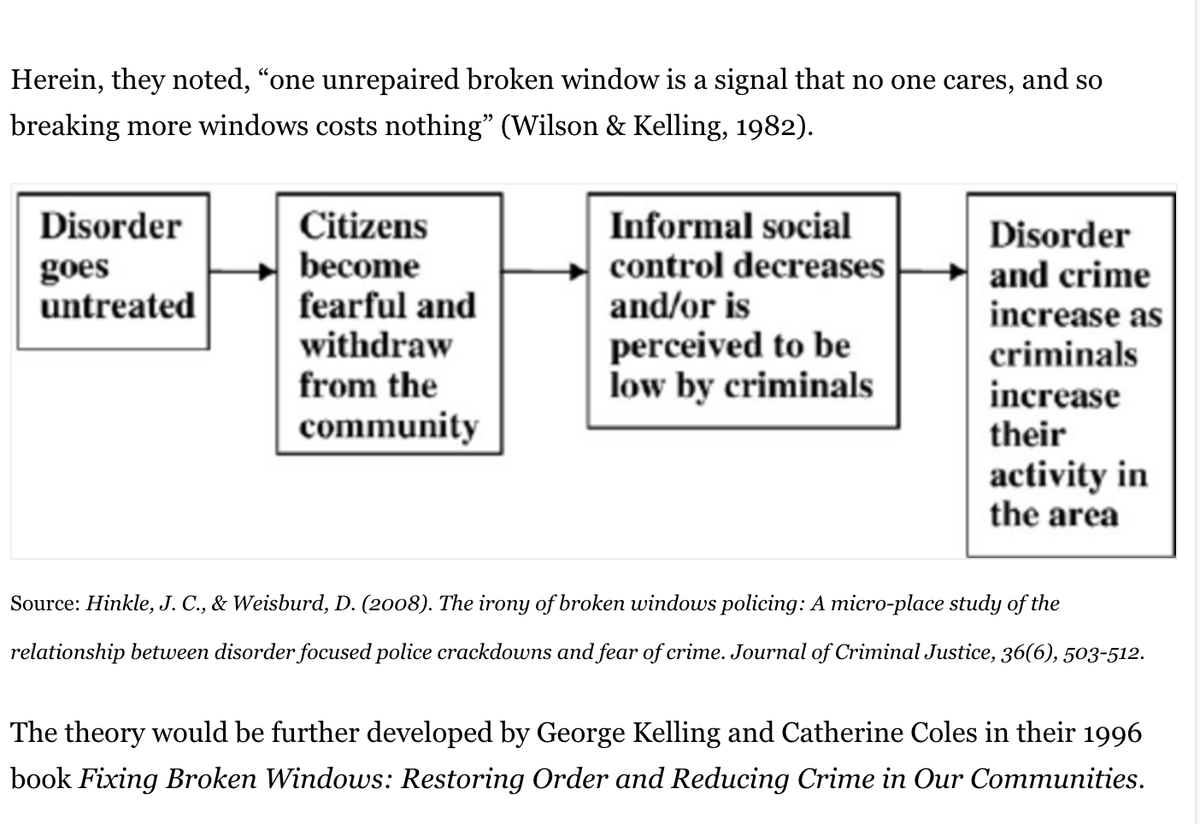
Criminologists James Q. Wilson and George Kelling later built on Zimbardo's work to create the "Broken Windows Theory" in 1982. They argued that visible signs of disorder create more disorder. Small crimes lead to bigger crimes when left unchecked.
In 1994, NYC Police Commissioner William Bratton used these findings to create a new policing strategy. His team cracked down on small offenses: graffiti, turnstile jumping, public drinking. Serious crime dropped 37% in just three years.
Critics point out that the experiment had flaws: • Small sample size (just 2 cars) • No controlled variables • Possible researcher bias • Ethical concerns about property damage Still, the findings have shaped policies for over 50 years.
The study shows three key truths about human behavior: • Environment affects our actions more than we think • Social norms collapse quickly once broken • The line between order and chaos is thin We need visible signals that rule still matter.
Clear thinking is a superpower in the 21st century. And mental models are proven shortcut to make better decisions without falling for biases. Grab a free copy of the Ultimate Mental Models to sharpen your mind today: https://superhumanx.gumroad.co...
If you liked this thread, join me on my mission: "School and society never taught you how to master the mind. My mission is to uncover the hidden wisdom in psychology and game theory for those who seek power and self-mastery. Follow me @mentalities_ to become Der Übermensch.