
You’ve been taught fascism and socialism are opposites. One far-right. One far-left. One about “order,” the other about “equality.” But look closer—especially at their economics—and that myth falls apart. 🧵
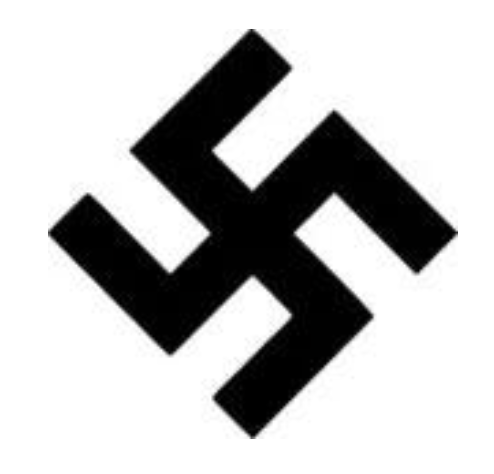

In school, fascism was framed as capitalism with jackboots. The opposite of communism. A right-wing monster created to crush socialism. But in reality, fascism didn’t oppose socialism’s controls. It shared them. It just rebranded.
Both systems rejected free markets. Both centralized economic control. And both treated the individual not as an end—but as a tool. Fascist economies preserved the illusion of private ownership… but took away the actual choices that make a market.


Under fascism: — All businesses had to be licensed — Strikes were banned — Wages and prices were set by the state — Economic activity served “the plan,” not consumers Every business decision—what to produce, how to hire, where to sell—was dictated from the top down.

In Italy, Mussolini: — Nationalized banks and industries — Price and wage controls — Quotas, licenses, and cartels — Mandatory unionism — Protectionist tariffs By 1934, 1 in 5 Italians worked for the state. By 1939, Italy had more state ownership than any country except the USSR.

Would you describe as capitalist a government that: ✔ Took over failing firms ✔ Seized stock holdings from banks ✔ Controlled over 80% of credit ✔ Nationalized ¾ of pig iron production ✔ Owned nearly half of all steel in the country;
Fascist “corporatism” was just central planning in a different costume. It promised labor-business “harmony.” In practice, the state created unions and cartels—then forced everyone into them. No negotiation. No competition. No entrepreneurship. Only quotas and orders.
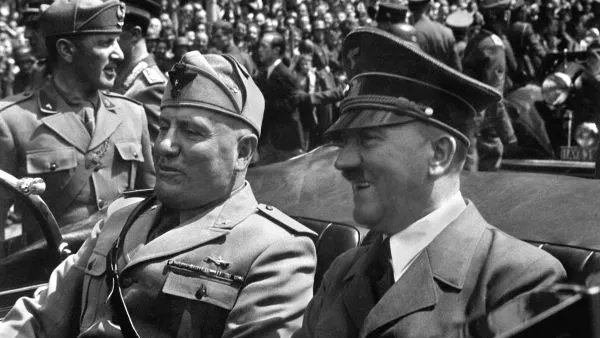
Fascism wasn’t a betrayal of socialism. It was its nationalist cousin. Mussolini called socialism his “spiritual mother.” He once edited a Marxist newspaper. What he built in Italy wasn’t a rejection of central planning. It was a rebrand—with patriotic slogans.

In his own words: “The citizen in the Fascist State is no longer a selfish individual who has the anti-social right of rebelling against any law of the Collectivity.” Freedom, under fascism, meant obedience. Private enterprise existed—but only at the state’s pleasure.

Where socialism talked about “workers,” fascism talked about “the nation.” Where socialism said “revolution,” fascism said “order.” But both handed power to the state. Both subordinated the individual. Both treated the economy as a tool for ideology.
So why is fascism called “right-wing”? Because it didn’t talk like socialism. It talked about pride instead of equality. About unity instead of class struggle. It looked like capitalism—but stripped away freedom from within.

The real divide was never fascism vs socialism. It’s control vs liberty. Central Planning vs Individual Planning. The state vs the individual. Two flags. Same playbook.

Most students never hear this. They’re told fascism was “capitalist.” They’re never shown the price controls, the cartels, the confiscations. If you want to challenge that narrative—with actual history and facts—apply to be a Local Coordinator at Students For Liberty: http://join.studentsforliberty... Connect with 2,000+ student leaders in 100+ countries. Organize events. Make friends. Bring real debates to campus.
