
an interesting narrative moment is when a story requires that a character explain something “impossibly intelligent” - something that only a person smarter than the main character or the audience would understand, to show that this person is way smarter than everyone else. […]

the first time i remember being exposed to this was on a cartoon called doug. one of the characters is revealed to have a super high IQ - this is demonstrated when he explains kants critique of pure reason to a friend, who, like the child audience, finds it impossibly confusing.

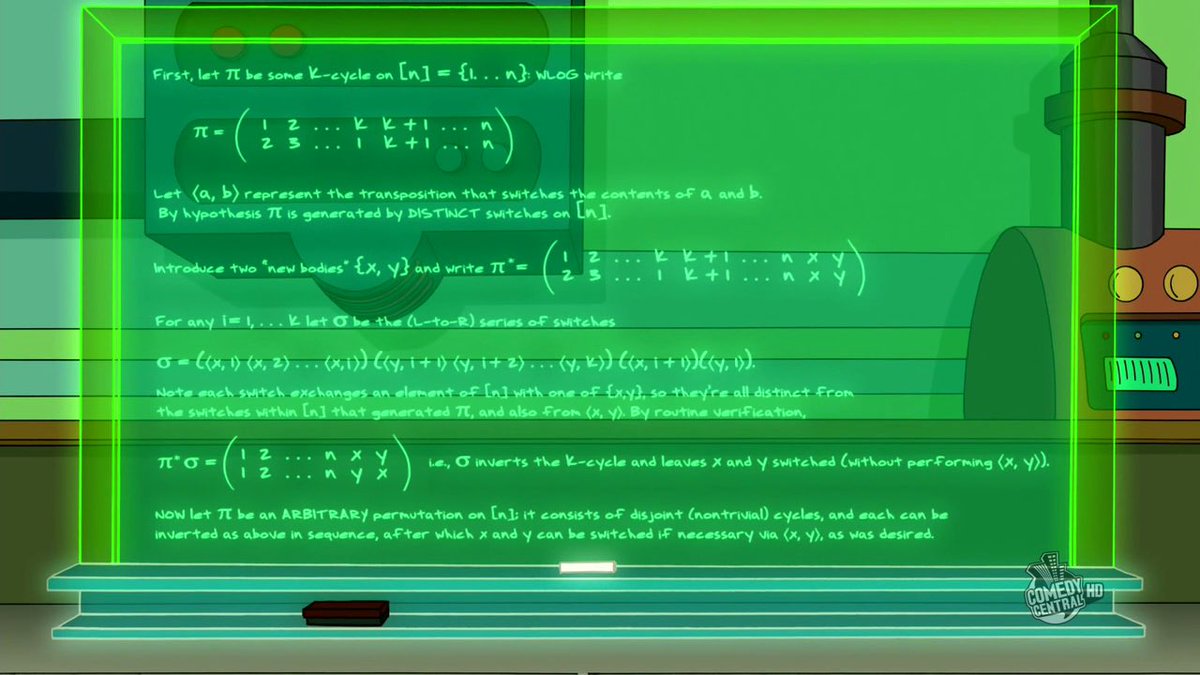
this is also often utilized in shows like futurama, where part of the set and setting is a form of extreme science that goes beyond our present knowledge. in fact, futurama somewhat famously invented a mathematical theorem just to display as filler in the show, for this purpose:

the example i think about the most is from the simpsons. a smarter version of homer is killed, or something, and writes on the ground a phrase that serves this purpose: just to show that he’s cracked some level of super intelligence inaccessible to most people

as a kid, i registered this as a stock joke phrase to demonstrate intelligence, “ontogeny recapitulates phylogeny”. it just so happens that it would become a main theme in my actual work later as an adult. the concept is that a single being recapitulates the story of its species

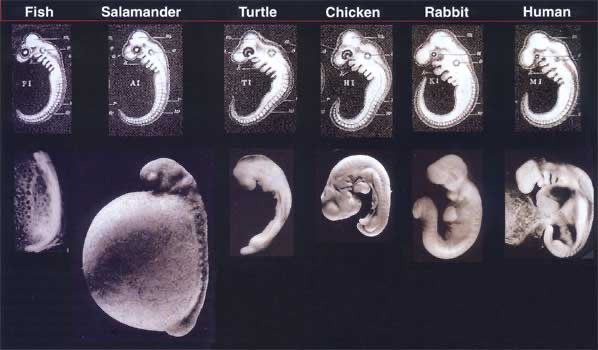
this was mainly used as a concept in nascent (insane joke) embryology - the idea that the fetus goes through varying evolutionary stages in microcosm, “retelling” the story of life on earth as a whole - developing lungs, organs, and so on, in the same order living creatures did:
whether or not that is true, a very similar concept is used in a spiritual and civilizational sense by rudolph steiner - the idea being that as a child develops, they spiritually and mentally go through the stages their own civilization did. they recapitulate their own culture.

it’s a philosophical question if something like this could be objectively true or not, but once this clicked for me, it never unclicked. a kid goes from garden of eden (paradise, “unaware”), to egyptian (images, thought, etc), to roman (rules, order), later to medieval, and so on
this has become central to my conception of mental development. a guy named lama anagarika govinda (right) wrote a book called foundations of tibetan mysticism. in it, he starts by introducing the concept of sacred language and of language as magic in early civilizations.

his concept is that, in early civilizations, the bridge between image, word, and magic (divinity) was total. language was itself sacred because, basically, it just connects things in a crazy way. most cultures lost this, unless they retained a sacred language in their religion.
if you went to a culture where, for example, they wouldnt throw away a book, they would only burn it - or they wouldnt use certain words in a certain way, that’s a sign that language and words have retained this primordial magical aspect, which is true to him, and key to religion
we retain some signs of this. “what is this called?” is often said by non-native speakers as “how do you call this?”. that’s what you’re really asking though: “how do i call forth this item?”, “what word summons forth this thing?”. its easy to see this as magic, or spiritual.
i believe that when the child is in the language acquisition phase, it must be something like this stage in human civilization (early) where words themselves were still magic. suddenly they make this sound, “milk”, and milk just appears. they summon milk, literally, like a spell.
i believe this is also whats behind kids finding it funny to say “poop”. suddenly, they can put “poop” into someone’s mind. and they react. incredible. this must be an ecstatic feeling, like being a real wizard, or if youre more theological, like adam felt when naming the animals
