
The Election of Pope Leo XIV: A fractured Bergoglian-wing, organized resistance by conservatives and a united front of U.S. cardinals allowed Robert Prevost to ascend to the papacy. This thread, based on conversations with Church insiders, details how the conclave transpired.

I. Introduction: Steps from Saint Peter’s Square, secretive talks were being held by cardinals ahead of the following week’s conclave. The rotating electors shuffled in-and-out of the apartment of the 76-year-old Cardinal Raymond Leo Burke, who was one of 133 men that would

Two years earlier, the then-Pope Francis threatened to withdraw the Vatican-subsidization of Burke’s apartment, a move that many traditionalists described as retaliation for the conservative cardinal’s outspoken criticism of the Argentine pontiff. But the week before the

Burke himself was viewed in many conservative circles as a papabile (an unofficial Italian term used by Vatican insiders to describe a potential candidate to be elected pope). Other traditionalist candidates were being floated such as Péter Erdő of Hungary, the desired pick among
Months before Francis’ passing, it was evident that it would be nearly impossible for a traditionalist to win the next conclave (requiring a two-thirds majority, which would amount to 89 votes among the 133 electors, the largest conclave in Church history). Conservatives were

The updates from Francis’ medical staff at Gemelli Hospital in Rome varied. On some days, the 88-year-old would show improvements. On others, he’d suffer setbacks (it was only after his discharge from the hospital on March 23rd when doctors revealed they considered ending

II. The Electors: Pope Francis would pass away on April 21st, less than one month after being released from the hospital. His final public appearance was delivering his Urbi et Orbi blessing on Easter Sunday from the loggia of Saint Peter’s Basilica—the place where his successor

The morning after his death, the first General Congregation of the College of Cardinals took place. Around sixty cardinals already in Rome gathered in the Synod Hall to finalize the plans for Francis’ funeral. The coming days would be the first time many of these men met each

The first truth was that the divides in the Church were not as simple as left versus right ideological dynamics. Topics raised over the twelve meetings included the Vatican’s financial troubles, dwindling membership around the globe, divisions within the Church and synodality

The second truth was the realization among the Bergoglian-wing of the Church that there was no consensus on who should succeed Pope Francis. The liberal-leaning coalition knew the numbers worked to its advantage and saw an opportunity to install a pope that aligned with its

The third truth, and most troubling for the Bergoglian-camp, was the gradual understanding that many of the cardinals elevated by Francis were not as loyal to his mission as initially believed. Fifteen of the eighteen cardinal-electors from Africa were elevated by Francis, but

Francis broadening the representation in the Church through the College of Cardinals brought with it diverse worldviews. The 108 cardinal-electors elevated by Francis were fractured, and it created an opportunity for traditionalists to capitalize on the divisions. The splintering
III: The Italians: An Italian had lead the Catholic Church for 455 years before the election of Polish Cardinal Karol Józef Wojtyła—who would take the name Pope John Paul II—in 1978. Following the elections of Benedict XVI (Germany) and Francis (Argentina), many Italians believe

Italian Cardinal Pietro Parolin was seen as the strongest contender. As Francis’ secretary of state, he could be counted on to continue the Bergoglian vision of the Church; moreover, he had the bona fides as an experienced diplomat who could navigate its return to the global

Parolin’s allies began campaigning on his behalf, starting by focusing on the Bergoglians. The pitch was that the Italian from Venice was already the front-runner, and if other cardinals quickly threw their support behind him and produce a quick victor, it would signal to the

Parolin’s camp knew he was a vulnerable candidate. His name was associated with two of Francis’ most contentious hallmarks of his papacy: (1) the controversial-turned-criminal London land deal that lost the Vatican $150 million; and (2) the secret agreement with the Chinese

IV: The Americans: New York Cardinal Timothy Dolan arrived in Rome on the morning of Wednesday, April 23rd, to attend the funeral of Pope Francis that upcoming weekend. His American colleague, Burke, was already working to block a progressive from ascending to the papacy. Dolan,

There had long been a taboo against a pontiff coming from the United States in fear that the position could be politicized by handing it over to a geopolitical superpower. But with the Vatican’s finances in a dire situation, and donations from the U.S. declining, a pope with a

Conversations surrounding the prospect of an American successor to Francis began shortly after his hospitalization. A viable contender could not be viewed as being too American and would need to have connections to the rest of the world, the Roman Curia and the Bergoglian-wing of
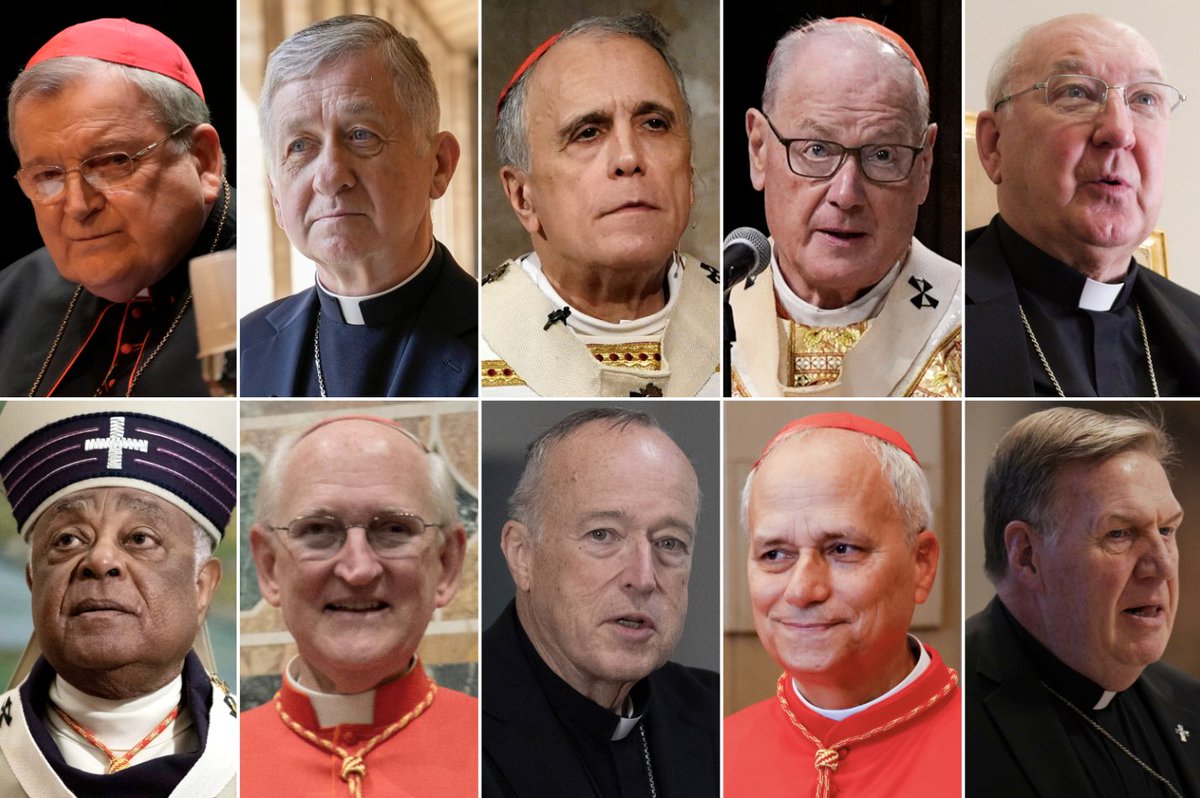
Farrell, 77, born in Dublin, Ireland, was selected by Pope Francis in 2019 to be the camerlengo, the Vatican official who runs the Holy See after the death of a pope and before the election of another. His profile was rising in the aftermath of Francis’ passing. But his work as

Prevost, 69, born in Chicago and a naturalized citizen of Peru, had his career fast-tracked by Francis who appointed him the prefect of the Vatican’s powerful Dicastery for Bishops—the organization tasked with vetting nominations for bishops around the world—and elevated him to

The first step was making sure that everyone was onboard. Given Prevost’s reputation as a moderate—and his ties to Francis—this proved to be relatively easy. This became clear as the American cardinals gathered at the Pontifical North American College in Rome ahead of the

The Americans’ ten votes on the first ballot would be enough to put Prevost’s name in the running. A larger alliance would send a signal to the rest of the electors that his candidacy was for real. Momentum on the second ballot, the Americans believed, could seal his fate.

Dolan, at a “Commonwealth” reception held for English-speaking cardinals, worked to broaden the coalition. He held intimate conversations with electors from Africa, Asia and Latin America and persuaded them to throw their support behind Prevost. The Americans had rallied their

V: The Conclave: The first ballot on Wednesday, which produced the first black smoke, established that it was a two-way race. It’s believed that Parolin had the most votes (40-50) with Prevost in second and Erdő a more distant third. Other liberal candidates—Aveline, Grech,

Allies of Parolin were scrambling to unite the Bergoglian-wing of the Church. They believed that if there was a significant increase building on his current lead, the rest of the electors would fall in line. Time was against them. The cardinal-electors wanted to produce a quick

Instead, the second ballot produced little momentum. The Bergoglian-wing of the Church was splintered, and Parolin was not seeing the substantial gains he needed. As the votes consolidated, it was becoming increasingly clear that the conservative blockade was real, and a

As the fourth ballot unfolded that afternoon, the reality of the situation set in for Prevost. He began breathing heavily. Cardinal Tagle of the Philippines turned to him and asked, “Do you want a candy?” He accepted. New Jersey Cardinal Joseph Tobin, who has known his American

The senior cardinal, Parolin, was tasked with approaching Prevost after acquiring the two-thirds majority needed to win the election. The two men, eye-to-eye, finalized the process. "Do you accept your canonical election as Supreme Pontiff?” Parolin asked. “Yes,” responded
