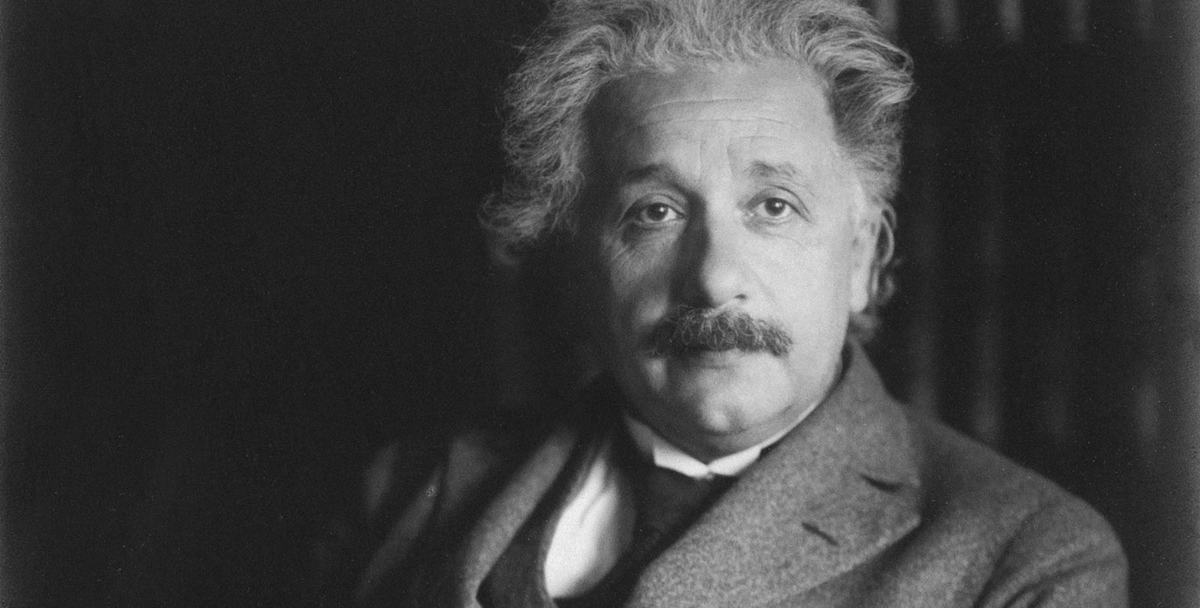
This is John Nash. He's the genius behind Game Theory. His ideas influenced Einstein, Russell, and won him a Nobel Prize in 1994. Sadly, his legacy is a heartbreaking tragedy. Here's his story... 🧵

Born in Bluefield, West Virginia in 1928, John Forbes Nash Jr. was a math prodigy. By 15, he read E.T. Bell's "Men of Mathematics" and could prove advanced theorems...

At Carnegie Tech (now Carnegie Mellon), one professor wrote just one line on his recommendation: "This man is a genius." Wait until you see what came next...
At Princeton in 1948, Nash tackled big unsolved problems while his peers worked on minor ones. His PhD advisor Albert W. Tucker watched in awe as Nash ignored textbooks and created brand new math.
"He didn't learn much from other people," said Tucker. "He learned from himself." In 1950, at just 21, Nash wrote a 28-page paper that changed economics forever.
His thesis on "non-cooperative games" contained one single reference. Yet Princeton's math chair Solomon Lefschetz called it "one of the most original PhD theses I have ever seen." But that was just the beginning...
By 1958, Nash was a star professor at MIT, dating beauty queen Alicia Larde. His Nash embedding theorem shocked the math world. The Pentagon paid him to crack Soviet codes...

Fortune magazine named him one of America's brightest mathematicians. Then everything fell apart. January 1959: Nash began seeing "men in red ties" he believed were secret communist agents.

He resigned from MIT to become "the emperor of Antarctica." At a conference, he tried to give a talk about secret messages from outer space. His colleagues watched in horror as his mind unraveled.
For 25 years, Nash wandered Princeton's campus, filling blackboards with equations and calling himself "Johann von Nassau." "You could see him in the old Fine Hall talking to himself," recalled Princeton math professor Donald Spencer.
Students called him "the Phantom." Few knew his past glory. Something remarkable happened in the 1980s...

Without medication, Nash began "thinking rationally again." "I emerged from irrational thinking," he explained, "like waking from a dream."
Harvard mathematician George Mackey asked him how he could believe aliens contacted him. Nash's answer will shock you...
"Because," Nash told Mackey, "the ideas about supernatural beings came to me the same way my mathematical ideas did. So I took them seriously." By 1990, Nash started working on math problems again.
Then economists Assar Lindbeck and Jörgen Weibull made an unexpected move... These Swedish economists nominated Nash for the 1994 Nobel Prize in Economics.


The committee worried: was Nash stable enough to handle the attention? After careful consideration, they decided yes. The world rediscovered the forgotten genius who'd spent decades lost in delusion.
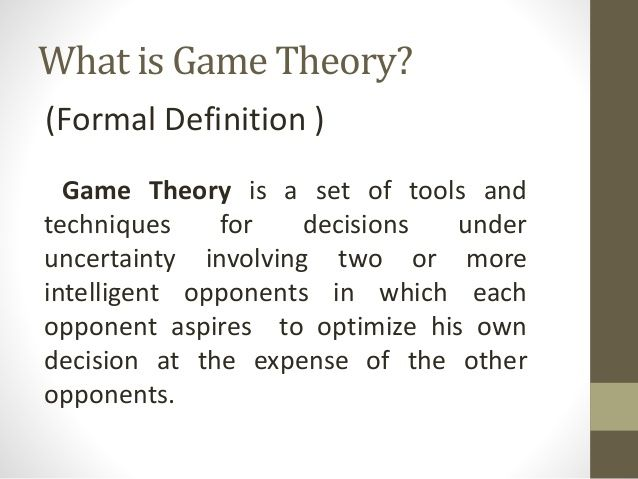
Nash's big idea? The Nash Equilibrium: in any competition, there's at least one point where no player can improve by changing only their strategy. Princeton economist Harold Kuhn explained it as:
"a situation where no player can benefit by changing his strategy while others keep theirs unchanged."
Let's see how it works: Two prisoners are caught. Each has a choice: stay silent or betray. • If both stay silent: 1 year each • If one betrays: betrayer goes free, other gets 10 years • If both betray: 8 years each Game theory says they'll both betray - the Nash
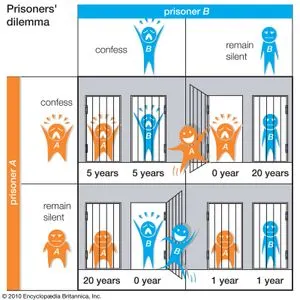
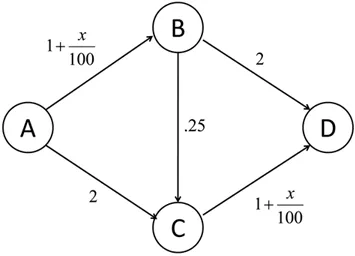
The Nash Equilibrium explains: • Why oil-producing countries cheat on production quotas • How animal species decide to fight or flee • Why traffic jams form even on open roads • How businesses set prices
John von Neumann told Nash in 1955: "You've made an important discovery." He was right. The contrast is striking: the same mind that couldn't tell reality from fantasy created the mathematical tool we use to understand rational decisions.
"Madness can be a form of genius," said Sylvia Nasar, Nash's biographer. His story went from math journals to Hollywood in 2001.
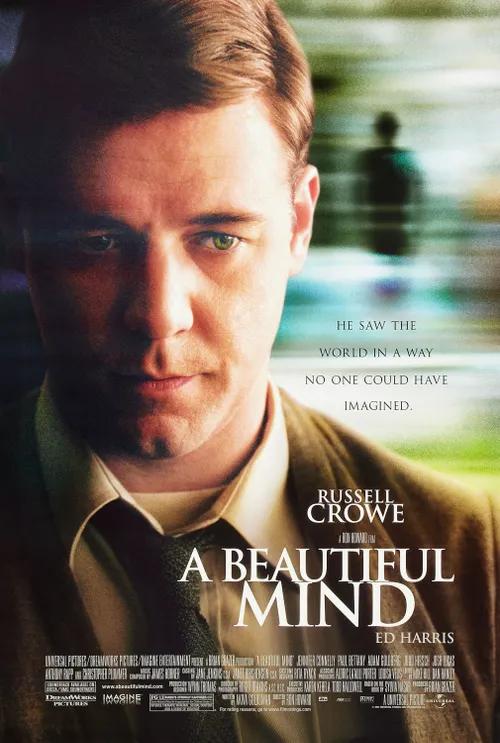
Director Ron Howard's "A Beautiful Mind" won 4 Oscars, with Russell Crowe playing Nash. The movie changed details but captured a truth: Nash fought his way back from mental illness through sheer willpower.
In 2015, at age 86, Nash received the Abel Prize - math's highest honor. Then tragedy struck.

Just days after receiving the Abel Prize in Norway, Nash and his wife Alicia died in a taxi crash on the New Jersey Turnpike. They had been married, divorced due to his illness, then remarried.
"We reconnected because he needed someone and I was there," Alicia once said. True love and genius until the end.
My threads have received +400M impressions and gained +300K 𝕏 followers in 2024. I'll show you how to craft viral threads like this. Join my FREE program to become a prolific viral thread writer in just 5 days: http://writeviralthread.com
If you liked this thread, join the @GeniusGTX mission: My mission is to uncover the hidden wisdom in psychology and game theory for those who want to become a genius thinker.