
Recently retired CJI Khanna served 6 months. Current CJI Justice Gavai will also serve a short term. Now compare this: •US CJ John Roberts: appointed 2005, still serving. •UK CJ Sue Carr: will serve around 17 years. Why? And what are the implications? A Thread. (1/6)
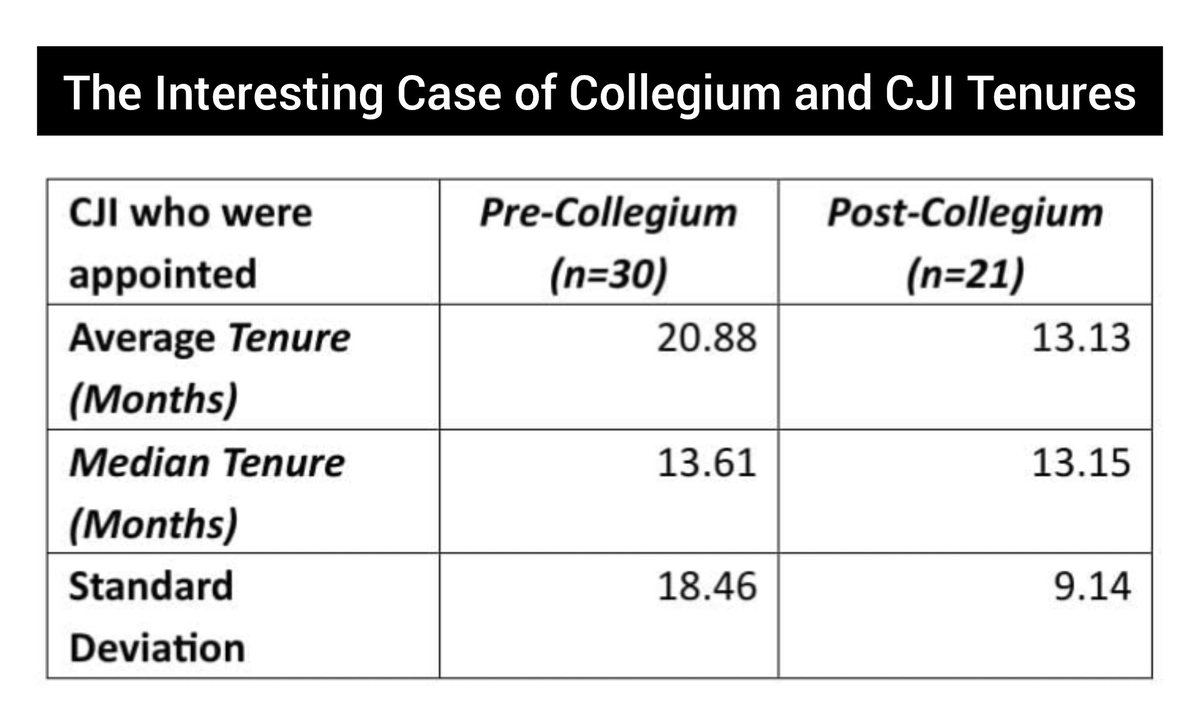
𝐓𝐡𝐞 𝐃𝐚𝐭𝐚 𝐓𝐞𝐥𝐥𝐬 𝐭𝐡𝐞 𝐒𝐭𝐨𝐫𝐲: -Pre-Collegium (1950–1993): Average tenure ~21 months. -Post-Collegium (1993–2025): Average tenure only 13 months 𝟑𝟕% 𝐝𝐞𝐜𝐥𝐢𝐧𝐞. (2/6)
𝐀 𝐒𝐭𝐚𝐭𝐢𝐬𝐭𝐢𝐜𝐚𝐥 𝐀𝐧𝐨𝐦𝐚𝐥𝐲: However, median tenure has remained stable at 13 months pre and post Collegium. That means that some long tenured CJI's who boosted average earlier, are now absent! Proof- 𝐓𝐨𝐩 𝟓 𝐥𝐨𝐧𝐠𝐞𝐬𝐭-𝐬𝐞𝐫𝐯𝐢𝐧𝐠 𝐂𝐉𝐈𝐬 𝐰𝐞𝐫𝐞 𝐚𝐥𝐥 𝐩𝐫𝐞-𝐂𝐨𝐥𝐥𝐞𝐠𝐢𝐮𝐦. (3/6)
𝐖𝐡𝐚𝐭 𝐃𝐨𝐞𝐬 𝐢𝐭 𝐦𝐞𝐚𝐧? •The Collegium system has practically removed long-term CJIs, creating comparatively short tenures. •By carefully timing judicial appointments and oaths, the Collegium indirectly determines who becomes CJI and precisely how long they serve. •The Collegium regularly insists on strict adherence to its recommended sequence of appointments, citing that any delays by the government (GOI) can alter judicial seniority and disrupt planned successions. (4/6)
𝐈𝐦𝐩𝐥𝐢𝐜𝐚𝐭𝐢𝐨𝐧: #Collegium is not only recommending judges; it is also effectively managing judicial leadership. The result is more number of CJIs with low average tenures. 𝐁𝐫𝐨𝐚𝐝𝐞𝐫 𝐂𝐨𝐧𝐬𝐞𝐪𝐮𝐞𝐧𝐜𝐞𝐬: We need to know if short tenures affect efficiency, reform and innovation. It is reasonable to assume a leader would need sufficient time to effectively lead. (5/6)
Read the full report here. (6/6) https://finskeptics.com/report...