
When bullets start flying, do you have a mental framework to make clear, fast decisions, or will panic freeze you in place? How the OODA Loop helps you dominate chaos🧵
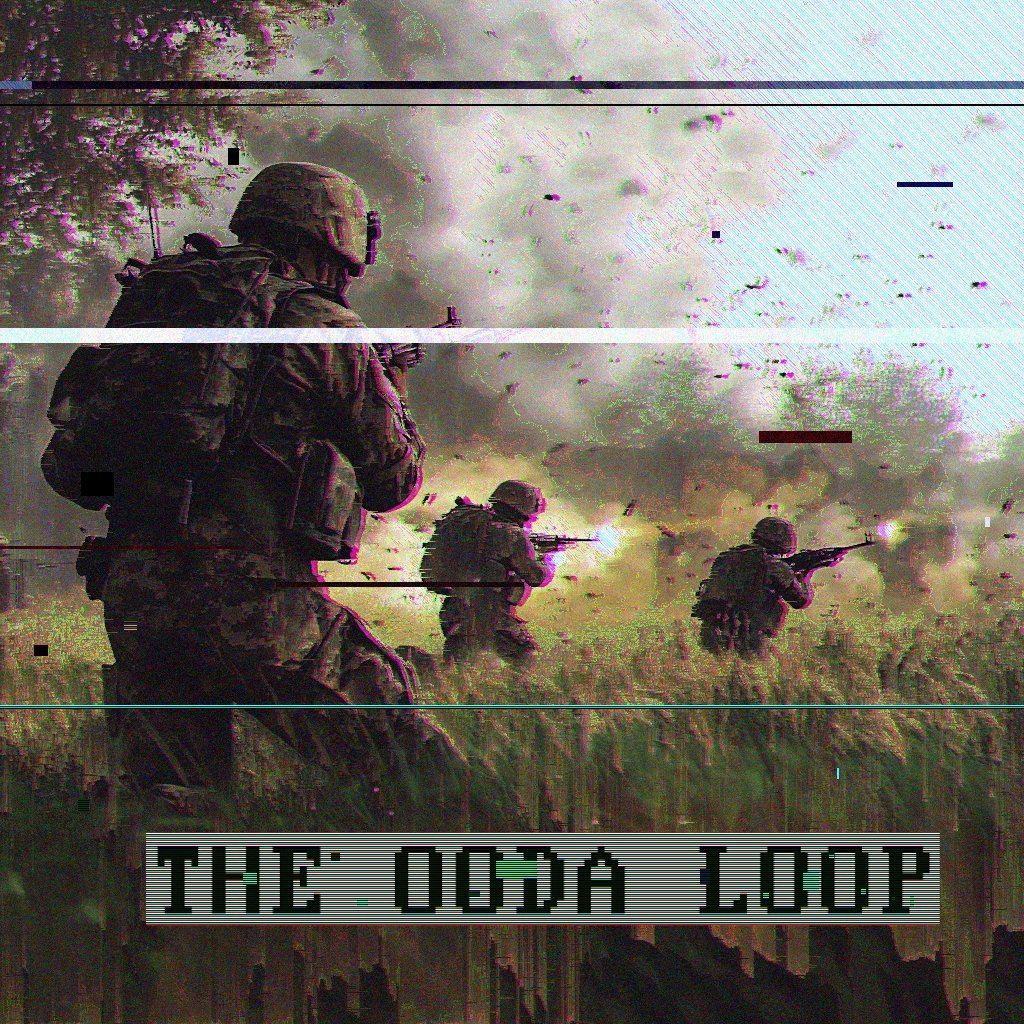
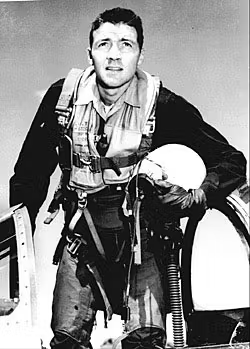
Tactical Decision Making – The OODA Loop At the core of good leadership is solid decision making. The ability to think under stress and to come out on the other side is paramount to not only creating a positive outcome but also fostering a sense of control for both yourself and those dependent on you. While many of us use a general mental framework to attack problems that we encounter head on, there exists another option. Enter the OODA Loop. The OODA Loop is a mental model created by Colonel John Boyd for decision making and was initially used for operational level planning and decision making in the field. Since its inception, it has spread to law, business, law enforcement, cyber security and warfare, and any other high stress-high reward field. The strength of the system is it’s continuous feedback loops and it’s vagueness that allows it to be placated into many scenarios and still produce positive outcomes.
What is the OODA Loop, exactly? The OODA Loop is comprised of four stages: Observation Orientation Decision Action These four stages are then repeated forming the “Loop” part of the OODA Loop. Each full repetition of the Loop produces more information that can be acted upon and improve the next potential outcome. If you think this sounds a lot like the scientific method, or at least its ideal form, then you would be right. This is effectively a boiled down version of the method bypassing the things that are entirely irrelevant to those in high stress situations. I really doubt a fighter pilot would want to quantify and graph every aspect of his opponent's vehicle. Perhaps after the engagement he may, but in the moment it is irrelevant. The OODA Loop’s four simple steps instead allow minds in high stress situations switch into rapid decision-making.

Observe. A wise man once said, “Observe everything; admire nothing.” The first step of the Loop is Observe. Observing is not simply taking in data points. Information is useful but requires a greater contextual picture to be painted. Observing incorporates the area the observer is in, the environmental factors, what their adversary is doing, what their adversary is not doing. Perhaps in an office setting it could be what are the relationships at play? For example, let’s say you have a squad leader in a field during some kind of near peer conflict. You can fill in the blanks if you choose, it really is inconsequential. The team is suddenly under fire from across the field in a band of trees. The team takes cover and the squad leader begins to observe (ideally he did some beforehand as well). He may notice the time of day, the location of his opponents, how they are firing on him, what the weather conditions are like, and what their volume of fire is. These factors all influence how he is to orient his team to respond. If they are overwhelmed by mass fire, they may decide to break contact and find greater cover elsewhere and ambush them. If it is night time, they may be able to numerate the enemy force by muzzle flashes seen through their night vision if they have it. Perhaps the weather is stormy, hindering their ability to make use of UAVs. The list goes on but these are all factors that the squad leader is determining when he OBSERVES the situation. They are taking in the raw information and making basic analysis of the situation. When the loop repeats, an extra substep is added to Observe. It is the added question of “were my prior predictions accurate? And then why? Or why not? Once the information is parsed and a basic analysis is done, the observer now must process it even deeper under the next step.

Orient. Prior to making any decisions, the observer must now orient their thinking around their decision. While we have a baseline series of predictions, we need to filter them through previously learned information to ensure that it is refined to be as accurate as possible. This includes personal history, genetic history, training, knowledge of the opposition, and the new information itself all come together. This is where contextual judgement and the removing of personal bias steps in to form the basis for the decision made. Returning to the previous example, the squad leader must be cognizant of the enemy’s actions in relation to his training as well as his personal biases that may hinder his decision making abilities. If the team is under fire and the fire is more accurate relative to previous engagements, he may note that whoever these guys are, they are serious business and the situation may be more dire than if these were run of the mill conscripts/rebels/terrorists/whatever and he needs to not only take it serious himself, but also his men need to be made aware if they aren’t already. Based on his knowledge of responding to ambushes, he knows that his team is within a kill box and they need to get out of it as soon as possible. Perhaps there is no cover nearby in this field, the team is prone on the ground and borderline panicking, meaning there is nowhere to run. Following the end of this step, all the thinking will coalesce into a singular or series of logical decisions that must be decided upon.

Decide. This step is the second-most straight forward of the OODA Loop. It is what it says on the box. The observer, once they have observed and oriented their thinking, must now decided on what action to take. They may only have one option or they may have multiple. They need to take the situation at hand and decide which option is the best. This step is sometimes called the hypothesis step as it is where hypotheses are ran rapidly to determine which choice creates the best outcome. For our squad leader he may be deciding between breaking contact by peeling toward a flank in search of cover or concealment or assaulting through the ambush. He quickly looks at the field and analyzes if there is cover or concealment for him to find, let’s say there is none, this means that he would have to pop smoke grenades. He has to ask himself if his guys would have time to even get smoke grenades out, have them diffuse enough gas to cover them, and then for them to get to the smoke screen and then go where? There is nowhere to go. The squad leader then analyzes assaulting through. It is risky but if he stays where he is, his men are doomed, if they move laterally they risk getting annihilated and they have nowhere to really go, the best logical choice is to assault through the ambush. The squad leader has decided. The decision is made. Now the action must be taken.
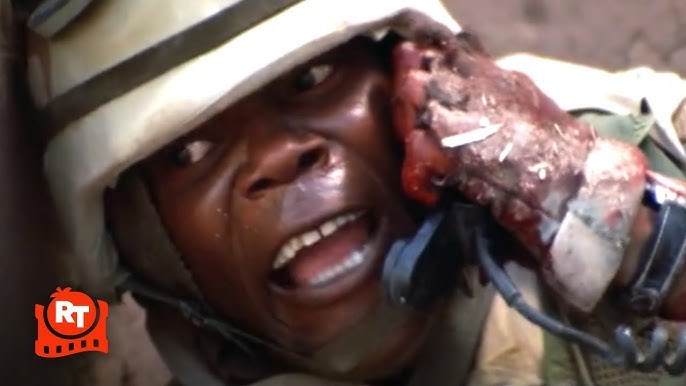
Act. A quote I stole from fs(dot)blog is “There’s a difference between making decisions and enacting decisions,” and the Act step is the simplest. The observer has made their decision and must act. The decision is ultimately tested out. The squad leader looks to his men and orders them to assault through into the tree line. Everyone stands up and charges in. For the sake of a nice story we will say they take no casualties and annihilate the enemy. Hooray! When the act step is taken, ideally the results come back positively and things panned out, If they didn’t, and the results weren’t fatal, the information is to be retained for the next loop of the Loop. Once the action is done, the loop repeats again. The observer begins observing again and identifies if the threat is gone, if it has changed, how did they respond, etc. The Loop repeats until the situation becomes normalized.

Why does the OODA Loop work? The OODA Loop allows rapid decisions to be made in complex scenarios. Someone who has practiced the Loop is able to rapidly switch into it during unpredictable and uncomfortable scenarios. The OODA Loop shines where uncertainty is a certainty. With the right filters and the right algorithm applied to thinking, uncertainty becomes irrelevant. The OODA Loop can help one prevent freezing in place during a difficult choice. Someone who may not have experience under fire but has plenty of training may initially want to panic once the range becomes kinetic both ways but with the OODA Loop they can analytically approach the situation and create prompt actions. “Let your plans be dark and impenetrable as night, and when you move, fall like a thunderbolt” – Sun Tzu Act accordingly.

Thanks for checking this article out, I really appreciate it! I am super de-boosted in the X algorithm due to the topics I write on so interactions with the post (particularly comments, and quote RTs) mean a lot to me! eel free to follow me, I try to release a full length article every week! The highlights tab in my profile features nearly 90 full length and free articles on many different topics including: tactics, prepping, historical lessons, philosophy, intelligence tradecraft, and more! Also check out my first two books on Amazon that cover an introduction to prepping in general and medical prepping! Give them a review as well! https://www.amazon.com/s?i=str...
