
🧵> Assyrian Osroene in Armenian sources “Deus” is one of the most prominent Armenianoid revisionists I’ve come across on social media. A consistent trend among these Armenian nationalists is their eagerness to appropriate Assyrian heritage, often relying on pseudo-historical

“It is known from our traditional history that Moses Khorenatsi lists among the Armenian kings a Abgar son of Arsha-may, who is the result of the misreading of the word Arsha-may from the Assyrian kings of Osroen or Edessa. On such a false basis, Khorenatsi weaves an entire

Nikoghayos Adonts: “From this it becomes clear that Khorenatsi reworked the anonymous material at a time when the national tradition had already managed to Armenianize the Assyrian ruler Abgar Uhhama”. Erker hing hatorov • Volume 2/Page 260 ________________________________
"It is possible to infer from Armenian history that with what cruelty the Armenians tried to stifle the first attempt to introduce Christianity into Armenia, which the Assyrian king of Mesopotamia, Abgar, did after his traditional negotiations with Christ, and that after Abgar's

“But even earlier than Armenia, Christianity had become the state religion for a short time in the neighboring small Assyrian state of Osroen, during the Ar-dar (179–216), with Edessa as its capital. The period of the state of Palmyra in the second half of the 3rd century, during

“The founder of Assyrian literature, Bardazan, was born in Edessa in 465 BC (154 AD) into a pagan family. The 13th-century Assyrian historian Bar Hebraeus testifies that Bardazan was a childhood friend of Abgar I, the Assyrian king of Edessa, who was the first to convert to
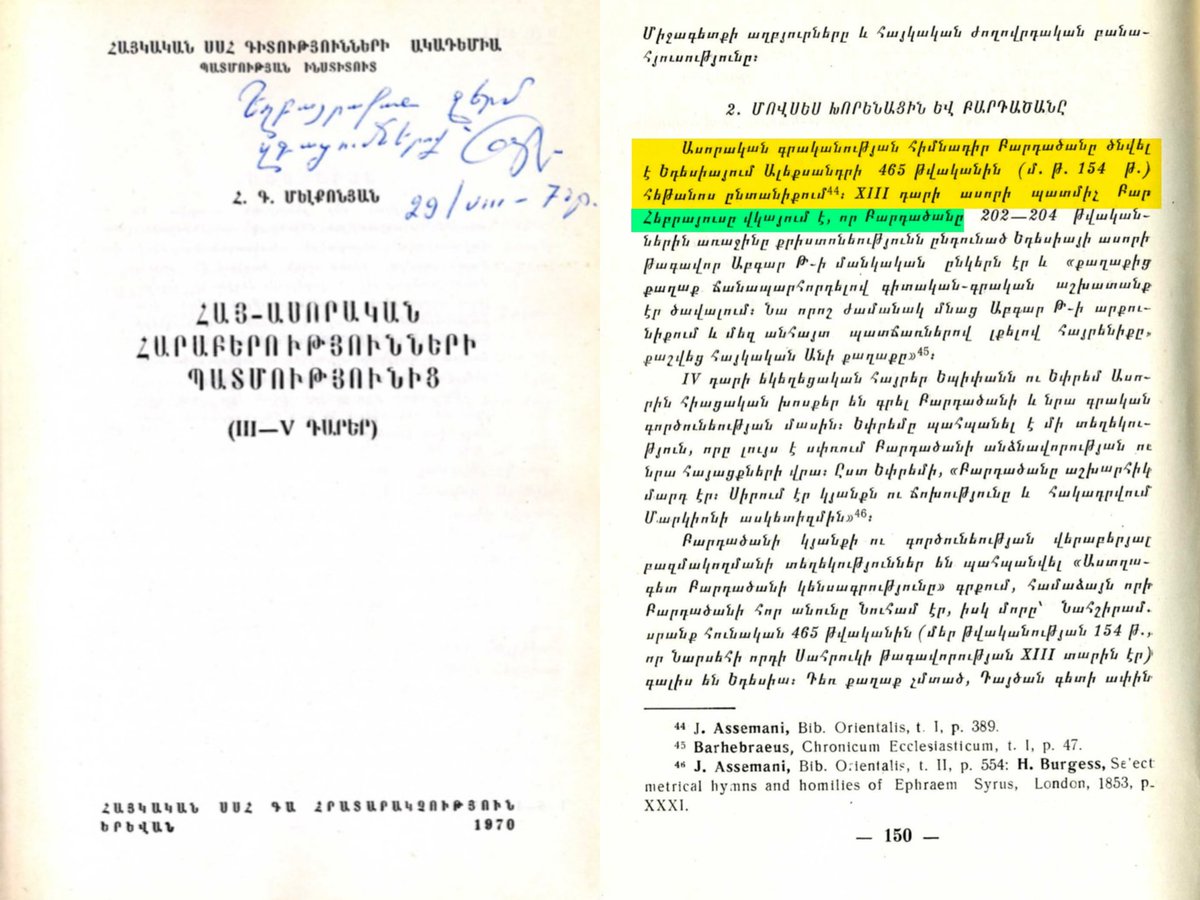
"In the late 1st and early 2nd centuries AD, he preached in Adiabene, but his story has been attributed to Edessa, since these Assyrian-speaking countries were often identified. Ghebubna of Edessa attributed Abgar to Assyrian origin, considering him not the son of Arsham, but the


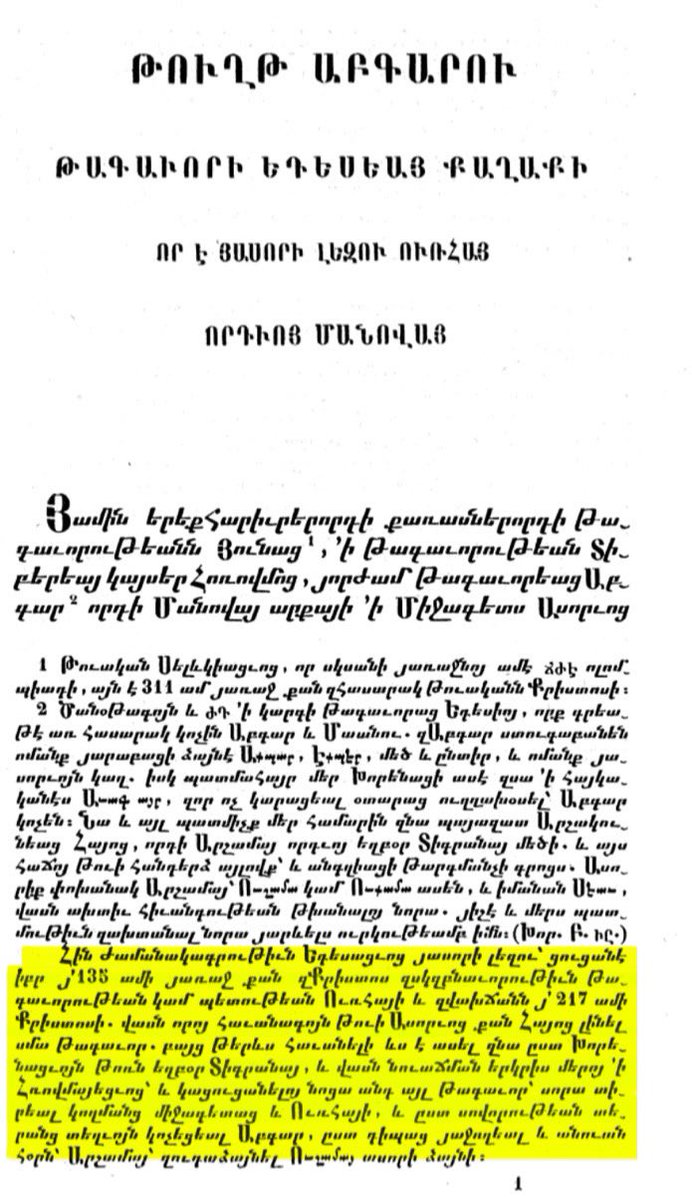
“The ancient chronicle of the Edessa in the Assyrian language shows that in 135 BC the beginning of the kingdom or state of Urha and its end in 217 AD. Therefore, it seems more likely that this king was an Assyrian rather than an Armenian. The original Rabikar wrote this, but the


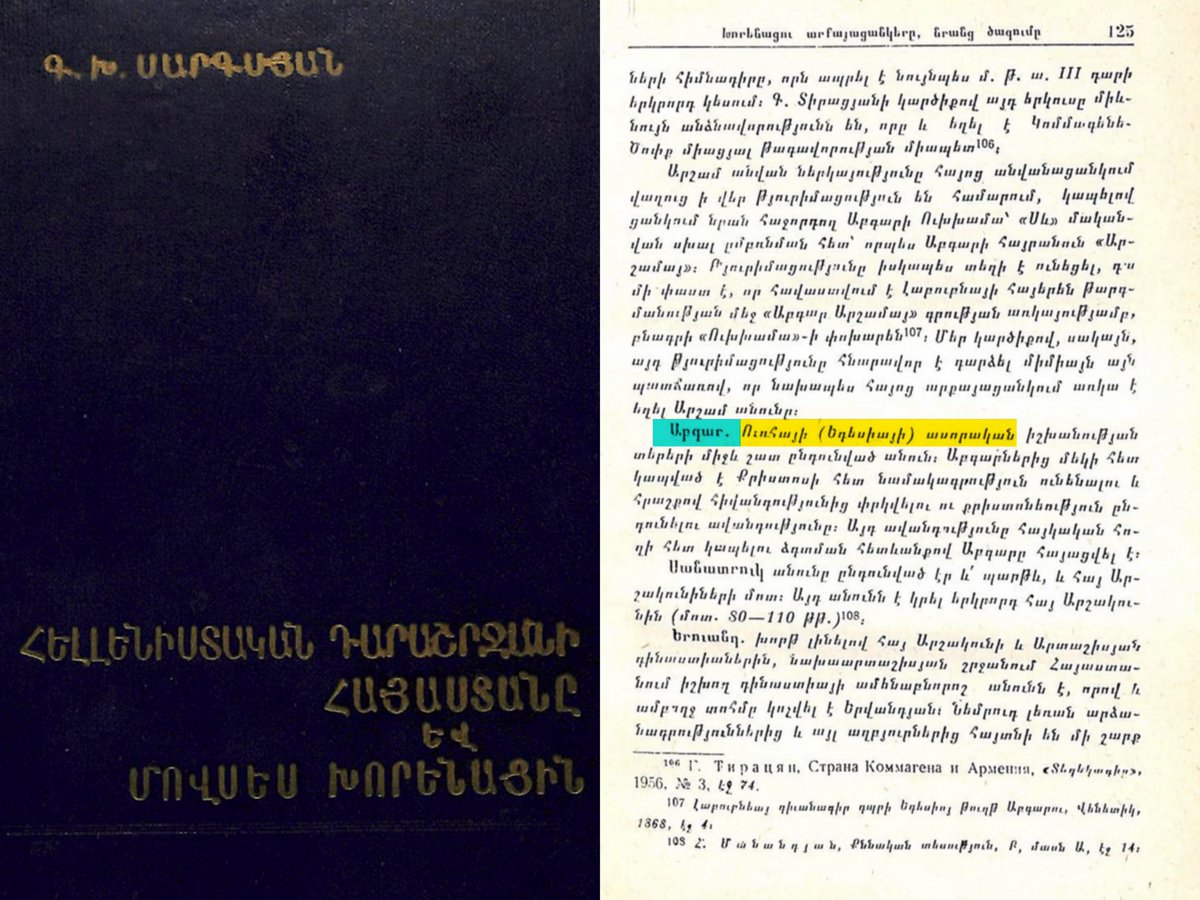
“Abgar, king of the Assyrians of Urhay (Edessa)” This document was created by Gagik Sargsyan, an Armenian historian, who was even the vice president of the Armenian Academy of Sciences. -Gagik Khoreni Sargsyan (Hellenistic Armenia and Moses of Khorenatsi)
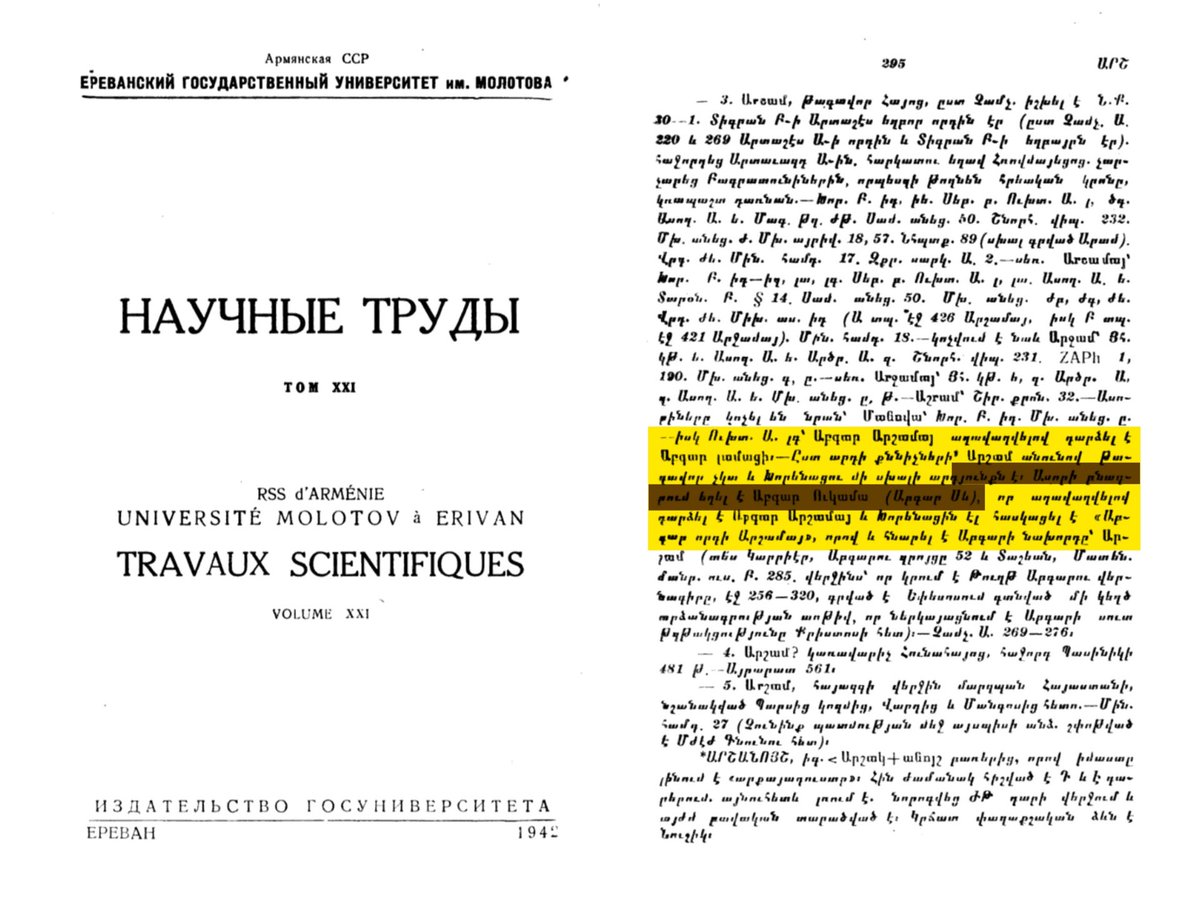
“According to modern researchers, there is no such person named Arsham and it is the result of a mistake by Khorenatsi. The Assyrian origin, was Abgar Ukama (Argar Sev), who was distorted”. -Hrachʻeay Achaṛean (Scientific Works / Scholarly Papers Volume XXI RSS of Armenia
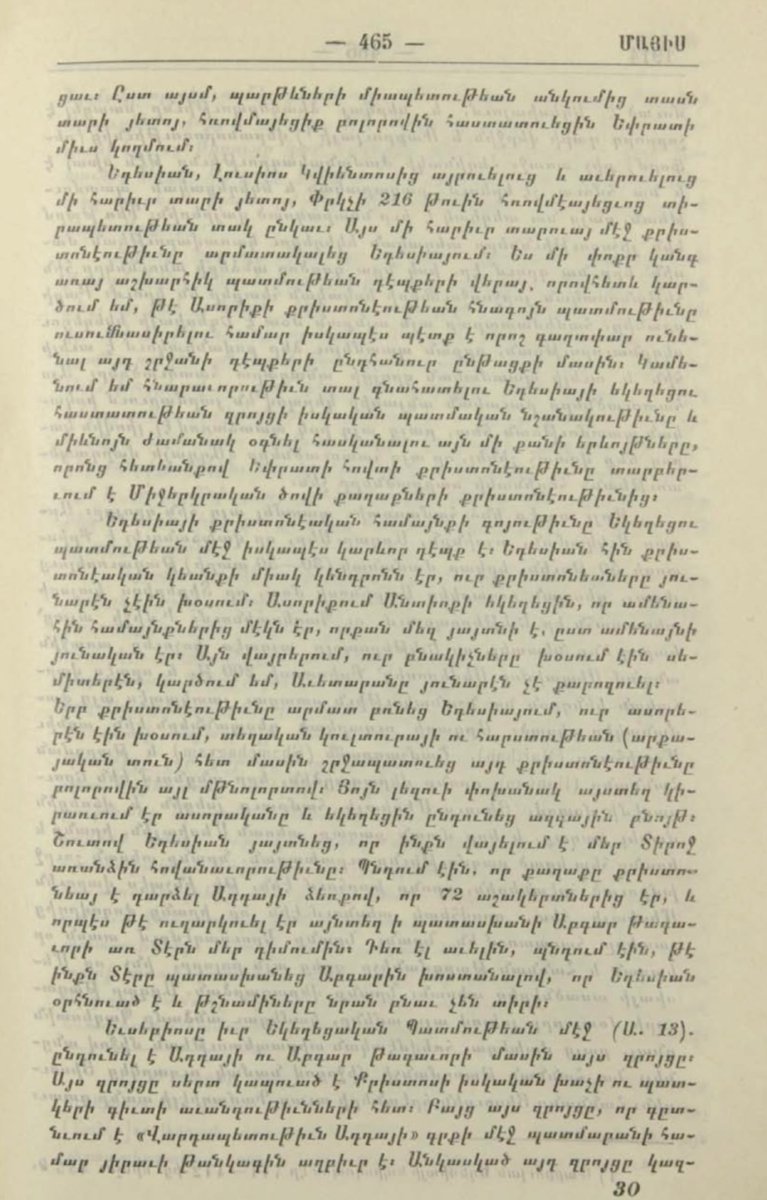
"In those places where the inhabitants spoke Semitic, I think the Gospel was not preached in Greek. When Christianity took root in Edessa, where the people spoke Assyrian, it was surrounded by a completely different atmosphere, together with the local culture and wealth (royal

“only known by the Assyrian name Abgar”. -Stepʻanos Palasanean (History of Armenians)

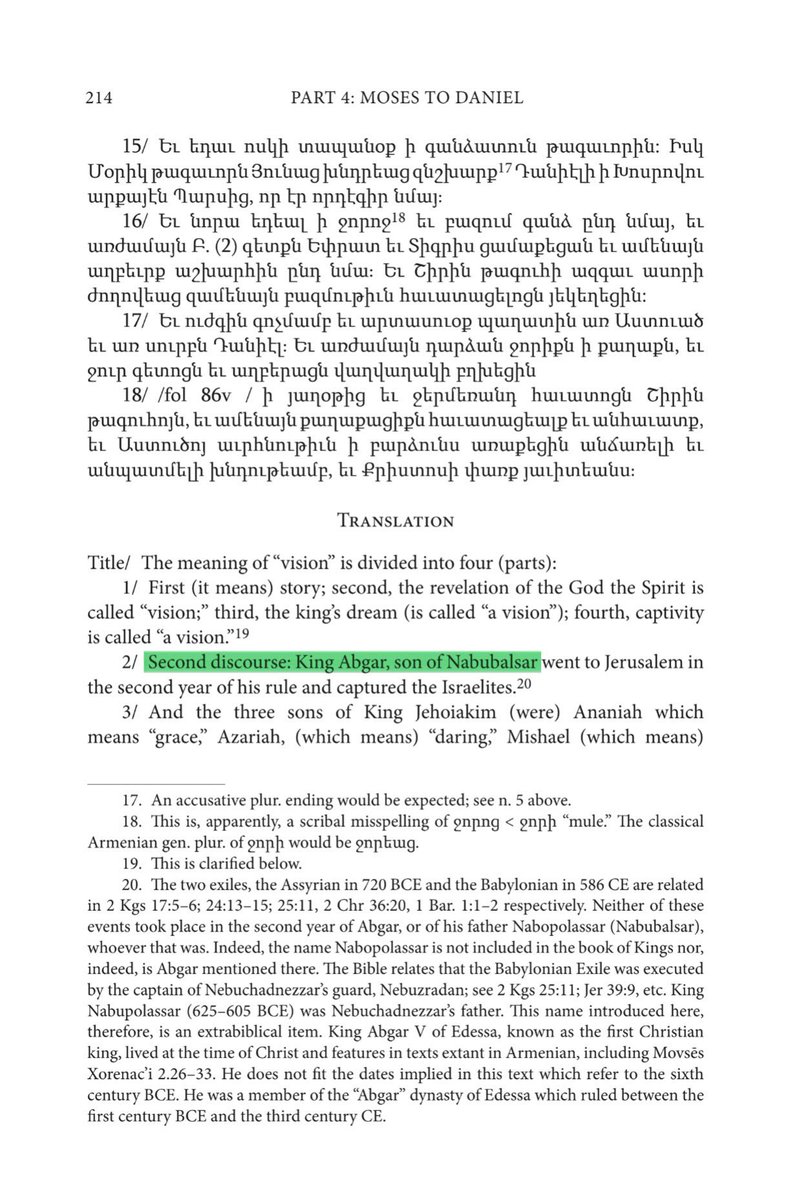
“ King Abgar, son of Nabubalsar went to Jerusalem in the second year of his rule and captured the Israelites”. From the Armenian Apocrypha Texts of Daniel. -Michael E. Stone (Armenian Apocrypha From Adam to Daniel)


"Among them, the most notable was Ardar XV, who, according to Moses Khorenatsi, was the "son of Arshamai", the Armenian king of the Middle East, and who converted to Christianity, settling in his capital, Edessa. According to the same Armenian sources, Edessa was the capital of


"The Assyrians are descendants of the Aramaic tribes who, after the decline of the Seleucid Empire, established their own small principalities in the second century BC, the most famous of which was the principality of kingdom of Edessa". -Satenik Kirakosyan (Teaching the Origin


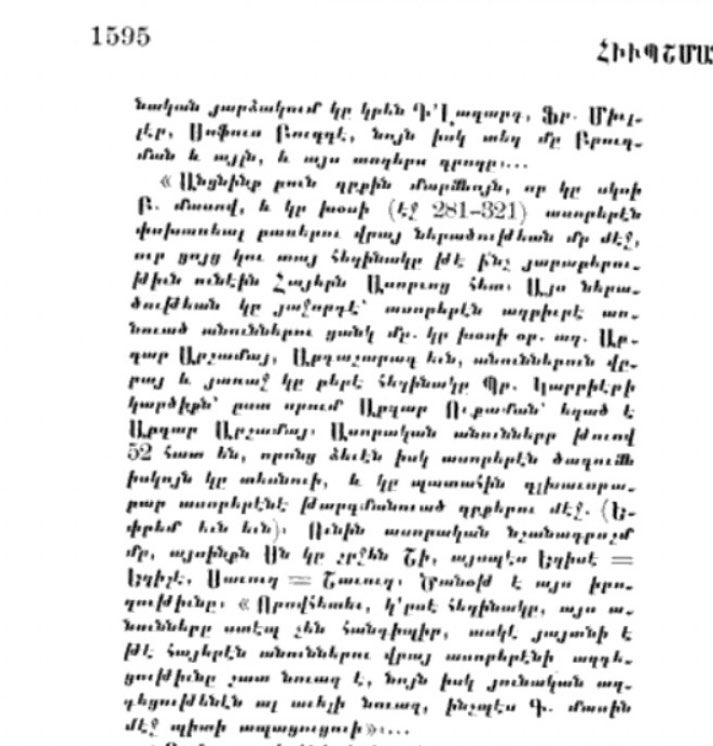
“This introduction is followed by a list of names taken from Assyrian sources. He speaks, for example, of Abgar Arshamay, Arthasarag, and the names of the latter”. -H. Arsen Ghaziken (New Armenian Bibliography and Encyclopedia of Armenian Life)
“In the Hellenistic period was the Assyrian kingdom of Osroene the capital, then the capital of Armenian Mesopotamia”. -Éditeur, February 15, 2023 in Heritage (Western Armenia: Urfa)
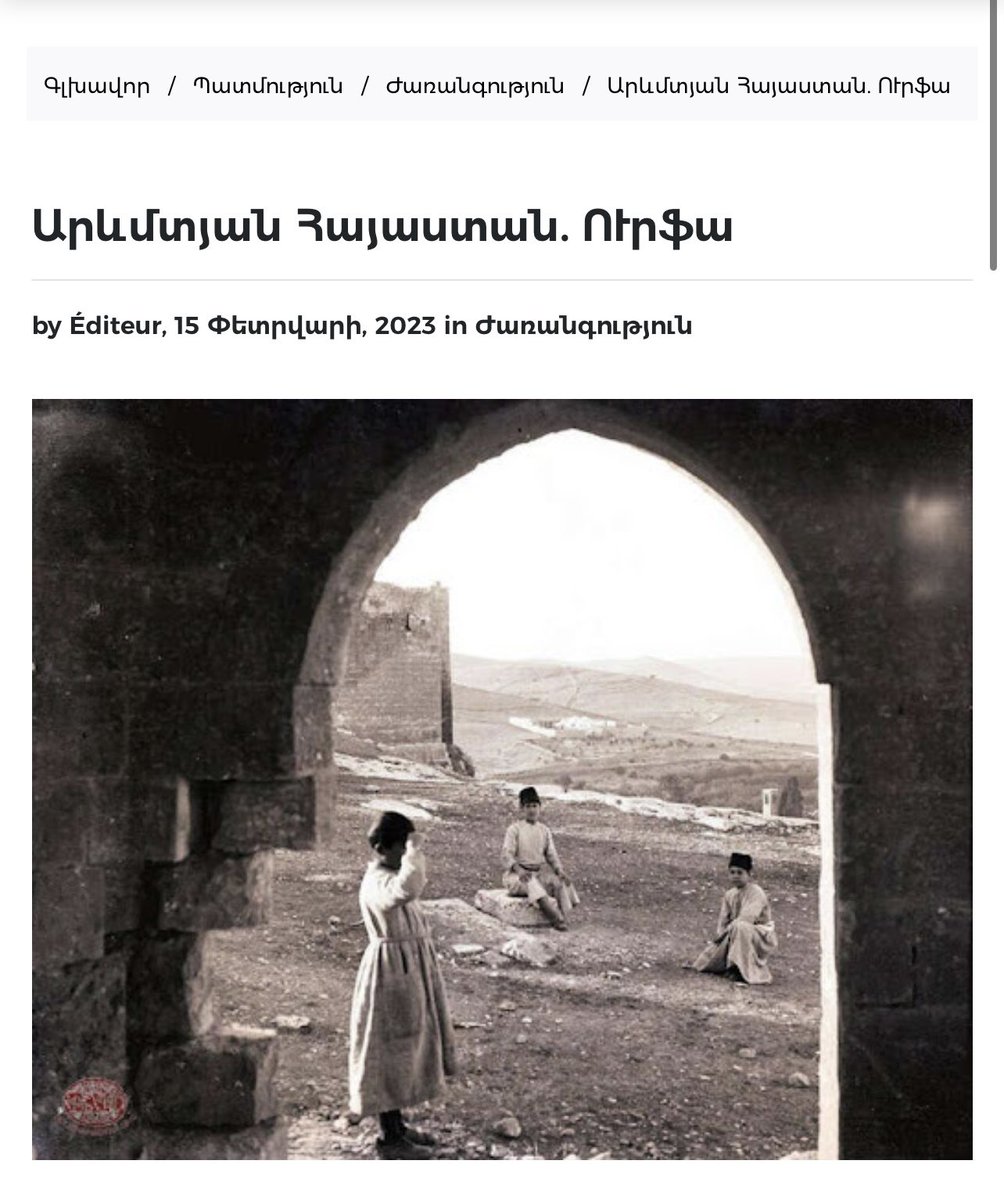

“M. Khoren's Assyrian conversation completely covers Armenia. King Abgar becomes Armenian, Edessa becomes the capital of Armenia. And because Abgar, along with his people, adopts Christianity, Armenia becomes the first Christian country. The Armenian king Sanatruk is now Abdar's
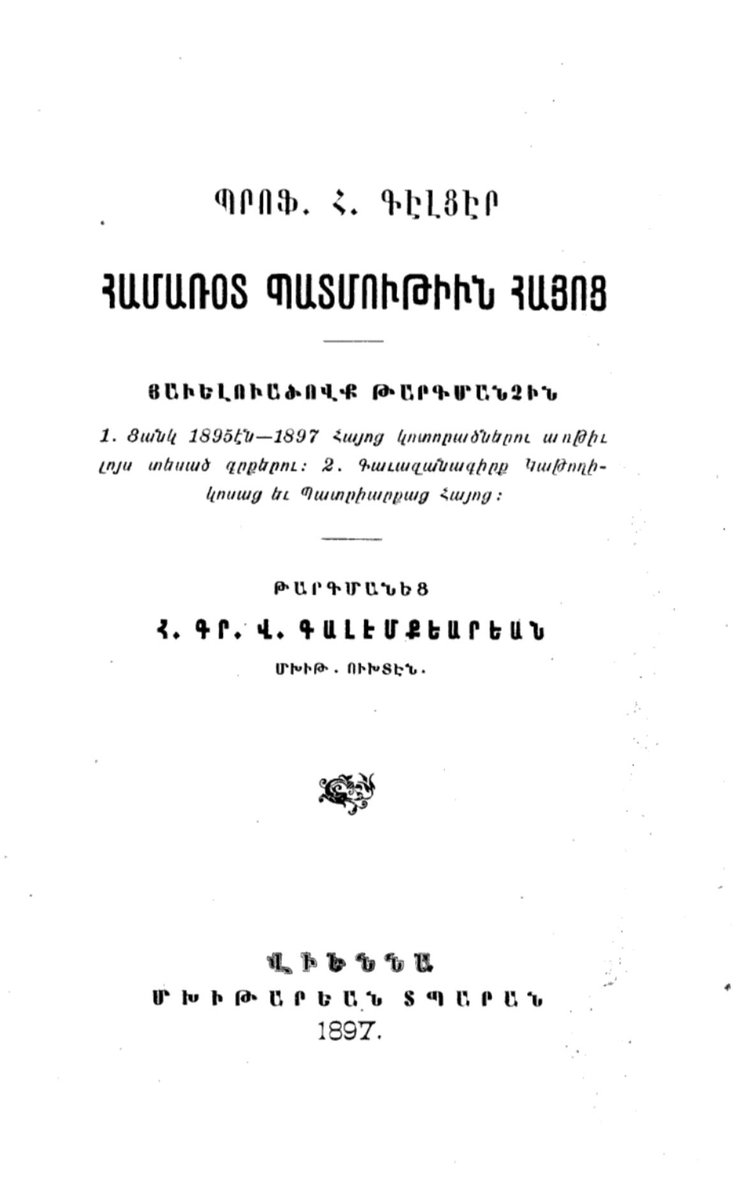

“The lineage of Abgar is not according to our Khorenatsi genealogy. What two authors say is not correct. For the tribe of Abgar was Assyrian, and for a century it lasted in princely or royal succession. And as if by their own name, all of them were called Abgar or Argarean, just


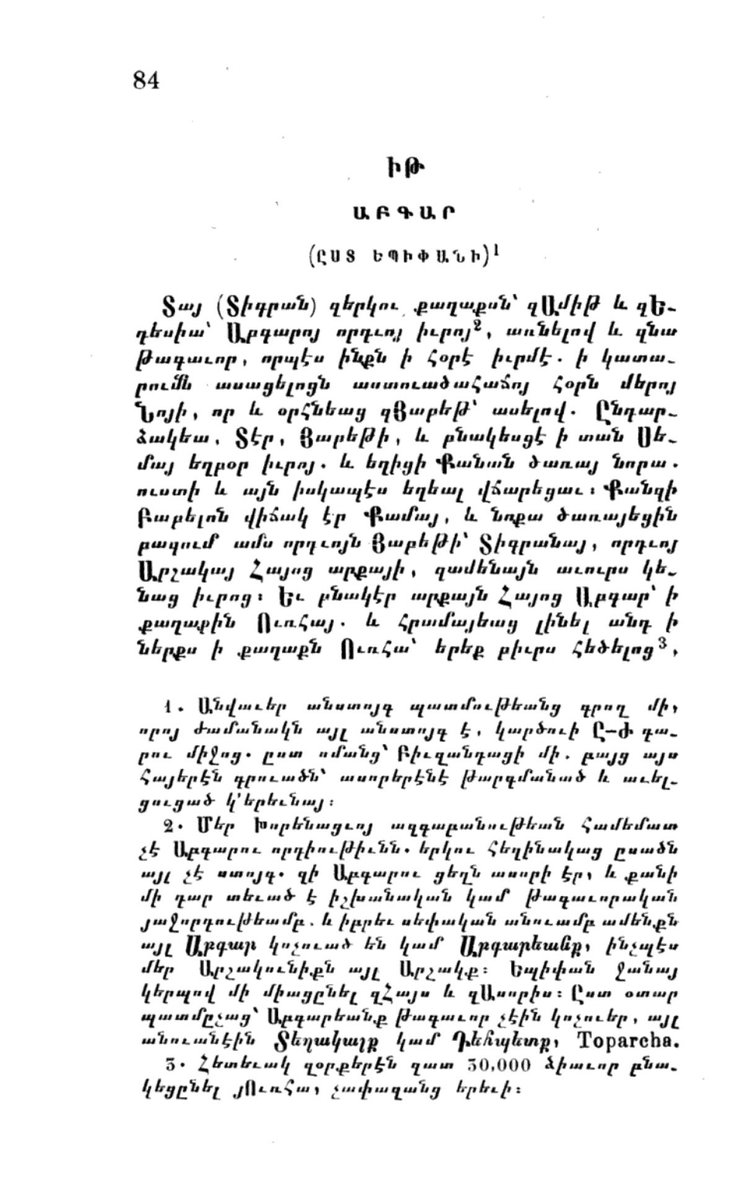

“The tradition had become very domestic, and perhaps an ethnographic misinterpretation, as if the Armenians and the Assyrians (Aramaeans) were descended from a single ancestor — Ram— had contributed no less to this. The direct result of such a misunderstanding is undoubtedly the

“Whatever the Khorenatsi tells of Abgar in chapters 16-19, such as the conflict between Abgar and Herod, the fight and the victory, the sending of his angels to Rome, Abgar's anger and the idea of rebelling against the Romans, his going to pacify the Parthian succession

“Assyrian, which is the Aramaic of Edessa or Urha. This period was an independent state from 136 BC to 217 AD”. -Hrachya Acharyan & Edward Bagrat Aghayan (Complete Grammar of The Armenian Language Compared To 562 Languages) Volume 2•

“The adoption of Christianity as the state religion in the small Assyrian state of Osroen (Assyrian: Urhay, more) during the reign of King Abgar V Ukkama is associated with the latter's name. In fact, already in the 2nd – 3rd centuries, the majority of the ancestors of modern

“Abgar was not an Armenian but a Mesopotamian(Assyrian) prince, one of the kings of Osroen, Edessa”. -Georg Mesrop (History of the Armenian Church)

“As for Abgar, our ancestor solved the question more easily. That Assyrian king, whose territory was in Syria, was baptized without any distinction as the king of Armenia”. In the previous page, the authors clearly state that Abgar being referred to as an “Armenian king” is

