
Pranayama breathing is the best bio hack on Earth. It fixes depression, chronic stress, and reverses aging naturally. Ancient yogis used this to live disease-free for 120+ years. Here's how to use Pranayama the right way (according to science): 🧵
In 2024, UCLA's Dr. Jack Feldman made a breakthrough discovery. He found a tiny cluster of neurons called the preBötzinger Complex that controls your breathing rhythm. But here's what shocked him: changing your breath patterns directly rewires your brain's fear response.

His team modified mice to breathe slower for just 30 minutes daily over 4 weeks. Result? These mice became significantly less fearful than controls. This wasn't placebo. This was proof that breath control physically alters brain function.
But the ancients knew something even more powerful... Consider Sri Krishnamacharya, "the father of modern yoga." He lived to 100+ and could voluntarily stop his heartbeat for over 2 minutes. His secret? He taught that breath guides all movement and famously asked: "Where is
Modern science is now proving why these yogis lived so long. Harvard researchers found that pranayama reduces cortisol—your primary aging hormone. But cortisol reduction triggers a cascade that most people don't know about...
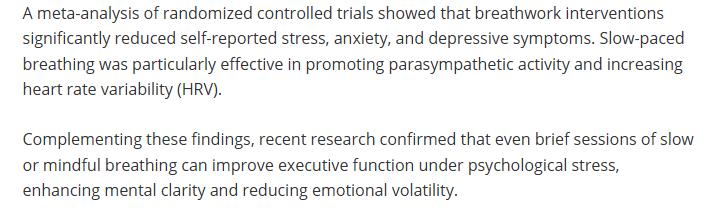
When cortisol drops, your antioxidant defenses strengthen. Oxidative stress plummets. Most importantly: your telomeres, the protective caps on chromosomes, stop shortening as quickly. A longitudinal study proved people with lower cortisol had slower cellular aging over 3
Here's the mechanism that will blow your mind: Specific breathing patterns activate lung stretch receptors. These trigger the Hering-Breuer reflex via your vagus nerve. This stimulates your parasympathetic system and downregulates your HPA axis. The result? Your body shifts
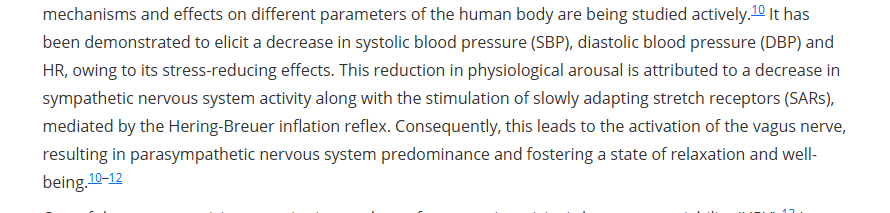
But not all breathing techniques are equal. Nadi Shodhana (alternate nostril breathing) was tested on hypertensive patients. Just 10 minutes led to immediate reductions in systolic blood pressure, diastolic blood pressure, and heart rate. The effects lasted 6 weeks.
Bhramari Pranayama (humming bee breath) is even more fascinating. The humming creates vibrations that resonate through your skull. Studies show it reduces stress hormones and improves attention in just 10 days. But there's one technique that surpasses them all...
Sudarshan Kriya Yoga (SKY) - the most scientifically studied breathing technique. Research shows it reduces PTSD, depression, cortisol, and ACTH while increasing prolactin (anti-stress hormone). It modulates your HPA axis. Some benefits appear after just ONE session.

A Harvard-affiliated review of 33 studies found something remarkable: Yoga practitioners (which includes pranayama) showed improved "predictors of longevity." Walking speed increased. Lower leg strength improved. These are direct markers of reduced frailty and extended
Here's the simplest protocol to start: 4-7-8 Breathing (Dr. Andrew Weil): • Exhale completely through mouth • Inhale through nose for 4 counts • Hold for 7 counts • Exhale through mouth for 8 counts • Repeat 4-8 cycles Practice twice daily.
But here's what's truly shocking: Despite overwhelming evidence from Harvard, UCLA, and hundreds of studies... medical schools barely teach breathwork. Why? The system rewards pharmaceutical treatment over prevention. There's no billing code for teaching patients to breathe.
The ancient yogis understood something profound: Your lifespan isn't measured in years, it's measured in breaths. By slowing your respiratory rate through pranayama, you literally conserve your life force. Modern science proves they were right about cellular aging.
Begin with Nadi Shodhana (enhances melatonin synthesis and parasympathetic recovery): • Sit comfortably, spine straight • Use thumb to close right nostril • Inhale through left nostril • Close left with ring finger, release thumb • Exhale through right nostril • Continue
Your breath is the master switch controlling stress hormones, immune function, cellular aging, brain chemistry, and longevity genes. The yogis who lived 100+ years weren't lucky. They were practicing the most powerful biohack known to humanity.
Thanks for reading. If you enjoyed this post, follow @karlmehta for more content on AI and politics. Repost the first tweet to help more people see it: Appreciate the support.