
Polkadot is dead. Raised $500M. Promised a revolution. Now? No users. No devs. No future. Here’s how one of crypto’s biggest bets faded into a ghost chain 👇🧵
I’ve put a lot of effort into the research, and it would mean so much to have your support in spreading this free knowledge! Before we jump in, a quick ask: - Like + RT + comment under the first tweet - Follow me - Join the Telegram for real-time plays: https://t.me/NonzeeNotes
1/ ICO that started it all: 2017: Polkadot raised $144M in minutes. Another $43M in private rounds. By 2021, it looked unstoppable — the “Ethereum killer” was here.

2/ Parachains promised a new Web3. Polkadot launched its mainnet in 2020, parachains in late 2021. Shared security and scalable design. It looked brilliant on paper, but something felt off...
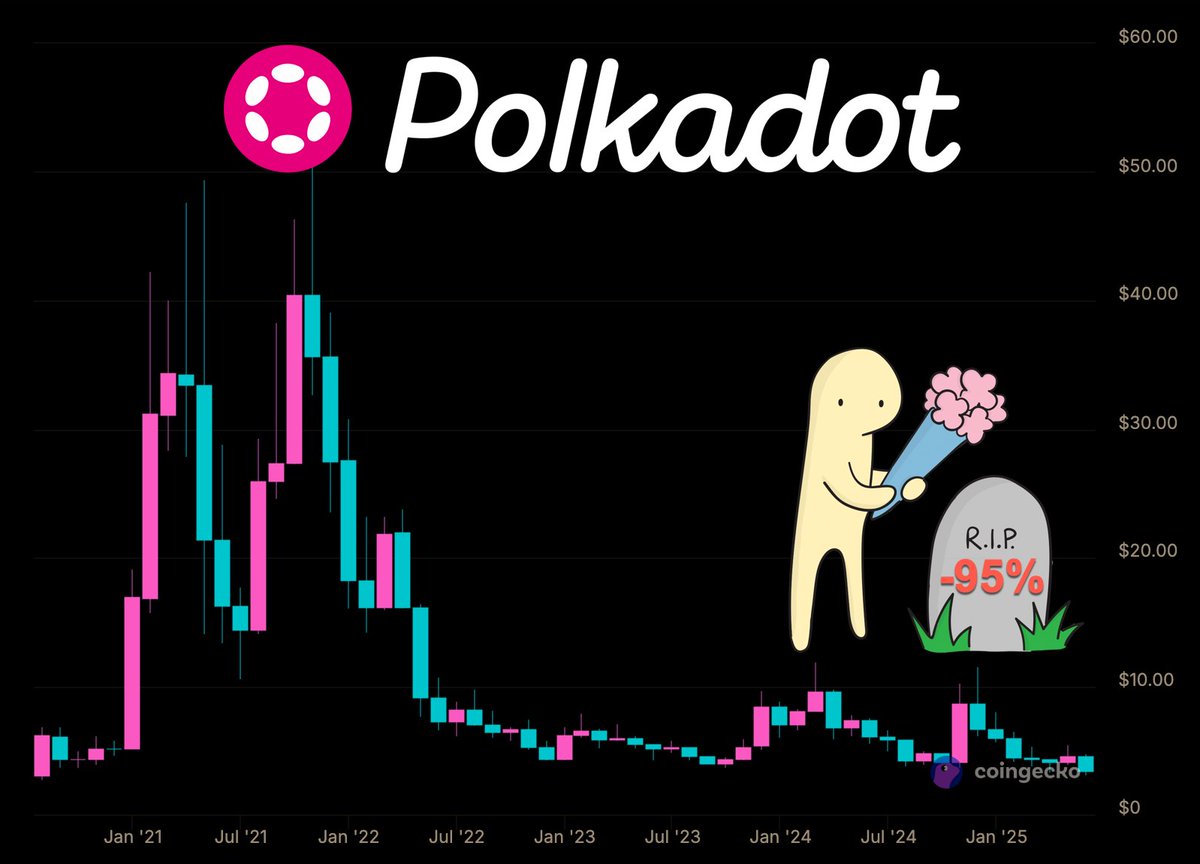
3/ Hype without traction. At its peak, $DOT hit $55. Market cap: $50B. But the network never found product-market fit. No killer app, no sticky users. Just parachains with potential — never payoff.

4/ Nightmare for Developers. Building on Polkadot was brutal. Substrate and Rust weren’t beginner-friendly. Compared to EVM chains, it felt like work. Too much friction; devs moved elsewhere.
5/ Confusing architecture, bad UX. Two networks: Polkadot and Kusama. (both had tokens) Nobody understood the difference, users got confused, builders hesitated. It was a UX disaster.
6/ Auction model killed momentum. Parachain auctions sounded genius. But locking $DOT for 2 years for a slot? Projects lost momentum, users lost liquidity. It was complex, costly, and ultimately — unsustainable.

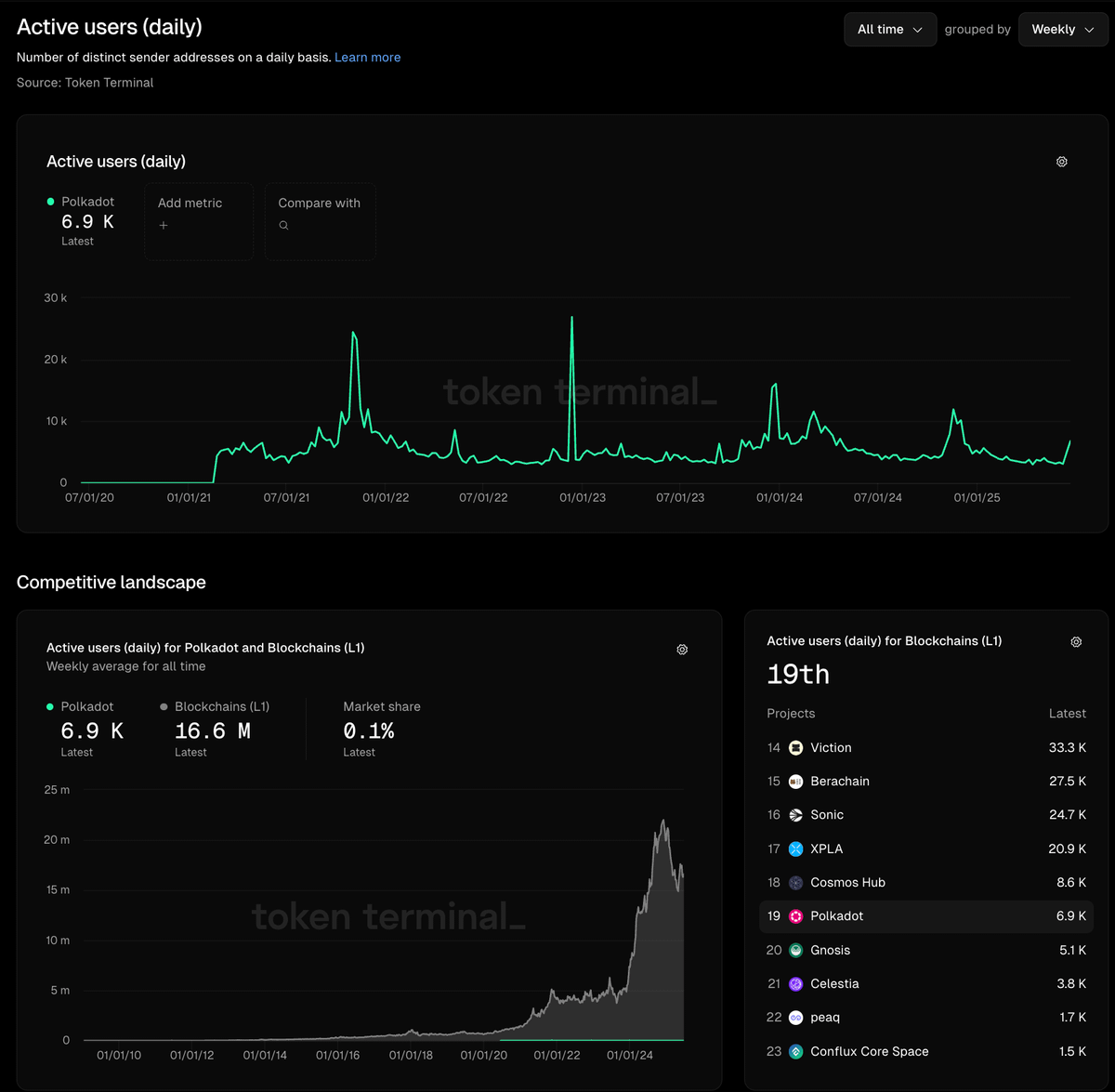
7/ Real usage never followed. 2021–2024: parachains launched. But daily active users dropped fast. By 2025, $DOT had fewer than 5K daily users across all chains.
8/ Developers jumped ship. 2022: Polkadot had 2,400 monthly developers. 2024: that number nearly halved. Too many bridges to nowhere. Too few reasons to stay. Even the die-hards lost faith.


9/ Governance lost its power. Polkadot had one of the most ambitious governance models. But it got hijacked by whales. Treasury spent over $129M in 2024 — most of it with no clear ROI. Voter turnout sank. (so did trust)

10/ Tech got better but no one cared anymore. 2024: Polkadot 2.0 launched -> Async backing, Agile Coretime, JAM protocol. It was fast. Scalable. Efficient. But the world had already moved on.
11/ Market spoke loudly. $DOT collapsed from $55 to under $5. No meaningful recovery, charts screamed death spiral, investors stopped believing.

12/ No product, users, narrative. Web3 runs on narrative. Polkadot never had one that people cared about. It was smart, complex. But it never felt inevitable.
13/ What’s left today? The architecture is still brilliant. XCM, shared security, interchain messaging — it works. But that doesn’t matter without users. Polkadot is a marvel of engineering… with no one inside.

Polkadot proves tech doesn’t equal traction. It built the chassis of a Web3 supersystem — but with few users, slow adoption, dev drop‑off, market freeze, it feels like a ghost town. If a real‑world killer app arrives, it could return from the dead. Until then? $DOT remains a top‑tier tech engine nowhere built into.
Most real alpha never makes it to Twitter. Join the Telegram for early entries and real-time plays: https://t.me/NonzeeNotes

If you like this thread helpful, don't forget to: ➜ Follow me @0xNonceSense for more. ➜ Like/Bookmark/Repost the quote below if you can. Head back to the start of the thread and share it with others 👇.