
📄I'll demonstrate that Jesus Christ is the Messiah, from premises a Jew committed to the Tanakh would accept, which personally I don't think is necessary for apologetics or the truth of Revelation but I'll indulge because it will entirely avoid the accusation of redefinition:
i) Whoever fulfils the prophecies given by God through the Prophets concerning the Messiah and the restoration of Israel is the true Israel's King and fulfiller of covenantal promises. (Isa 9:6–7; Jer 31:31–34; Ezek 37:24–28)

ii) Jesus of Nazareth fulfils these prophecies: a) Born of David's line (Isa 11:1; Matt 1:1ff) b) Brings a New Covenant (Jer 31:31ff; Heb 8:8–12) c) Unites Jew and Gentile under God's reign (Isa 49:6; Acts 13:47)


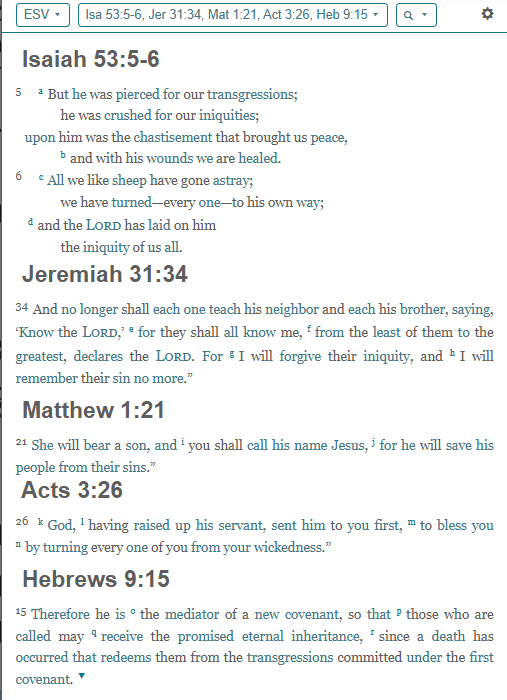
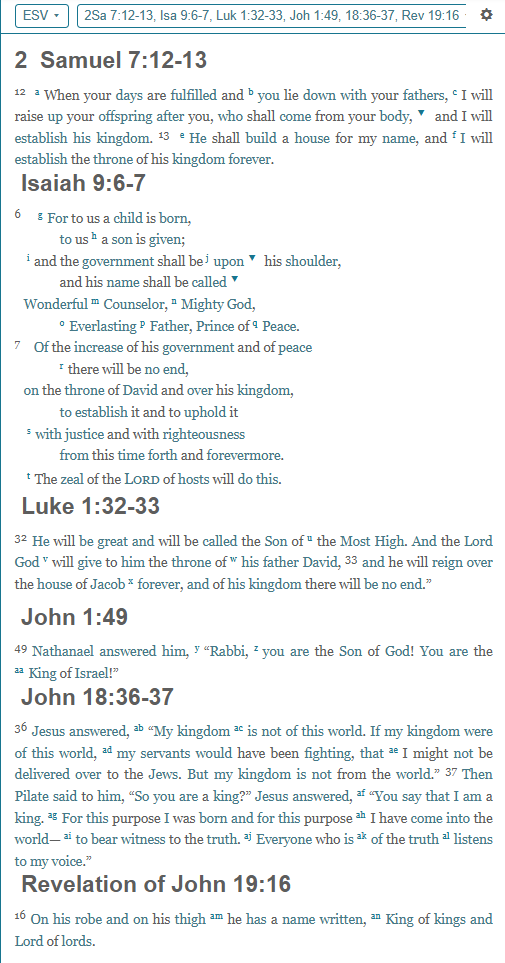
d) Jesus frees the Jews from sin and exile (Isaiah 53:5–6, Jeremiah 31:34; Matthew 1:21, Acts 3:26, Hebrews 9:15) e) Jesus Rules as King of Israel (2 Samuel 7:12–13, , Isaiah 9:6–7; John 1:49; John 18:36–37; Luke 1:32–33; Revelation 19:16)
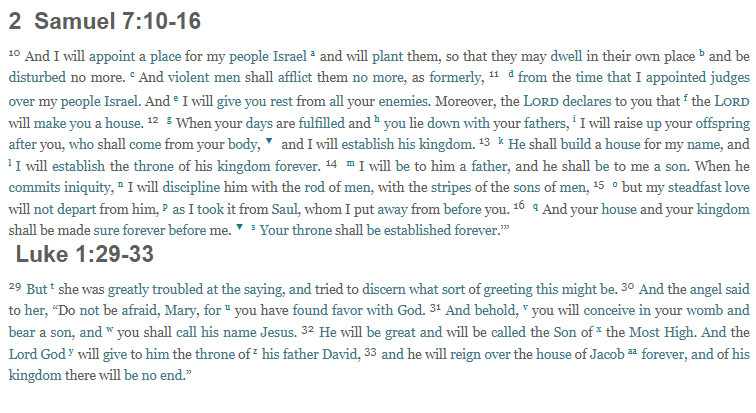
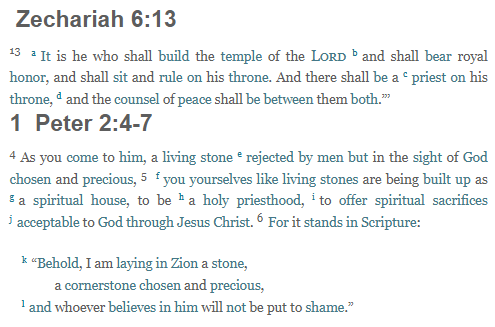
f) Reigns eternally (2 Sam 7:10-16; Luke 1:29-33) g) Establishes a spiritual Temple and priesthood (Zech 6:13; 1 Pet 2:5) ∴ Jesus is the true Messiah and the Church, composed of those united to Him, is the restored Israel, as foretold by the Prophets.
But even working as I did from the assumption that the Jews get to set the enframing doesn't actually rest on scripture but on rabbinic tradition post facto which itself would have to first contend its continuity with the Torah. Theres no non-naive reason to humor them here.
Especially given that the Old Testament clearly speaks of the Messiah being Divine. Ergo, the assumption that concedes first to this Jewish position fails adequacy to scripture and should not be prima facie assumed.
The major premise i) is necessarily accepted for the sake of the argument. The minor premise ii) stands proven but we can go thus further, in showing that the Messiah is supposed to be Divine by reason of origin.
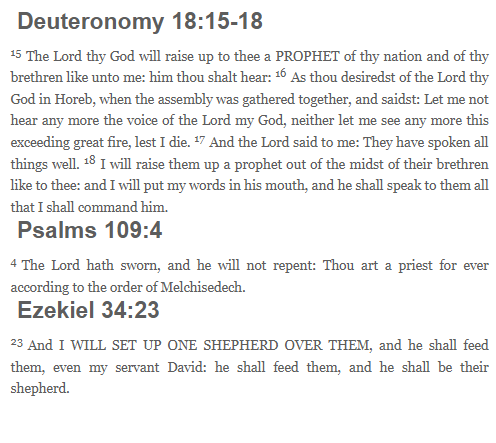
The Old Testament contains mere indications of the True Godhead and Divine Sonship of the Messiah. As Ludwig Ott argued (cf. Fundamentals of Catholic Dogma III, s. 1, c. 1.3) The Messianic prophecies describe the coming Redeemer as:

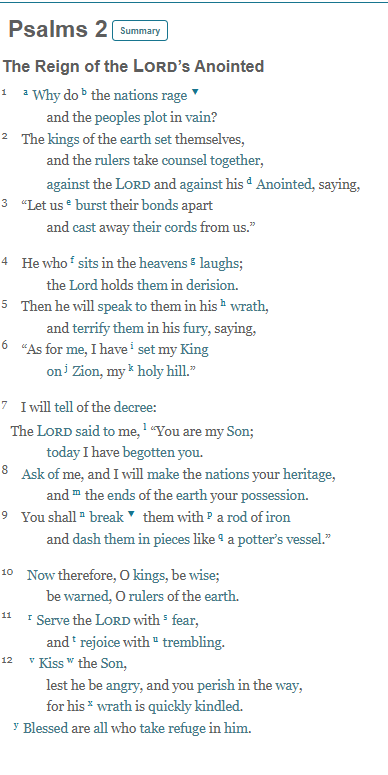
- a prophet (Dt. 18:15-18) - as a priest (Ps. 109:4) - as a shepherd (Ez. 34:23 et seq) - as King and Lord (Ps. 2; 109; Zach. 9:9) - as a suffering servant of God (Is. 53)
- as suffering crucifixion (Ps. 22) - and designate Him the "Son of God" - as begotten before the Daystar - "Wonderful, Counsellor", "Mighty God", "Everlasting Father", "Prince of Peace" (Isa 9:6–7 above)
- The Lord hath said to me: Thou art my son, this day I have begotten thee. (Ps. 2,7 ; cf 109,3). A further consideration is the attribute of Eternity which is predicated of the coming Messiah yet is clearly in many Scriptural contexts a Divine appellation.
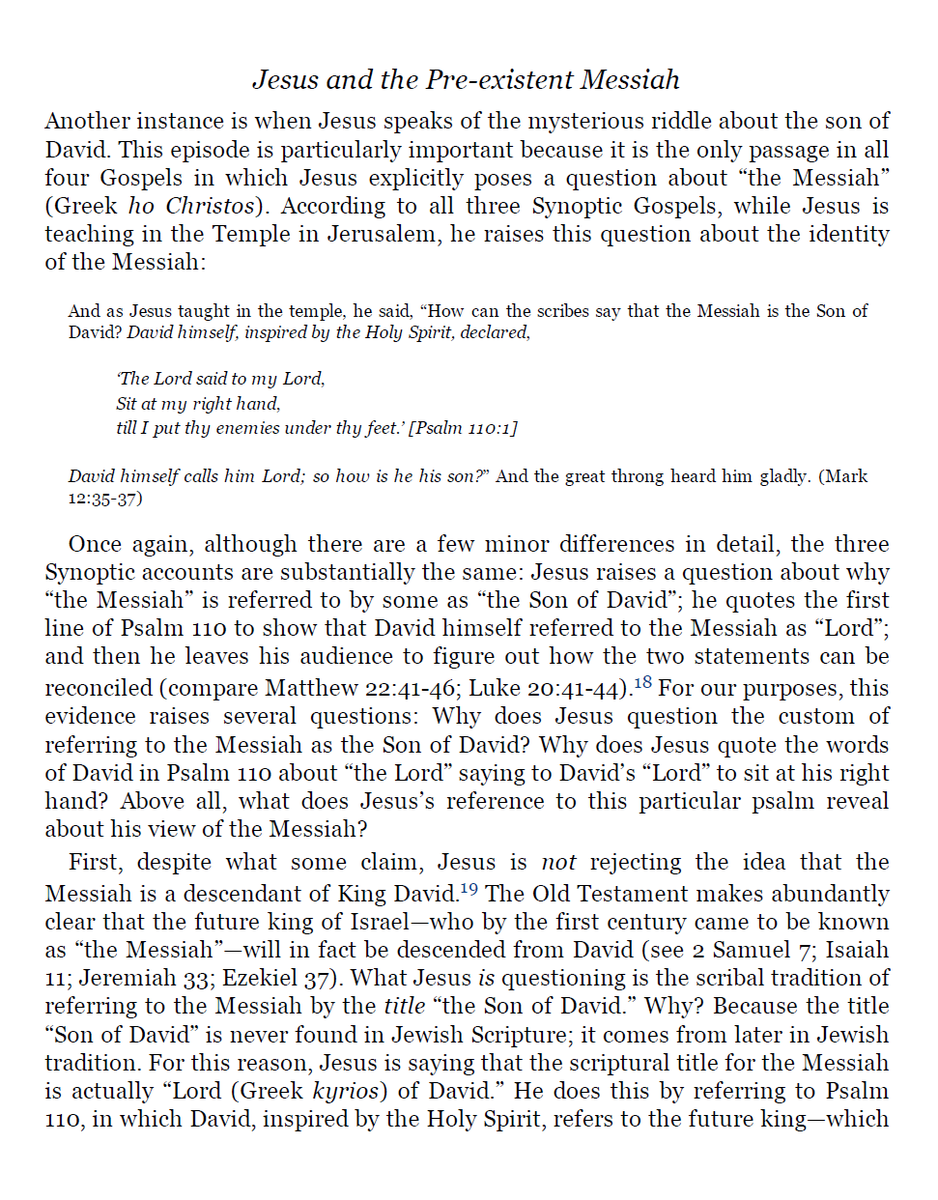
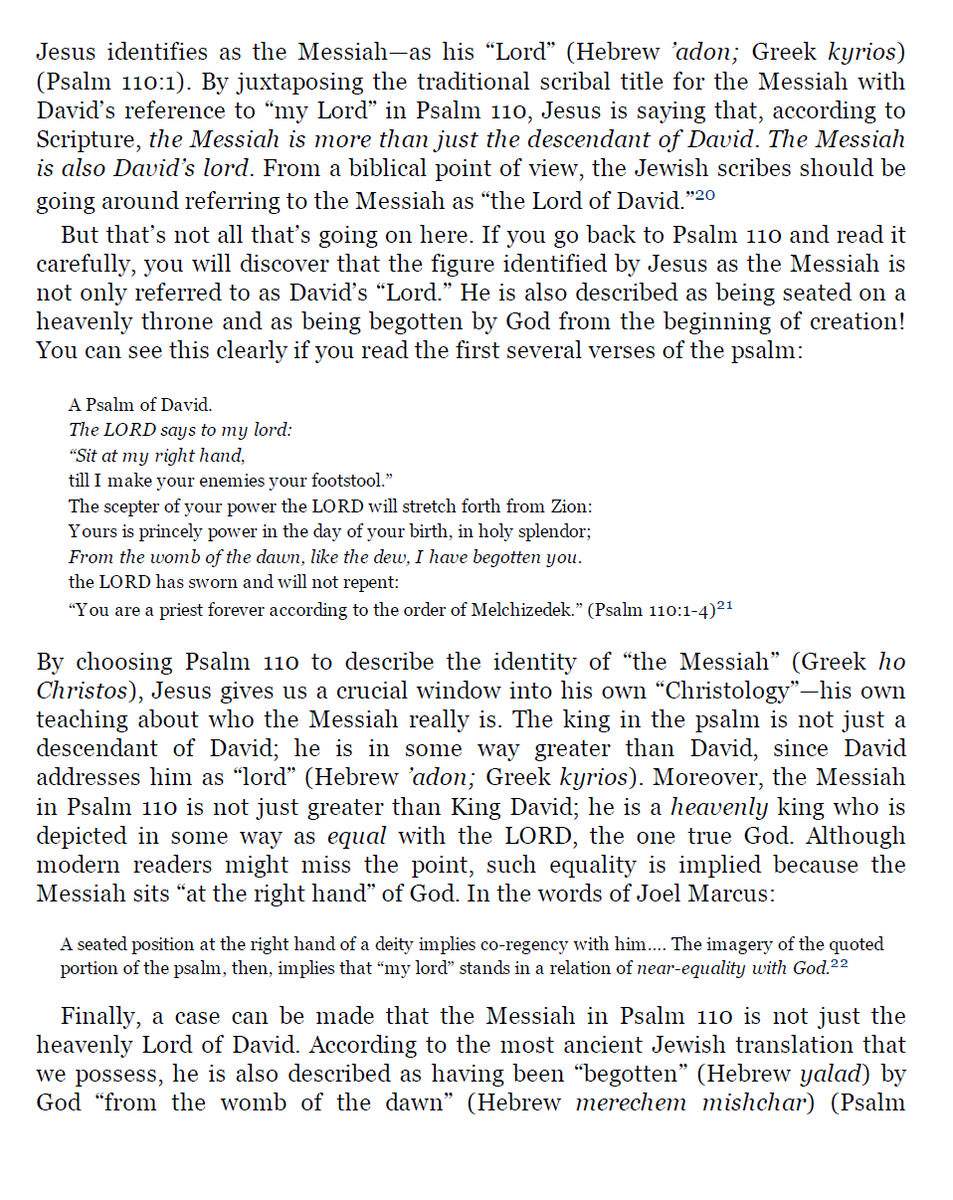

As Brant Pitre notes here, The Messiah promised in the Old Testament is not merely a human descendant of David, but also a divine figure who pre-exists David and reigns with God; therefore, only a Messiah who is both human and divine can fulfill the Old Covenant.
That which is prophesied in divine Scripture as belonging to the Messiah must be fulfilled in the true Messiah. But divine Scripture prophesies that the Messiah will be (1) a human descendant of David, and (2) the pre-existent Lord of David, seated at the right hand of God,
begotten before time, and sharing in divine prerogatives. Therefore, the true Messiah must be both human and divine. (1) is already clear in 2 Samuel 7:12-14, Isaiah 11:1, Jeremiah 33:15, shown already to be fulfilled in Jesus.
But (2) has already also been given ample evidence from the Old testament's requirement of the Messiah being Divine. We can go further:
Psalm 110:1 – “The LORD said to my Lord: ‘Sit at my right hand until I make your enemies your footstool.’” David refers to his descendant as “my Lord” (Heb. ’adoni), a title used for divine or exalted figures.
But in Jewish culture, a father does not call his son ‘Lord’; the greater honours the lesser. Therefore, this descendant is greater than David—and not merely human.
Jesus’ riddle in Mark 12:35–37 brings this contradiction into focus: How can the Messiah be both David’s son and David’s Lord? Answer: if he is divine as well as human.
Messiah is Pre-existent and Begotten of God Psalm 110:3 (LXX rendering) – “From the womb, before the morning star, I have begotten you.” Psalm 2:7 – “You are my Son; today I have begotten you.”
The Messiah is said to be begotten, not created, from before time—implying eternal generation and a unique sonship from the Father, pointing beyond any mere creature.
Messiah Reigns with God. (Psalm 110). In Jewish idiom, sitting at God’s right hand signifies sharing in divine authority (cf. Joel Marcus, cited by Pitre: “a seated position at the right hand of a deity implies co-regency”).
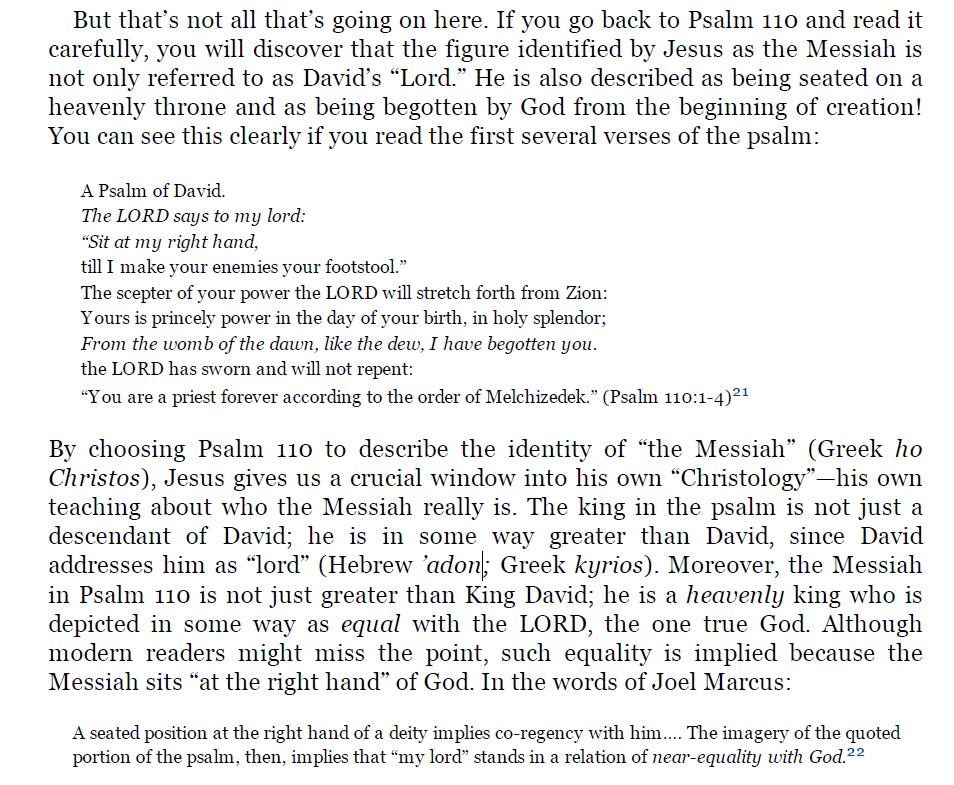
No mere creature may reign beside the LORD unless he shares in His divine nature (cf. Isaiah 42:8: “I will not give my glory to another”).
While Jewish expectation often reduced the Messiah to a Davidic king (cf. Son of David), this title is never used in Scripture itself, as Jesus notes (cf. Mark 12:35).
Instead, Scripture ascribes divine qualities to the Messiah, including pre-existence, lordship over David, co-regency with God, and divine begetting.
Therefore, according to the Old Testament and as Pitre (Case for Jesus, c. 10, n. 3) and Ott argue well, particularly Psalm 110, Psalm 2, 2 Samuel 7, and Isaiah 11,
the Messiah must be both (1) a human descendant of David, and (2) the divine Lord, begotten before all ages, and reigning at God's right hand. Only a Messiah who claims to be Divine, is Divine, can fulfill the Old Covenant prophecies.
And since Jesus alone among all claimants to Messiahship has done so (see Matt 22:41–46; Mark 12:35–37; Luke 20:41–44), he alone fits the biblical criteria for the Messiah.
Appendix: I could have included the ascription of "Eternity" to the Messiah but this one is more complicated. It must be noted, that the biblical expression" Eternity" may mean merely a long period of time.
But in other contexts are clearly Divine: Mich. 5, 2 (which is fulfilled in Matthew 2:6; John 7:42). Dan. 7, 14: His power is an everlasting power that shall not be taken away: and his kingdom that shall not be destroyed."
All in all, the New Testament does not redefine Israel, it reveals what Israel always was: the people of God in covenant fidelity. Rejecting that is rejecting the prophets. John Bergsma on the Dead Sea Scrolls is worth looking to on this matter.