
Can you think of many men who dared challenge an entire Empire? A gladiator took the fight from the arenas to Rome herself, humiliating the Empire that ruled the known world; this is his story..🧵⤵️

Spartacus was born around 111 BC in Thrace, a rugged land of warriors around Northeastern Greece and its borders with Bulgaria. Likely raised among tribes known for their ferocity, he may have wielded a curved sica sword in raids or as a mercenary.

Ancient sources hint he served in Rome’s auxiliary forces, learning their tactics before deserting—perhaps scorning their discipline or driven by a personal slight. Captured, he was enslaved and sold to a gladiatorial school in Capua by 73 BC.

Life in the ludus was a paradox: gladiators were both despised slaves and idolized performers. Spartacus likely faced the arena’s roar, the crowd’s bloodlust, and the shadow of death in every bout. Each victory honed his skill—parrying a retiarius’s trident or outlasting a

Spartacus shared leadership with Crixus and Oenomaus, but his tactical genius shone. A former soldier, he knew Rome’s playbook: rigid legions, predictable camps. He turned his ragged force into a mobile scourge, training them to wield pilfered weapons and strike like wolves.
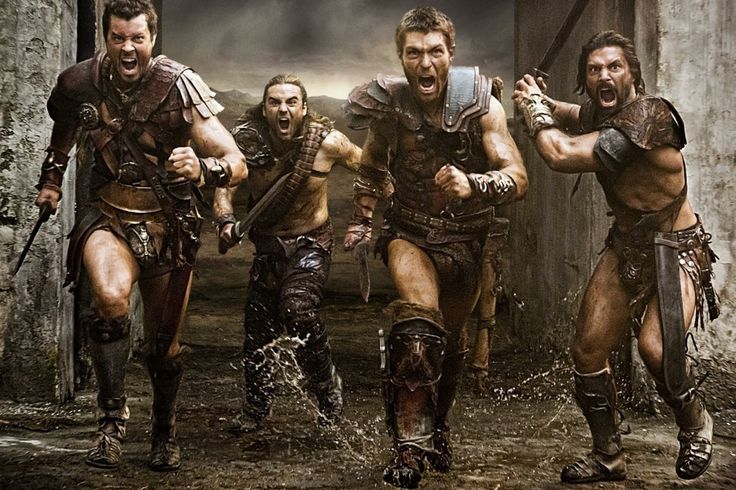
Their first test came against Gaius Claudius Glaber, a praetor sent with 3,000 men to starve the rebels out. Spartacus outfoxed him. Under cover of night, his gladiators—ropes woven from vines—rappelled down Vesuvius’s cliffs, circling Glaber’s camp. The dawn assault was a

Rome’s Senate, stung by the embarrassment, deployed both consuls—each commanding a consular army of roughly 10,000–20,000 men, including legionaries, auxiliaries, and cavalry. These were no hastily assembled militias but disciplined forces led by Rome’s top officials, tasked

He lured Gellius’s forces into a narrow valley, where his scouts had scouted ambush points under moonlight. At dawn, rebels descended from wooded slopes, gladiators like Spartacus and Crixus hacking through Roman lines with stolen swords and crude spears, while shepherds pelted


Soon after, Spartacus turned north, clashing with Gnaeus Cornelius Lentulus Clodianus, whose consular army of 10,000–15,000 mirrored Gellius’s in discipline but not in fate. Likely in Picenum’s rolling fields, Spartacus exploited Roman overconfidence. Feigning retreat—a Thracian

Spartacus, bloodied but unbowed, led the charge, his murmillo training evident in every precise strike. Appian notes the Romans fled, leaving behind arms and pride. This second consular defeat, per Plutarch, shook Rome’s core, cementing Spartacus as a specter of defiance, his

Spartacus, now commanding an army of up to 120,000—slaves, shepherds, and outcasts flush with looted Roman gear—pushed north, likely toward the Alps, aiming for freedom beyond Rome’s reach. His victories had humiliated the Republic, drawing thousands more to his banner with every


Spartacus, undeterred, pressed on, defeating another Roman force under Quintus Arrius in northern Italy. Appian describes him turning south again, possibly swayed by his army’s reluctance to abandon Italy’s riches or by blocked Alpine passes. I'm not sure even today why he
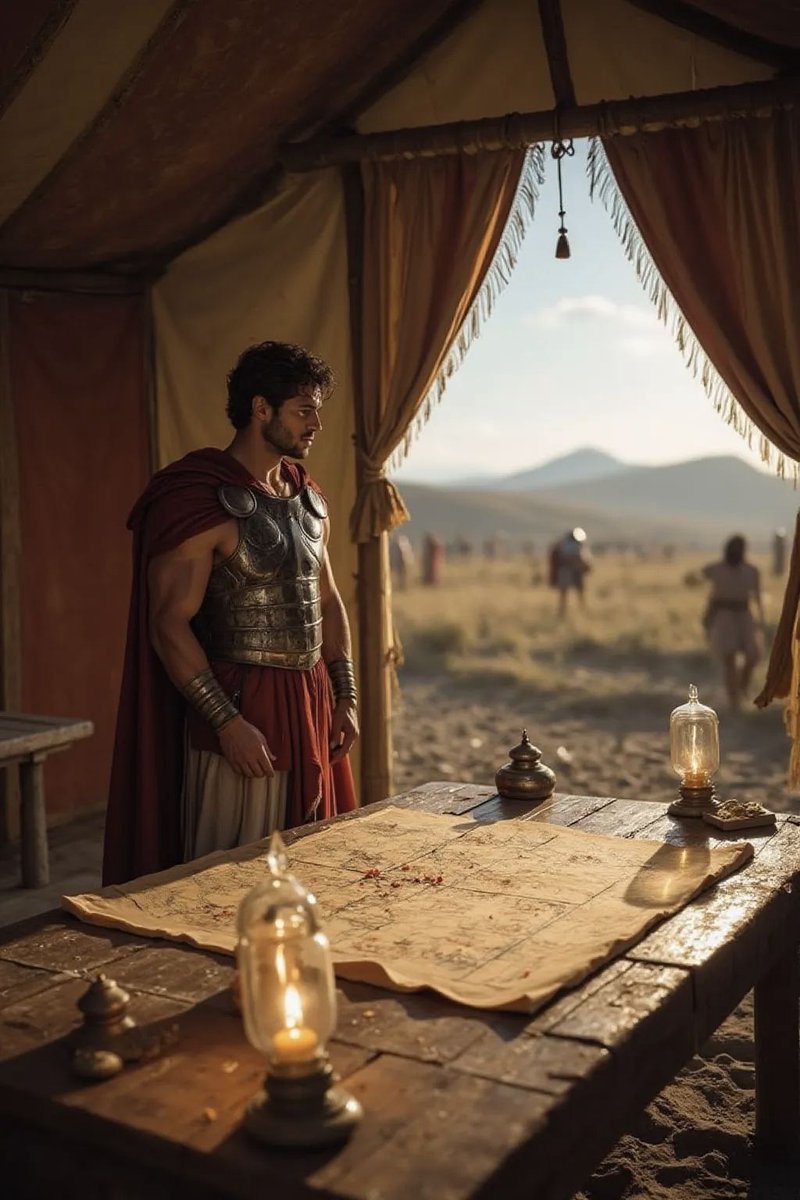
As Spartacus’s rebellion tore through Italy in 72 BC, Rome’s Senate, reeling from his victories over consular armies, scrambled to end the slave uprising that threatened the Republic’s core. Marcus Licinius Crassus, a wealthy patrician and ruthless strategist, was given
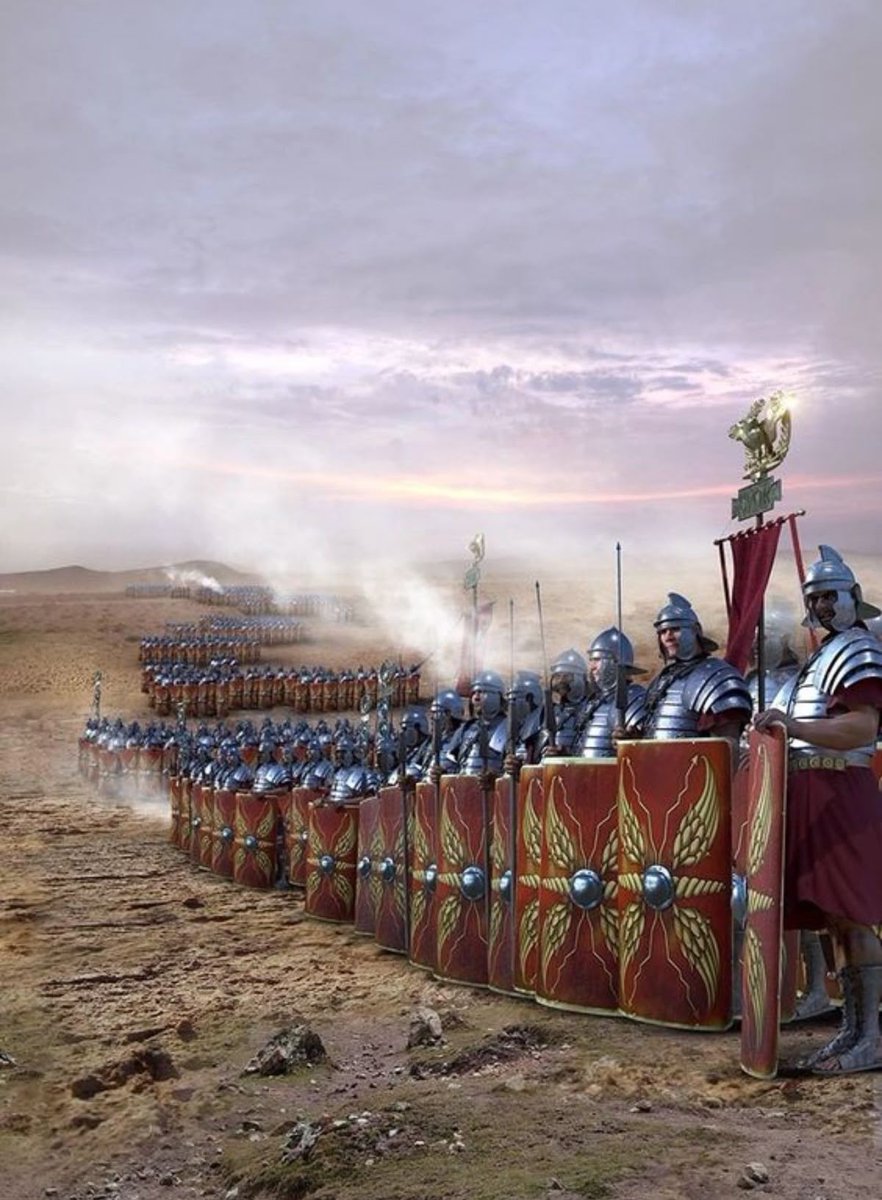
Appian notes that Rome recalled two additional forces to tighten the noose: Gnaeus Pompeius (Pompey), fresh from crushing Sertorius’s rebellion in Spain, marched with his battle-hardened legions from the northwest, while Marcus Terentius Varro Lucullus, governor of Macedonia, was

These reinforcements, likely adding 20,000–30,000 men, converged on southern Italy by early 71 BC, creating a three-pronged trap. Crassus, knowing Rome’s patience was thin, fortified the Bruttium peninsula with ditches and walls to starve the rebels, while Pompey and Lucullus

Cornered in Bruttium, Spartacus faced Crassus’s legions at the Silarus River (modern Sele River) in spring 71 BC, his army weakened by hunger and defections but unbowed. After a failed deal with Cilician pirates for ships, Spartacus, with perhaps 50,000 fighters left, broke
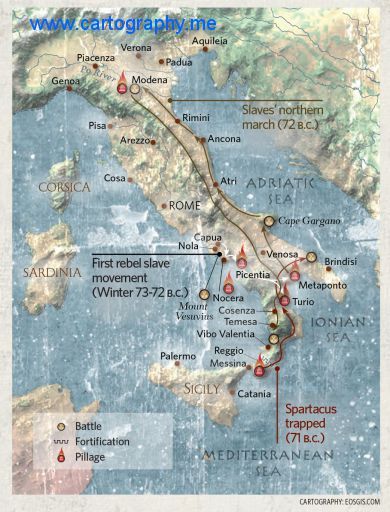
Appian describes the final stand as a maelstrom: Spartacus, astride a horse, his Thracian frame scarred from gladiatorial arenas, rallied his men—gladiators, slaves, and shepherds wielding looted swords and makeshift spears. He charged into Roman lines, cutting down foes with a

Crassus, denied a trophy, crucified 6,000 survivors along the Appian Way, a 200-kilometer warning to slaves. Pompey and Lucullus, arriving late, mopped up stragglers, but Crassus’s victory, built on Rome’s massive reinforcements, came at the cost of admitting a gladiator had
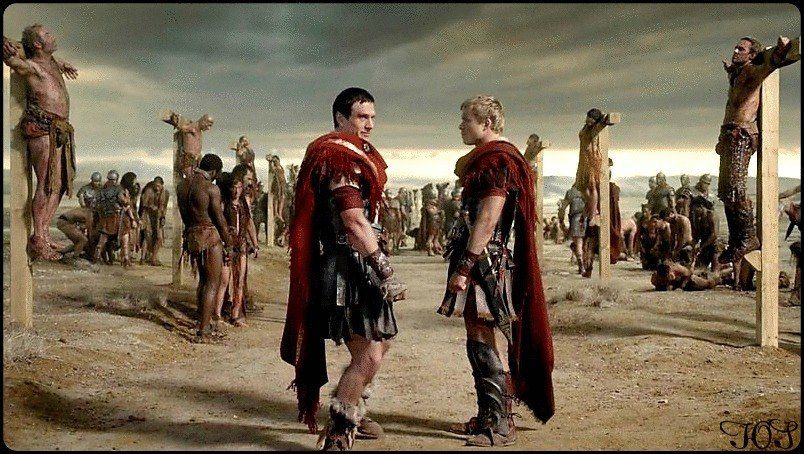
Spartacus’s final stand at the Silarus River ended in a storm of blood, his body lost but his rebellion seared into Rome’s memory. 6000 crosses were not meant to erase Spartacus but to make him a grim symbol—Rome’s warning to all who dared defy its might. And yet he stands.
