
For 17 years, soil microbiologist Robert Kremer studied what happens in the soil when we plant GMO crops. His findings contradict conventional assumptions about modern agriculture’s impact on the invisible world beneath our feet.
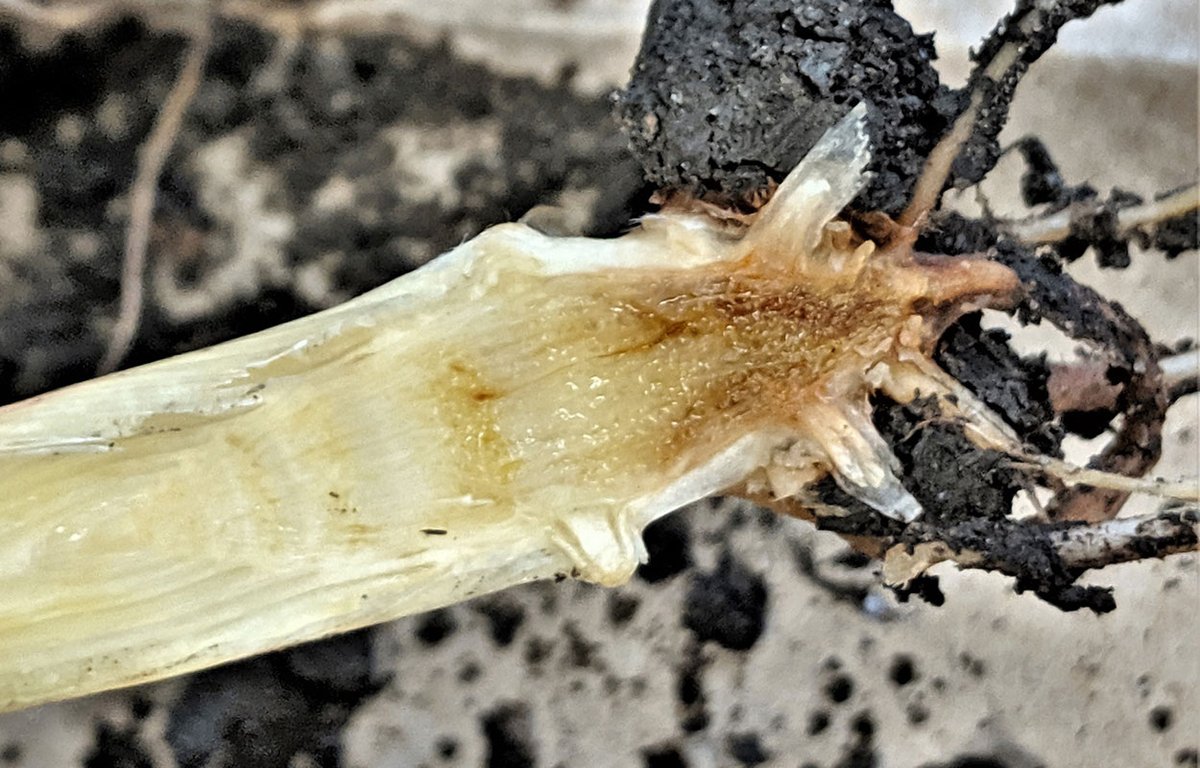
Kremer, a USDA scientist with 32 years of experience, discovered that GMO soybeans and corn consistently harbored 2-10 times more of pathogenic Fusarium fungi on their roots than non-GMO crops.
Living GMO plants actively release glyphosate through their roots. Kremer’s team detected over 1,000 nanograms per plant seeping into the soil over just 16 days, fundamentally altering the underground ecosystem.
This herbicide doesn’t just kill weeds, its a superfood for pathogenic fungi. Fusarium species can use glyphosate as both a carbon and phosphorus source, giving them a competitive advantage over beneficial microorganisms that protect plant health.
Even untreated GMO plants showed altered behavior. They released more sugars and amino acids through their roots than conventional varieties, suggesting genetic modification itself changes how plants interact with soil life—before any herbicide is applied.
To make matters worse, the population of fluorescent pseudomonads, bacteria that normally suppress fungal plummeted in GMO fields. Meanwhile, manganese-oxidizing bacteria proliferated, locking away essential nutrients despite adequate soil reserves.
Kremer documented several negative knock-on effects. Glyphosate chelates manganese, iron, and zinc, making them unavailable to plants. This weakens plant immune systems precisely when pathogen pressure increases. It’s a perfect storm for crop vulnerability.
Fields under intensive GMO production saw soil organic matter drop from 1% to 3%. This represents a fundamental degradation of soil health that affects water retention, nutrient cycling, and microbial diversity.
GMO soybeans showed reduced nodulation and nitrogen fixation even without glyphosate treatment. The very genetic modifications meant to improve crops were disrupting ancient plant-microbe partnerships essential for sustainable agriculture.
Kremer pioneered polyphasic analysis—using multiple techniques to assess microbial communities. While simple diversity counts often showed minimal changes, examining specific functional groups revealed dramatic shifts in soil ecology that standard methods missed.
His findings have been validated globally. Researchers in Brazil, Argentina, and Europe report similar patterns. Increased pathogens, decreased beneficial microbes, altered soil chemistry—the signature is consistent across continents and crop types.
Recent metagenomic studies using advanced DNA sequencing confirm Kremer’s work while revealing additional complexity. Genes related to nitrogen cycling and plant growth promotion are consistently suppressed in GMO systems.
Kremer’s work shows what happens below ground matters as much as what we see above it. His findings suggest we need to reconsider how we evaluate agricultural technologies—not just by yields, but by their impact on the foundation of all terrestrial life.
References: 1. Glyphosate Root Exudation Kremer, R.J., Means, N.E., and Kim, S. (2005). "Glyphosate Affects Soybean Root Exudation and Rhizosphere Microorganisms." International Journal of Environmental Analytical Chemistry, 85(15), 1155-1174. 2. Increased Fusarium