
Key levels for visit and reversal [Ichimoku Thread #12 🧵👇]

1/11 ❓How to know which level on the chart is likely to get visited, and which to hold (reverse for a bounce)? Multiple timeframe analysis is a must but if done in a chaotic way you may get lost in the sea of levels. In this thread I will cover some basic hints about which

2/11 📚First, as a recap, you need to know which are the 11 levels which Ichimoku shows you on each timeframe. ➡️In the past, at Chiko Span: the candle at CS, and all the other four lines. These five levels in the past are the only ones relevant in the present, only because

3/11 When you look at multiple timeframes, you see many levels and you need to know which of them are relevant for your idea. 🫴Here are three points to consider related to that: 1⃣ Time horizon. You may look for a confluence between multiple timeframes within the same "tier".
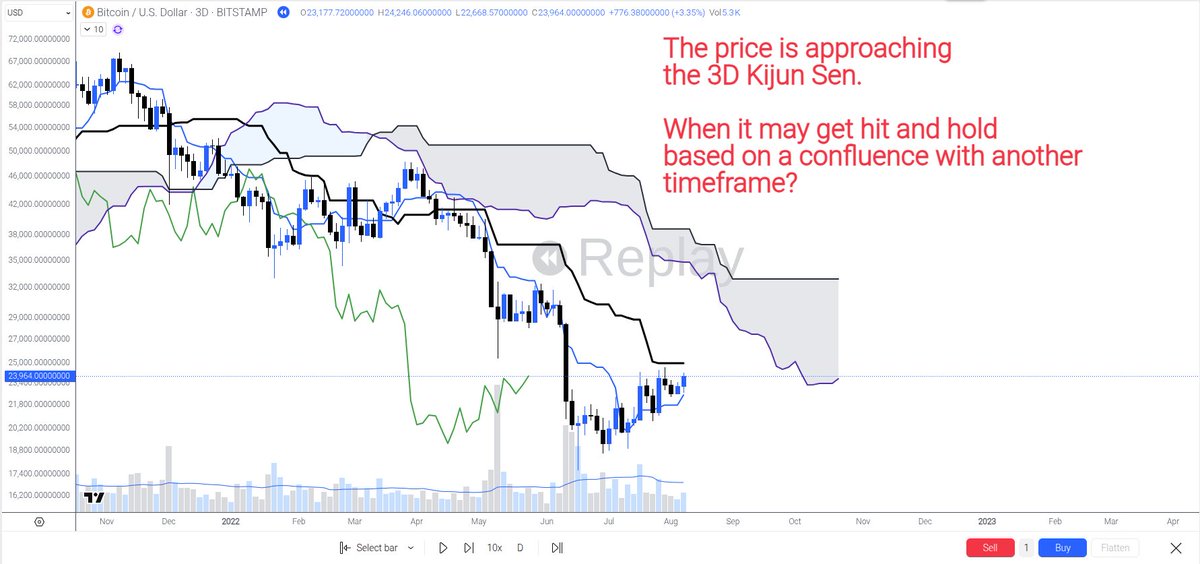
4/11 🔥 One extremely useful thing in Ichimoku is that, if you use the math formulas to calculate the future upcoming levels of the Han-Ne lines, you can see an upcoming confluence. Which will tell you both WHEN a level is likely to get visited and to hold. 🫴 For example,

5/11 There is also one way to know until where the price may wick beyond a level and you can set buy and sell orders there with a very high precision. This is when two levels are very close to each other (assuming less than 0.5 ATR distance). In this case, if for example you

6/11 ❓During a trend, how to know which level should hold, and which may not hold? Here come handy the imbalances. As we know, sellers and buyers are in balance on Tenkan Sen short-term and at Kijun Sen mid-term. Tenkan Sen should be visited on average each 9 candles, and
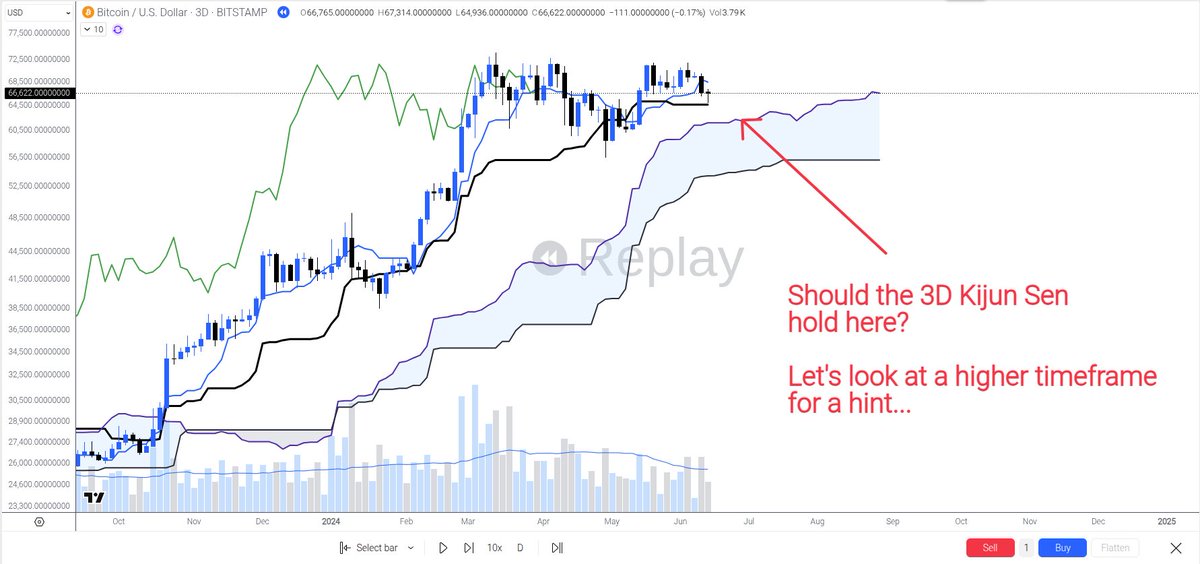

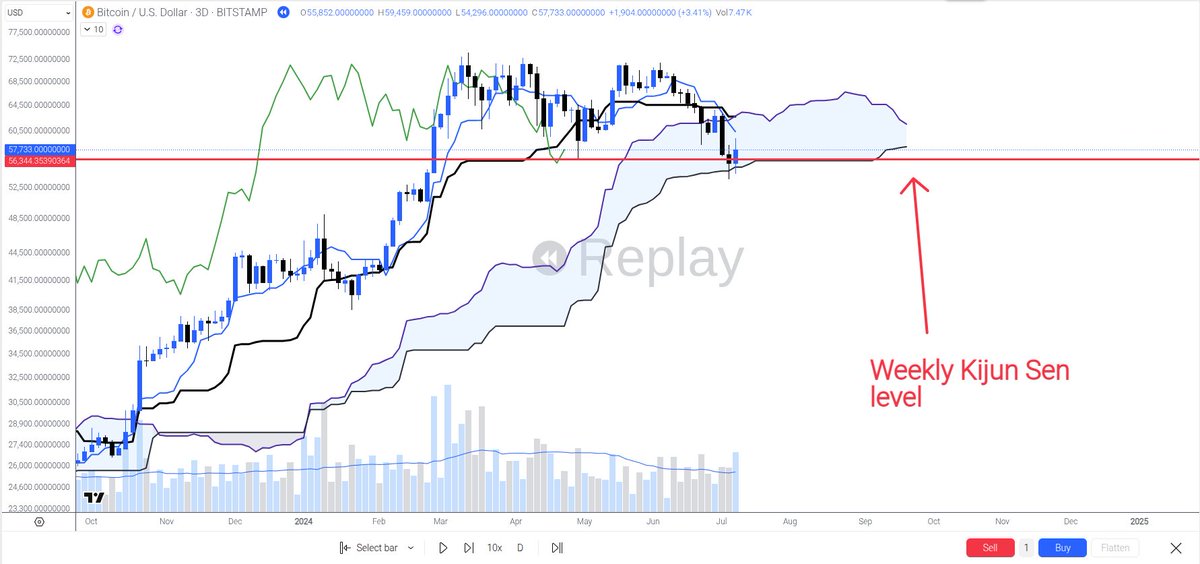
7/11 📚It's also important to understand the strength of support and resistance the different levels provide. For example, Tenkan Sen will always be a weak level. Kijun Sen will be stronger. SSB in a thick kumo will be even stronger. As we know, a super tiny kumo has very
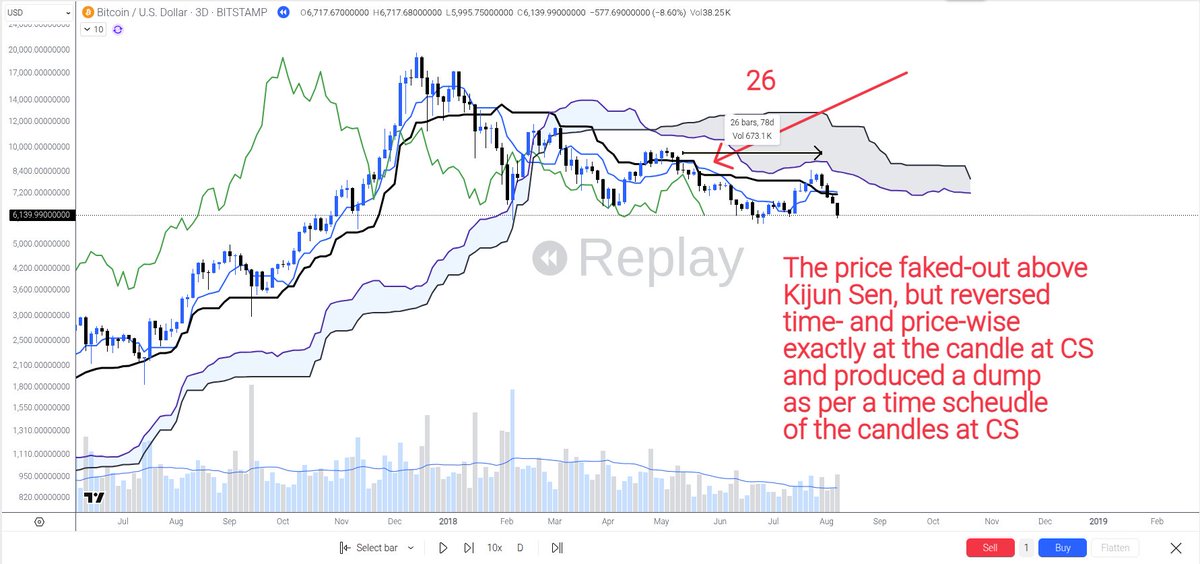
8/11 Something very important to note is that the candle at Chiko Span is an extremely important level. Much more important even than Kijun Sen. The price may lose Kijun Sen and relatively easy recover it if CS is away from the candles. But, if CS goes on the other side of the
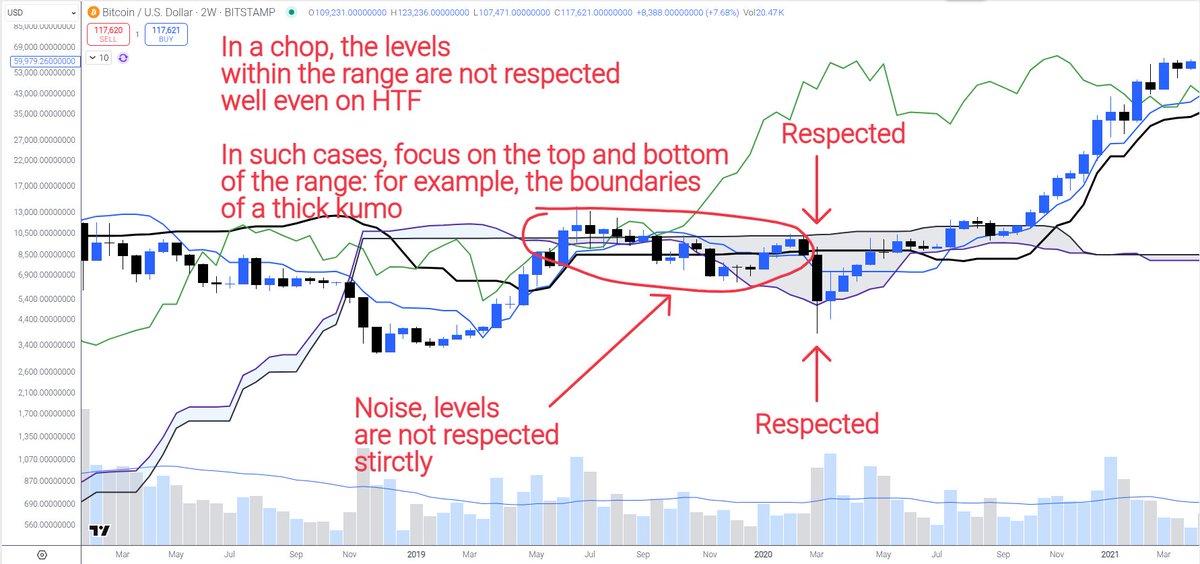
9/11 Last but not least: during a chop, all Ichimoku lines interact with each other. In this case, it's best to ignore all levels within the chop zone and focus on the outer extremes - the top and the bottom of the range:
10/11 This thread covered how to discover key levels in Ichimoku. If you found it useful feel free to share it so the knowledge can reach more people.

11/11 Previous lessons 1. The Ichimoku TA system https://x.com/DoctorCatX/statu... 2. Tenkan Sen https://x.com/DoctorCatX/statu... 3. Kijun Sen https://x.com/DoctorCatX/statu... 4. Real and fake TK crosses https://x.com/DoctorCatX/statu... 5. SSA https://x.com/DoctorCatX/statu... 6. SSB https://x.com/DoctorCatX/statu... 7. Kumo
@DoctorCatX Incredible lessons here, thanks so much for your time and effort @DoctorCatX
@DoctorCatX Dr. Cat today's btc daily closing was above POC level of 117.8k. Do you think that we may go lower tomorrow? Thank you
@2023Analyst Still 50/50 sir not clear
@DoctorCatX Sir, this is soooo good. Thank you again for all your time and effort, a lot of questions I had in my mind from previous lessons were answered here.
@DoctorCatX great read 🙏👍
@DoctorCatX Saved for reading This weekend. Thank you!
@DoctorCatX Boss man.. Boss, Boss man! 🙏

@DoctorCatX Great one!!! Thanks man
@DoctorCatX Top Cat. Such an elegant system.
@DoctorCatX She‘s hiding sth brotha‘ 😁
