
Just got back from the first “GEO Conference” (Ai SEO) I’ve had solid success optimizing LLM responses, but wanted to learn even more Honestly, I was skeptical, but the conf was great! Here are some of my takeaways Some are just interesting, while some are highly actionable
If you’re creating content for a topic, play with making different “entrances” to the same thing. Different pages that are in different tones and different styles and different formats. Why? Because the queries are not keywords. They are specific and contextual to the
When creating that content, play with giving the AI a different identity. “You are a single 25yr/old male investment banker in NYC making $400k who understandably hates life and wants to do something else no matter what” “You are a married 50yr/old female CFO of a fortune 500
The CISO at Anthropic, @JasonDClinton explained to us how the LLMs “think”. Originally most of us were told that LLMs were “predictive”. They were intelligently guessing what word should most likely come next. Jason said that is clearly wrong. Instead, LLMs kick your questions
So, if all neural networks are using this higher level thinking, you have to figure out how to activate that. Remember, it’s math. How do you activate that math so that the AI recommends your brand? Make your content math-like. A few ways: - Semantic content - Staying in your
Ask yourself—what does a model with 16x the compute of today look like? Because that reality is only 2 years away. Compute is increasing at 4x per year. Jason’s answer—an AI that is worlds better at sorting through the BS. To quote him, “can’t fake it as easily with SEO
When do the big brains think AGI will be here? This definition of AGI is “AI that can do anything a person can do”. The answer: 50% probability within 4 years. And this likelihood increases by 10% every year thereafter.
Ok, on to some actionable AI optimization tactics from several different guests, in no particular order. - LLMs can write content that LLMs like to reference. How? Literally just ask it. - There is an LLM model whose sole job is to look at the web and say, “Is this bullshit or
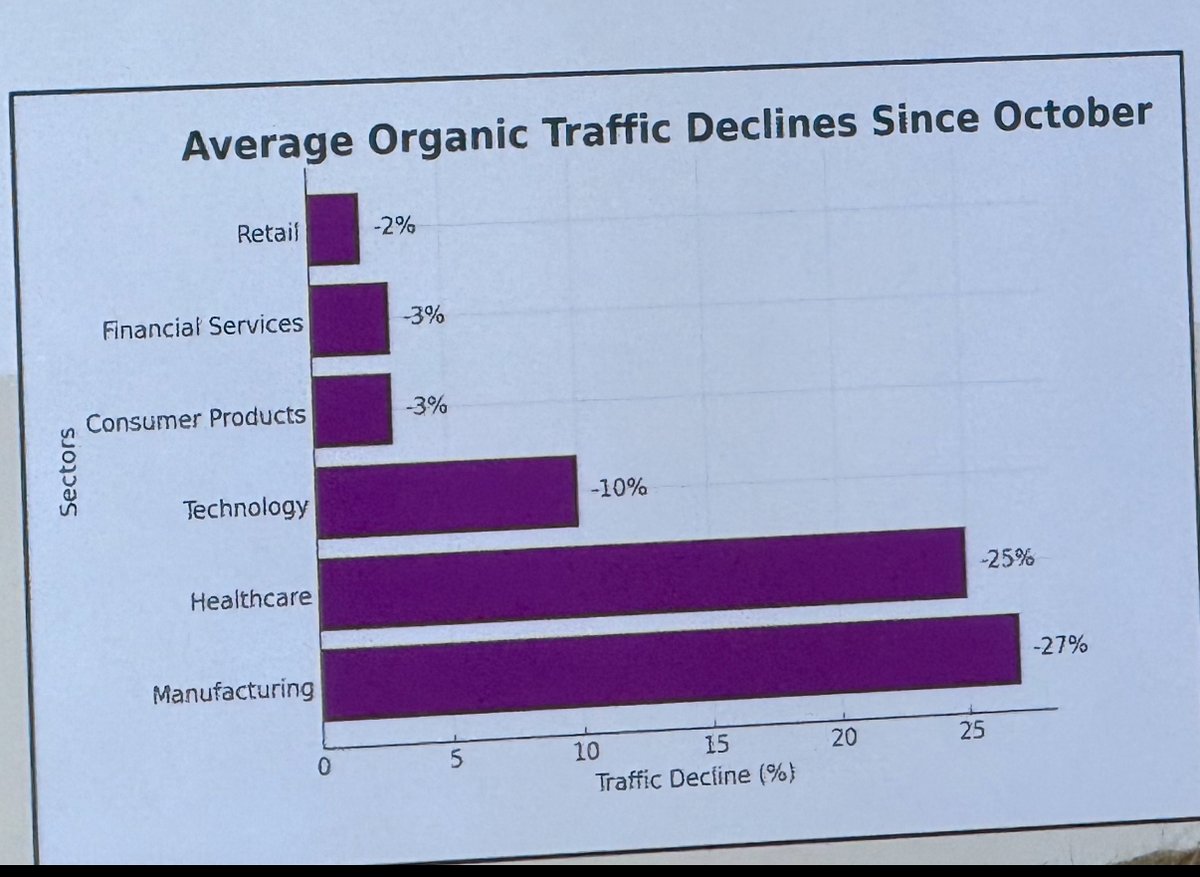
Sooooo many brands are about to face a major crisis. Many are already toast, and they don’t even know it. Organic traffic decline will get nasty for some. Many huge brands that are sleeping on AI optimization and are going to pay a big price. Lots of others will still get
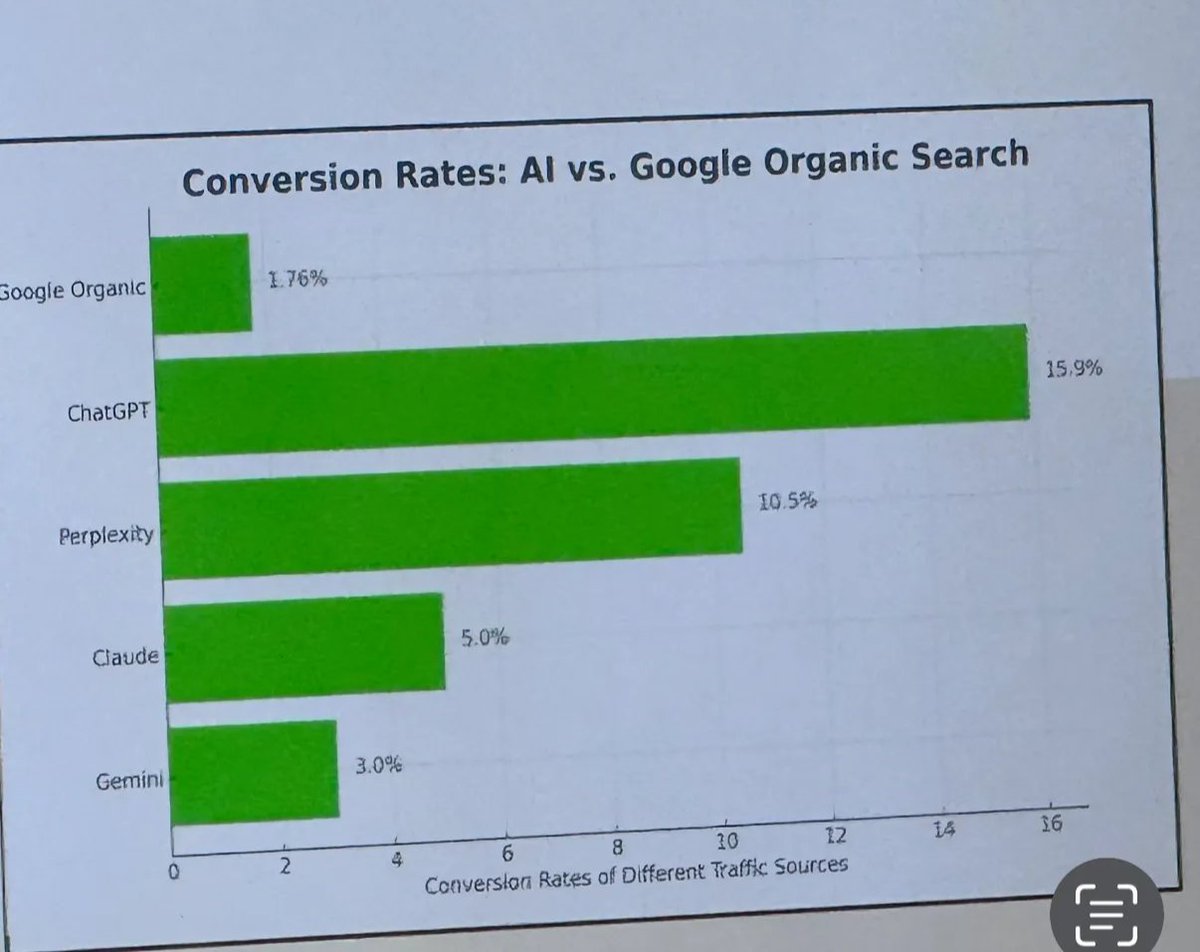
Traffic isn’t the entire story though. Conversion rates from AI are almost an order of magnitude better than from Google. I can confirm this with many of my own sites and our client sites. (slide from the fabulous @wei_zheng)
CFO’s are going to hate this. Really hate this. But with AI it is worlds harder to attribute traffic and conversions. Yeah you can track some in analytics, but only to a point, and it’s next to impossible to track anything close to like you can with SEO or traditional ads.
YOU HAVE TO BUILD TOPICAL AUTHORITY (that’s the tweet)
You should most CERTAINLY have a publicly accessible knowledge-base on your site. Also, if applicable, have a “education” section. Cover as many tightly related niche topics as you can. Be the topical authority.
Schema It’s always been a bit of a debate in SEO. “Does it really do anything or not?” Well, now it does for sure. You need to use more schema. On everything. Now. AIs love it (and you can get sneakily creative)
Don’t forget about SEO! Speakers kept reminding us of this. While this GEO thing is super fun and most certainly has a massive future, old-school SEO is still the king and will remain so for some time. Don’t focus on one at the expense of the other (you need both). And don’t
Have a TL;DR on your posts It can literally say TL;DR if you like, or summary, or whatever. Reinforce whatever point you were trying to make (and why you said it)
“The revenue model where you’re monetizing eyeballs is going to die, and it’s going to die quickly.” @cshel of Yoast
You basically need to be an SEO. SEO an GEO are different, but the skill-sets are remarkably similar. No one is going to be good at GEO who is not good at SEO. IMHO, GEO is just SEO 2.0
Coming back to that “bullshit detector” model. Trust is everything. You must be trusted to be referenced. Not trusted ≠ invisible Trust is built up from all over. Be everywhere. Podcasts, social, blogs, YouTube, and get citations everywhere you can. Leverage others,
SEO = Discovery GEO = Relevance
It’s wild how bad the AIs are at identifying consumer brands (and what that means). This example was interesting. The first slide shared several examples of catalog photos from well known high-end clothing brands (think Loro Piana). The AI’s could NOT identify hardly any of
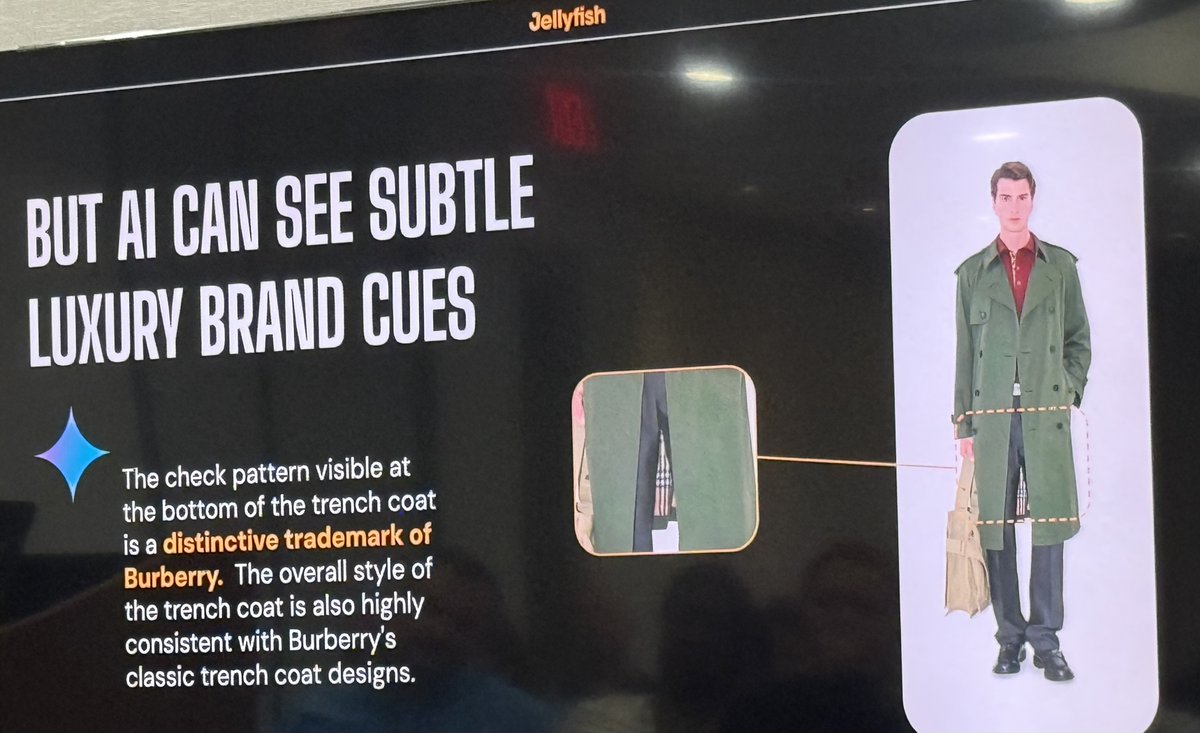
Here is the takeaway from the brand cue. If brands want to rank in AI, they might have to always use some signature branding on everything they produce to be attributable, even if it’s discreet. (As someone who hates branded clothing, not liking this)

LLMS.txt There was a big debate on this. Is it useful or is it useless? For those who don’t know, it’s similar in nature to the Robots.txt, the file you put on your site to tell web crawlers how they can access it. The llms.txt is a proposed web standard for how LLMs should
For the true SEOs out there, let’s get into how to actually rank. There was lots of talk on “you need to find your way into the sources used”. But that’s hard, and IMHO not usually doable. At my agency (plugging Smash Digital) we found that the better path was to CREATE and

Some tools and platforms that attended and were mentioned for AI optimization: JoinAnvil .com Peec .ai Conductor .com AirOps SurferSEO (❤️) Ahrefs (❤️)
“90% of brands are going to disappear” I forget the speaker 👀
It’s a wild time! It’s both exciting and a little scary. It’s scary at just how quickly everything is about to change, and to some extent already has. So many brands are already having a helluva time getting new users at the cheap CAC of before (SaaS). Many companies will