
This took me 5 years to learn. Cost me over 100R in losses. If you're cutting trades early to "save money," you're making the same expensive mistake I did. Stop before it's too late. [A thread] 🧵
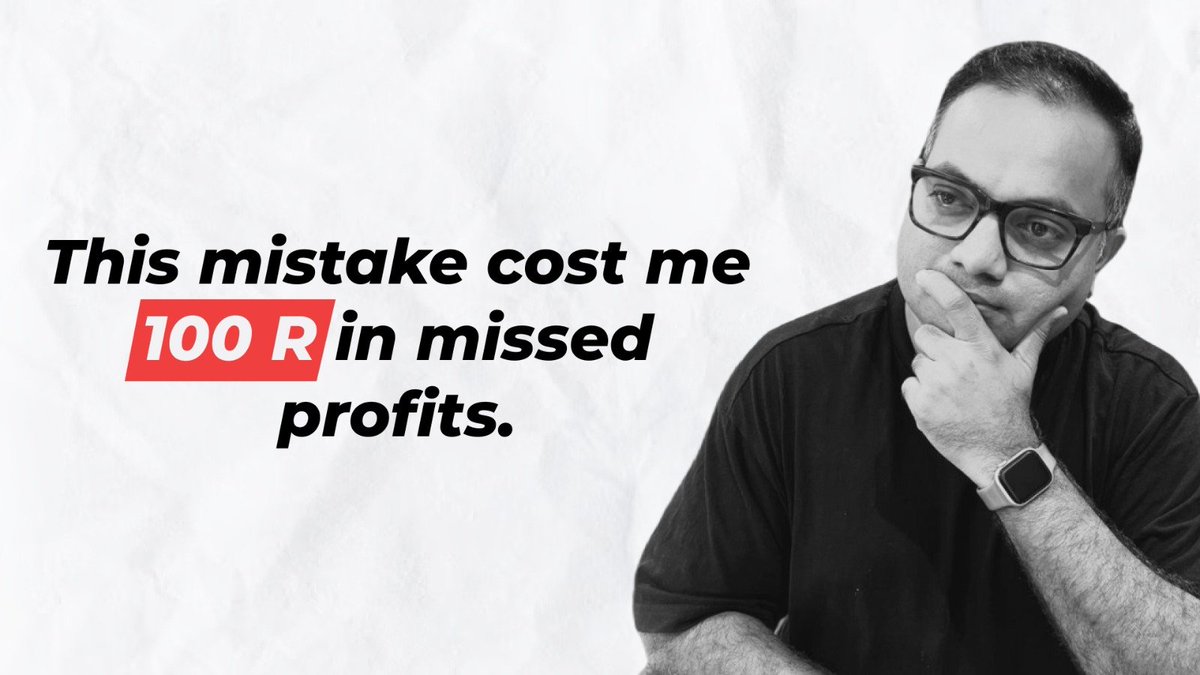
2/19 I was that trader who did everything right. Perfect entries. Good position sizing. Solid risk management. But I kept losing money even when my analysis was spot on. My winners would turn into small losses. My losers stayed losers.
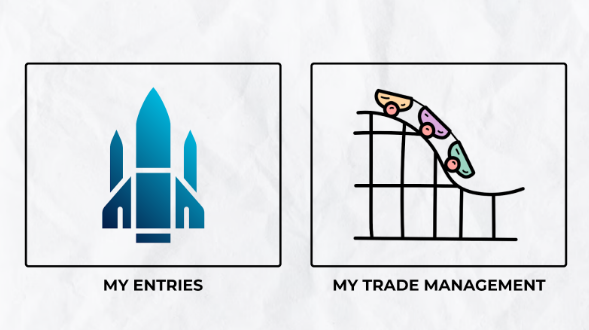
3/19 The problem was , I was cutting my trades way too early. The moment a stock didn't move in my favor immediately, I'd get nervous. "What if this goes against me? Let me just cut it now and save money." Sound familiar?
4/19 When we enter a trade, we have a plan. We know our entry, our stop. Everything's good so far. Then we enter the trade and expect it to rocket up immediately. But stocks don't work that way.
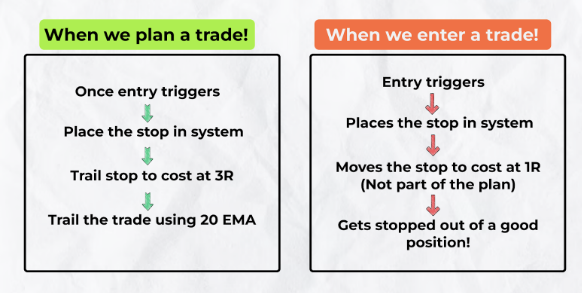
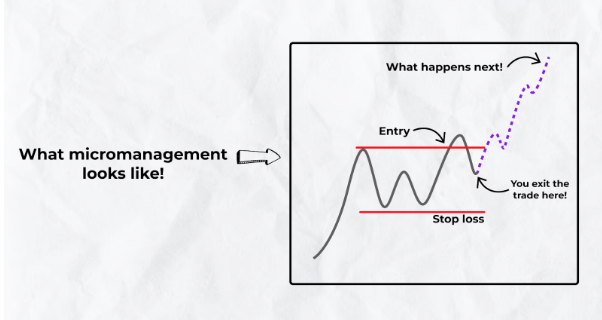
5/19 Instead, the stock just sits there. Maybe it wiggles up and down around your entry price. This is totally normal. But your brain starts going crazy: "Maybe I was wrong" "What if this doesn't work" "I should cut this before I lose more"
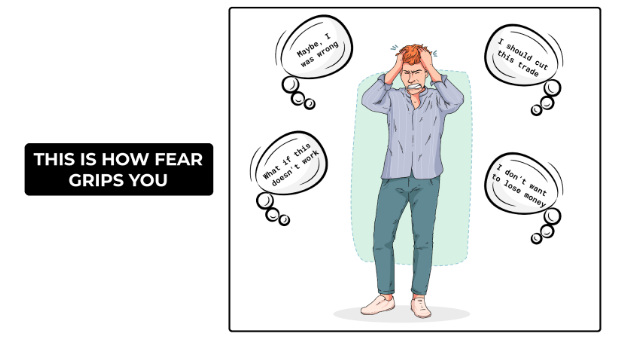
6/19 So you sell. You feel smart. You "saved" money. Let's say you were going to lose ₹1000 if it hit your stop. But you cut early and only lost ₹200. You saved ₹800. Good job, right? Wrong.
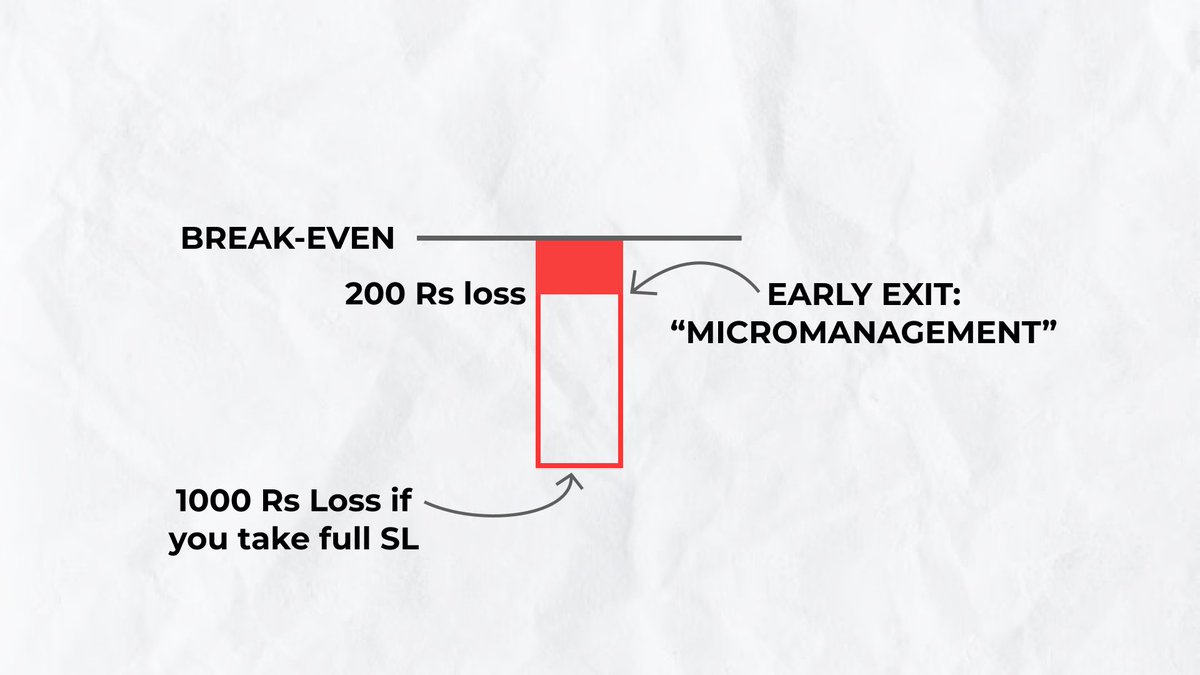
7/19 Let's say you do this 10 times. Each time you "save" money by cutting early. Total saved: ₹8,000 across all trades. But what if 2 of those trades would have made you ₹10,000 and ₹15,000? You saved ₹8,000 but missed ₹25,000 in profits. Net loss: ₹17,000.
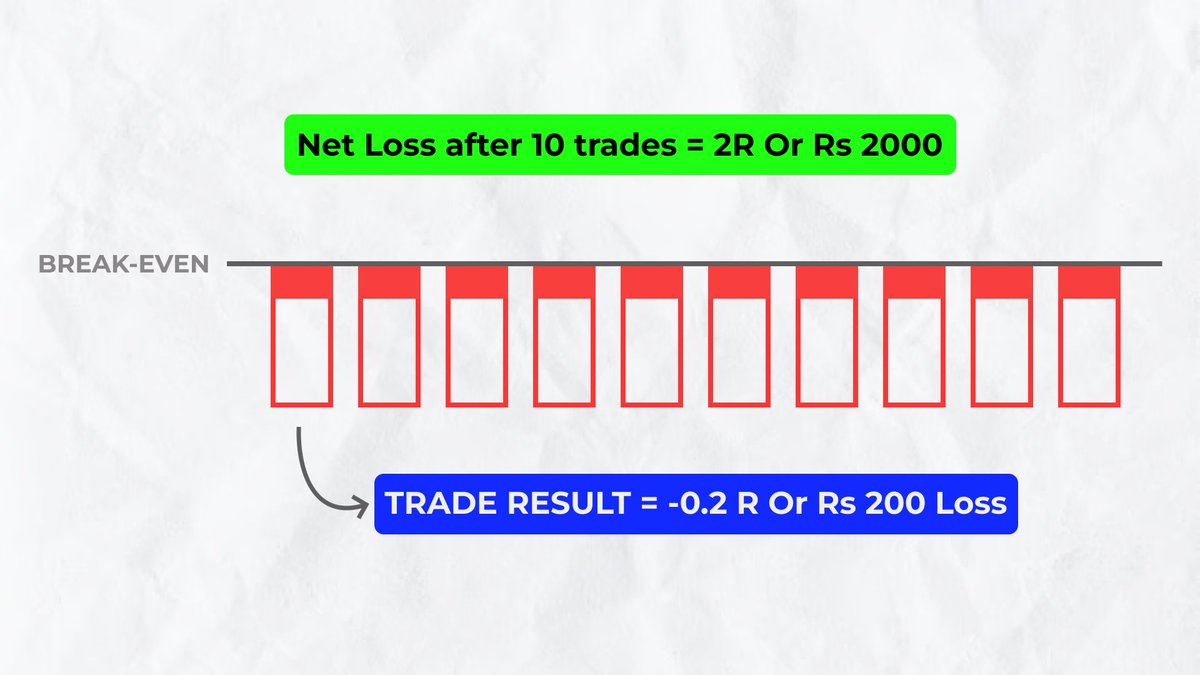
8/19 And that's assuming only 2 out of 10 would have worked. What if 4 would have worked? What if 6? The math gets ugly fast. You think you're being smart. But you're actually destroying your account.
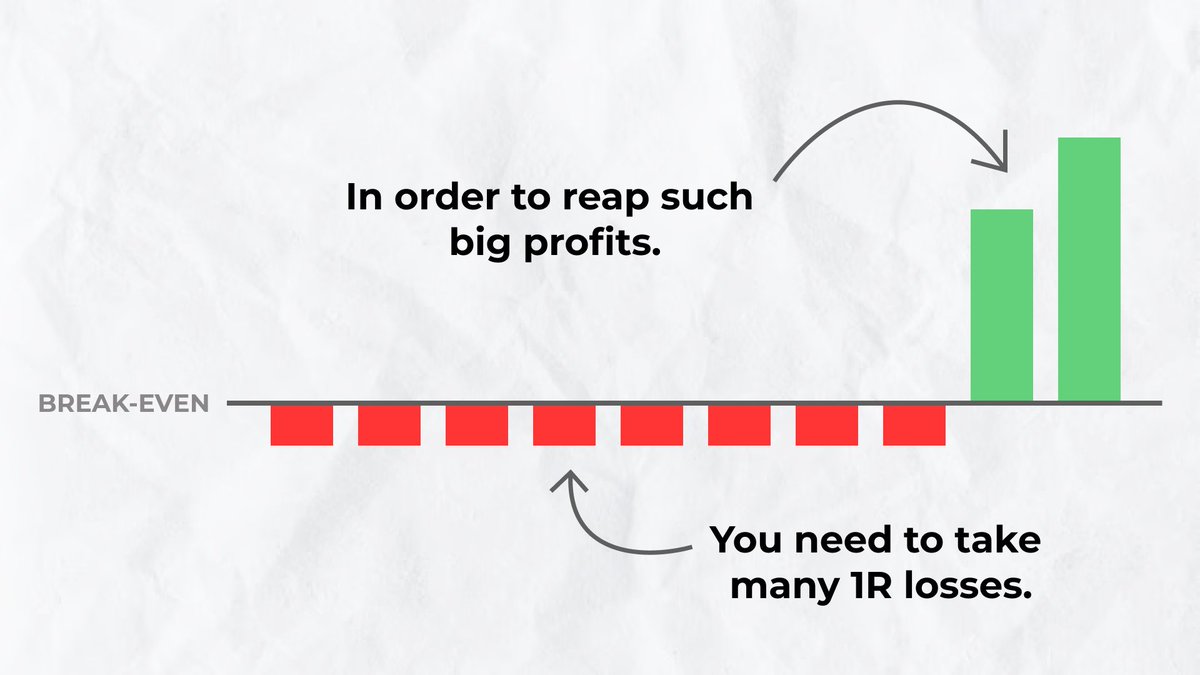
9/19 But the money isn't even the worst part. The worst part is what happens to your brain. When you cut that first trade early, your brain says "Good job! You saved money!" This trains you to doubt every trade you make.
10/19 The next trade, you cut even earlier. Then earlier. Then earlier. Soon you're cutting trades at breakeven because "what if it goes down?" Now you're not even trading anymore. You're just moving money around and paying commissions.
11/19 I've seen traders who spend 8 hours a day watching their screen. They stress about every tiny move. They analyze every candle. They second-guess everything. And they make no money. Meanwhile, other traders enter their trades and go play golf.

12/19 Guess who makes more money? The golf player. Because he's not there to talk himself out of winning trades. The micromanager cuts all his winners early and lets his losers run. Backwards trading.
13/19 Don't believe me? Go check your old trades. Look at every trade you cut early last year. See where those stocks went in the next 2 weeks. I'll wait. Painful, right?
14/19 One of my friends did this exercise. He looked at 50 trades he micromanaged. 12 of them would have been huge winners. He left over ₹1,00,000 on the table trying to save ₹20,000 in small losses. He could have taken 30 full losses and still made money.
15/19 So what's really happening when you micromanage? You're not protecting your money. You're protecting your ego. What hurts more: 1. Taking a planned loss 2. Watching a stock you sold go up 50% The second one kills you.
16/19 But the first one is just business. Part of the game. The second one is self-destruction. Your stop loss is there for a reason. It's not there to be second-guessed every time the stock moves.
17/19 So how do you fix this? Simple rules: 1. After you enter a trade, close your laptop. Walk away. The trade doesn't need you watching it. 2.Don't check your positions for 3 days. Most panic happens in the first 72 hours when nothing important is happening.
18/19 3. Every time you want to cut early, write it down instead. Don't act on it. Check back in 2 weeks. This will train your brain fast. 4. If you can't stop micromanaging, you're trading too big. Cut your size in half.
19/19 Trading feels like you should be doing something all the time. But most of the time, the best thing to do is nothing. Your job: Find good setups and stick to your plan. The market's job: Everything else. Stop trying to do the market's job. You're terrible at it. Found
My book "Swing Trading Simplified" is written exactly for that. It’s a perfect starting point to understand. Check it out here → https://amzn.to/4ksMe62
@AnkurPatel59 Five star thread again 🙏🙏
@AnkurPatel59 Ankur bhai youtube channel konsi hai aapki?
@AnkurPatel59 @threadreaderapp unroll