
I’ve been working with an IVF startup, @herasight, that has already screened hundreds of embryos. Today we come out of stealth with a paper showing that our predictors for 17 diseases — validated within-family — beat the competition, with improved performance in non-Europeans🧵

Check out our website where you can play with our widget and download our white paper: https://herasight.com/
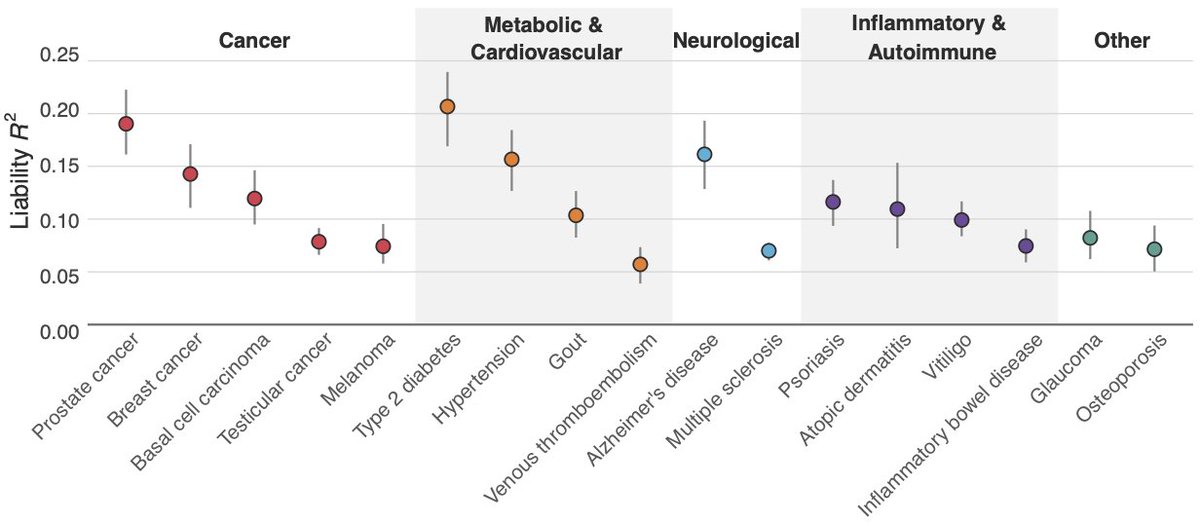
In our paper, we detail our polygenic scores (PGS) for 17 diseases using a custom meta-analysis. We used state-of-the-art methods to create PGSs based on 7.3M SNPs. Our most predictive PGSs explained ~20% of the variance in liability for prostate cancer and type-II diabetes.
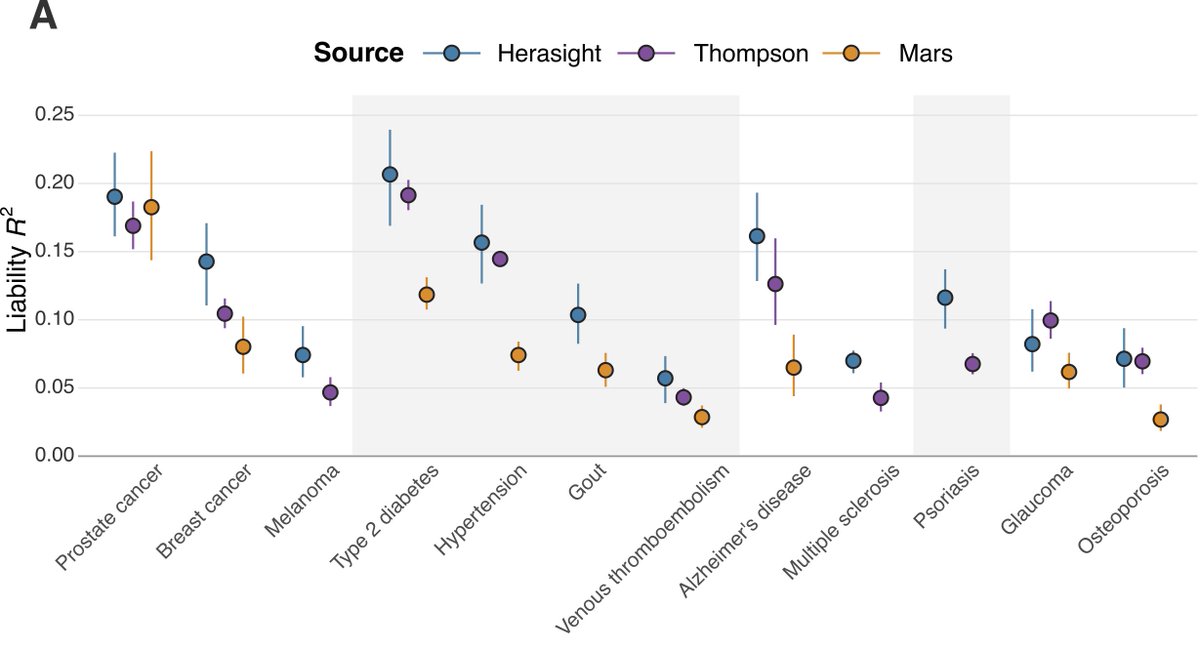
We compared our PGSs to the best published academic efforts. Our scores explained 28% and 87% more liability variance on average than those of Thompson et al. and Mars et al., respectively, with substantial improvements for breast cancer, melanoma, coronary artery disease, gout,
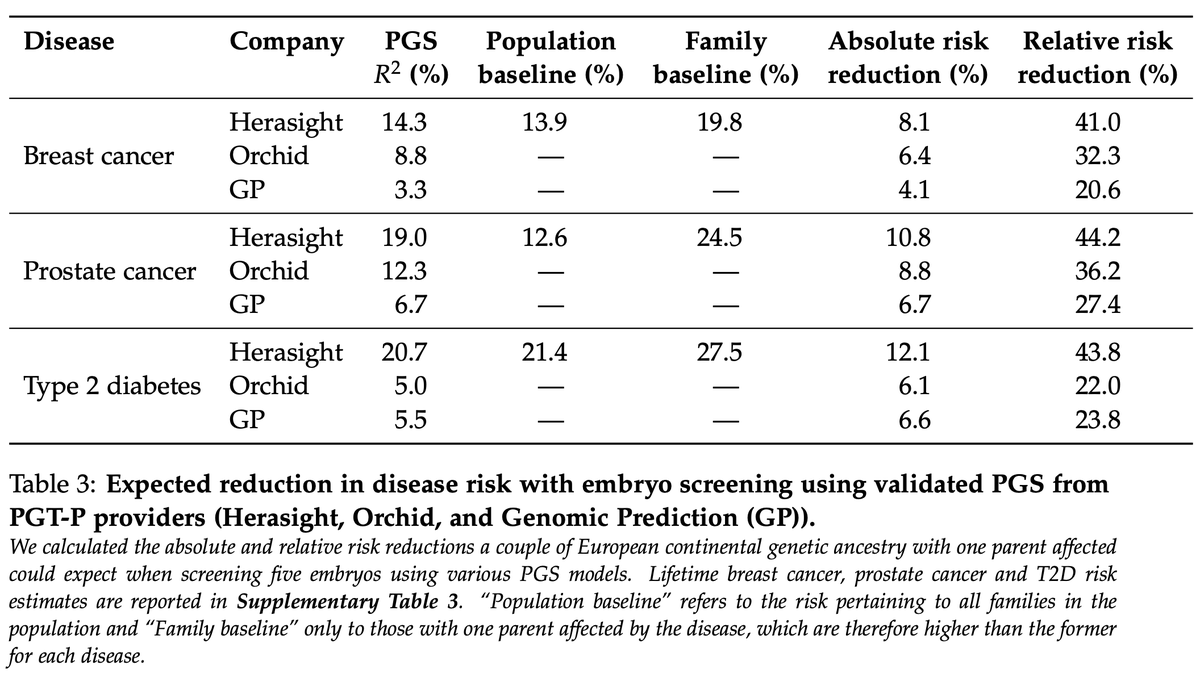
We compared our scores to published data from embryo screening companies Orchid and Genomic Prediction. Our scores explained 122% (Orchid) and 193% (GP) more liability variance, translating to greater absolute and relative risk reductions (table below). For example, for a
If the prediction ability of a PGS is smaller within-family — as I’ve shown for some traits in my own research — it won’t work as well for embryo screening. We therefore validated our PGS within-family, with only osteoporosis showing a significant reduction of its effect.
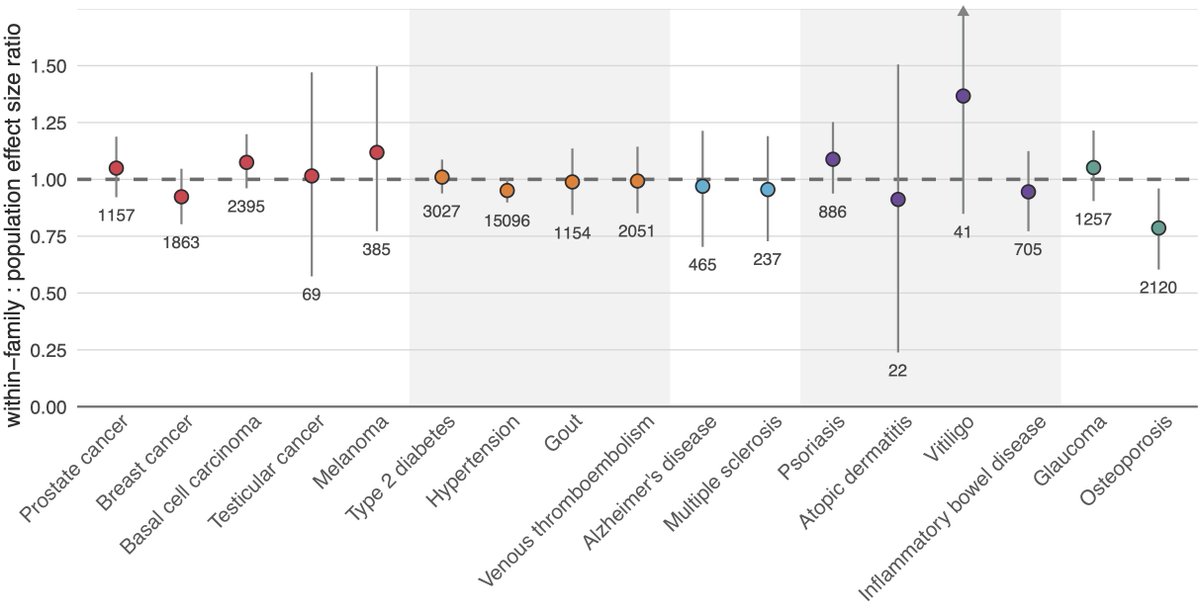
PGS being offered for embryo screening should undergo within-family validation. While our analysis shows that most disease PGS predict about as well within-family as in the population, osteoporosis shows that this can't be assumed and should be checked. If the performance is
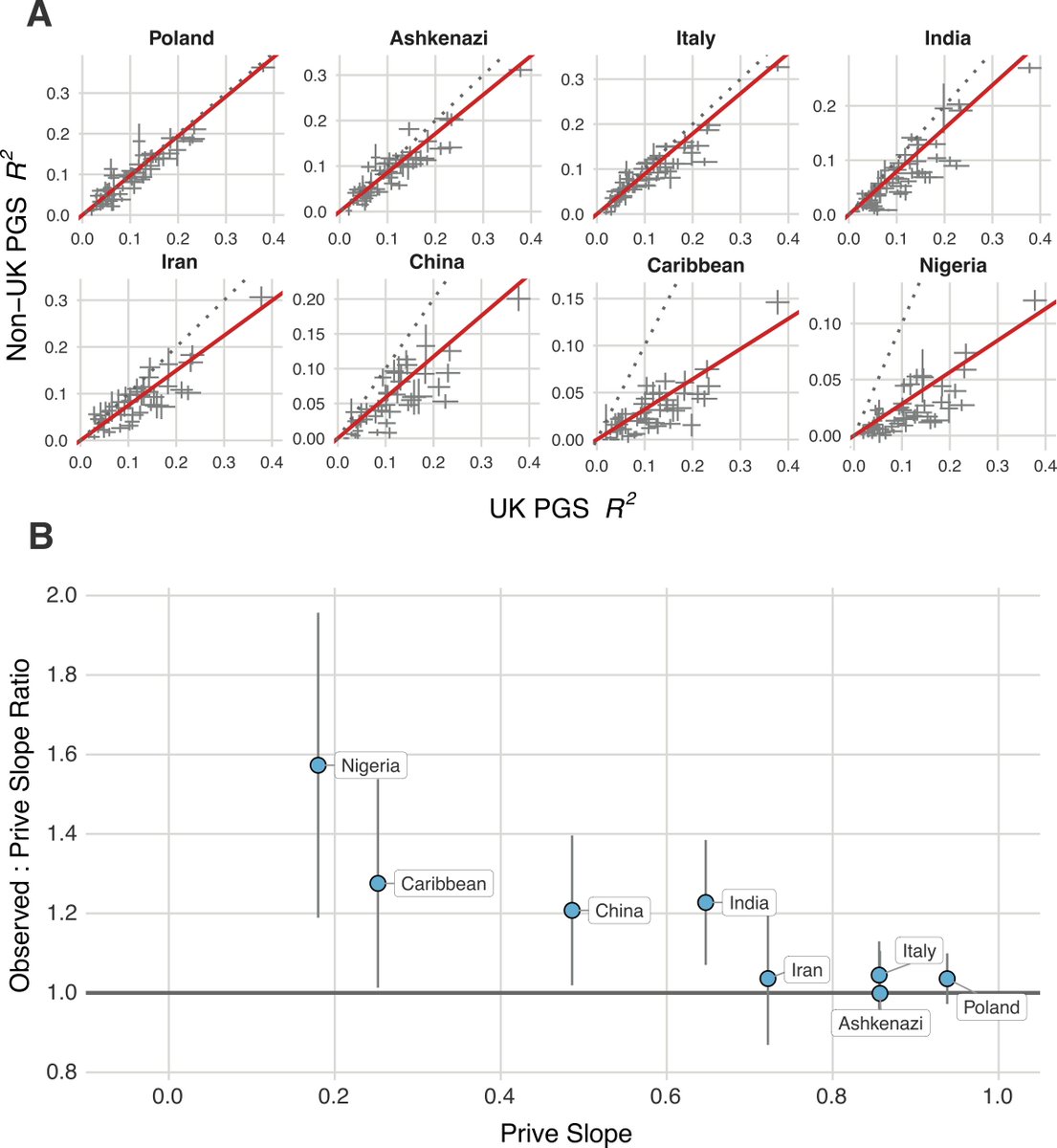
PGS prediction accuracy declines with genetic distance from the training sample. We assessed this for our PGS to calibrate our predictions for different ancestries, finding improved prediction ability for non-Europeans compared to previously published results (Prive et al.). The
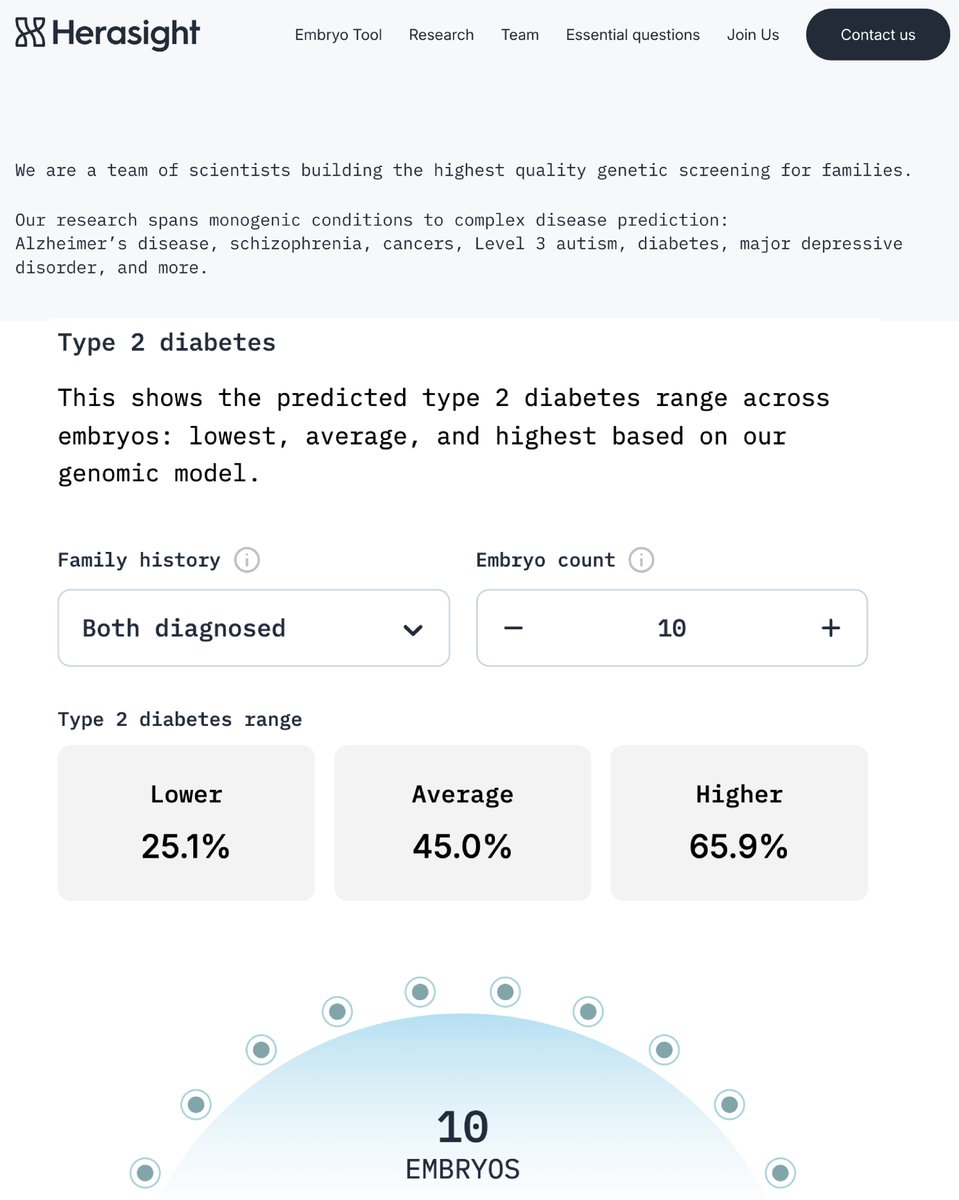
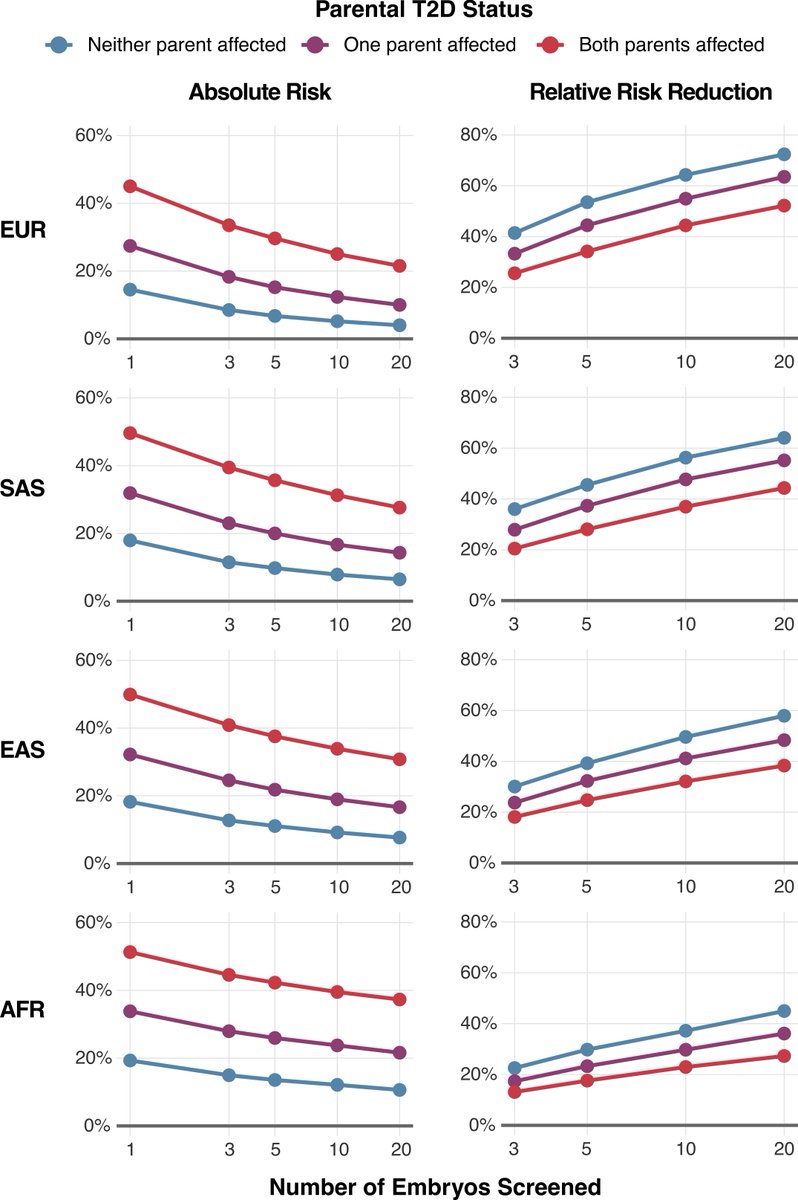
We use type-II diabetes to illustrate the utility of our scores for embryo screening. Even with 5 embryos, the absolute risk reduction ranges from 5% to 15% depending on parental ancestries and disease status, with relative risk reductions of ~50% expected in some scenarios —
Thanks to @_twolfram for leading this effort and the rest of the team (@SponceyM @jeremyli__ @JonathanAnomaly) at @herasight! Check out our website (http://herasight.com) and sign up to keep informed. Even more exciting science is coming soon!
@_twolfram @SponceyM @jeremyli__ @JonathanAnomaly @herasight And thanks to our advisors @joe_pickrell and @timothycbates
And @sebastian_gero
@herasight See this thread for our analysis of Nucleus: https://x.com/AlexTISYoung/sta...
@AlexTISYoung @herasight Cool
@elonmusk @herasight Thanks!
@AlexTISYoung @herasight Glad to see the overtone window shifting! Genetic choice gives people better chances in life
@NiklasAnzinger @herasight Agreed
@AlexTISYoung @herasight Cool to see this taking off!
@maximlott @herasight Thanks!
@AlexTISYoung @herasight Exciting work!
@techno0ptimist @herasight Thanks!
@AlexTISYoung @herasight congrats, super important work, beautiful to see the rigor and performance
@MatttBuckley @herasight thanks
@AlexTISYoung @herasight Great work!
@DrMichaelSagner @herasight Thanks
@AlexTISYoung @herasight Extremely interesting
@thealepalombo @herasight Thanks
@AlexTISYoung @herasight I can't think of a better product than smart, disease free babies
@alex1craig @herasight We want to give parents the best information on the health and wellbeing of their future children.
@AlexTISYoung @herasight Gratifying to think of what good can come of our work 👶
@SponceyM @herasight This is just the beginning.
@AlexTISYoung @herasight any interesting question if you were screening should you care about a disease like type-2 diabetes that appears to be solved now vs some other characteristic?
@MinotaurStock @herasight Yeah it's hard to predict exactly what diseases will be most relevant in the future, but choosing an embryo with lower risks of diseases is likely to result in a healthier child even if treatments for diseases have improved in the future.