
Before AWS existed, one company ran the servers for Twitter, LinkedIn, and Facebook's entire app ecosystem. They owned Node.js, invented containers 8 years before Docker, and Peter Thiel even backed them. Then something happened...
In 2004, a cancer researcher turned entrepreneur named Jason Hoffman started a cloud company called Joyent. While Amazon was still figuring out AWS, Joyent was already hosting the internet's hottest startups. Their client list would make your jaw drop.

Twitter's early infrastructure ran on Joyent servers. LinkedIn scaled on Joyent. When Facebook opened to third-party apps in 2007, Joyent partnered with Dell to host them all. But that's not even the craziest part.

Thousands of Facebook apps (and their millions of users) ran on Joyent's cloud. Some accounts suggest Joyent even helped power Facebook's chat feature. They were literally everywhere. Just invisible. And they had technology that wouldn't exist anywhere else for 8 years.

Joyent built their own operating system called SmartOS. It used "container virtualization" via Solaris Zones. This was in 2005. Docker didn't exist until 2013. But here's why being 8 years early was actually their biggest curse.
Their containers were so efficient that one Joyent server could handle what took multiple Amazon EC2 instances. Industry experts called it "way better than AWS." But they made one technical choice that would haunt them forever.
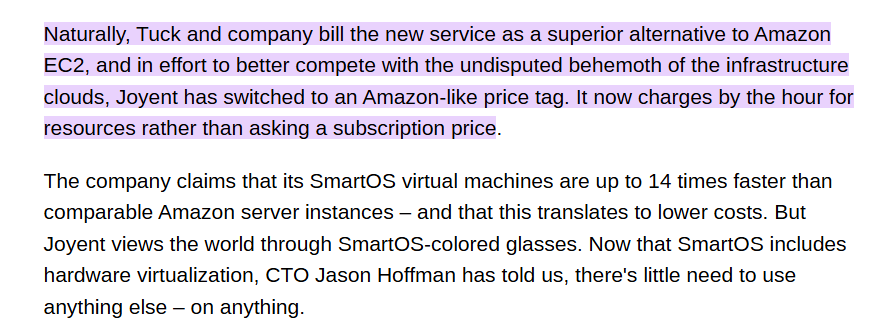
They built it on Solaris. Developers wanted Linux. While Joyent was fighting this compatibility battle, they made a hire in 2010 that should have changed everything. They brought in the creator of something you probably use every day.

Ryan Dahl. Creator of Node.js. Joyent became the steward of what would become one of the world's most important developer platforms. Today NASA uses Node.js. Netflix uses it. LinkedIn, Uber, PayPal all use it. Yet somehow, owning Node.js wasn't enough. Because Jeff Bezos had a

"Your margin is my opportunity." AWS slashed prices constantly. They opened data centers globally. They spent billions. Joyent tried to match Amazon's pricing. But they were fighting a company with infinite money. And Amazon understood something about developers that Joyent
Amazon built an empire on developer evangelism. Free tiers for startups. Massive documentation. Global conferences like re:Invent. One-stop shop for everything. Joyent stayed niche. Elite, but niche. Then they made the decision that sealed their fate.
Joyent chased big enterprise and telecom customers like Telefonica. Amazon chased everyone. Every startup. Every developer. Every student learning to code. By 2010, "cloud" meant AWS. Joyent was already forgotten. The acquisition offer that came next was insulting.

2016: Samsung acquires Joyent for ~$125 million. For context, AWS was worth $100+ billion by then. The company that invented containers and owned Node.js sold for pocket change. But Samsung's ownership made things even worse.
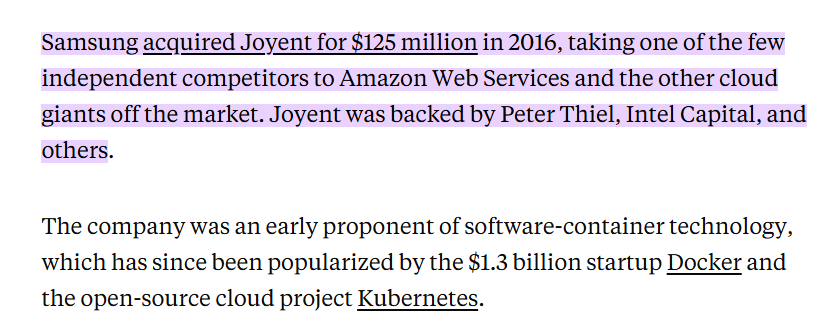
Under Samsung, Joyent limped along for three more years. 2019: They shut down their public cloud entirely. The company that once powered Twitter started helping customers migrate to AWS. The irony gets worse when you see what their technology spawned.

Joyent's DNA is everywhere. Every Node.js application. Every Docker container. Every Kubernetes cluster. They invented the future of cloud computing. They just couldn't sell it. Want to know the real gut punch?
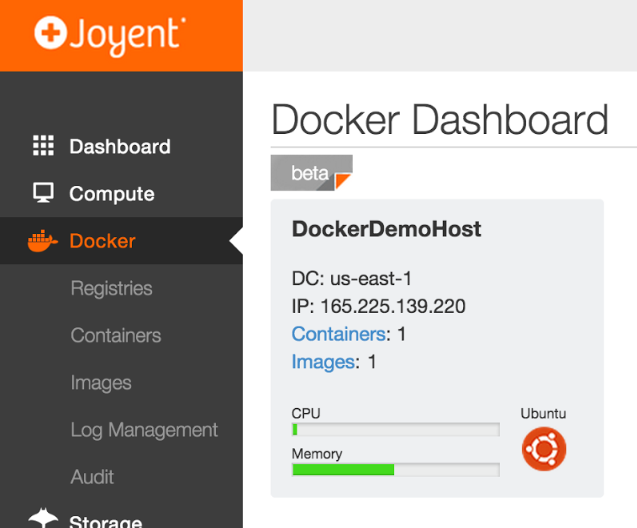
Samsung paid $125 million for technology that influenced over $1 trillion in market value. AWS is worth $100B today. Docker hit $2 billion. The Node.js ecosystem generates billions annually. Joyent captured none of it.
The lesson? In tech, being first doesn't matter. Being best doesn't matter. Scale matters. Distribution matters. Pricing matters. Ecosystem matters. Joyent had the technology to change the world. Amazon had everything else.
Thanks for making it to the end! I'm Alex, co-founder at ColdIQ. Built a $6M ARR business in under 2 years. We're a remote team across 10 countries, helping 400+ businesses scale through outbound systems.

RT the first tweet if you found this thread valuable. Follow me @itsalexvacca for more threads on outbound and GTM strategy, AI-powered sales systems, and how to build profitable businesses that don't depend on you. I share what worked (and what didn't) in real time.
@itsalexvacca Fascinating story!! Was not aware of joyent till now.
@commanderdgr8 I was equally surprised when I got to know about them. A David vs Goliath story in a sense..
@itsalexvacca Fascinating. I learnt about Nodejs when I tried creating an app on Facebook. One of the options was a Nodejs app hosted on Heroku. Another side story here - Solaris was developed by Sun, the original developer and trademark holder for the Java.
@patalmypal Interesting, thanks for sharing.
@itsalexvacca From my understanding, joyent created value but didn’t understand selling i’d say He didn’t understand the rules of the game he was in
@crashoutMerch That is one solid perspective to look at the whole situation. It's many factors, but the loss leader strategy by Amazon is possibly the most devastating stroke to Joyent.
@itsalexvacca Incredible story
@itsalexvacca Here's a deep dive podcast if you're interested! https://www.pathaka.ai/podcast...
@itsalexvacca Your thread is everybody's favorite! #TopUnroll https://threadreaderapp.com/th... 🙏🏼@armandoare for 🥇unroll
@itsalexvacca @jasonh is a legend. Thanks for telling his pioneering Cloud OG story to a new generation @itsalexvacca 🙌
@itsalexvacca When I worked at Coca-Cola every marketing site and app had to have an on prem Savis server hosting at $3k/month. I got them to finally switch to AWS option.
@itsalexvacca What a read!
@itsalexvacca How do you keep finding these topics 😃 demand generation GTM right there
@itsalexvacca Banger Post. Didn't know any of that.
@itsalexvacca Supply chain resilience isnt about predicting disruption... its about adapting to it faster than your competitors. Esp. now w/ shifting global dynamics.
@itsalexvacca Some technologies arrive before the world is ready. This Joyent story proves that timing and execution can matter more than being first. With decentralized AI, the timing is now, the demand is here, and the opportunity is open to everyone who plugs in early. Be part of it:
@itsalexvacca Nice one!
@itsalexvacca I'll tell you what happened. You're a bit off the mark. You overstate the case for how awesome they were. They didn't really have anything all that unique from a tech stack. SmartOS wasn't new - it was a port of existing Linux technology - kvm - to Illumos (then, still,