
How to stay poor: 1. Never take risk. 2. Take risks you don’t understand. Here’s how to minimize your risk when buying your first business:
There's no such thing as the right or wrong business. There's only the business that's right or wrong for you. The risk is often in buying something you know nothing about. That's why I created the Contrarian Deal Clarity Framework to help first-time owners find their perfect
You need to define 5 components: 1. Your Ideal Owner Experience 2. Your Zone of Genius 3. Business Size 4. Profit Requirements 5. Industry Focus Let's break each one down:
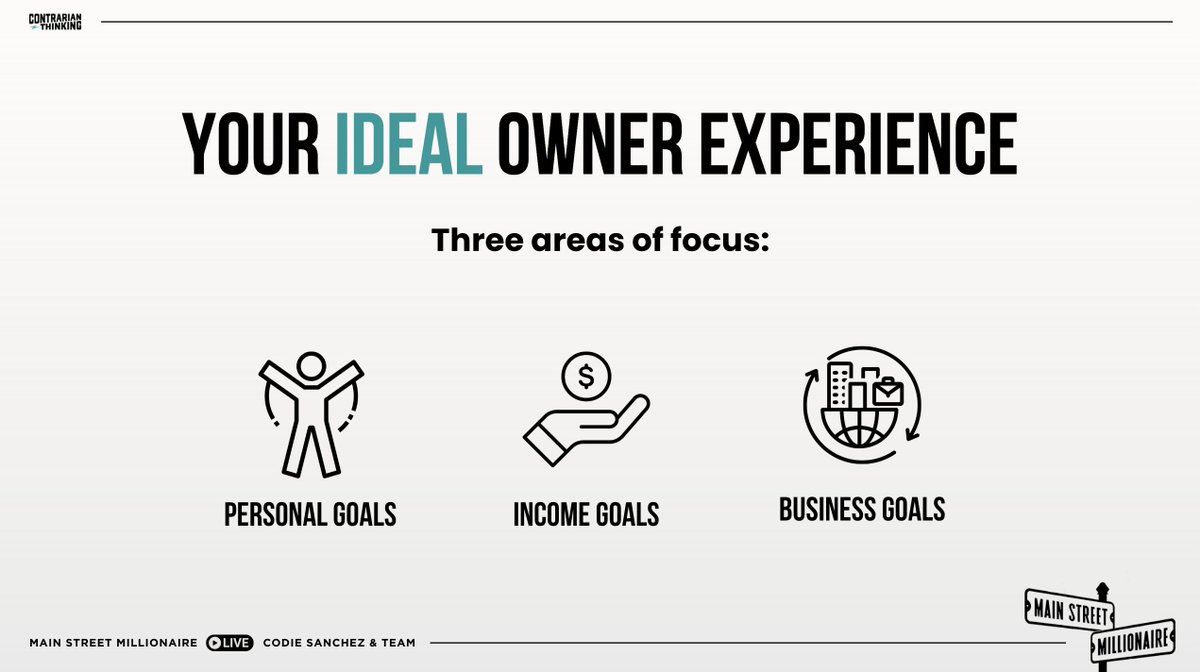
Your Ideal Owner Experience Saying "I want to leave my 9-5" is too wishy-washy. To trade in your W2 form, your vision board needs to be specific on three things: • Personal goals (do you want more family time or grind for yourself) • Income goals (replace your $75k salary or
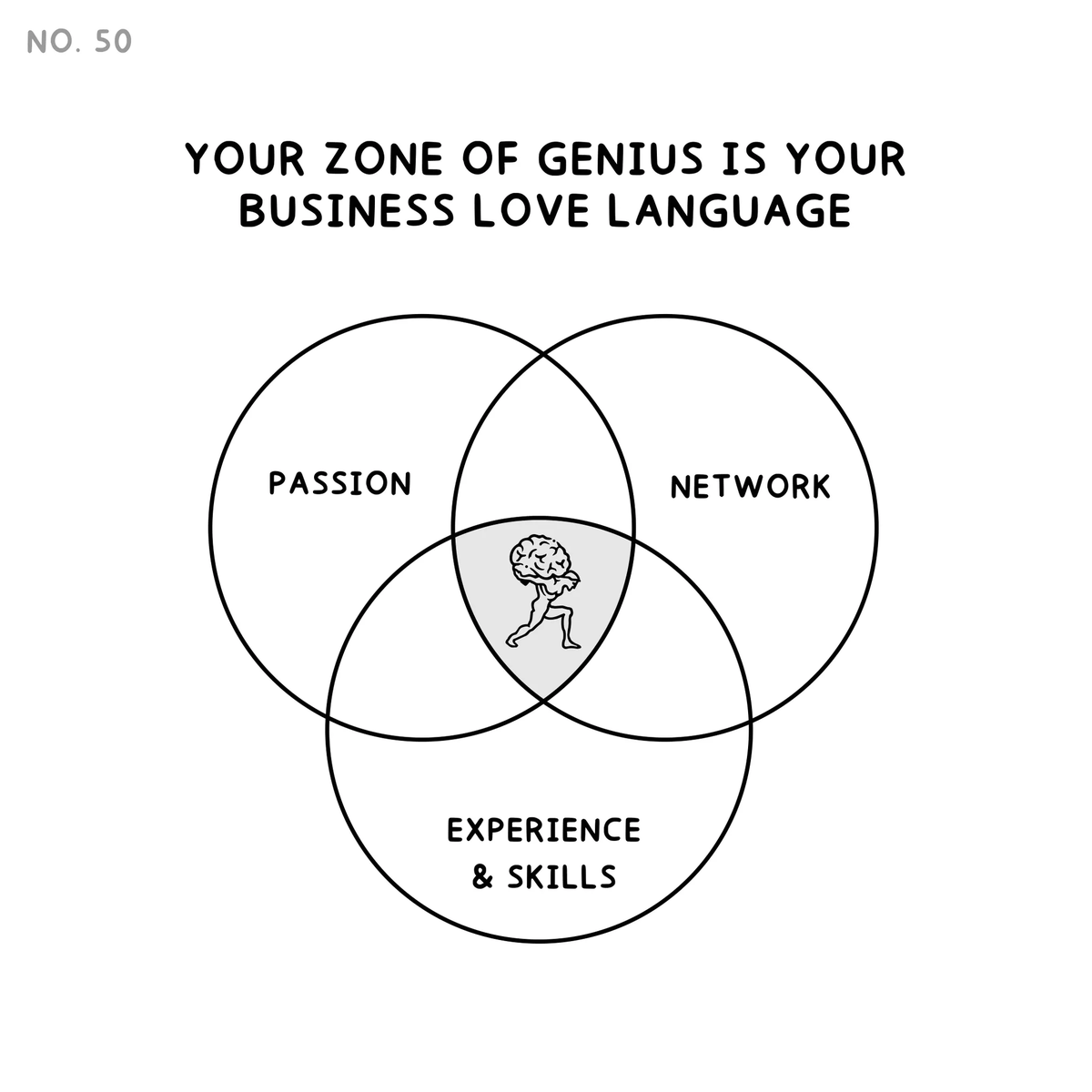
Your Zone of Genius Think of this as the intersection where these three elements overlap: • Passion (what you love) • Skills & Experience (what you're good at) • Network (who you know) Most people ignore this and buy businesses they hate running in 6 months. Don't be most
Business Size It’s easy to fantasize about buying a Fortune 500 company. But we’re not playing the billionaire game here. As a first-time time buyer, look for micro acquisitions: • <$1M cost • $50K-$200K profits • 1-3X multiples Less competition, more opportunity, fewer

Profit It’s important to remember you're not just buying a business for the sake of it. Your acquisition MUST be an income stream that can cover: 1. Debt service 2. Operator salary (if relevant) 3. Growth/working capital 4. Your earnings I use these two tests to evaluate if a
The SOWS Test Before I buy anything, I ask if the business is: • Stale - Does the owner still use fax machines • Old - Is it 5+ years old with repeat customers • Weak - Does competition suck at marketing • Simple - Can an 8-year-old could understand it The more boxes it
The BRIT Test Then I check to see if it’s BRIT: • Buy - Must be a cashflow, not cash-suck businesses • Resist - Recession-proof • Increase - Can I raise prices (most owners undercharge by 30%) • Tech - Can I add simple technology to improve it? Which brings us to the last
Industry First, you have to realize certain industries are designed to eat cash, not make it. Think: • Restaurants • Newspapers • Software • Hotels They all have high failure rates and should not be your first business.
On the flip side, these are my favorite businesses for first-time buyers: • Digital Businesses (build once, sell continuously) • Home Services (people will always need their roofs fixed and lawns mowed) • Professional Services (any business where a license is required has an
Once you get clear on your Deal Box, decisions become clearer. You stop wasting time on deals that don't fit and get closer to buying your first biz.
If you want to learn more about business buying, you should come to my 3-Day live event in September. The whole event is designed to give you the tools & confidence to buy your first biz. Check it out here: https://codiesanchez.com/msm?u...
@Codie_Sanchez How about starting a business. Start with a skill set you have or in an industry you’re familiar with. This ridiculous X fad of “rolling up boring businesses” is moronic. First, no business is boring. Try starting, growing and building one. A real one, like one in the
@Codie_Sanchez The goal isn't to avoid danger. The goal is to understand it better than anyone else.
@Codie_Sanchez If kids grow up thinking all risk is bad, they’ll play small forever. But if they learn how to evaluate risk early, they’ll spot opportunities others miss.
@Codie_Sanchez 3. Don't learn from the risks you didn't understand. -> staying poor
@Codie_Sanchez Poverty loves extremes. Smart wealth lives in calculated risk. Clarity is the real capital.
@Codie_Sanchez Most people either live in fear or buy a Shopify store with $0 due diligence. Both keep you broke.
@Codie_Sanchez Look for asymmetric upside so small losses don’t wipe out big wins.
@Codie_Sanchez So true. But sometimes the hard part is figuring out which risks are worth understanding in the first place. Do you remember one that surprised you?
@Codie_Sanchez Such a smart contrast in the first two lines , shows how both fear and ignorance can keep you stuck. Love the shift into actionable advice at the end. Definitely saving this!
@Codie_Sanchez The first step to wealth is shutting up and listening to risk. Not avoiding it. Not worshipping it. Understanding it.
@Codie_Sanchez balancing risk is the real art form
@Codie_Sanchez Great points, I’d add that doing solid due diligence makes a huge difference when you’re stepping into your first deal.
@Codie_Sanchez Due diligence and understanding cash flows probably tops the list, but curious what specific red flags you've learned to avoid.
@Codie_Sanchez 3rd way to stay poor: wait for "perfect" while others take smart risks and learn from mistakes
@Codie_Sanchez How to become rich: 1. Take risk 2. Take calculative risks
@Codie_Sanchez Risk isn't the enemy if you know what you're doing. Do your research and go in with eyes open! 😊
@Codie_Sanchez Great points! Avoiding risks entirely or jumping into the unknown can definitely stall wealth. For buying your first business, I’d add: research the industry, consult a financial advisor, and start small with a clear exit plan. #MoneyMindset #FinancialFreedom #MoneyWise2025
@Codie_Sanchez Real talk. Playing it too safe or too blind both lead to loss. Smart risk is the middle ground.
@Codie_Sanchez You have to take risks!
@Codie_Sanchez Good list. #2 is a big one. It can ruin you.
@Codie_Sanchez Action + system = a step closer to greatness.
@Codie_Sanchez just gotta take that first step
@Codie_Sanchez Minimizing the risk is a great strategy!!
@Codie_Sanchez Smart risk beats safe comfort every time.