
In modern times, the parable of the Good Samaritan is reduced to a story about kindness. We’ve forgot its true meaning— not the way the early Church understood it. Irenaeus, Origen, Ambrose, Augustine saw not 'kindness,' but the entire drama of salvation. The true meaning 🧵:

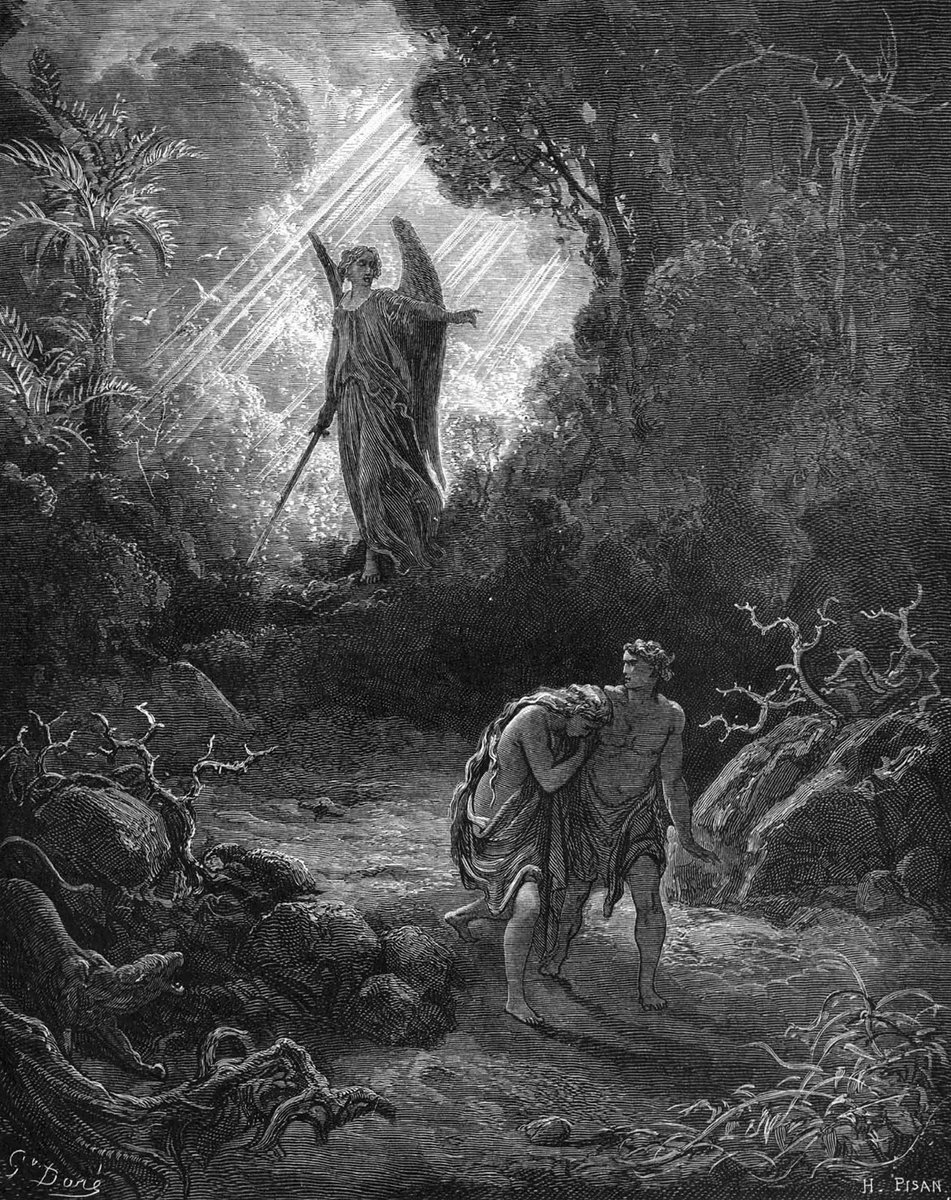
“A certain man went down from Jerusalem to Jericho…” That man is Adam—a symbol of all humanity. Jerusalem is the heavenly city of peace, from which he fell. Jericho, meaning the moon, represents mortality—waxing, waning, and dying. (Augustine, Quaest. Evang. II.19)

“He fell among thieves…” These thieves are the devil and his angels, who: Stripped him of immortality Beat him by persuading him to sin Left him half-dead—alive in body, but dead in soul, wounded and oppressed by sin. (Augustine, Quaest. Evang. II.19)
“A priest saw him… then a Levite…” The priesthood and ministry of the Old Testament walk by. They see the wounded man—but cannot save him. For Augustine, the Old Law reveals sin but offers no remedy for the soul. (Augustine, Quaest. Evang. II.19)

“But a Samaritan, as he journeyed, came to him…” “Samaritan” means Guardian—and it is Christ Himself. He draws near when all else fails. Rejected by men, yet full of divine compassion.
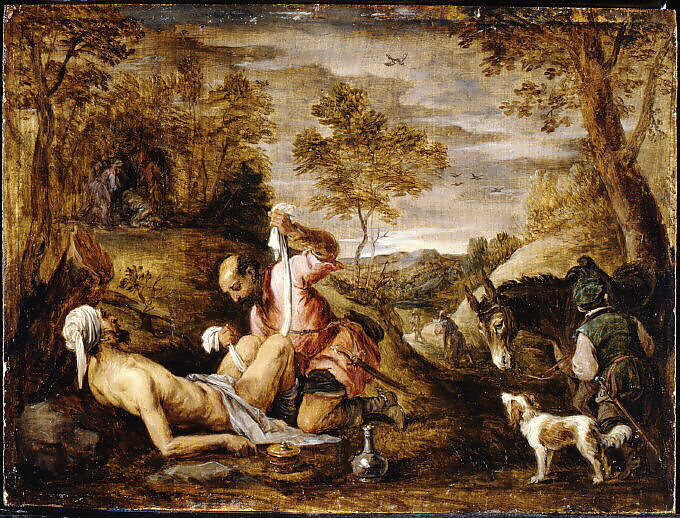
“He bound up his wounds, pouring in oil and wine…” The binding is the restraint of sin. The oil brings the comfort of good hope. The wine is the call to repentance—a fervent spirit stirred into action. (Augustine, Quaest. Evang. II.19)

“He set him on his own beast…” The beast is the flesh of Christ—the Incarnation. The man is lifted by belief in Christ’s humanity. God takes on flesh to carry the wounded back to life.

“He brought him to an inn…” The inn is the Church. A refuge for weary souls. A waystation for those returning to their heavenly home—where grace heals what sin destroyed.

“The next day he gave two pence…” The two coins are either: The two commandments: love of God and neighbor or The promise of this life and the next Both entrusted to the Church by Christ.
“Given to the innkeeper…” The innkeeper is the Apostle, charged to care for souls. The extra payment? Either: His counsel of celibacy Or his refusal to be a burden, working with his own hands to spread the Gospel. (Dodd 1961: 13–14)
“Whatever more you spend, I will repay when I return…” The morrow is after the Resurrection. Christ promises to return. Until then, the Church heals, the Apostles labor, and grace continues to flow.
In modern times, we reduced the Good Samaritan to a story about kindness. But the early Church saw more— a hidden Gospel. A parable of the Fall, the Incarnation, the Church, and Christ’s return. Not just a moral tale, the entire drama of salvation, hidden in plain sight.

After posting 28 miracle threads last month, I decided to try something a little different with this one. I personally love parables and unpacking them. Let me know your thoughts. Follow here: @penn_williamE. I’m now finishing editing my first YouTube video on the Holy House
Have you ever heard of this allegorical meaning to the Good Samaritan before? Curious how well known it is, God bless.
@penn_williamE What a tremendous thread! I’ve long since hated the Church of Nice interpretation of this parable. I think the symbolism you’ve laid bare here is quite profound. Thank you!
@DonnaCattolica Thank you, much appreciated. Although St. Augustine did the heavy lifting! God bless
@penn_williamE 🙏🙏🙏🙏
@Richard70641109 Thanks for reading, the church father’s lives and legacy continue to give
@penn_williamE Excellent thread.
@dvermont Much appreciated, thank you for reading! God bless.
@penn_williamE Great thread, thank you for sharing!
@Lululee0511 Grateful to be able to merely share the church fathers and our beautiful tradition! God bless
@penn_williamE W thread
@HoldenCCole Much appreciated brother! Looking forward to your next one, God bless
@penn_williamE Do you think it’s significant that Samaritans were heretics ? From what I understand, They rejected the entire lineage of David and his kingship . They had different books in their Torah .
@KeenanMiller7 My view is that the Samaritan’s status as a heretic and outsider makes the parable even more shocking in its literal sense. And it makes the allegorical sense even richer: Christ is rejected like a Samaritan, yet He alone shows mercy and saves.
@penn_williamE Hold on, where are you getting that Samaritan means guardian? I thought that was an ethic/national group from the northern part of the holy land, which Jews of Jesus’s time (the parable’s) audience would’ve regarded as enemies and presumed the man to be a thug?
@maquisardberet Good question! In his allegorical interpretation, Augustine writes: “Samaritan means Guardian, and therefore the Lord Himself is signified by this name.” (Quaest. Evang. II.19) He’s not making a linguistic claim about the origin of the word. He’s interpreting the role the
@penn_williamE This is really cool. Have you done any other Patristic exegeses of Christ’s parables? I’d love to read more like this. Thanks @penn_williamE
@CDogmatics First time on Twitter, just testing how it would be received. I usually do deep dives on miracles and Marian apparitions. More parables coming!
@penn_williamE Nicely told - succinct and clear. It's not an insignificant error, is it, to read this story literally and only see the need for a welfare state.
@thegrug Much appreciated, although St Augustine and the church fathers did the heavy lifting!
@penn_williamE Wow, until the end, with the fact that the Samaritan goes and returns (a common theme in Jesus' parables), I wasn't really buying it. This might actually be an actual double meaning by Christ.
@freaky_tree_man Yes, I think that’s the way I should have framed it. “A double meaning.” I didn’t mean for it to come across as this is the ONLY meaning.