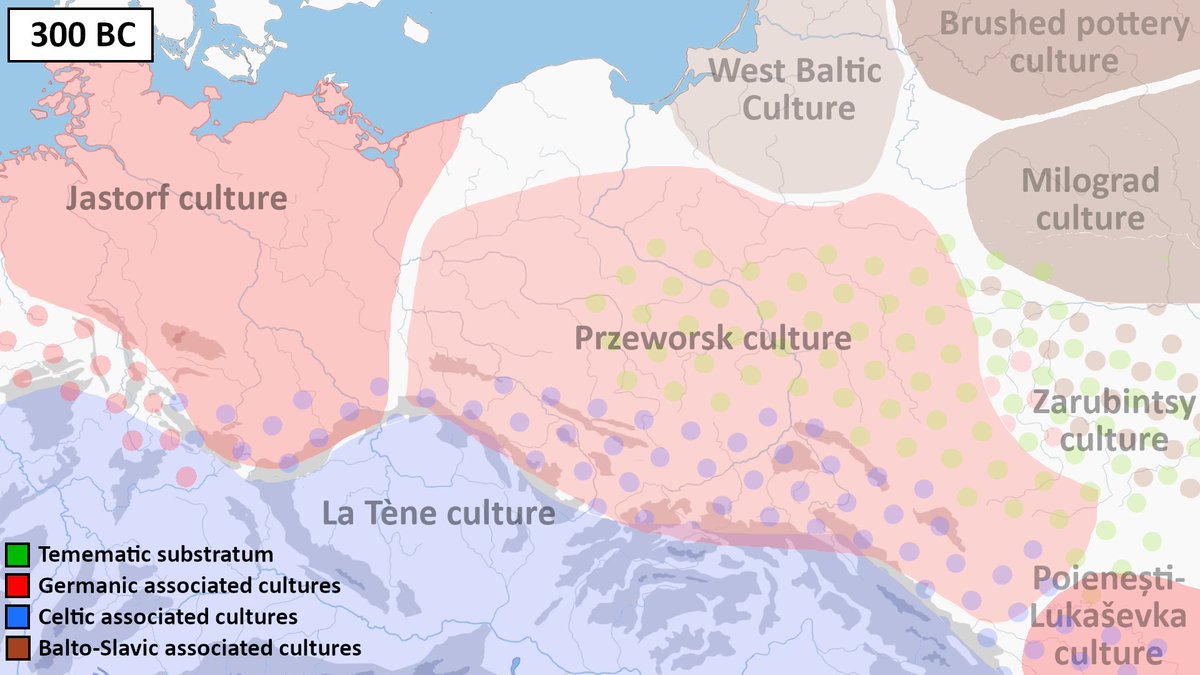
(1/2) This whole discussion about the identity of Lusatian culture (Germanic, Celtic, the Temematic thesis, and the Balto-Slavic) really got me thinking. But now I have an idea of what it might have looked like: blue = Celtic red = Germanic green = Temematic brown = Balto-Slavic
(2/2) Based on archaeological continuities and linguistic theories, as well as aDNA studies where possible, I have attempted to reconcile known archaeological cultures with this. All of this remains however extremely speculative, of course.


@GermaniaMagnaTW trzciniec was balto slavic
@Thund8r8r Sceptical: the Trziniec culture existed from 2400 to 1300 BC. Many scholars dont even think that the Balto-slavic languages had split properly from the Indoeuropean main stock at this point. Though maybe it was a shared ancestor of both balto-slavic and Temematic peoples.
@GermaniaMagnaTW The Nordic Bronze Age emerged from the Unetice culture. They were not contemporaneous.
@Daseinsuhr Dont think so: the Nordic Bronze age culture did exist from 2000 to 600 BC. The Unetice culture existed from 2300 to 1600 BC. So there was for sure a time overlap. The Nordic Bronze age and Unetice were also genetically different. Its possible they shared a common origin however.
@GermaniaMagnaTW Also Correction on the dates: Urnfield starts in 1300bc, and you missed Urnfield Predecessor, the Tumulus Culture (1600-1300bc) Hallstatt itself starts in 900/800bc
@VVeltkrieger First point is valid. Though not that important for the topic. I disagree with the second point: the Hallstatt culture differentiated from the Urnfield culture 1200 BC onwards. For the purpos of this clip (correlating cultures with linguistic groups), the representation is fine.
@GermaniaMagnaTW The Pomeranian Culture was also Germanic https://x.com/VVeltkrieger/sta...
@VVeltkrieger Maybe. There are clear material cultural similarities between Pomeranian culture and Lusatian culture though. Clearly Germanic influences appear mainly in later phases. Therefore I decided to present the culture as a point at which the takeover by the Germanic tribes took place.
@GermaniaMagnaTW Y-DNA speaking Temematic lineages would most likely be associated with R1a-M458 amongst Slavic groups today.
@GermaniaMagnaTW There have been Celtic finds up to Mazurian Lakes recently announced
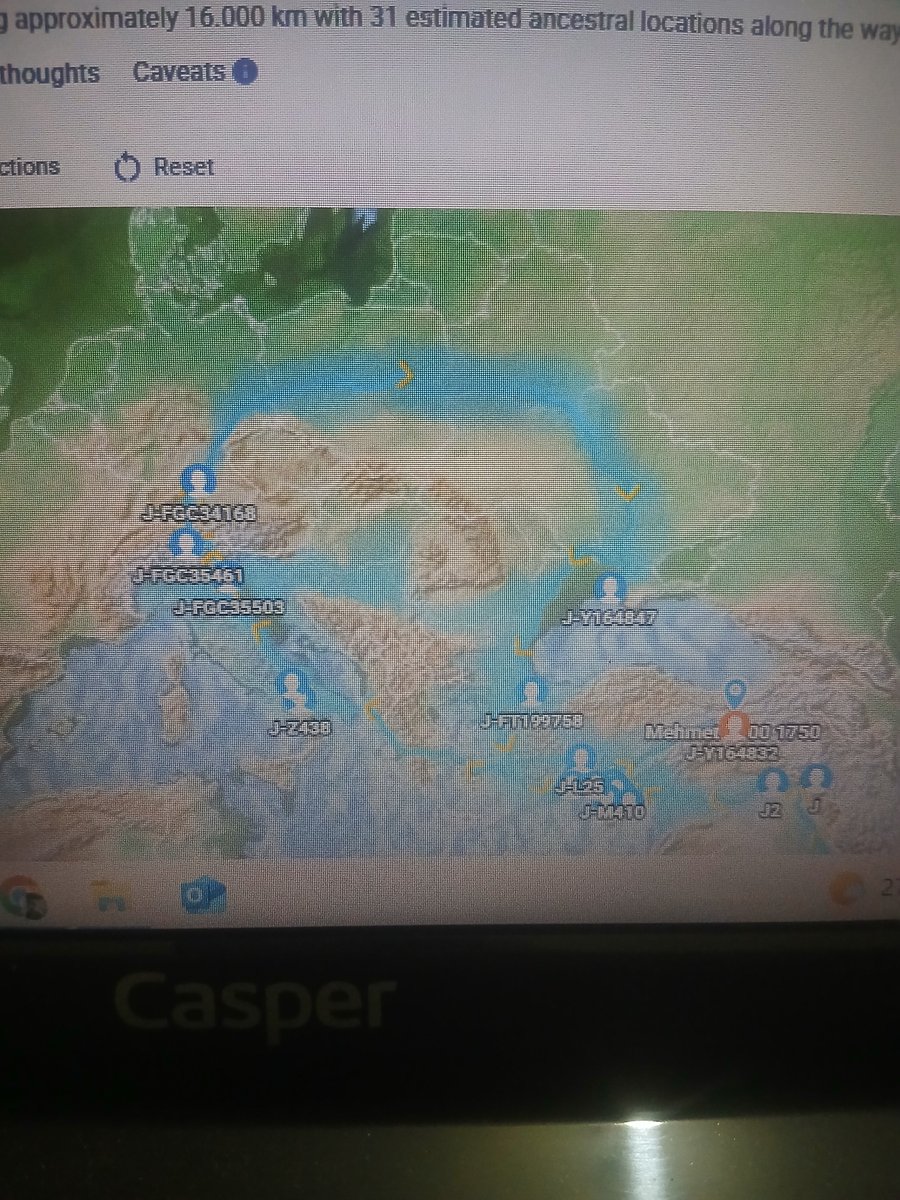
@GermaniaMagnaTW Bu hangi kültür içinde olabilir? j-fgc34168 milattan önce 2150, j-Y164847 milattan önce 1550