
Jefferson's obsession with the woolly mammoth was part and parcel of his case for American greatness. It was critical that "the bones of the mammoth which have been found in America, are as large as those found in the old world" (Notes on the State of Virginia). Here's why.🧵
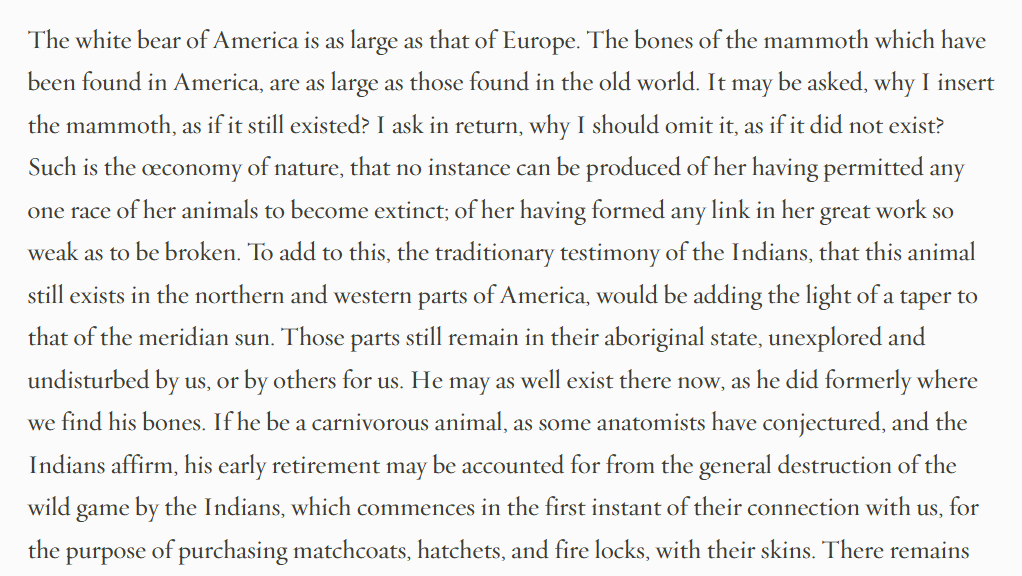
Old World intellectuals like Georges-Louis Leclerc, Comte de Buffon insisted that American species were "degenerate" miniatures of their European counterparts because the earth and atmosphere in America was "less active, less energetic."
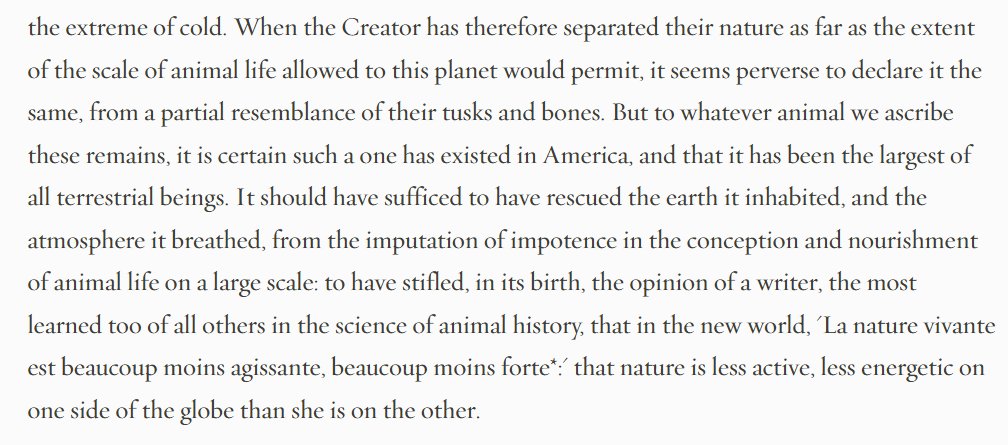
The real rub of the claim, though, was Bufon's "extension [of it] to the man of America, whether aboriginal or transplanted." "The savage is weak and small in sexual organs; he has neither hair nor beard and no ardor for women... much less strong in body... more cowardly."
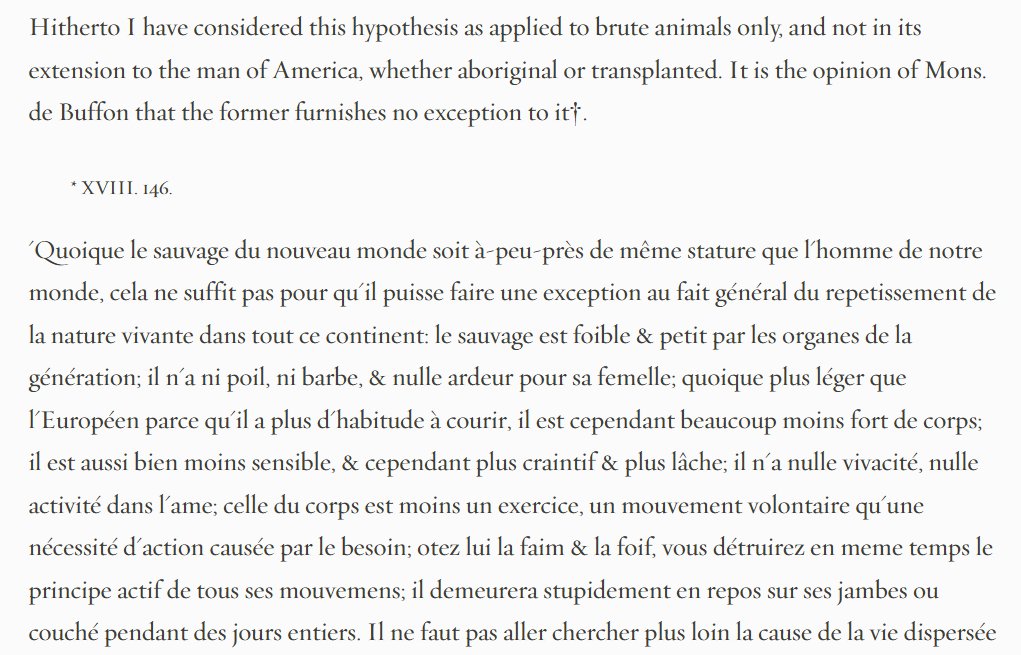
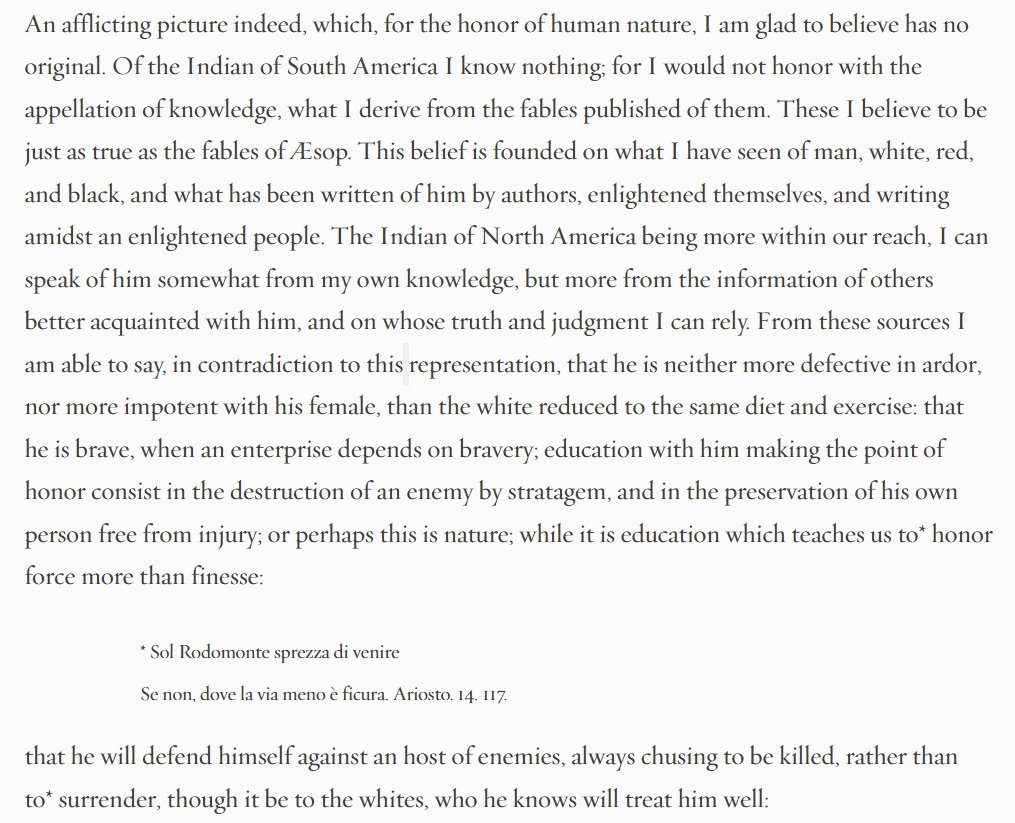
If Bufon's argument was correct, then America could never (at least not for long) be great, nor hope to compete with Old World powers. But Jefferson refuted the charges: the Native American "is neither more defective in ardor, nor more impotent with his female... he is brave."
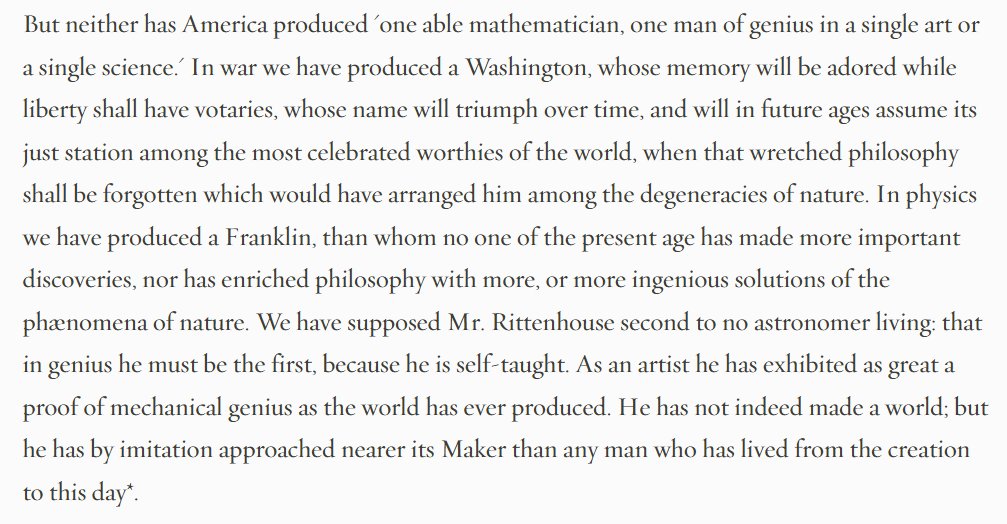
As further counter-proof, Jefferson offered "Washington, whose name will ... in future ages assume its just station among the most celebrated worthies of the world, when that wretched philosophy shall be forgotten which would have arranged him among the degeneracies of nature."
As Jefferson concludes, "America, though but a child of yesterday, has already given hopeful proofs of genius, as well of the nobler kinds, which arouse the best feelings of man, which call him into action, which substantiate his freedom, and conduct him to happiness."
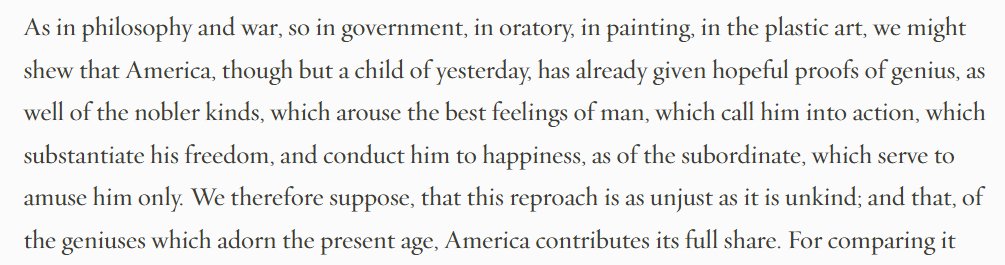
"Of the geniuses which adorn the present age, America contributes its full share" — Thomas Jefferson, Notes on the State of Virginia (1785)