
Having a child changes people. It makes them far less rambunctious, and pushes them to be more stable. Notice what happens to men's criminal offending rates in the lead-up to childbirth. They become far less criminal!🧵

This isn't just about taming dads though. The effect for women is also incredibly substantial, albeit with a small difference: there's a larger reduction in crime during pregnancy, with some rebound after. But the rebound is only partial.

In short, what we see with both moms and dads is that having kids leads to a change in priorities and a stark reduction in crime perpetration So, how does this vary by marital status? For men, there's not much better married men can do This effect is about taming unmarried men

For women, the picture is very similar, albeit with relatively larger effects for the married. Notice: Unmarried women become almost as law-abiding as married women by the last month of pregnancy. They then quickly rebound, but not all the way.

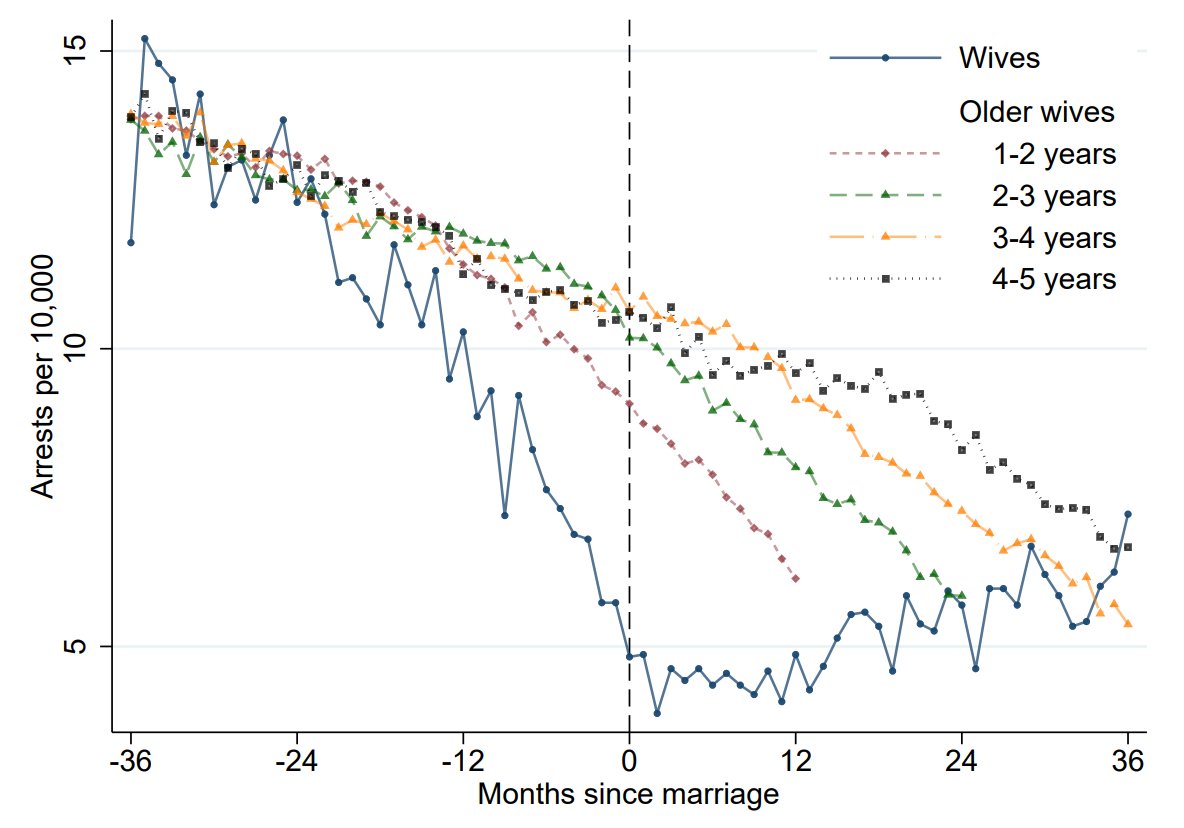
The large gap obviously has to do with selection into marriage: more law-abiding people are more likely to get married. But does marriage still have an effect? As it turns out, the answer is "no". People become more law-abiding leading up to marriage, then they level out. Men:

In essence, marriage is the peak of a long period of desistence from criminal wrongdoing, but it does not, itself, cause people to become less criminal. You can see this played out using data from people who get married with a delay from the focal sample (x-y years). Women:
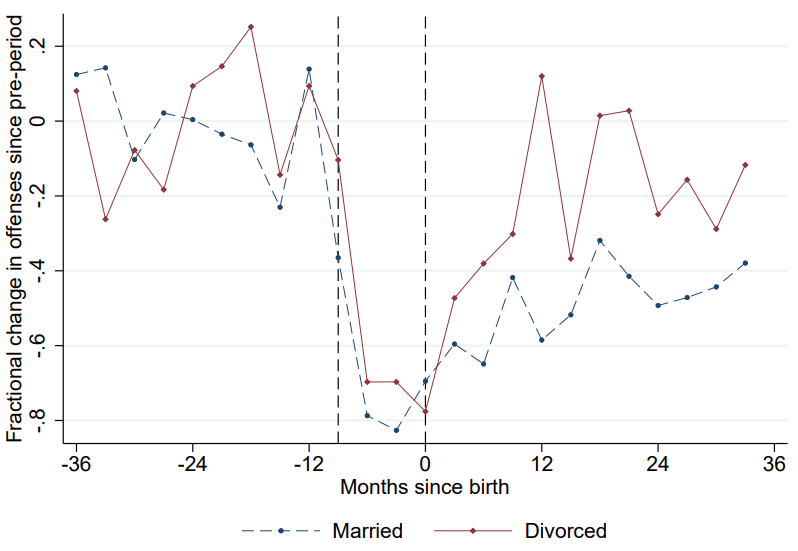
I think this makes sense for both men and women. Women ask men to shape up, and women hopefully strive for the same when they're approaching marriage. But what about bad marriages? Using ones ending in divorce, we see those modify the effects of childbirth for men:

Similarly, for women, bad marriages come with rebounding, all the way back to pre-child offending levels.
All of these effects are shockingly robust. They hold up for men with future criminal histories, men born outside of the state the data comes from (Washington), and it even seems like childbirth helps to tame men with juvenile offending histories:

This is very important! This supports the notion that 'aging out' might be tied to 'manning up'—that is, accruing life milestones and achievements, doing things that make losing it all worse. Remember how the PLO stopped Black September? *with love* https://x.com/cremieuxrecueil/...
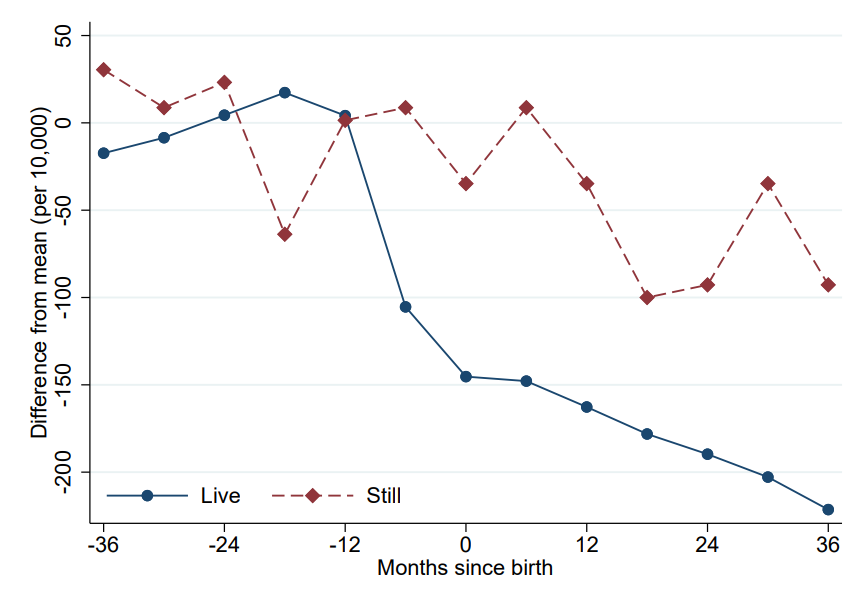
Now, what if it's men's preparation for the child that leads to the reduction in criminal offending? We can test this using stillbirths Because of their rarity, the data here has to be aggregated to six-month periods. What we end up seeing is no taming effect The kid matters!
The fathers of stillborn children do something better than the fathers of living children though. They beat women less. There appears to be an effect of childbirth on domestic violence, and not in the way of reducing it, but to increase it somewhat.
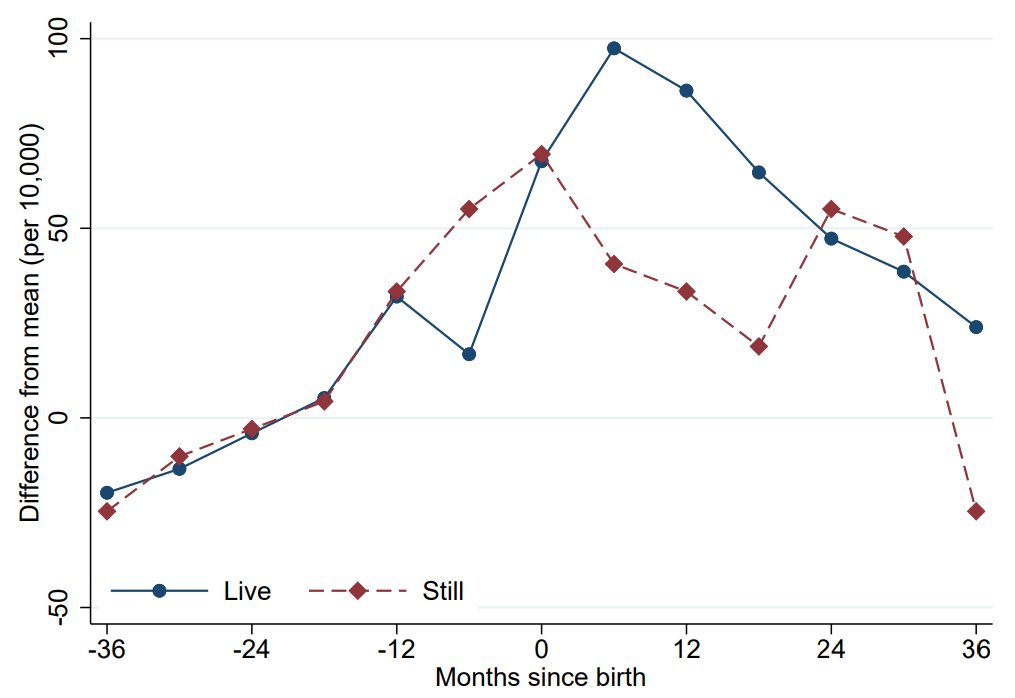
This domestic violence effect is seen in the general sample, excluding stillbirths. People beat pregnant women less, and the more heavily pregnant, the less they beat. But then beatings happen. To be clear, this is not large and is smaller than the crime decreasing effect.

Men might hit women more because of frustration with children, changes in their relationship, or a lot else. But what also might be happening is that people are more likely to report things as domestic violence, or they're more likely to report the crime in general. Who knows!
To briefly summarize: Childbirth tames. When people have kids, they become more docile adults. Other literature suggests there are benefits for men's incomes and market attachment (i.e., continuous employment) as well. Women leave the market more, but such is the cost of kids.
These changes are also concentrated among first-time parents, suggesting that childbirth causes a cascading change in lifestyle preferences, and that the issue is not budget shocks or loss of free time. Interesting, no?
I think this speaks to something else that's very important: Aging and crime. One of the major life accomplishments is having kids. Frankly, my view is that people aren't really complete until they're married, and I suspect I'll soon feel kids are required, too.
Do people age out of crime, or is it something else that happens alongside aging that leads to crime reductions? These results speak to the importance of milestones, culturally-embedded ones attached to childrearing, for sure, but nevertheless, something many people miss.
The people who go to prisons, offend, and so on, are likely to miss milestones and life achievements, so they might be less tamed by age than age-related stats would suggest they should be. Think about it: things like the age-crime curve are carved by incarceration.
With all that said, I'll just repeat: Childbirth tames people. It's been an important part of aging up for all of human history, for the vast majority of people, and it's been thought of as a taming influence all throughout. With rising childlessness will people grow up at all?
I suspect that childlessness, more than anything else, helps to explain the rise of certain permanent-children demographics, like "Disney Adults". I don't think it's the whole story by any means, but I think it's important, both for individuals and our institutions.
Who knows if there'll be similar responsibility-promoting institutions cropping up instead of family formation via childbirth? I don't think there has been yet. Source: https://www.nber.org/system/fi... Check this out, too: https://x.com/cremieuxrecueil/...