
@ruckusofantioch @EpicSans020 @Gedeon_Optinius @KingMic92357513 @BrotherAugusti2 1. Well then you're going to be running up against a lot of ppl. 2. Molinism/Congruism still have to face the objection of semi-pelagianism. 3. Those views are Catholic views. 4. A lack of something is not a positive something else. And a lack of resistance just gets us back to
@Acolyte83349490 @EpicSans020 @Gedeon_Optinius @KingMic92357513 @BrotherAugusti2 1. Fair 2. Molinism/ Congruism are forms of UE, since they’re not based on merits, but rather middle knowledge, and congruent circumstance, respectively 3. Some members of the Kievian schools hold to these views explicitly
@ruckusofantioch @EpicSans020 @Gedeon_Optinius @KingMic92357513 @BrotherAugusti2 And what is Middle Knowledge grounded in? The essence of the agent, something else or nothing at all?
@Acolyte83349490 @EpicSans020 @Gedeon_Optinius @KingMic92357513 @BrotherAugusti2 Middle knowledge (in between natural and free) is grounded in counter factuals, which are things that would have happened had conditions been different. The arguments against this historically were from Dominicans who argued this made God’s knowledge contingent
@ruckusofantioch @EpicSans020 @Gedeon_Optinius @KingMic92357513 @BrotherAugusti2 Yes I am aware of the literature on Molinism but this leaves the Grounding Objection untouched.
@Acolyte83349490 @EpicSans020 @Gedeon_Optinius @KingMic92357513 @BrotherAugusti2 The Molinists aiming to make the grounding in both God and the creature. Part of the reason this is, is because they know if they make the grounding in the creature alone then they vindicate the Dominicans when they accuse them of Pelagianism/ semi-Pelagianism.
@Acolyte83349490 @EpicSans020 @Gedeon_Optinius @KingMic92357513 @BrotherAugusti2 And considering the Orrhodox Church accepts Carthage, and Trullo to be authoritative and binding, this is also the case with us, the grounding can’t possibly be in the creature alone
@ruckusofantioch @EpicSans020 @Gedeon_Optinius @KingMic92357513 @BrotherAugusti2 And even if we read them the way you seem to suggest, that hardly makes Molinism an Orthodox option.
@Acolyte83349490 @ruckusofantioch @EpicSans020 @KingMic92357513 @BrotherAugusti2 Met. Platon argues that it is https://x.com/OrthoAugustine/s...
@Gedeon_Optinius @ruckusofantioch @EpicSans020 @KingMic92357513 1. I wonder where he got the idea of Molinism from? Again, non-Orthodox sources. 2. Shocking that ppl using non-Orthodox sources express non-Orthodox views. 3. This leaves untouched the Grounding Objection. 4. It has already been conceded that saints can and in fact erred.
@Acolyte83349490 @Gedeon_Optinius @EpicSans020 @KingMic92357513 1. That’s not an issue we did the same thing with Aristotle, Plato, and Plotinus. We took the good and removed the heterodoy. 2. No it’s not that, even St. Gennadius Scholarios who wrote a confession of faith, used western terminology to express the true faith.
@Acolyte83349490 @Gedeon_Optinius @EpicSans020 @KingMic92357513 3. Ultimately everything is grounded from its cause and for us it’s God and this is a non-issue bc God doesn’t override our will or determination. He causes our existence and in the same way he causes our action
@ruckusofantioch @Gedeon_Optinius @EpicSans020 @KingMic92357513 But without determinism. If God does not determine our actions then Augustine, Prosper, Aquinas and others are wrong on that point. You can't consistently deny divine determinism and then say God causes our actions.
@Acolyte83349490 @Gedeon_Optinius @EpicSans020 @KingMic92357513 God “causes” our actions insofar that he causes us. It’s why he’s the first and only cause to all creatures. There’s distinctions in primary and secondary causation The efficient cause for salvation is God via grace but the efficient cause in damnation is creatures.
@ruckusofantioch @Gedeon_Optinius @EpicSans020 @KingMic92357513 Second, again, why are damned creatures the cause? Because they were caused to be so and cause such and so. This is why Augustine argues that the angels that fell did so because God withheld goods from them, that, subjunctively, would have brought about a different choice in them
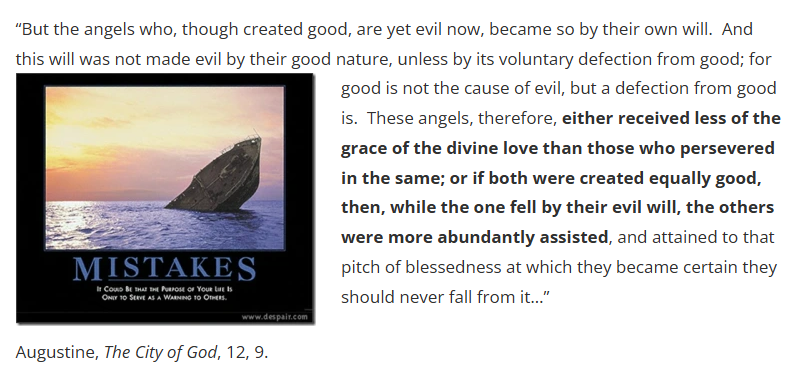
@Acolyte83349490 @Gedeon_Optinius @EpicSans020 @KingMic92357513 God empowers both the elect and the reprobate with potential but the potential is only actualized in the elect and this actualization is two fold.
@ruckusofantioch @Gedeon_Optinius @EpicSans020 @KingMic92357513 It also entails Christological problems, which is evidenced in Augustine's view that the primary example of predestination is the man Christ.
@Acolyte83349490 @Gedeon_Optinius @EpicSans020 @KingMic92357513 Do you think Augustine would disagree with what St. Maximos says here?
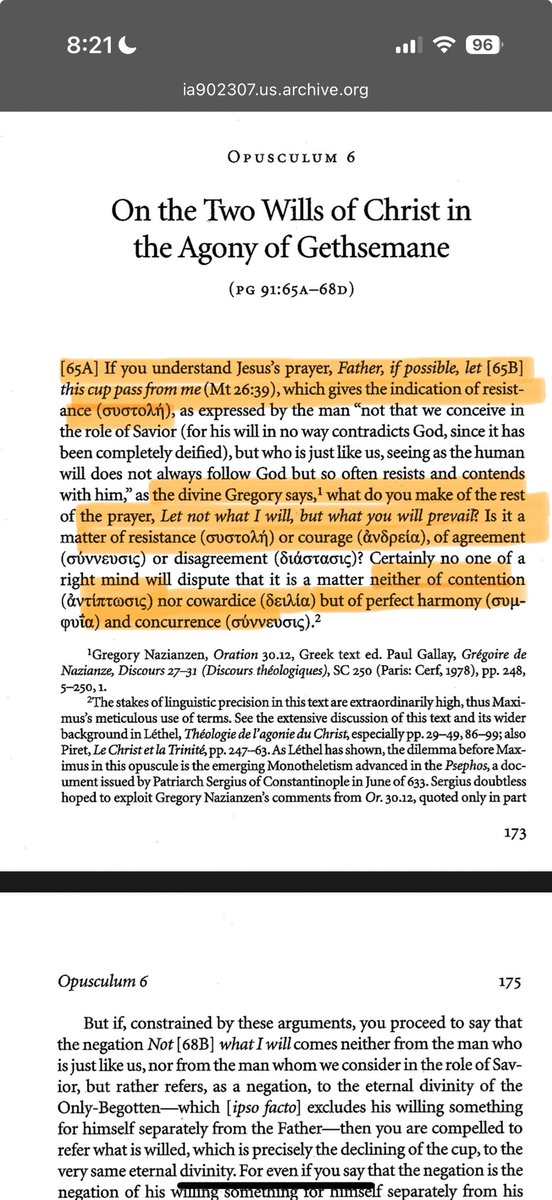
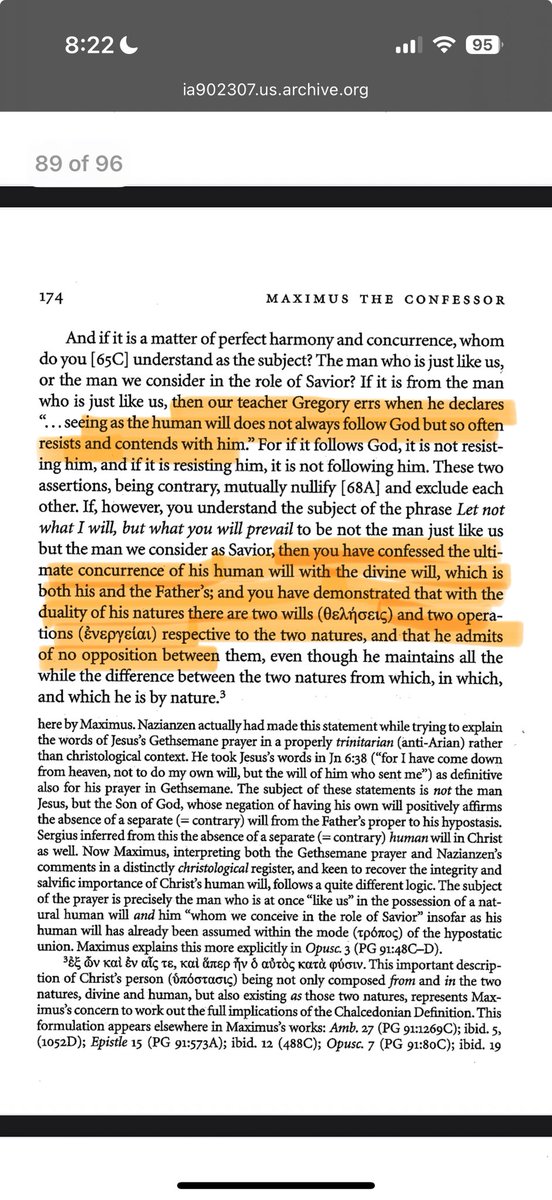
@ruckusofantioch @Gedeon_Optinius @EpicSans020 @KingMic92357513 and yes I do think Augustine would disagree. Here is why. For Augustine, a second fall is ruled out because the opportunity for choice in the continum of the divine present precludes the chance for another moment to make a defective choice. For Maximus, impeccability doesn't
@Acolyte83349490 @Gedeon_Optinius @EpicSans020 @KingMic92357513 I do think there’s choice options and that the saint choose between many that are infinite but all good
@ruckusofantioch @Gedeon_Optinius @EpicSans020 @KingMic92357513 So when Jesus in the passion chooses, does he choose between a good and a bad option? Does he ever will the other option or is that a phantom?
@Acolyte83349490 @Gedeon_Optinius @EpicSans020 @KingMic92357513 Christ could never deliberate between good and bad, that would contradict his divinized human nature. If he was presented with good and bad options, he chooses the good. However he never deliberates these things in his mind
@ruckusofantioch @Gedeon_Optinius @EpicSans020 @KingMic92357513 I did not ask about deliberation. I asked about choice between morally constrasting options. 1. Is one of the options bad? 2. Did he choose to save his life?
@Acolyte83349490 @Gedeon_Optinius @EpicSans020 @KingMic92357513 1. Sure it could be/ not preferable 2. No he chose to die
@ruckusofantioch @Gedeon_Optinius @EpicSans020 @KingMic92357513 1. Is the choice to save his life sinful? 2. If he chose to die and didn't also choose not to die, then why does he say "not my will?"
@Acolyte83349490 @Gedeon_Optinius @EpicSans020 @KingMic92357513 1) not necessarily. It was a blameless passion. It’s instinctually for humans not die. But he didn’t resists the divine will. 2) he did choose but I wouldn’t say it was between two evils. However the divine will compelled him to submit to the will of the father (the divine)
@ruckusofantioch @Gedeon_Optinius @EpicSans020 @KingMic92357513 He wills both, because both are willed by God, that is why it is a blameless passion. He brings two divinely willed goods together. 2nd Compulsion precludes freedom. This was actually the Monothelite view of Pyrrhus. In this way Pyrrhus and other Monothelites sought to secure
@Acolyte83349490 @Gedeon_Optinius @EpicSans020 @KingMic92357513 The error of the monothelites was that the human will did not actually cooperate or participate in Christ. That’s not what Augustine or other Western dyophysites would say. Christ’s human will did not resist the divine will.
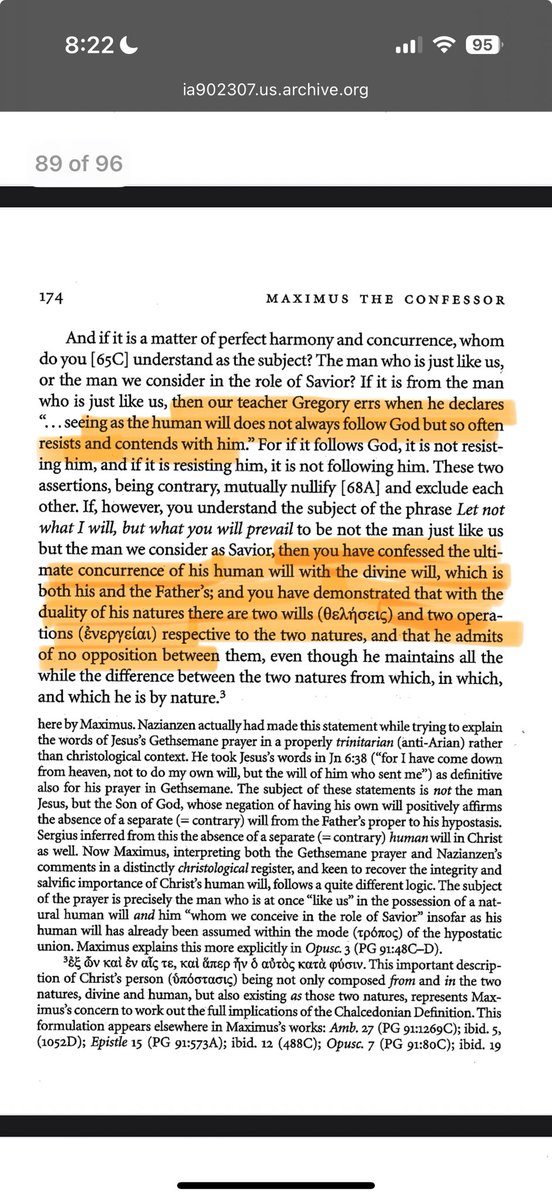
@ruckusofantioch @Gedeon_Optinius @EpicSans020 @KingMic92357513 Have you read the Disputation with Pyrrhus?
@ruckusofantioch @Gedeon_Optinius @EpicSans020 @KingMic92357513 Then you are aware of the section where Pyrrhus floats the idea of the divine will using the human will and Maximus' rejection of it and his mentioning of Nestorius.
@Acolyte83349490 @Gedeon_Optinius @EpicSans020 @KingMic92357513 Yes but Augustine nor the Augustinians in general believe this. A rejection of cooperation started with Jansen whose 5 points were condemned
@ruckusofantioch @Gedeon_Optinius @EpicSans020 @KingMic92357513 Just so long as the divine will determines the human, the error is present. Jansenism here makes no difference. Again, we have already established that on this schema, congruity is also determined.
@Acolyte83349490 @Gedeon_Optinius @EpicSans020 @KingMic92357513 Would u agree with this statement
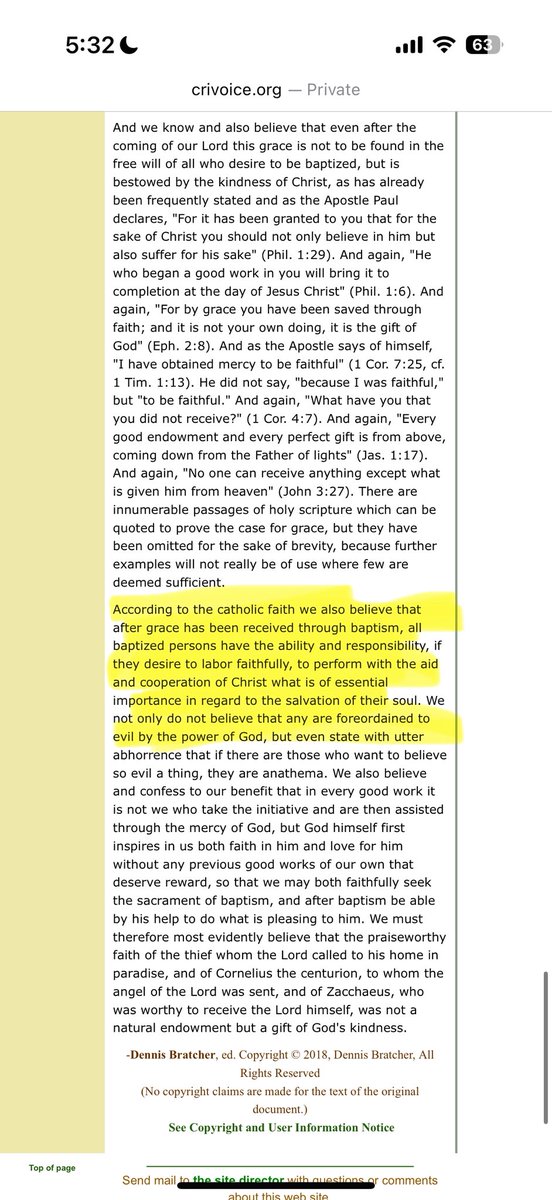
@ruckusofantioch @Gedeon_Optinius @EpicSans020 @KingMic92357513 1. the print is awfully small. Is this Dositheus?
@Acolyte83349490 @Gedeon_Optinius @EpicSans020 @KingMic92357513 No this is Orange II +529, a notoriously Augustinian council