The "Project SEKAI Special Talk Session" has just ended! This will be a thread of things they talked about on the stream! Watch the stream's archive here ⤵️ http://youtu.be/6GXHIB9oy5Q

(We might post things rather slowly as we go and rewatch the stream again while taking notes...)
■ Story Production ■
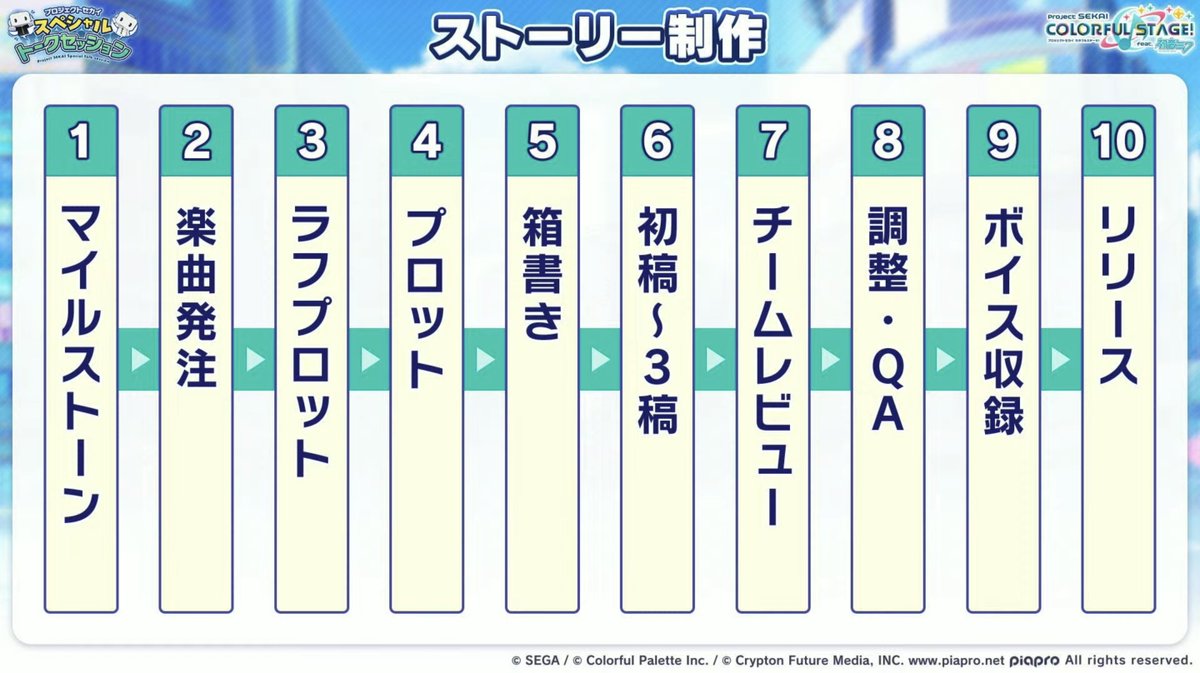
First, we have the structure for the game's story production! 1. Milestone (Goals) 2. Commission song 3. Plot draft 4. Plot-writing 5. Story outline (storyboard) 6. 1st~3rd drafts 7. Team review 8. Adjustment/QA 9. Voice-recording 10. Release
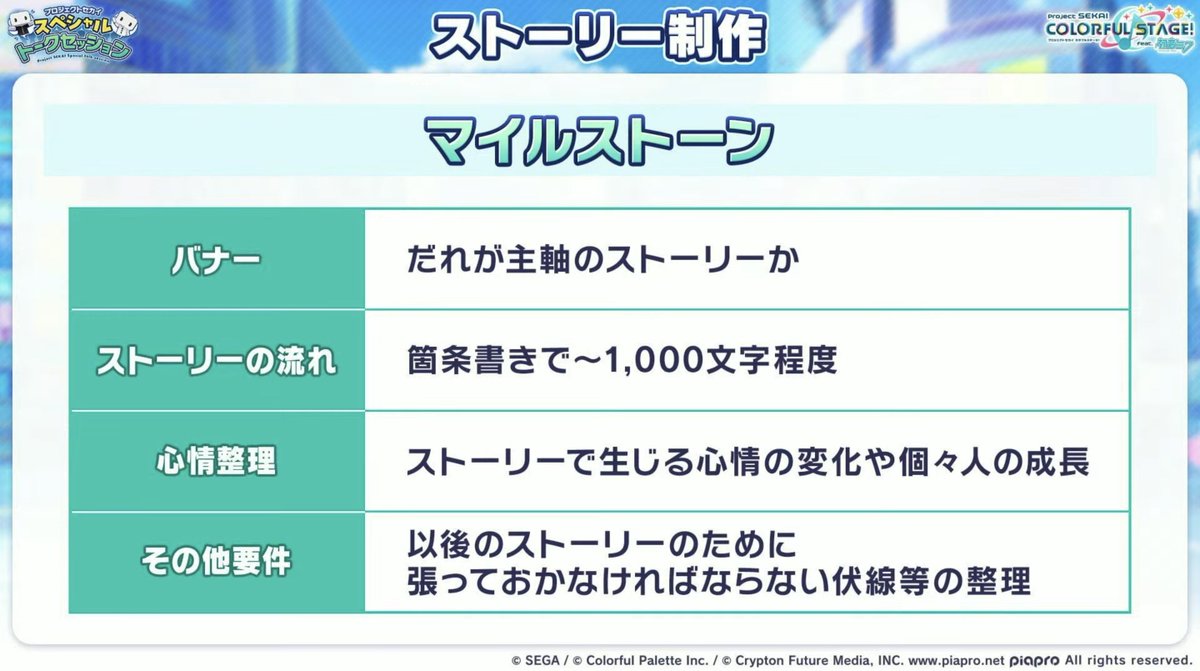
■ Milestone ■ Milestone in this context is like goals/requirements for when they write stories/plots for the game! We have: ・Focus character ・Story flow ・Resolution: Emotional changes & growth within the story ・Others: Organizing plot for future stories
Kondo-san mentioned that at first he used to work on story milestones together with the writing team, but as of now he's the only one who work on them. He also mentioned that Project SEKAI's story was written to have an end, but it won't end with the game's 6th anniversary.
He said there are still stories that they just /have/ to write and stories that they think would be good to write.
■ Song Commission ■ For song commissions, they'd give outlines of the event to the song's producer (example is for "competitive fire!") ・Focus character ・What kind of event: They decided to enter a tournament to secure a spot at a global/world music event (1/2)

・Theme: "I wanna go there right away!" - Please incorporate a passionate type of music that gives off the idea of wanting to get to an ideal place quickly. Feel free to also rephrase any similar meanings as long as the basic theme is conveyed through the song. (2/2)
When asked if they've decided on whether they've decided which producer to write certain songs from the start or not, Kondo-san answered that they mostly decided on the producer after they've finished writing the story.
(They also had a quiz where people would guess which commission song is it based on descriptions alone. It was for "Toumei na Palette." Seems like the staff also likes to observe how the fans react too because Adachi-san mentioned how popular "Devil Honami" was from the 4-koma.)
■ Plot Production ■ Next, they explained how plot-writing works and the steps they had to go through. ・Plot draft: Rough synopsis (10 bullet points) ・Plot-writing: Detailed synopsis (5- pages) ・Outline/Storyboard: Episode composition (8-10 pages)
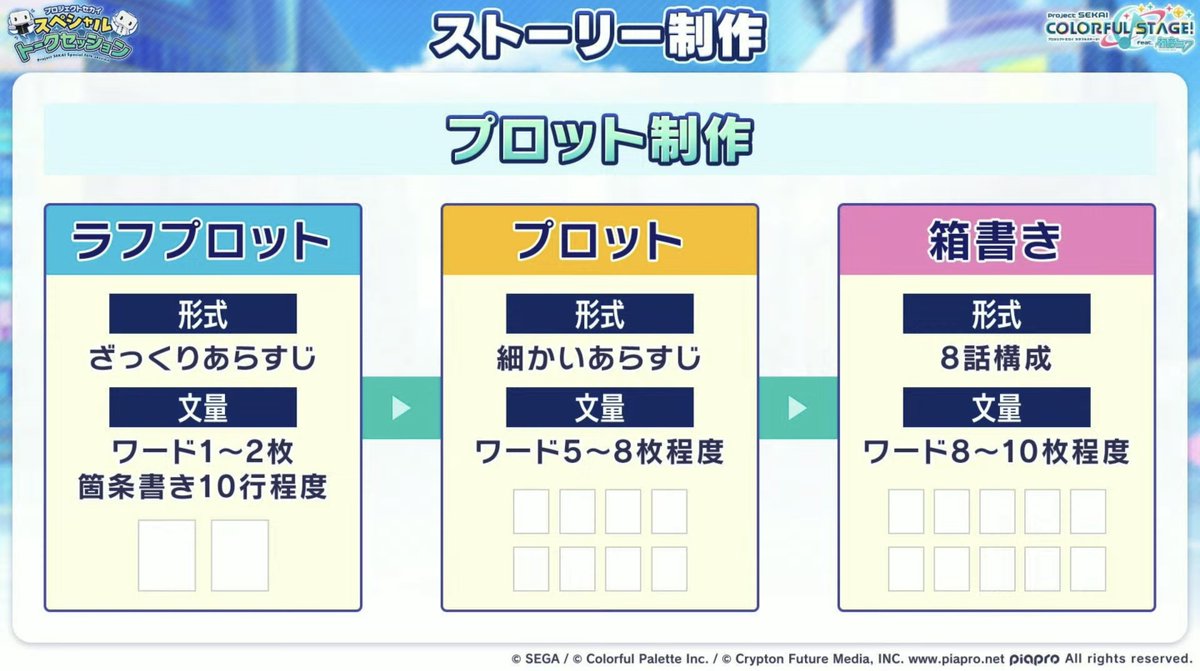
They also showed the outline/storyboard for episode 8 of the event "Competitive fire!" (Airport scene)

■ 1st~3rd Drafts ■ ・1st: Is the structure correct? Is it easy to read? Is the theme conveyed clearly? ・2nd: Are there any inconsistencies? Are there any out-of-character behavior? ・3rd: Look at the whole story again and see if everything fits to be sent for reviews.

We were shown a bit from episode 8 of the event "Competitive fire!" as an example (Who's the speaker, their lines, and other important notes/remarks)

■ Team Review ■ After previous steps are done, the story would be sent to be reviewed by not only the writing team, but the Project SEKAI team as a whole.

Kondo-san mentioned that they have the whole team reviewing the stories because when someone reviews a story they write on their own, there would be things that they wouldn't notice. It would usually take one whole day to review a story.
■ Adjustment / QA ■ The final step before releasing the story. Several things are checked: ・Grammars and expressions ・Trademarks ・Typos ・Discrepancies with past stories ・Character first-person-pronouns (how they call themselves/call each other)

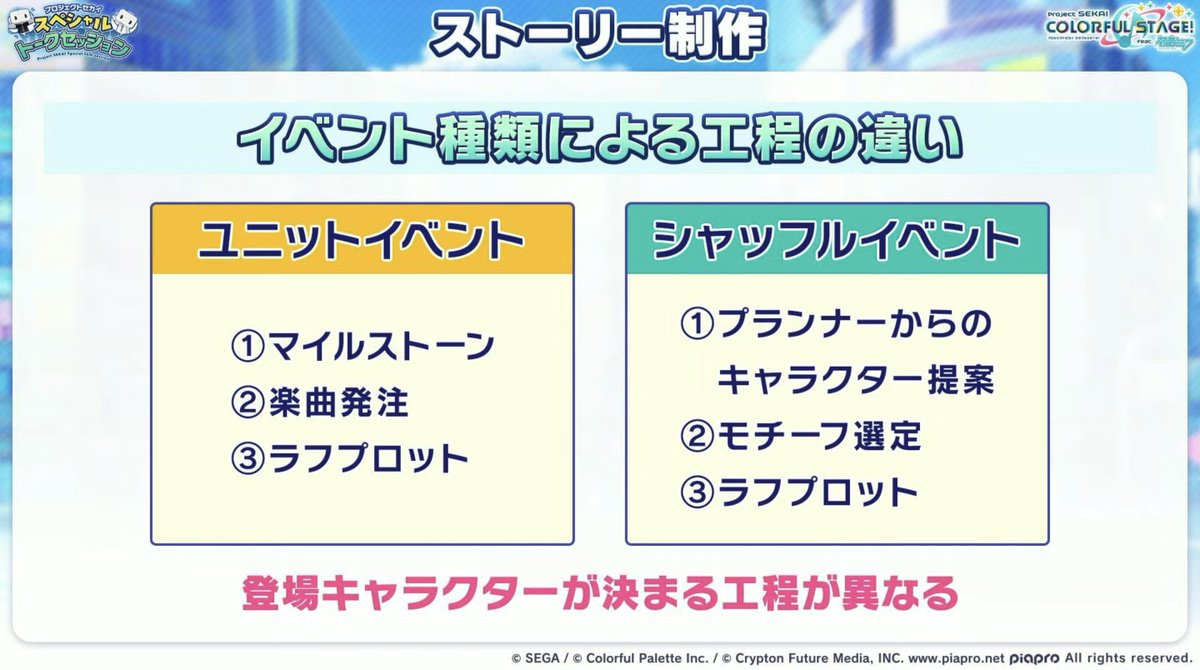
■ Production Process ■ They also explained the difference in process for [Unit Event] & [Mix Event]. ■ Unit Event ・Milestone ・Song commission ・Rough draft (plot) ■ Mix Event ・Character proposal ・Theme/motif choice ・Rough draft (plot)
■ Illustration Production ■
(For this segment we have the art director, Iizuka Kouhei on stage!)

Just like previous segment, we first have the summarized steps for the illustration production: 1. Character choice 2. Costume production 3. Front, back, side costume drawings 4. Rough drafts (Untrained & Trained) 5. Clean copy (Chara & BG) 6. Finishing 7. Debug 8. Release

■ Character Choice ■ Planners will be the ones who decided which characters will get 4★/3★/2★. ・Focus/Banner character must be a 4★ ・The 2 other 4★ will be decided based on their involvement in the stories or the number of cards they have. (1/2)

・VS choice is based on the story, number of cards, and number of times they appear in songs
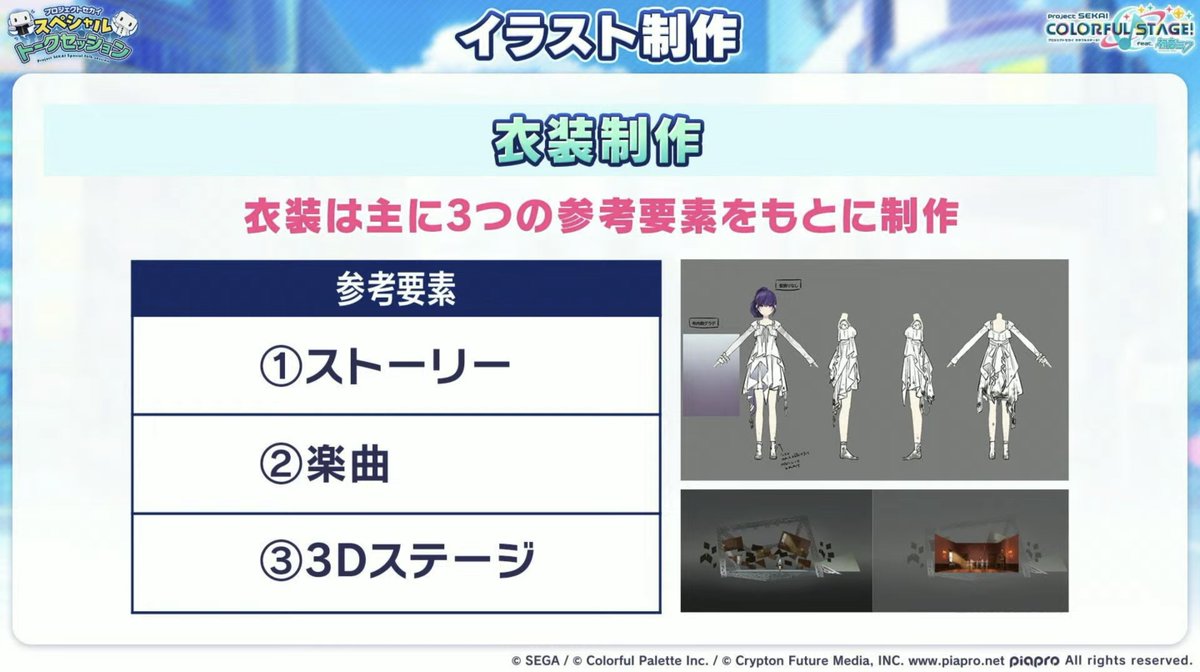
■ Costume Production ■ The costumes were created based on 3 main elements as references: 1. Story 2. Song 3. 3D Stage Designing costumes, including feedback etc. would usually take around a week or so. (Iizuka said there usually would be 2-3 people working on designs)
■ Trained Illustration Drafts ■ Rough drafts for the cards are created based on the stories, and what the artists wish to make. While examples that are shown are 2 per cards, the art team would usually make around 9-10 rough drafts for the cards

While discussing the concept for Ichika's card (above), some suggestions such as her sense of preservation, self-assertion, and conveying the feeling of slight unfulfillment came up.
For Saki's card, while the team thinks the concept on the right was cool, based on the story and how it touched upon the conflict of clashing ideas, they decided it'd better to include 2 characters back-to-back in the card to connect with the story.
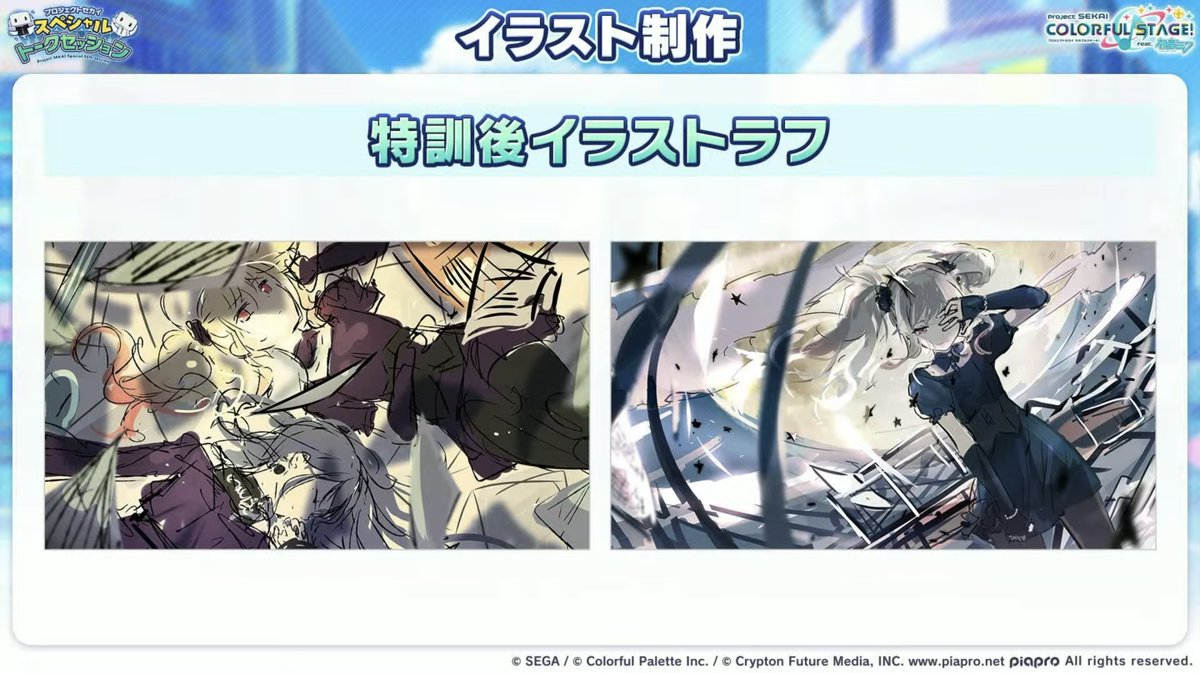
(Final version of the cards for those looking for them/wanting to compare them with the rough drafts!)


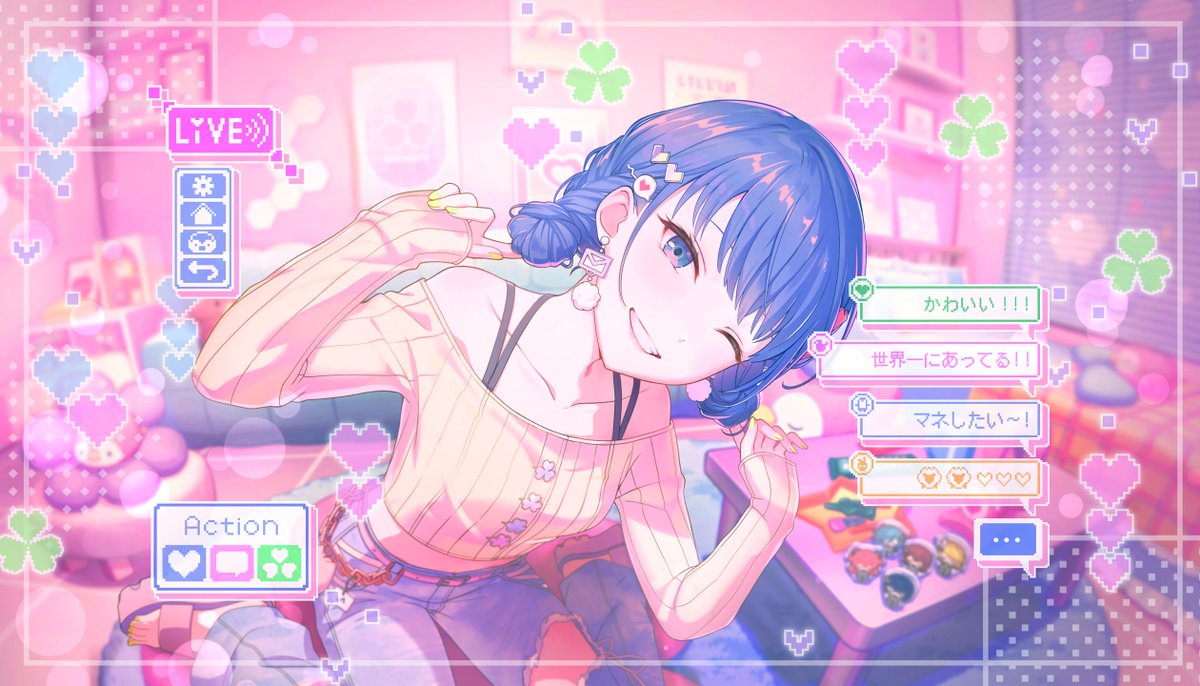
The concept for Haruka's card (and the set in general) is live streaming screen. While it doesn't really have any connection with the story, they wanted to convey a different, new sides of idols that the story has through the cards.
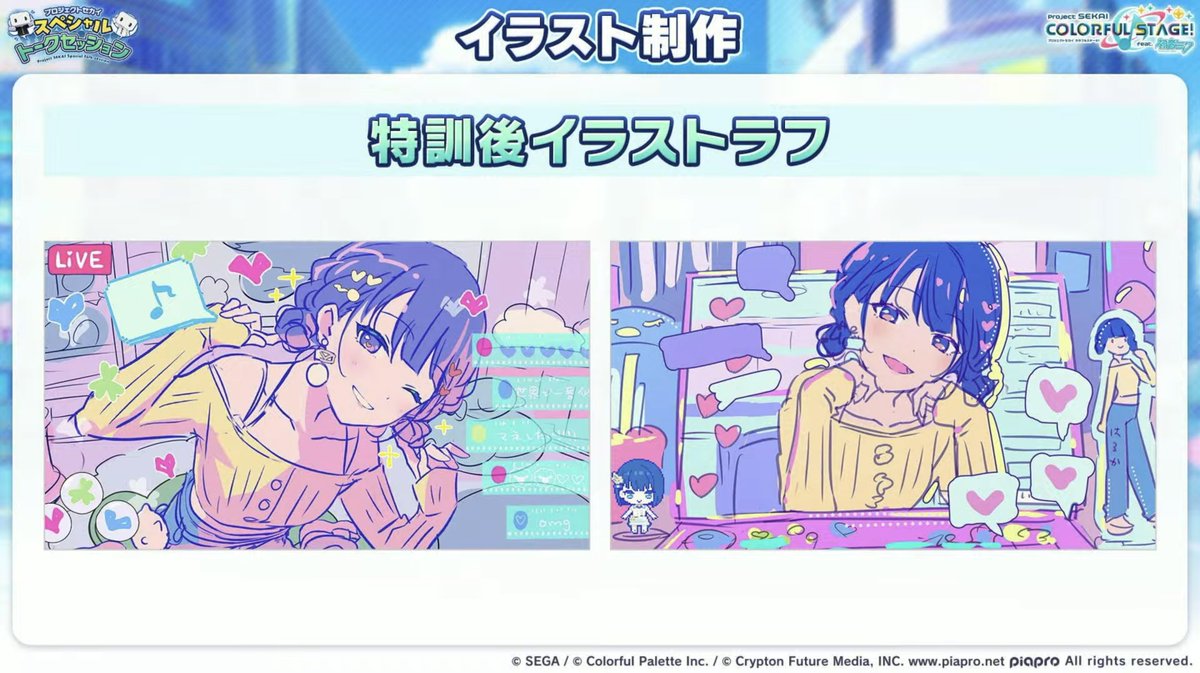
They also wanted to convey the idea that despite the idol is live streaming to an audience, they wanted to give off the vibe that the idol on the screen is giving a fanservice just for us, the one viewer behind the screen.