
1/ Central bank independence is probably coming to an end. In the short-term, this is due to radical and somewhat political moves made by the Trump administration. But in the long-term it is a failure of the ideas that were used to justify independence in the first place. 🧵

2/ Central bank independence is a technocratic competency that came out of the new model of "stakeholder democracy" especially associated with Clintonism and Blairism. Basically this is a euphemism for "rule by experts".

3/ More specifically central bank independence became popular because policymakers became convinced that central banks had used technocratic wizardry to solve the inflationary problems of the 1970s and early-1980s.

4/ This explains the politics. But what really needs to be understood is where the economists got the inner-confidence to claim that they could use central banks to "optimise" economic policy.
5/ The original dream was put forward by John Maynard Keynes in his "Treatise on Money". In the 1920s Keynes became convinced that central banks had the power to steer the economy almost completely by targeting an optimal interest rate called the "natural rate of interest".

6/ But by the 1930s he realised that this was an illusion. This led him to write the General Theory. After seeing central banks' inability to counter the Great Depression he rejected the natural rate of interest and sees a rather limited role for central banks in the future.

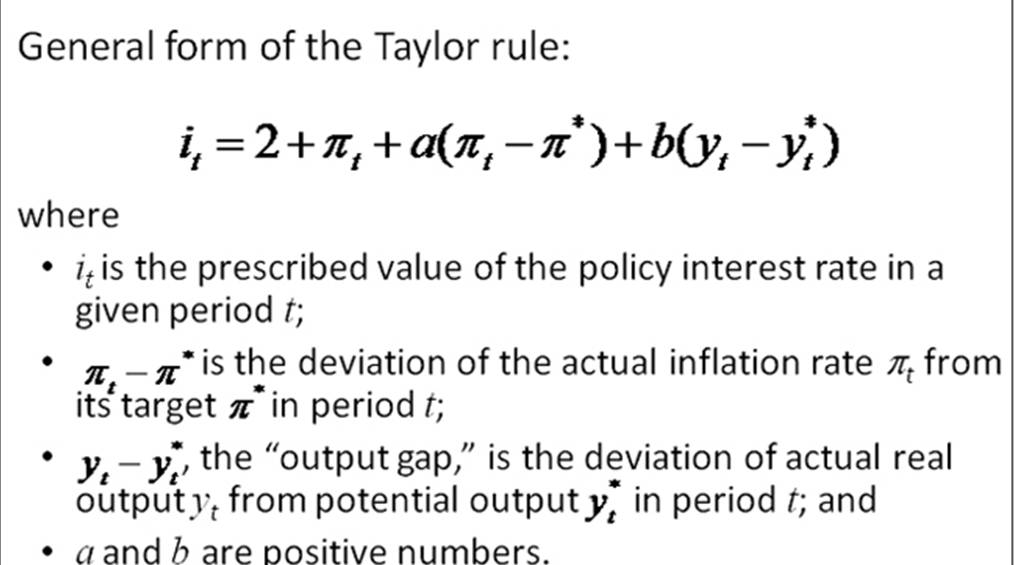
7/ In the late-80s and early-90s, after a period of seemingly successful inflation control, the economists regained their confidence and came to think that the natural rate of interest could be targeted by central banks. They even came up with a formula called the Taylor Rule!
8/ Confidence in this new ultra-technocratic framework grew in the 1990s as economists became confident that they had cracked the puzzle and produced low inflation and high growth that they called the "Great Moderation".

9/ But this all started to fall apart, first after the bursting of the Dotcom bubble in 1999-00. Then after the Global Financial Crisis (GFC) in 2008.

10/ This led to a brief rethinking of the discipline. Critics like Hyman Minsky were allowed entry into the ivory tower as economists scrambled to understand what was going on.

11/ For a moment it looked like economics could be reformed and economists might look again at questions around the postwar economic consensus.

12/ But this did not happen. Academic economists - especially older ones - did not like the criticism and so they dug in to maintain their institutional power. Soon everything returned to normal - but all the awkward questions remained unanswered.

13/ At the same time, central banks had become addicted to quantitative easing (QE) programs. They told the public that infusing money into the banking system would produce inflation and raise economic growth.
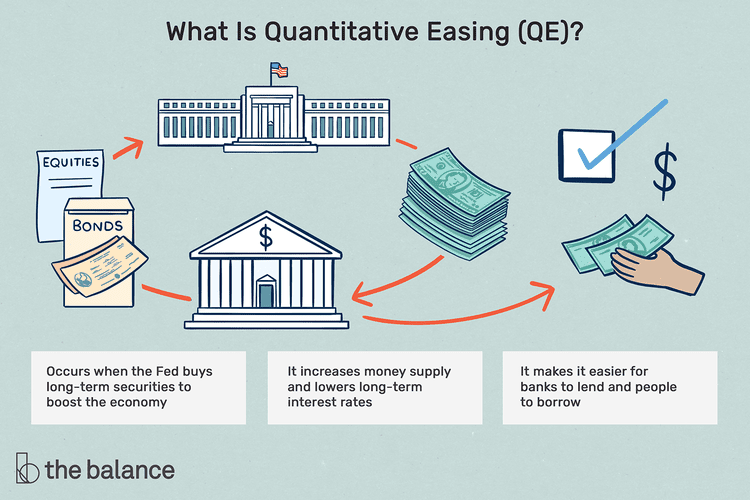
14/ This did not work but because they had no other ideas central banks undertook round after round of QE. Eventually the situation started to resemble a movie franchise which had become completely clapped out and stale.

15/ It became increasingly obvious that QE was just pumping up massive bubble in financial and housing markets. But the central bankers ignored this and pretended it wasn't happening.

16/ Even when it became obvious that QE had played a large part in bankrupting the United Kingdom economists and central bankers continued to pretend nothing was wrong.

17/ Trump's attack on central banks is typically crude. But also, in typical Trump fashion it is targeting an institution that is obviously rotten and out of ideas.

18/ Defenders of the Fed have nothing much to say. Unlike in the 1990s, they have no new ideas. They cannot re-articulate their role. So, they start to see themselves as a political group - the "experts" - and start to make overtly political arguments.

19/ At best they might argue that unless monetary policy is set carefully it will cause financial instability. But this is only because constant Fed interventions have got the financial markets addicted to Fed interventions. They created this problem!

20/ This results in pure institutional defence for the sake of institutional defence. Or, to put it differently, it looks like CARE: Cover Ass, Remain Employed.

21/ Increasingly the system looks late Soviet. The bureaucrats cannot articulate what they are doing. Nor can they say its working. They just say that if you get rid of the system bad things will happen. This is unsustainable.

22/ This is why liberal technocracy is collapsing. And since liberalism has come to be defined as technocracy, liberalism is collapsing all over the world. Fortunately, I have just written a book about this that is out in the UK and will be out in the US in a few days.

23/ Link below. https://www.amazon.com/Collaps...
@philippilk Wow Phillip, what a gross way to justify trumps ongoing efforts to consolidate his power and ruin American democracy You fail to mention the recurring issue of politicians cutting rates before elections, a key argument for central bank independence
@nicprinciotta I wasn't aware Fed independence was central to American democracy! 😂 The absolute STATE of American civil education...
@philippilk Can we just end central banking? Who cares if it’s independent or not
@philippilk Your thread is very popular today! #TopUnroll https://threadreaderapp.com/th... 🙏🏼@jed_shed for 🥇unroll
@philippilk The Federal Reserve is literally a cartel. You want to stabilize banking and finance? Make banks and financial institutions buy their own private insurance. Don't let them operate unless they insure to an amount that will cover their losses. Then, when a bank fails, let it fail.
@philippilk The old idea of savings fuel loans which fuel interest rate returns is long dead. The cycle is the government orders money printed for banks that loan the money, then the government buys the debt back and splits the interest with banks while citizens pay it back with labor.
@philippilk @DataRepublican The central bank has never been independent. The notion is steeped in bait and switch ideology.