
In the 1980s, Donald Trump bet everything on a building New York didn’t need. He bulldozed a department store to build condos no one thought would sell. That “reckless” gamble became Trump Tower and launched a billion-dollar empire: 🧵


In the late 1970s, Manhattan’s real estate market was struggling. The city was recovering from a financial crisis, and many developers hesitated to take on new projects. Donald Trump, in his early 30s, saw an opportunity.
He set his sights on the Bonwit Teller department store building on Fifth Avenue, one of the most prestigious locations in New York City. His plan? Demolish the store and build a 58-story skyscraper with luxury apartments that would stand out among Manhattan’s skyline.
At the time, luxury condominiums in New York City were an untested market. Most developers focused on commercial office spaces or rental apartments. Trump believed that wealthy buyers worldwide would pay a premium for high-end residences in the heart of Manhattan.
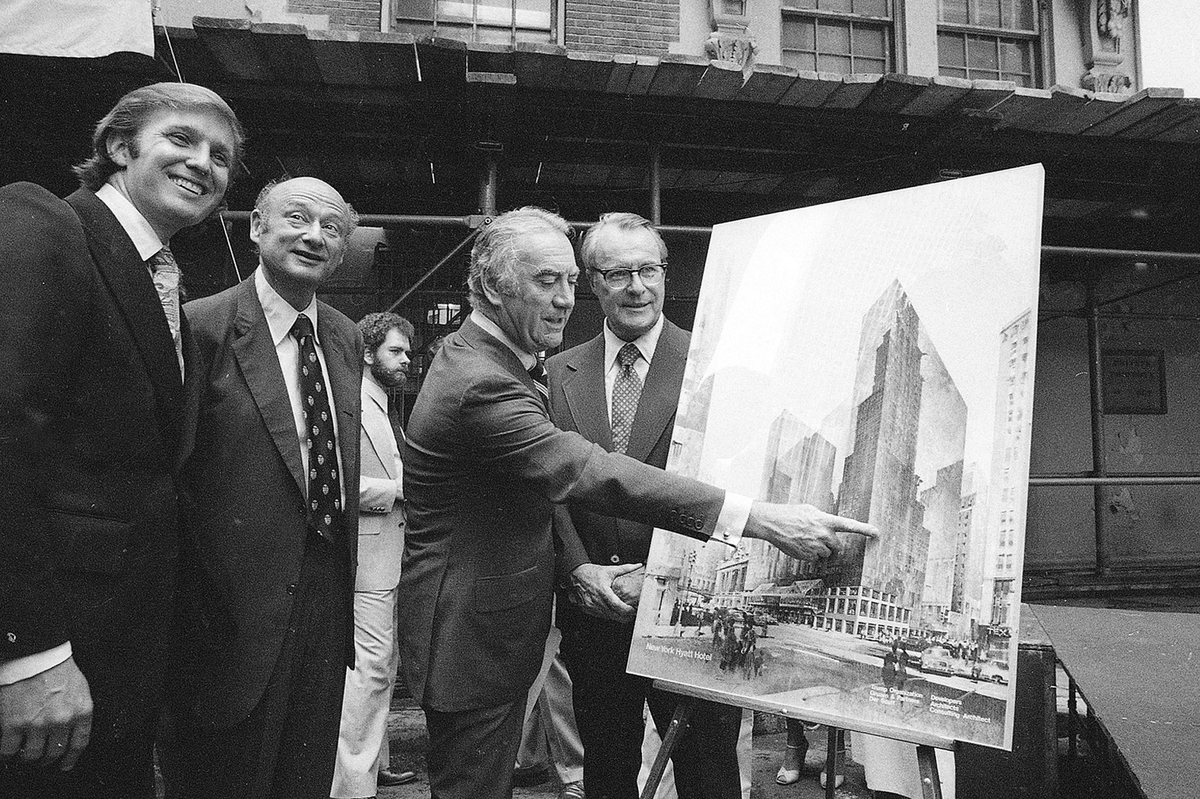
But there were significant challenges: 1. Trump needed to secure nearly $200 million in financing. 2. Preservationists criticized Trump for demolishing the historic Bonwit Teller building. 3. If the project failed, Trump risked losing everything even his reputation.

Trump negotiated a complex deal with Genesco, the owner of Bonwit Teller, and convinced them to sell the building for $25 million. To finance the construction, Trump struck a deal with the Equitable Life Assurance Society, giving them a 50% stake in the project.

Trump Tower was designed to be unlike anything New York had ever seen: 1. The lobby featured Italian marble, brass fixtures, and a 60-foot waterfall. 2. Trump secured high-profile tenants like Tiffany & Co. to add prestige to the building.
3. The condominiums were marketed as the ultimate in luxury living, targeting wealthy buyers worldwide. Trump’s bold marketing tactics, including hosting star-studded launch parties, helped generate buzz for the project.

When Trump Tower opened in 1983, it was an instant success: The condos sold out quickly, generating over $300 million in sales. Retail and office spaces were leased to top-tier tenants. The building was featured in movies, TV shows and celebrity events.

Trump Tower’s success cemented Donald Trump’s reputation as an ambitious real estate developer. Today, it remains one of the most recognizable landmarks in Manhattan and is valued at over $1 billion.

@Finance_Nerd_ He looks like a vampire.
@Finance_Nerd_ It’s a piece of crap
@Finance_Nerd_ @_HistoryNerd And he still owes them lots of money.
@Finance_Nerd_ The "reckless gamble" wasn't his. It was a bet against the 200 Polish workers paid half the union rate and the contractors left with unpaid bills. The house, it turns out, doesn't always win honestly. The foundation of this "empire" was laid with exploited labor, leading to a
@Finance_Nerd_ Sometimes big risks lead to big rewards!
Thinking of reactivating last year’s BFCM campaigns? @triplewhale analyzed 10,000+ ad accounts, and the data from the first half of 2025 makes one thing clear: the old BFCM playbook is dead. Ad spend is up 27.24%, while CPA climbed 11.70% and CPM rose 14.84%. The percent of

Billions of people can't use AI. Not because they're poor. But because Silicon Valley doesn't speak their language. NVIDIA just changed that with ONE game-changing release: ⬇️

Boeing dominated the aviation industry for decades. The 737 was the best-selling plane of all time. But 2 crashes changed everything. And the Airbus A320 went from 600 to 19,000 orders. How one plane destroyed one of America's greatest companies:


Athletic Greens solved every health problem except one: Getting people to remember them. While customers loved the product, they literally couldn't remember what it called. Here's the two-part rebrand that transformed them from forgettable to top of mind:
