
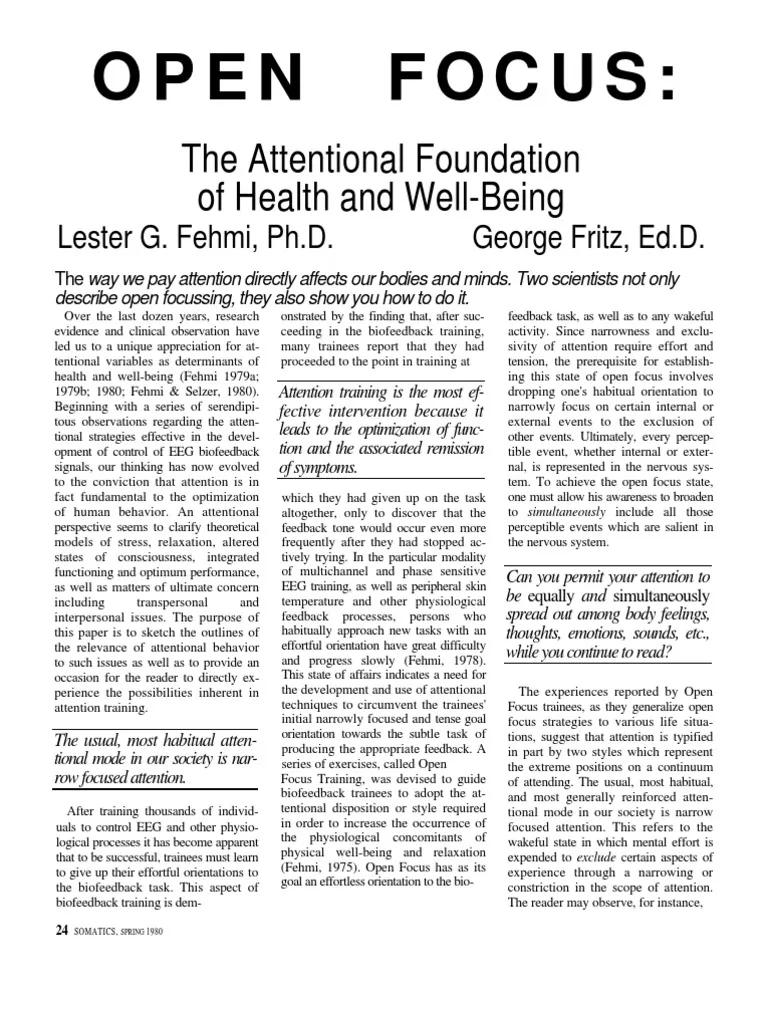
Open-Focus Training is the most overlooked protocol for stress relief. It dissolves anxiety, reduces chronic pain, and unlocks flow states. Even elite Navy SEALs or the CEO of Google, Sundar Pichai, praise it for keeping them sharp under pressure. Here’s how it works 🧵


Stress isn’t just “in your head.” It’s your nervous system reacting to how you focus attention. Dr. Les Fehmi found that when attention stays locked in a narrow focus, the brain gets stuck in fight-or-flight.
Narrow focus is like a spotlight. Great for threading a needle or finishing a project. But if it’s stuck, your brain perceives ordinary challenges as threats. This attentional rigidity fuels:
• Pain signals that feel louder • Anxiety loops that won’t shut off • Chronic fatigue from cortisol overload • Declines in focus, memory, and performance Dr. Fehmi called Open-Focus a “forgotten doorway” into regulation.
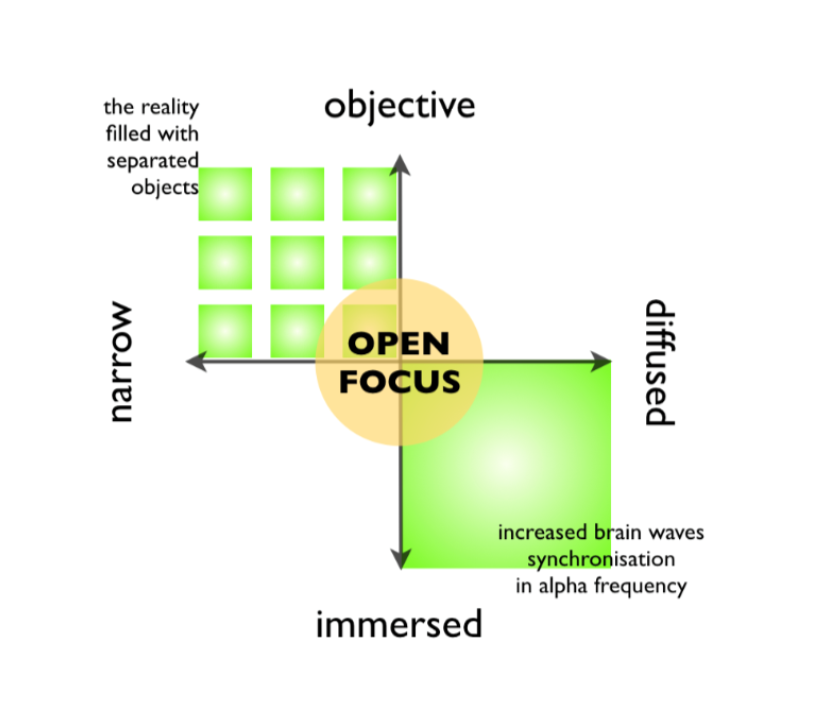
He identified 4 attention modes: • Narrow → laser focus • Diffuse → wide, relaxed • Objective → detached observing • Immersed → fully absorbed in the moment Resilience is being flexible in moving between modes.
Your attention style regulates your autonomic nervous system. • Narrow = sympathetic dominance (fight/flight) • Diffuse = parasympathetic activation (rest/digest) This alters hormones, immune function, and the perception of pain.

When awareness expands (diffuse focus), the EEG shows alpha synchrony, coherent brain rhythms linked to: • Lower stress reactivity • Faster recovery from pain • Greater creativity & fluid problem-solving Here are 3 practices you can try today to open your focus:
Exercise 1: The Palm Clenching Close your hand into a tight fist. Hold for 4 minutes. Notice the tension. Then slowly release, opening the palm fully. This simple Shaolin practice teaches your nervous system how to let go.
Exercise 2: Peripheral vision. Softly gaze ahead at a point, but relax your eyes and notice what’s at the edges of your vision. This widens awareness, eases hypervigilance, and immediately calms the nervous system.
Exercise 3: Whole-Body Space Awareness • Close your eyes. • Sense the space inside your chest, arms, legs—even your whole body at once. This exercise helps diffuse awareness, dissolve tension, and signal safety. It’s similar to the recently popularized NSDR...
Bonus — Neurogenic Tremoring (TRE) Animals shake after escaping predators to discharge trauma. Humans suppress this and that's why we stay stuck. Simple exercises trigger involuntary shaking that releases decades of stored stress from your nervous system. Watch this ↓
“Attention isn’t just where you look. It’s how your brain decides what’s real, what hurts, and what feels safe.” — Dr. Les Fehmi Fehmi believed mastering this was the missing piece in psychology and his research still feels ahead of its time.
Your body already knows how to heal; it just needs the right signals. I put together a free 5-day Nervous System Course with daily teachings + practices to help you press your “reset button.” Get started here: http://bodymindaccelerator.com
I'm curious, what are your thoughts on body-based healing? I'd love to hear your thoughts—let me know below! Ciao, Brian.
@IamProHuman What is open focus training?
@briandecoded Bruh did you read it lol
@IamProHuman @TheBetterPath_ If you can't be normal under stress.....you are the weakest man in this planet
@IreriJb @TheBetterPath_ cool dude
@IamProHuman Also explains why "work" which doesn't t include "play" leads to depression. And that's 99% of work.
@IamProHuman Great process. Thanks Brian
@IamProHuman Open-Focus Training's like a cheat code for stress. Tried blending it with other techniques? 😄
@IamProHuman This is awesome, thank you.
@IamProHuman Perhaps overlooked because true focus is internal, not something trained.