
🧵 ANCA in Rheumatology: Tweet 1: ANCA — one antibody, many confusions. From GPA to drug-induced vasculitis, it’s powerful when used right… and misleading when used wrong. Here’s a quick guide 👇 @IhabFathiSulima @DrAkhilX @CelestinoGutirr #MedTwitter #Rheumatology

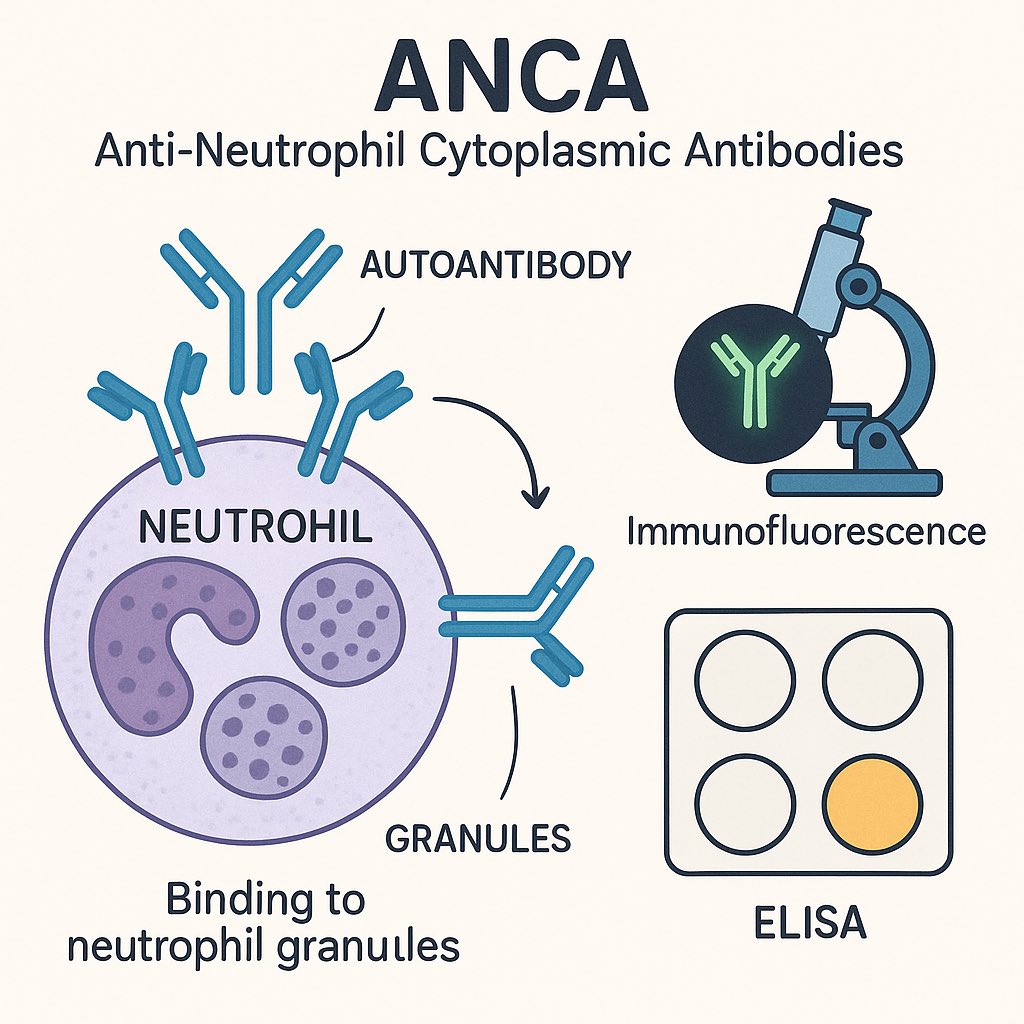
Tweet 2 (What is ANCA?): •Anti-Neutrophil Cytoplasmic Antibodies •Autoantibodies targeting neutrophil granule proteins •Tested by: 🔬 Immunofluorescence (IFA) 🧪 Antigen-specific assays (ELISA, CLIA)
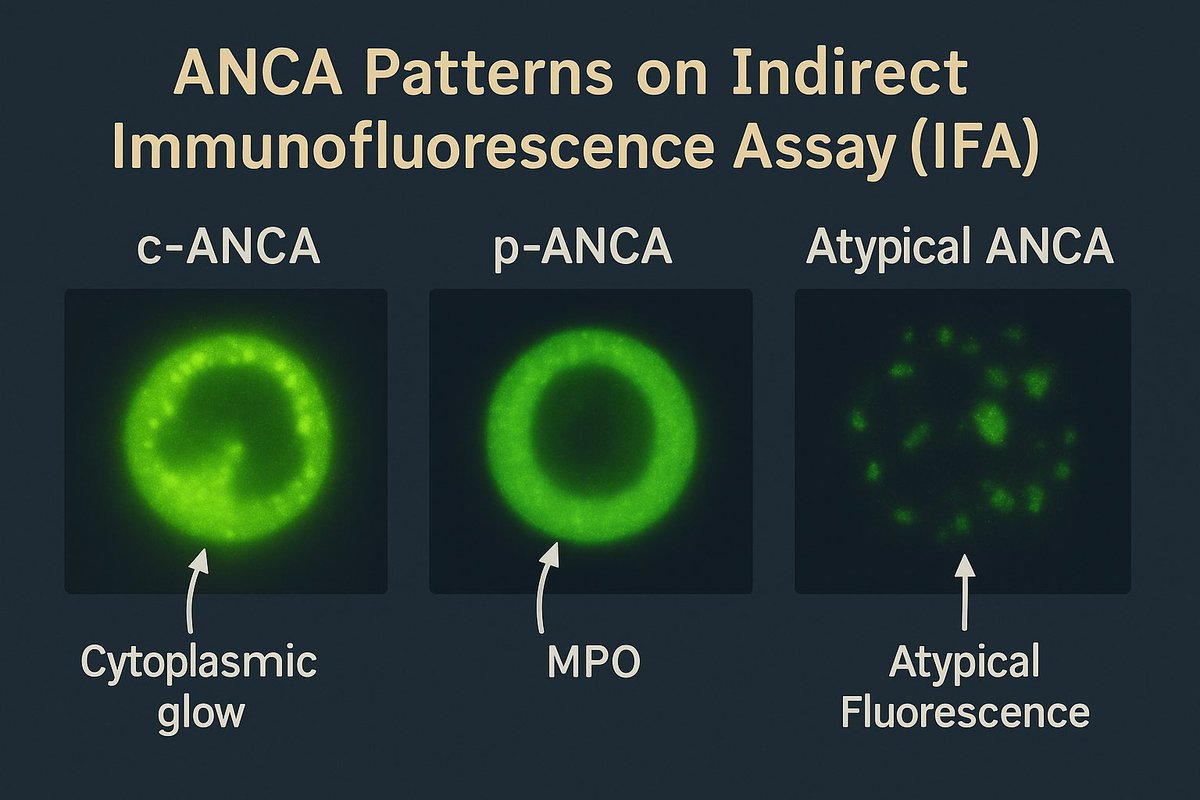
Tweet 3 (Patterns): •c-ANCA → cytoplasmic glow → usually PR3 •p-ANCA → perinuclear halo → usually MPO •Atypical ANCA → seen in IBD, drugs, infections
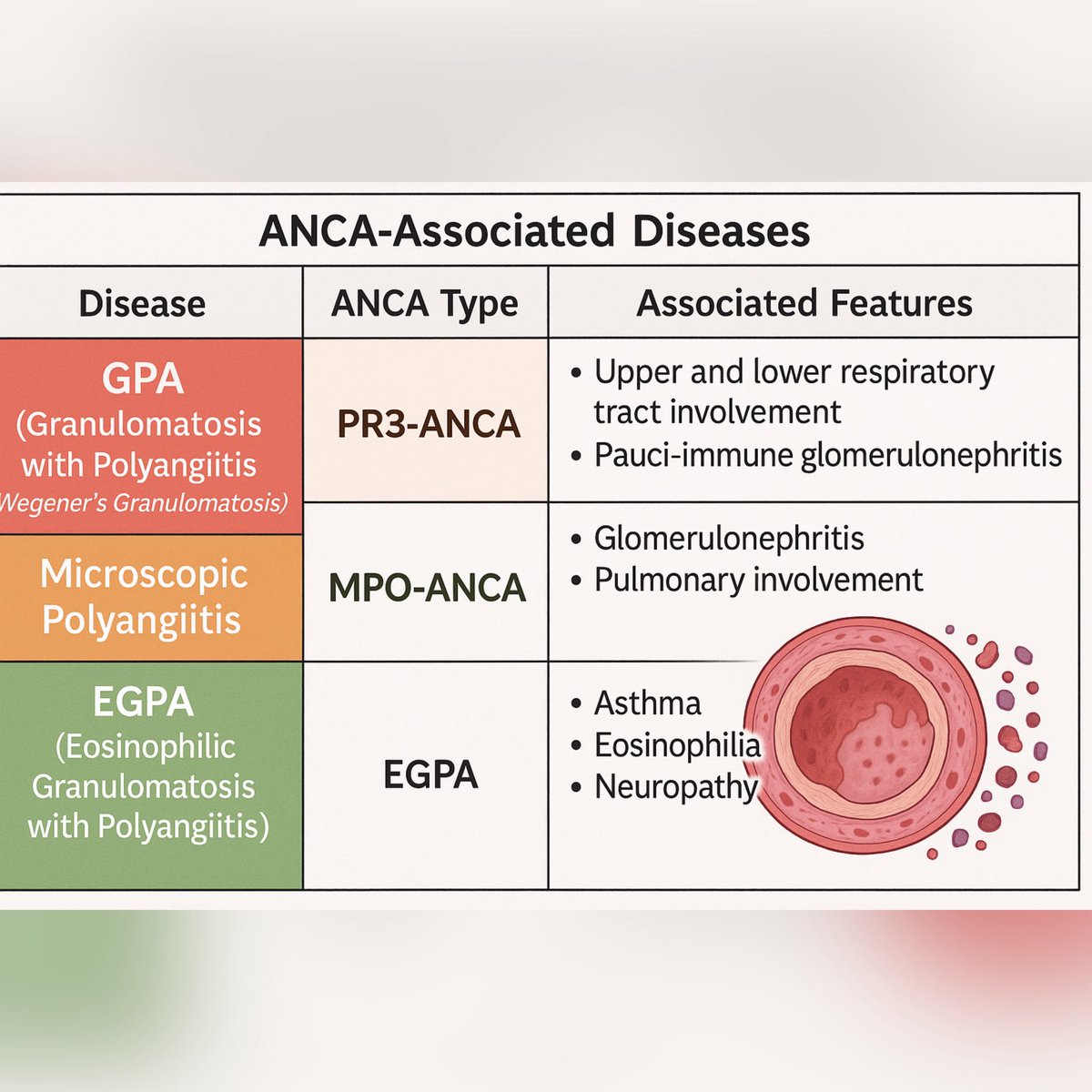
Tweet 4 (Associated diseases): •GPA → PR3-ANCA (c-ANCA) •MPA → MPO-ANCA (p-ANCA) •EGPA → MPO-ANCA (but many negative) •Others: drug-induced vasculitis, IBD, autoimmune hepatitis ⚠️ Not all vasculitis is ANCA-positive (e.g., PAN, limited GPA).
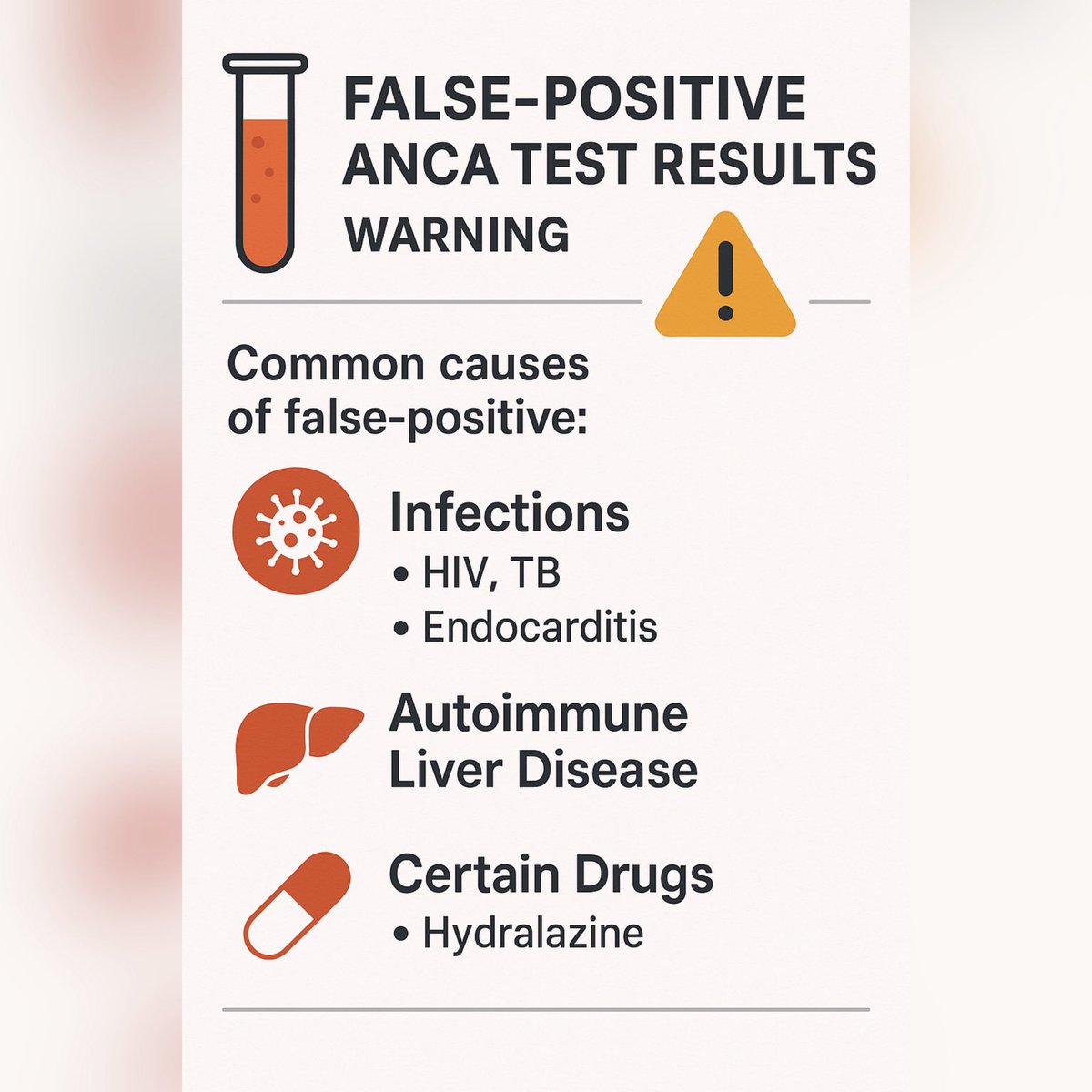
Tweet 5 (Pitfalls): ANCA ≠ always vasculitis. •Infections (TB, HIV, endocarditis) •Autoimmune liver disease •Drugs: hydralazine, PTU, minocycline
Tweet 6 (Clinical pearls): •ANCA supports but never replaces suspicion. •Rising titers sometimes predict relapse — but not reliably. •Tissue biopsy remains the gold standard.

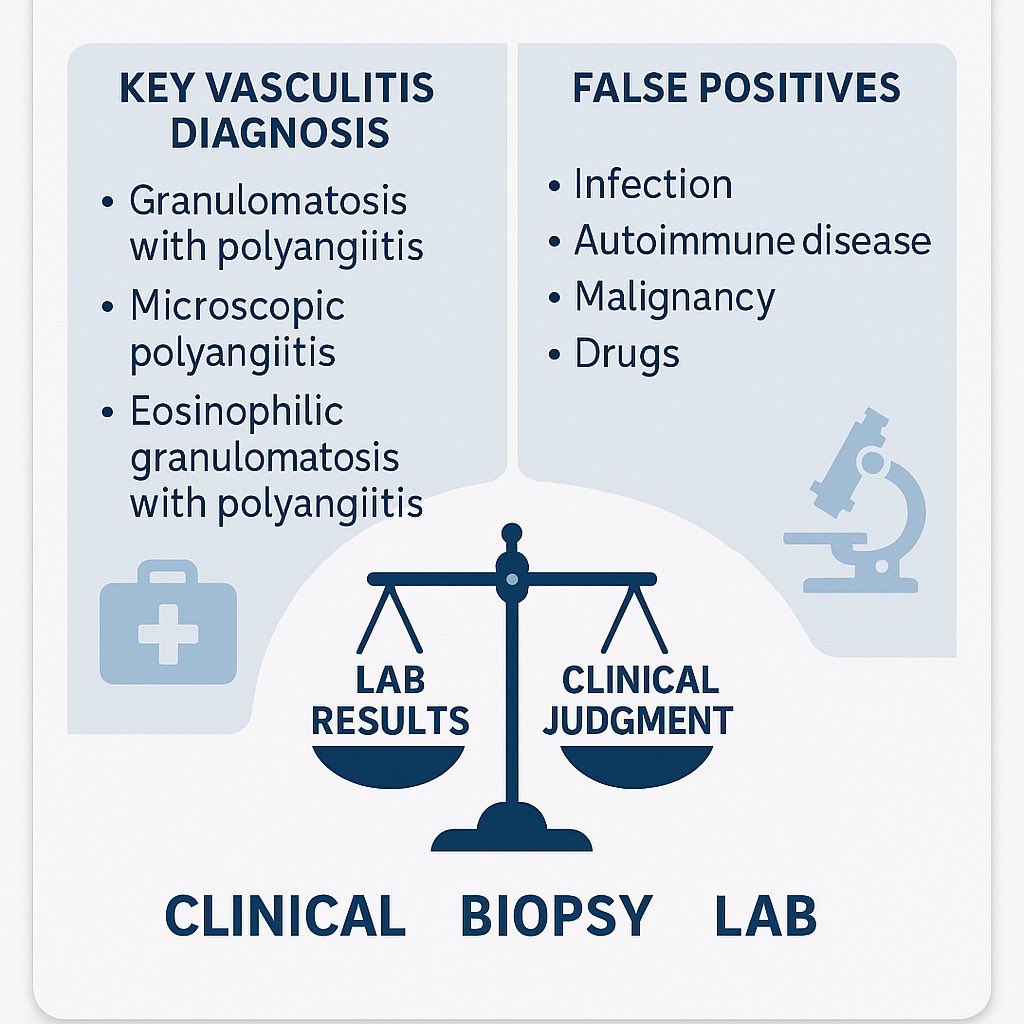
Tweet 7 (Take-home): ✅ ANCA is key in vasculitis diagnosis. ❌ False positives are common. 🔑 Always interpret with history, exam, imaging & biopsy.
@Rheumat_Aravind @IhabFathiSulima @DrAkhilX @CelestinoGutirr Thank you for sharing this - very helpful.