
If dopamine = pleasure... Then why does chocolate still taste good when it’s blocked? Because dopamine isn’t about liking. It’s about wanting and learning. Let’s rewire how we think about the world's most popular neurochemical 🧵


2/ 1950s: scientists gave rats a lever linked to stimulate their brain. The rats got obsessed. Thousands of presses. No food. No sleep. Just zaps. Humans did too. That loop? VTA → NAC → cortex (mesocorticolimbic circuit)

3/ So everyone assumed: Dopamine = pleasure Wrong. Here’s what they missed 👇 • Rats without dopamine still like juice • Parkinson’s patients (dopamine loss) still enjoy candy • Cocaine + dopamine blockers = still get high What crashes isn’t pleasure. It’s your drive.
4/ Dopamine works in 3 lanes: • Liking → hedonic pleasure (while consuming) • Wanting → motivation to pursue (drives action) • Learning → updating predictions for the future Remove dopamine → wanting collapses (but liking survives) So the “pleasure chemical” = a myth.
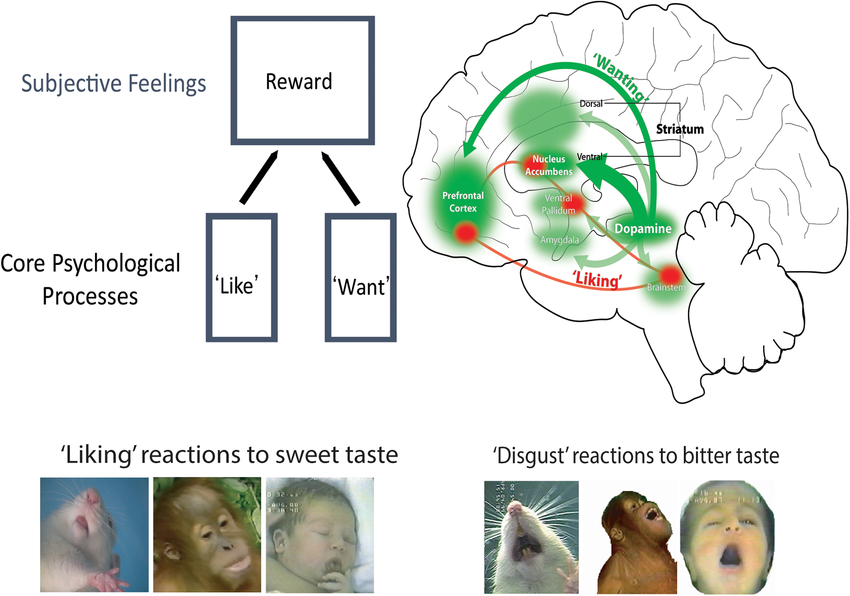
5/ Most people think rewards teach us. Also wrong. Mistakes do: • Dopamine doesn’t fire when you’re happy. • It fires when you're surprised. • It’s your brain’s “WTF was that?” signal That’s called Reward Prediction Error = RPE And it's the key to learning well.
6/ RPE in action: • Before learning → dopamine fires at the reward • After learning → fires at the cue predicting it • Missed reward? → dopamine dips below baseline • Surprise reward? → dopamine spikes higher than ever (RPE is also used to help computers/AI learn)

7/ Why this matters for you: RPE keeps you hooked 🎰 Slot machines 📱 Notifications 🎯 Flow states All powered by one thing: Tiny mismatches between what you expect… And what actually happens.
8/ Dopamine circuits also fuel motivation. They “ramp up” as you approach rewards and binds to: • D1 receptors → energize your chosen action • D2 receptors → inhibit competing actions Even signs you're getting close to reward = ↑ dopamine


9/ Sleep deprivation wrecks this balance. It downregulates D2 receptors → • impulsivity • loss of executive control • scattered attention Your brain literally can’t suppress distractions. That’s why tired = unfocused

10/ Addiction hits the same system. Drugs downregulate D2 receptors in the ventral striatum → • reduced motivation for natural rewards • diminished capacity for pleasure This is a rewiring of wanting + learning.
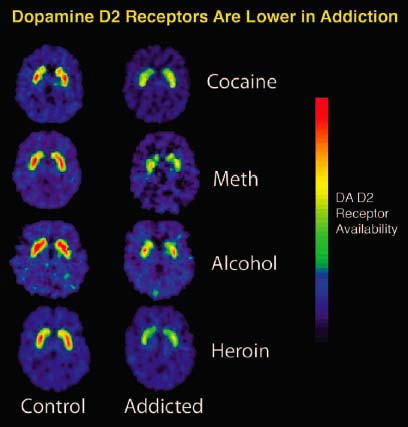

11/ Here’s the flip side: People prone to "flow states" have greater D2 receptor availability. Flow is optimized dopamine balancing: • (D1) motivation → pursue • (D2) inhibition → ignore distractions Yes, you can train this.
12/ The takeaway: Your brain’s learning algorithm runs on prediction errors, not pleasure hits.

BONUS/ Practical tips ✅ Sleep: ↑ D2 receptors & executive control ✅ Exercise: ↑ dopamine release + receptor density ✅ Novelty: dopamine spikes without drugs ✅ Mindful reward design: pair habits with cues → strengthen NAc pathways Your daily choices train the circuit.
@KeithSakata It's also tied to food memory- works in synastry with fructose. As hunter gatherers finding and remembering where fruit was located was the difference between getting enough fat stores to make it through winter and dying. We are highly wired to enjoy foods that make us fat.
@KateXGate Love this frame 👀
@KeithSakata goal directed behaviour !
@JeremyCosse Totally!
@KeithSakata But medications like Wellbutrin and Vraylar that target dopamine can directly improve people's ability to feel pleasure and reduce anhedonia. Doesn't this suggest dopamine plays a more direct role in pleasure than just motivation?
@sonicshifts Great point 👏 wworth noting: wellbutrin isn’t pure dopamine = boosts norepinephrine too. That dual action restores motivation, drive, and energy, which often feels like pleasure coming back. Maybe even enhances capacity for pleasure.
@KeithSakata This is super interesting and a beautifully laid out thread. Thank you for putting it together Keith. Do doctors use this kind of material when working with various kinds of addiction? The material is simple to follow and could be applied to pamphlets to break down the 'why' to
@the_meat_market Thanks Rowena! Generally no, but educating about the brain goes such a long way I think! Hbu?
@KeithSakata Great thread! Like how it covers both the theory and practical elements of dopamine. The comment you made about "Tiny mismatches" between expectations and results reminded me of the Skinner Box/Operant Conditioning in the context of slot machines and gamification in general,
@CitizenYvr Glad it resonated!
@KeithSakata Guessing you already know about Wolfram Schultz - if not here is his web site: https://www.wolframschultz.org...
@dawso007 Legend! Thanks for sharing George
@KeithSakata Hello. Do you have at hand the reference of the paper where they did the experiment? Regards.
@pjbarrecheguren Sure! Which experiment?
@KeithSakata Unroll @threadreaderapp
@KeithSakata Dopamine is a derivative molecule
@KeithSakata Dopamine ≠ ‘pleasure chemical’, it’s the brain’s ‘motivational currency.’ 🧠💸 Chocolate tastes good thanks to opioids & serotonin. Dopamine’s job? Making sure you want it again (and again… and again 🍫). So dopamine isn’t the party… it’s the FOMO that makes you RSVP.
@KeithSakata So you’re saying my brain is a chocolate addict and a scholar at the same time?
@KeithSakata Awesome - thanks It is always great to see more data in ways that we can relate to failure being key to falling in the right direction. Just need some decent navigation so that it leads us to where we want to go in the long-run.
@KeithSakata Novelty is the real game changer , if life becomes fresh and surprising on daily/weekly basis it makes you more motivated and happier.
@KeithSakata In true persuit is, purest of all pleasures.