An overview and collection of broad observations on the Slavic ethnogenesis and expansions - 🧵
The archaeology of the early Slavs, despite nominally being well studied, is fragmented between various academic disciplines despite the size of the available library of material Even Gretzinger et al falls into this same trap, making bizarre blunders because of this
This thread will attempt to assemble a single clear narrative formed out of the available archaeological, genetic, linguistic and historical data surrounding the subject
In addition, it will attempt to resolve a number of controversies that have arisen surrounding the Slavic ethnogenesis
1. The affinity of Slavs to pre-Slavic archaeological cultures 2. The social and military organisation of Early Slavs 3. The alien cultures that influenced the development of said organisation To achieve this, it is important to understand the origin of Balto-Slavs as a group
Part 1: Early Balto-Slavs Balto-Slavs are characterised by various clades of R-Z645, a lineage associated with the early Baltic Corded Ware groups It's MRCA is dated to after the earliest Corded Ware arrivals in the region https://www.yfull.com/tree/R-Z...

R-Z645 then splits into 2 subclades, R-Z93 and R-Z283 R-Z93 is the defining lineage of Indo-Iranians, but is beyond the scope of this thread, so it will not be discussed in great detail R-Z283 however, is more important https://www.yfull.com/tree/R-Z...
Unlike R-Z93, whose MRCA is dated to around 4500ybp, R-Z283's MRCA is dated to almost the same time as R-Z645's MRCA Going by this, it must have been the larger and more widespread lineage of the two among early Corded Ware groups, and diversified earlier


R-Z283 has several subclades R-Z284 - characteristic of the Battle Axe/Boat Axe cultures that entered Estonia, Finland and eventually Central Sweden and Southern Norway - it is now found only among Northern Scandis, but at very high rates @VVeltkrieger has already mapped this


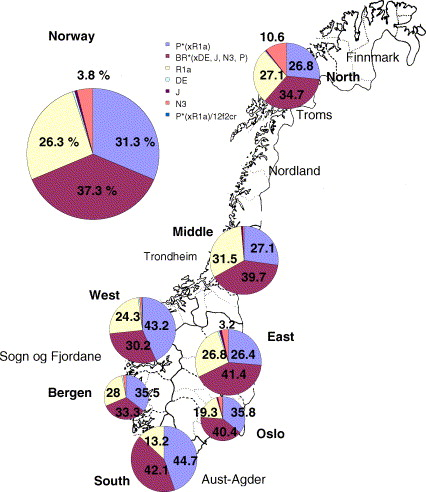
And then R-M458 and R-Z280 - these are the uniparentals that later characterise Balto-Slavs Now, at this point, the total absence of any Belarussian BA samples, as well as the scarcity of Belarussian BA archaeology, means that concrete data is harder to come by in this period
R-Z280 splits into 2 clades: https://www.yfull.com/tree/r-z... R-CTS1211 R-Z92 These R1a clades, along with R-M458, compose the absolute bulk of Balto-Slavic R1a

Jumping a lot further into the future due to the Belarussian scarcity, we can observe what are clearly autosomally Slavic people appear on the southeastern periphery of the Balto-Slavic Horizon, in the Pontic Forest-Steppe
There is a tendency to use Baltic_BA as a proxy for Slavic ancestry - but this is mistaken The southeastern Balto-Slavs had slightly higher steppe admixture, and notably higher ANF ancestry, but lower WHG ancestry as a result of weaker Balto-Slavic drift
This can easily be identified when comparing ancient southeastern Balto-Slavs to Baltic_BA like groups UKR035AB is a sample from about 2600-2700ybp, from the right bank of the Dniepr - he carries R-Z280 and is clearly autosomally Slavic
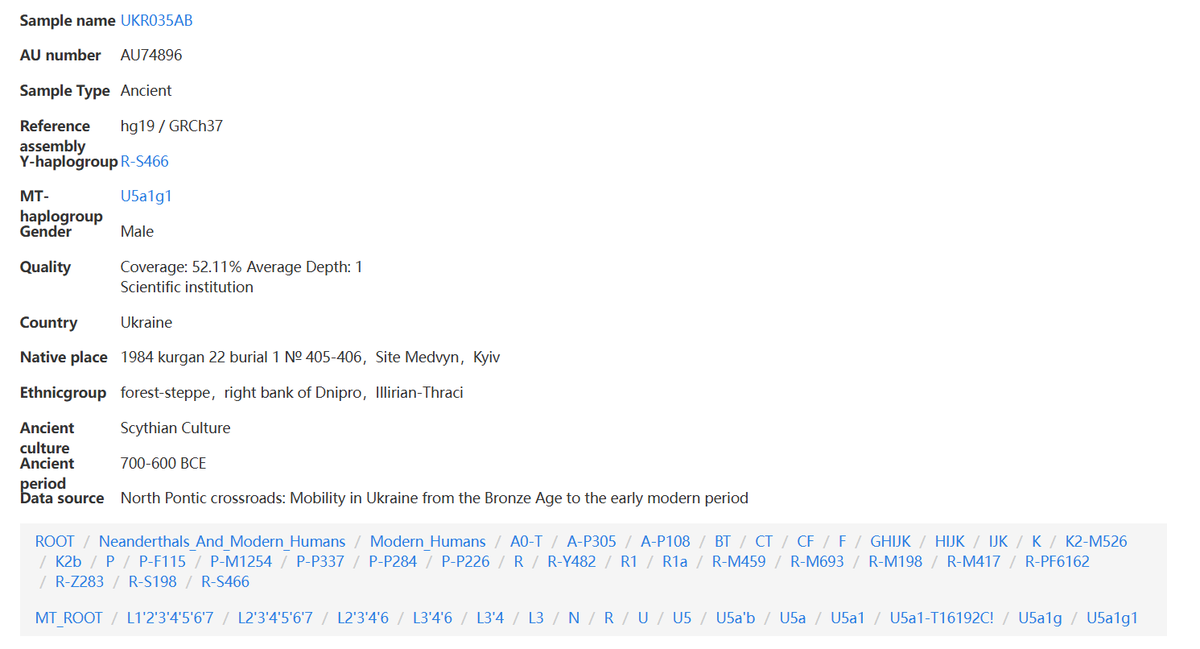

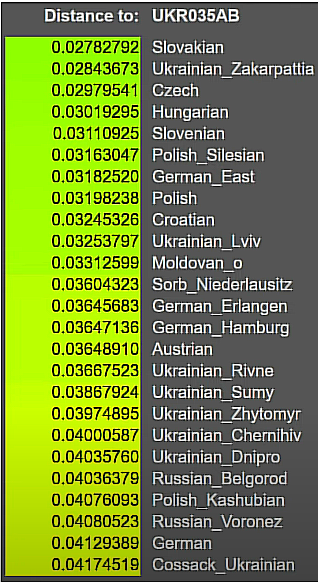
He is a much better fit for Slavs than Baltic_BA - showing autosomal affiliation for the purest Slav populations with a high level of consistency than Lithuanian and Estonian ends of the Balto-Slavic horizon His affinity to these modern Slavic populations as per G25 is shown here

And UKR035AB is no anomaly, samples attributed to the Androphagi are clearly Balto-Slavic as well There are a number of very basal Z280 samples that fit this description very well too - UKR116 here, for example fits in very well


In fact there is a very wide range of attested "Scythian" groups that are not Iranic Scythians but Balto-Slavs, and closer to the Slavic end of the horizon Androphagi, Neuri and the Ploughing Scythians are all examples of this
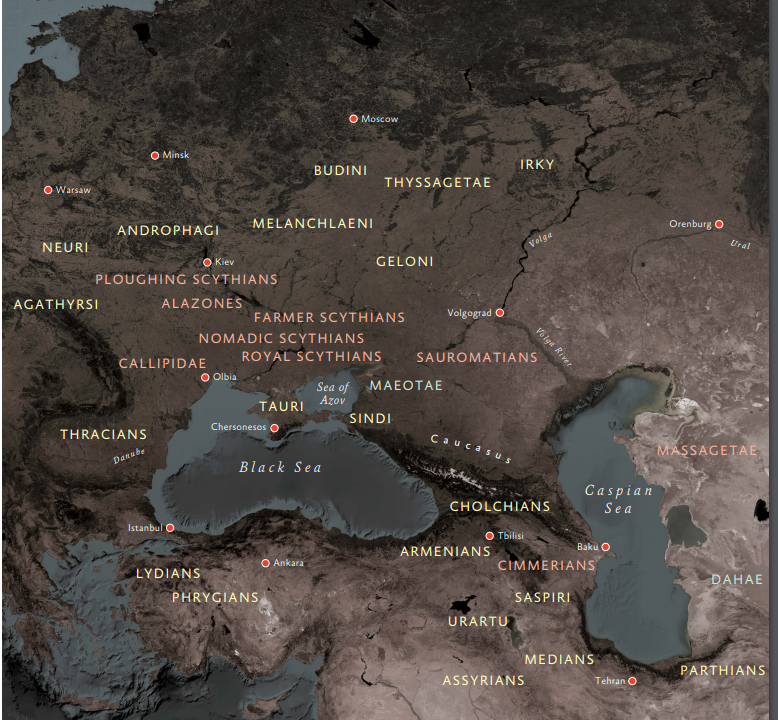
So how does the uniquely Slavic genome form? As Gretzinger et al stated (and many others have before them) Slavs come from a population that is clearly ANF-enriched, along with having weaker Baltic_HG and slightly higher Steppe ancestry than Baltic_BA

In addition, Gretzinger et al mentions a level of Siberian admixture in Slavs - this could either be as a result of Scythian or Uralic contact (and ultimately, absorption of their components)
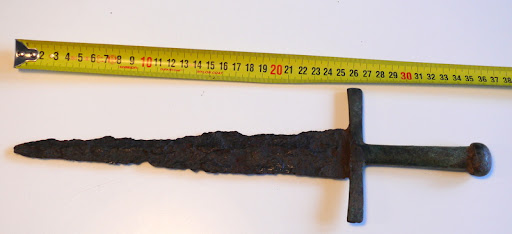
The Scythian and ENF influences are a part of a web of both Daco-Thracian and Iranian influences in the region Both groups were clearly associated with Iron metallurgy, and had a prominent presence in the Pontic steppe as a result of Iron-linked expansions
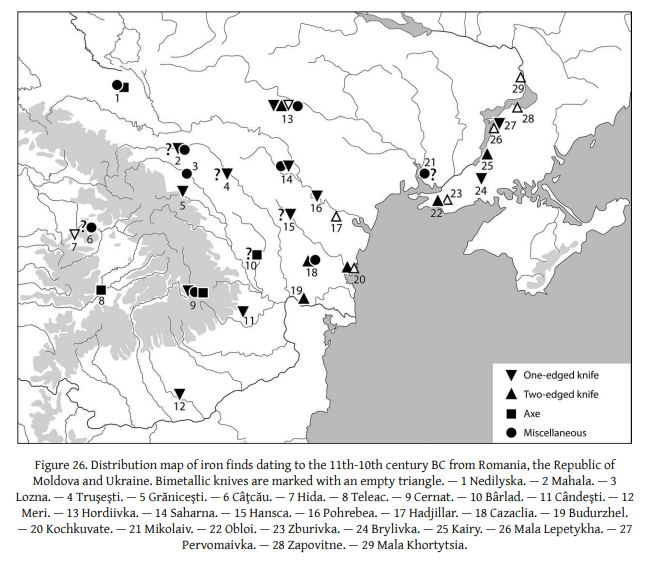

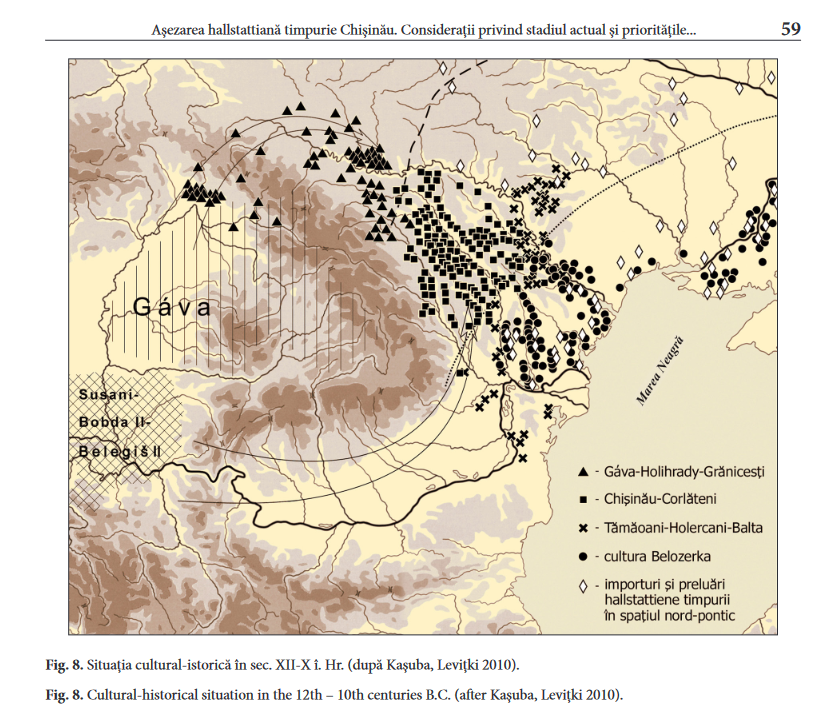
The Thraco-Cimmerian horizon (shown in previous post) is a sprawling metalworking phenomenon that occured across the Pontic steppe & beyond All of this is to say, Daco-Thracians very likely mixed with Slavs at some stage in the Chernoles culture, and are the enriched ANF source

This is further compounded by the material affinities of the Chernoles culture to Gava and Chisinau-Corlateni cultures While this is likely not a genetic relationship, it is a clear indicator of Daco-Thracian influence on the Pre-Slavic Chernoles

The Iranian influence in the Slavs is extremely widespread, and an equivalent Iranian influence is absent in Baltic, making clear that it is not the result of a common origin in the Eastern CWC In the next post I will begin listing some loanwords to give an idea of the influence
Bogъ (God) Rajь (paradise) Gъpanъ (ruler) - later Župan Sobaka (dog) Xorna (food, sustenance) - later hrana Aždaja (dragon) - associated with Iranian Azhdaha Toporъ (axe) Among others These loans range from religious, to mythological, to military, to political vocabulary
@preromanironage Slavs seem to have absorbed a Daco-Thracian element as well as a small Cimmerian/Scythian element - although uniparentals from either group are absent from early Slavs, probably due to later founder effects
@preromanironage Part 2: The Ethnogenesis of the Slavs from the Chernoles culture to the formation of the Kiev culture
@preromanironage The Channelled Ware complex is associated with the ancestors of Daco-Thracians, ultimately derived from the Belegis culture. Around 3300-3200ybp they had a massive expansion out of Banat @VVeltkrieger discusses this in detail here https://x.com/VVeltkrieger/sta...

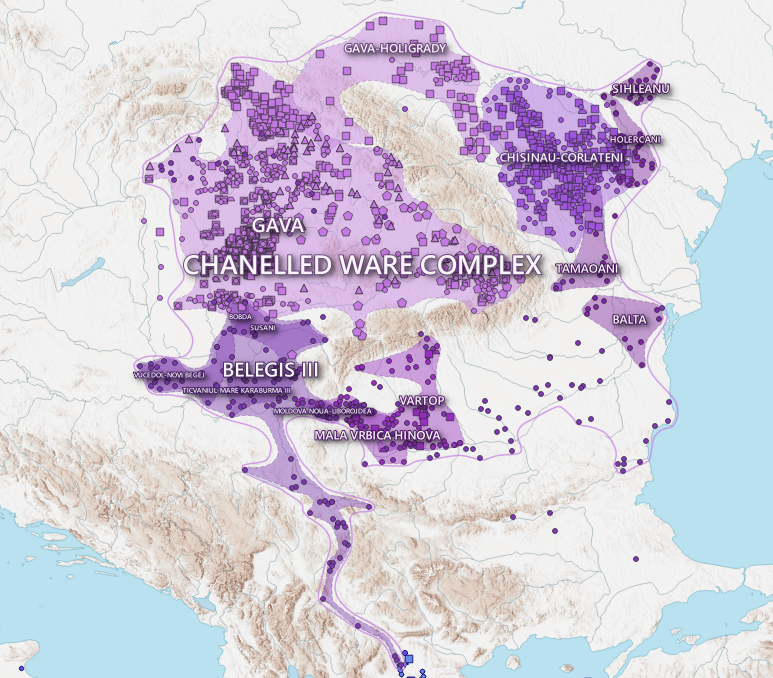
@preromanironage @VVeltkrieger A link between Daco-Thracians and Balto-Slavs has been summised for a long time - Jonas Basanavičius, a very prominent Lithuanian academic - had collected a collection of 600 cognates between Baltic and Thracian - and he is not unique in this, many others noticed this too

@preromanironage @VVeltkrieger In this context, it should be clarified that Channelled Ware are "Para-Daco-Thracians" rather than Daco-Thracians proper - their Daco-Thracian proper contact with Slavs will be explained in more detail later
@preromanironage @VVeltkrieger As these groups were expanding, the enormous and extremely powerful Srubnaja culture - likely a lost branch of the Indo-Iranian nation - was retreating and declining rapidly - they were no longer the warring pastoralist powerhouse they once were