
Circadian clock dysfunction affects virtually all the hallmarks of aging: - chronic inflammation - mitochondrial dysfunction - loss of autophagy - gut dysbiosis - cell senescence - telomere shortening Graph: PMID: 36583849

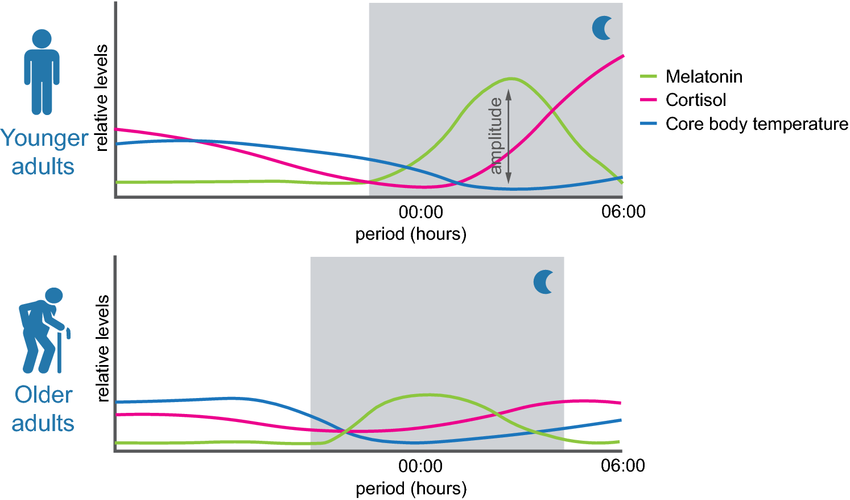
With aging, circadian clocks lose robustness: - Reduced amplitude of rhythms (weaker hormone and gene oscillations) - Phase advance (earlier sleep/wake times) - Impaired synchronization (due to weaker light sensitivity, sedentary lifestyle, irregular habits) Graph: PMID:
I just had a podcast with @GregPotterPhD who is a circadian rhythm expert We break down how circadian clock dysfunction contributes to aging and how you can maintain better circadian clock function with age https://youtu.be/eu4IP8VO80Y

@siimland Can you translate what this means to the average Joe?
@siimland Here I had chatGPT do it. The Simple Takeaway •Aging is driven by cellular damage and breakdown over time. •Circadian clocks keep our body running smoothly day-to-day. •When clocks go out of sync (bad sleep, irregular eating, light exposure at night), it worsens the
@siimland The circadian clock does play a crucial role in regulating biological processes and its dysfunction can significantly impact aging-related pathways. Mitochondrial dysfunction, inflammation, and reduced autophagy are indeed interconnected with the body's internal clock. It would
@siimland Circadian clocks coordinate aging processes, but calling them the master regulator oversells their role. Some people age well despite shift work, while others decline with perfect sleep schedules.
@siimland Fascinating—if circadian clocks set the tempo for aging, could molecular resonances (like O₂/H₂O vibrations) be the “notes” shaping cellular coherence? What if aging is really a loss of rhythmic harmony?